
What Counts as Domestic Sewage in London and Why It Matters
Domestic sewage in London is the combined foul water from toilets, showers, baths, hand basins, kitchen sinks and laundry in residential dwellings and mixed-use buildings — a definition that mirrors the Environment Agency's scope for the Standard Rules permit SR2015 No1 covering packaged sewage treatment plants discharging to ground. Anything that originates from a commercial process — kitchen grease from a restaurant, hair-treatment chemicals from a salon, dental amalgam from a clinic, vehicle wash water from a depot — is classified as trade effluent under the Water Industry Act 1991 and is regulated by the sewerage company, not the Environment Agency.
The London context makes this distinction unusually sharp. Most of inner London is served by combined sewers, so a misclassified flow that includes trade waste can quickly push a small development into Thames Water's trade-effluent consent regime, with consent fees, sampling, and heavy-metal limits applied even at low flow. The boundary is set by Building Regulations Part H, Foul Water Drainage and Approved Document H, which define how foul water must be collected, vented and treated before it leaves the site; once the flow crosses into trade effluent or above the SR2015 No1 threshold, Environmental Permitting takes over from Building Control.
For a consultant or developer, the practical question is binary: is the flow purely domestic and below 5 m³/day, or is any part of it trade? The answer dictates whether the site needs an SR2015 No1 standard rules permit, a bespoke Environmental Permit, or a Section 106 sewer connection with the local water company.
The 2026 Regulatory Stack for London Domestic Sewage Treatment
Four legal layers sit between a London site and a working packaged domestic sewage treatment plant, and a misstep in any one of them stops the project. The 2026 stack runs in the following order.
Layer 1 — Planning. Most packaged domestic plants below 5 m³/day fall under permitted development if installed more than 2 m from a boundary, but London's conservation areas, Green Belt and Article 4 directions tighten this materially. A planning pre-application check is the cheapest way to confirm whether a buried tank or kiosk will need a full application.
Layer 2 — Building Regulations. Approved Document H, Foul Water Drainage sets the system-design standards: venting, siting distances (7 m from any habitable building for septic tanks, smaller clearances for package plants per the manufacturer's certificate), and the requirement for a percolation test where discharge is to ground. Building Control signs off the foul-drainage design, not the discharge consent.
Layer 3 — Environmental Permitting. The Environmental Permitting (England and Wales) Regulations 2016 are administered by the Environment Agency. The SR2015 No1 standard rules permit covers packaged plants up to 5 m³/day discharging to ground, with strict 95-percentile limits on ammonia (≤5 mg/L), BOD (≤20 mg/L) and suspended solids (≤30 mg/L). Above 5 m³/day, or for any discharge to surface water under SR2015 No1's rules, a bespoke permit is required with a full application, H1 screening and typically 8–13 weeks of determination.
Layer 4 — Sewer adoption. Where a public sewer is available within a workable distance, the Water Industry Act 1991 requires a Section 106 sewer connection with the local sewerage company — Thames Water in most of London, with Lee Valley Water and Essex & Suffolk Water in the outer fringe. New private sewers serving multiple plots must be offered for adoption under Section 104. Sewer connection does not waive the Environment Agency's rules for any separate on-site discharge, and post-2024 the Environment Act 2021 and the Storm Overflows Discharge Reduction Plan have tightened how combined-sewer overflows are counted, indirectly raising the bar for any partial on-site treatment that interacts with a combined network.
Choosing a Process: A/O Packaged Plant, MBR, or MBR Plus UF Polishing
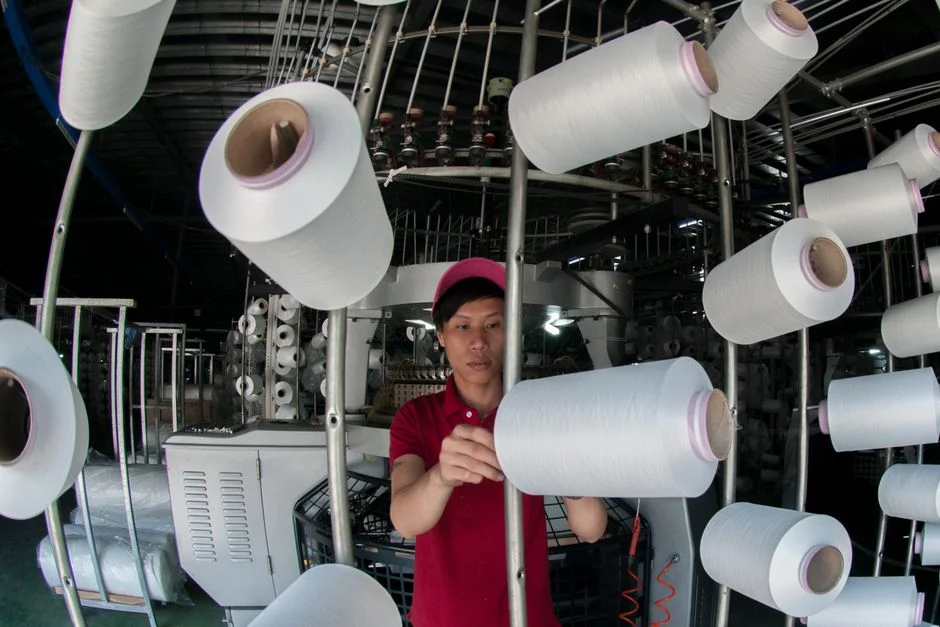
Three process trains cover essentially every packaged domestic sewage treatment in London from 1 m³/day to 80 m³/h, and the choice is driven by footprint, consent sensitivity and reuse intent rather than by influent strength alone.
Process A — Anoxic/aerobic (A/O) packaged plant. The A/O configuration combines denitrification in the anoxic zone with biological contact oxidation in the aerobic zone, followed by sedimentation and disinfection in a single buried unit. The underground packaged A/O sewage treatment plant (WSZ series, 1–80 m³/h) covers the full residential to small-municipal envelope, is fully automated, and sits below the finished ground level with landscaping over the top.
Process B — MBR membrane bioreactor. Submerged PVDF membranes at typically 0.1–0.4 μm pore size replace the secondary clarifier and most of the tertiary stage. The integrated MBR membrane bioreactor (10–2,000 m³/day, <1 μm effluent) produces a filtrate with BOD and suspended solids well below Royal Commission effluent standard (BOD 20 mg/L, SS 30 mg/L), on a footprint roughly 60% smaller than an equivalent conventional activated-sludge plant — the key benefit on tight London basements and back-land sites.
Process C — MBR + UF polishing for reuse. Where toilet flushing, irrigation or laundry reuse is intended, a hollow-fibre UF stage at 0.03 μm is added downstream of the MBR. The 0.03 μm PVDF ultrafiltration polishing stage (2,000–40,000 L/h) provides the log-reduction margin that reuse schemes need. Reuse in England currently requires a separate water-quality permit and a site-specific risk assessment; it is not covered by SR2015 No1.
Decision rule. <10 m³/day, no reuse, no surface-water sensitivity → A/O. 10–500 m³/day with limited footprint or tight consent → MBR. Reuse, hospital or hotel laundry-side, or surface-water-sensitive site → MBR + UF.
| Parameter | A/O packaged (WSZ) | MBR | MBR + UF |
|---|---|---|---|
| Flow range | 1–80 m³/h (≈24–1,920 m³/day) | 10–2,000 m³/day | 10–2,000 m³/day (UF polishes MBR) |
| Effluent BOD (mg/L) | ≤20 | ≤5 | ≤2 |
| Effluent SS (mg/L) | ≤30 | ≤1 (membrane-retained) | ≤0.5 (membrane-retained) |
| Effluent NH₃-N (mg/L) | ≤5 (with nitrification) | ≤1 | ≤1 |
| Relative footprint | 1.0× (baseline) | ≈0.4× | ≈0.45× |
| Operator skill | Low (basic packaged) | Medium (membrane cleaning) | Medium–High (two membrane stages) |
| Reuse-ready | No | Partial (subject to consent) | Yes (subject to reuse permit) |
| Capex vs. A/O | 1.0× (baseline) | 1.4–1.8× | 1.8–2.4× |
London Sizing: Matching Occupancy and Daily Flow to a Packaged Plant
A domestic plant is sized on both flow and load, and in London the bigger risk is under-sizing the biological stage on a flow-only calculation. Use 150 L/head/day as the typical London domestic unit for residential flows, escalating to 200–250 L/head/day for hotels (per HydropureWater's product sizing practice for the WSZ range, 2026). Convert to peak flow with a peaking factor of 2.5× for steady residential occupancy and 3.5–4× for transient occupancies such as hotels, student housing and short-let blocks. Worked example: an 80-unit residential block at 150 L/head/day × 2.5 occupants/unit gives ≈30 m³/day mean and ≈75 m³/day peak, which sits inside a single mid-range WSZ skid.
Load metrics drive aeration tank volume, not flow. Domestic sewage in London typically runs 200–400 mg/L BOD, 250–450 mg/L COD and 40–60 mg/L ammonia; size the aerobic zone on kg BOD/day with a typical F:M of 0.05–0.15 kg BOD/kg MLSS/day for an A/O contact-oxidation plant, or 0.03–0.08 for an MBR. A flow-only specification that misses the load will consent but fail in service.
For mixed-use blocks (residential plus café, gym or clinic), add 10–20% to flow and route the trade-effluent stream (kitchen, salon, dental) through pre-treatment such as a grease trap or DAF unit before the biological stage — discharge of untreated trade waste into a packaged domestic plant is a common cause of consent failure on London mixed-use sites.
| Site type | Occupancy basis | Unit flow (L/head·day) | Peaking factor | Indicative BOD (mg/L) | Typical packaged class |
|---|---|---|---|---|---|
| Residential flat (London) | 2.5 persons/unit | 150 | 2.5× | 200–350 | A/O (WSZ 1–5 m³/h) |
| House extension / single dwelling | 3.5 persons | 150 | 2.0× | 200–300 | A/O (WSZ <1 m³/h) |
| Hotel / serviced apartment | 1.5 persons/room | 200–250 | 3.5× | 250–400 | A/O or MBR |
| Student block / co-living | 1.0 person/bed | 150–180 | 3.0× | 250–400 | A/O (WSZ 5–20 m³/h) |
| Mixed-use (resi + café + salon) | As above + 10–20% | 180 | 3.0× | 300–450 | MBR + grease trap |
| School / office (canteen) | By staff + pupil | 50–80 | 2.5× | 200–350 | A/O (WSZ 1–10 m³/h) |
Disinfection and Effluent Quality: Meeting the Consent, Not Just the Permit
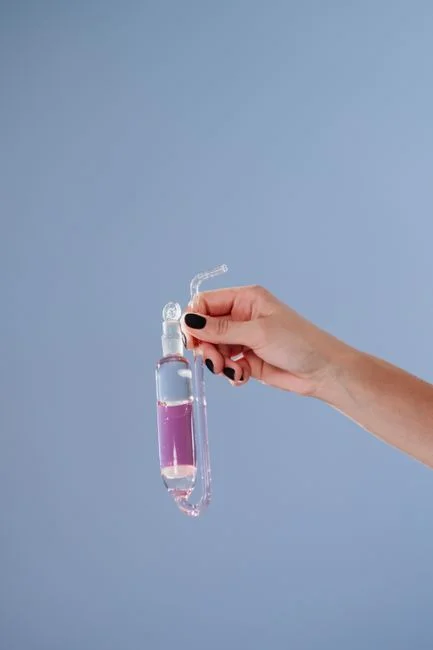
Disinfection does not achieve a BOD or ammonia consent; the biological stage does. What disinfection does is close the consent loop on microbiological indicators, control faecal coliforms, and — for SR2015 No1 surface-water discharges — provide the residual that the Environment Agency typically requires. The right choice is driven by discharge route and downstream use rather than by capex alone.
Chlorine dioxide from the chlorine dioxide generator delivers reliable microbial control with a measurable residual across a 50 g/h to 20,000 g/h capacity range, and is compliant with EU Drinking Water Directive 98/83/EC dosing limits and WHO guidance for residual ClO₂. UV-C sterilisation via the UV-C steriliser on the packaged plant outlet is chemical-free and effective against chlorine-resistant Cryptosporidium and Giardia, available in open-channel and in-pipe configurations sized to packaged plant flows. Ozone is the third option, used where the plant feeds a water-reuse loop because of its higher oxidation potential, but it carries higher capex and a strict off-gas-destruction requirement.
Cross-link to the consent: a typical SR2015 No1 surface-water discharge sets a 95-percentile BOD ≤ 20 mg/L and ammonia ≤ 5 mg/L; disinfection supports those numbers but does not produce them. Specify disinfection after the biological stage is fully sized.
Sludge and Screening: The Two Sides of a Domestic Plant Nobody Plans For
The headworks and the sludge line are where packaged domestic plants succeed or fail in year 2 and beyond. A GX rotary mechanical bar screen at the packaged plant headworks protects the anoxic zone from rags, wipes and fibrous material that accumulate rapidly in London residential flows and that a buried packaged unit cannot easily be opened up to clear.
For an A/O packaged plant, sludge is typically stored 6–12 months in the bottom of the tank before removal, at roughly 1–2% dry solids. An MBR produces less surplus activated sludge by mass (higher MLSS, longer SRT) but at 0.5–1.5% solids that still needs dewatering for off-site removal where tanker access is awkward. A plate and frame filter press (1–500 m² filtration area) supports on-site dewatering to a 22–28% dry-solids cake that can be bagged or containerised.
Chemical dosing closes the consent loop on surface-water discharges and on the polish stage: coagulant for SS, pH correction where nitrification has dropped the pH below 6.5, and — for reuse loops — antiscalant ahead of UF. The PLC-controlled automatic chemical dosing system integrates these injections with the package's existing control panel rather than running them as ad-hoc dosing pumps. A correctly specified London packaged plant in the 5–20 m³/day range typically runs at 0.5–1.5 hours of operator time per week.
Selecting and Procuring a London-Spec Packaged Plant in 2026

Procurement collapses to four steps once the regulatory stack and the process class are fixed. Step 1 — define the discharge route and the permit: SR2015 No1 (≤5 m³/day, ground), bespoke Environmental Permit (>5 m³/day, or surface water), or Section 106 sewer connection to Thames Water. Step 2 — fix the flow and load envelope: mean m³/day, peak m³/h, kg BOD/day, ammonia target, and any consent-tightening from a sensitive surface-water receptor. Step 3 — choose process class (A/O, MBR, MBR + UF) using the comparison table earlier in this article; resist the temptation to upgrade to MBR + UF unless reuse is genuinely specified. Step 4 — specify headworks, disinfection and sludge handling alongside the biological skid, then ask suppliers for a single integrated package with a single PLC, not a parts list that the contractor has to integrate on site.
For site owners managing multiple UK sites, the same framework — permit route, flow/load envelope, process class, integrated skid — applies outside London; a comparable sewage treatment equipment supplier selection framework sets out the supplier-side questions that translate this London-specific decision into any UK or export region.
Frequently Asked Questions
What is the Environment Agency threshold for a packaged domestic sewage treatment plant in London?
Standard Rules permit SR2015 No1 covers packaged plants up to 5 m³/day discharging to ground with 95-percentile limits of BOD ≤ 20 mg/L, ammonia ≤ 5 mg/L and SS ≤ 30 mg/L. Above 5 m³/day, or for surface-water discharge, a bespoke Environmental Permit under the Environmental Permitting (England and Wales) Regulations 2016 is required, with a longer determination and a full H1 environmental risk assessment.
Do I need Thames Water consent if there is a sewer within the site boundary?
Yes. Under the Water Industry Act 1991 a Section 106 application to the local sewerage company — Thames Water in most of London — is required for any new connection to a public sewer. A mains-sewer connection does not waive Environment Agency rules for any separate on-site discharge, and the Environment Act 2021 plus the Storm Overflows Discharge Reduction Plan have tightened how combined-sewer inflows are assessed.
MBR vs. conventional A/O for a small London site: which is cheaper overall?
A/O is cheaper to install — typically 1.0× baseline capex against 1.4–1.8× for an MBR. MBR is cheaper to consent on tight footprints and on surface-water-sensitive sites because the membrane-retained effluent sits well below Royal Commission limits and reduces ammonia and SS compliance risk. Operationally, MBRs produce less waste activated sludge but require scheduled membrane cleaning every 6–12 months.
Can a packaged domestic sewage plant produce water for toilet flushing or irrigation in London?
Yes — an MBR plus a 0.03 μm UF polishing stage will deliver reuse-quality water, but reuse in England currently requires a separate water-quality permit and site-specific risk assessment under the Environment Agency's water-reuse position; SR2015 No1 does not cover reuse.
How often does a packaged A/O plant need sludge removal?
For residential flows, expect 6–12 months between sludge removals from a buried A/O packaged unit, depending on loading. MBRs produce less wasted activated sludge by volume but require scheduled membrane cleaning and chemical-in-place maintenance on a 6–12 month cycle. Both figures assume a correctly sized headworks screen and a working dewatering line for the MBR case.