Why Copper Mining Sludge Is a 2026 Compliance and Cost Priority
Global mining generates roughly 10 billion tons of tailings per year, with China alone accumulating 12.98 billion tons cumulatively by 2021 (MDPI 2024, S2). Wastewater treatment is only 1–13% of a mine's total environmental footprint, yet it is the stream that determines whether dissolved copper, arsenic, and other regulated metals ever reach a receiving waterbody — which is why regulators and procurement committees now treat sludge handling as a first-tier design decision rather than an afterthought. Two precedents sharpened 2026 scrutiny: the Karamken tailings dam failure released ~340,000 tons of contaminated liquor (MDPI 2024, S2), and the Gold King Mine spill released ~3 million gallons of acid mine drainage (AMD) into the San Juan River (MDPI 2024, S2). In the United States, effluent limits for ore mining and dressing sit in 40 CFR Part 440, and any solid that fails the Toxicity Characteristic Leaching Procedure (TCLP) under 40 CFR Part 261 is reclassified as hazardous. In the European Union, Directive 2006/21/EC governs mining waste facilities, dam stability, and the mining waste management plan. Operators aligning with the 2026 mining pretreatment compliance guide will recognize these two anchors as the load-bearing compliance items in any new flowsheet.
Sources and Characteristics of Copper-Bearing Sludge
Copper-bearing sludge arrives in three distinct streams, each with its own chemistry, solids load, and disposal classification. The first is concentrator thickener underflow, where flotation tailings report as 12–25% dry solids (DS) with copper typically bound to sulfide or oxide gangue. The second is solvent extraction–electrowinning (SX-EW) raffinate and electrolyte bleed, which can carry more than 5,000 mg/L Cu(II) at pH 1.5–2.5. The third is AMD neutralization sludge, the product of lime dosing at acidic mine workings, where 10–500 mg/L Cu is the typical feed band. Across the global mining literature, copper in wastewater spans 2.5–10,000 mg/L (IJERPH 2023, S5), so a single site can see two orders of magnitude in feed concentration between dry and wet seasons.
Co-contaminants drive the disposal story. Arsenic rides along with copper at concentrations of 3.07–7.72 mg/kg in surface tailings samples, well below the 75 mg/kg ceiling in 40 CFR for non-hazardous mining sludge (MDPI 2024, S2), but AMD sludge near sulfidic ore can exceed that ceiling and force hazardous handling. Cadmium, lead, zinc, iron, and manganese behave similarly — they coprecipitate with copper hydroxide or co-dissolve in AMD, so TCLP is the gating test before any cake can be landfilled as non-hazardous. pH governs precipitation chemistry: AMD at pH 2–4 needs 1.5–2.0 stoichiometric lime (target pH 9–10 for hydroxide), while concentrator overflow at pH 6–9 can often be dosed with caustic alone. A quick sludge mass balance makes the design problem tangible: a 100 m³/h stream at 500 mg/L Cu with 95% precipitation yields ~0.6 t/day of Cu in cake; at 5,000 mg/L the same plant pushes ~6 t/day — a 10× swing driven entirely by feed concentration.
Step-by-Step Process Train: From Wastewater to Stable Cake
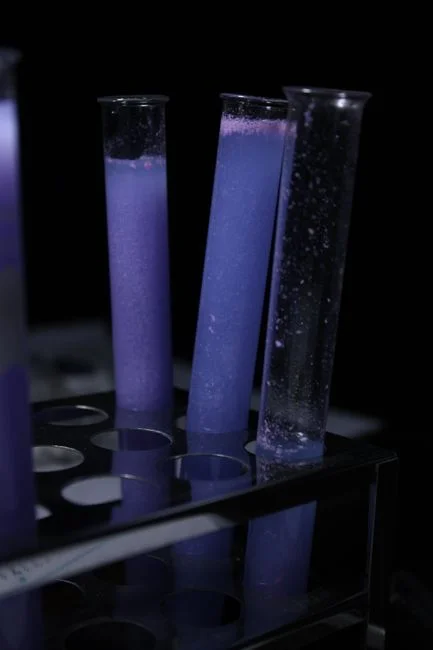
The 2026 process train for copper-laden streams runs in seven discrete steps, each of which has a measurable output that feeds the next unit operation.
Step 1 — Equalization and oxidation. Equalization basins smooth pH and flow swings from upstream operations. Aeration or H₂O₂ dosing oxidizes Fe²⁺ to Fe³⁺ ahead of neutralization, which improves floc settling and reduces the lime burden downstream. A chemical dosing skid is the standard control point for oxidation and pH correction reagents.
Step 2 — Chemical precipitation. Lime (CaO) and caustic (NaOH) are the low-cost defaults for copper at pH 9–10. Sodium hydrosulfide (NaHS) and biogenic sulphide precipitation drive residual Cu below 0.1 mg/L and produce a denser, faster-settling sludge — biogenic sulphide is one of four commercial process packages reviewed in the 2024 Heliyon mining wastewater review (S3). Selective ion-exchange resins such as MTS9600 have demonstrated 99% Cu removal at pH 2.0 from sulfate media (IJERPH 2023, S5), and waste-derived hydroxyapatite (S4) is an emerging adsorbent that targets the same low-pH raffinate streams.
Step 3 — Clarification or DAF thickening. The target overflow is 2–4% DS to the dewatering stage. Lamella clarifiers remain the workhorse in mining, but a DAF thickener is the better choice for colloidal, high-FOG, or iron-rich AMD sludge where floated solids settle poorly. A high-rate lamella clarifier handles conventional hydroxide floc with the smallest footprint per m² of clarifier area.
Step 4 — Sludge conditioning. Polymer conditioning is required to achieve efficient solid-liquid separation. Copper hydroxide sludge typically requires 2–8 kg of cationic polymer per ton of dry solids, while AMD iron-rich sludge is thirstier at 8–15 kg/t DS because of the higher surface charge and fines content.
Step 5 — Mechanical dewatering. A plate-and-frame filter press produces 35–45% DS cake and is the technology of choice for copper hydroxide and AMD sludge at flows up to ~50 m³/h per unit. Decanter centrifuges deliver 25–35% DS in a continuous, smaller-footprint package. Belt presses remain in use at flows under 20 m³/h where CAPEX dominates the decision.
Step 6 — Stabilization or recovery. Three pathways exist: (1) cement or sulfide stabilization for non-recoverable cake, (2) encapsulation in geopolymer or fired brick (MDPI 2024, S2), or (3) acid leach plus electrowinning, where pulsed electrodeposition has demonstrated 84.36% efficiency at 100% purity copper deposit (IJERPH 2023, S5).
Step 7 — Disposal or beneficial reuse. TCLP per 40 CFR Part 261 classifies the cake; the 75 mg/kg arsenic ceiling is the practical gate between hazardous and non-hazardous disposal (MDPI 2024, S2).
Comparing Dewatering Technologies for Copper Sludge
Equipment selection is governed by feed DS, target cake DS, polymer demand, and CAPEX band rather than by vendor preference. The table below summarizes the four dewatering paths a copper plant will shortlist before talking to vendors.
| Technology | Typical feed DS | Achievable cake DS | Polymer demand | CAPEX band (USD, 2026) | Footprint | Best-fit flow range |
|---|---|---|---|---|---|---|
| Plate-and-frame filter press | 2–8% | 35–45% | 2–8 kg/t DS (lowest per ton) | $250k–$700k per unit | Large, batch | Up to ~50 m³/h per unit |
| Decanter centrifuge | 2–6% | 25–35% | +30–50% vs filter press | $300k–$900k | Small, continuous | 5–80 m³/h |
| Belt press | 1–4% | 18–28% | 4–10 kg/t DS | $80k–$250k | Medium, continuous | Under 20 m³/h |
| Rotary drum thickener (pre-step) | 0.5–2% | 4–8% | 1–3 kg/t DS | $150k–$400k | Medium | Upstream of press or centrifuge |
Filter presses win on cake dryness and lowest polymer consumption per ton of dry solids, which is why they remain the default at sulfide-ore concentrators with tight cake-disposal economics. Centrifuges win on footprint and continuous operation, which is why they show up at remote SX-EW sites where building pad and operator presence are constrained. Commercial process packages reviewed in the 2024 Heliyon mining wastewater survey (S3) — SAVMIN, SPARRO, biogenic sulphide, and DESALX — should be read as integrated flowsheets rather than single unit operations, and they typically combine precipitation with membrane or ion-exchange polishing. Membrane thickeners (UF on clarifier overflow) are used as a water-recovery step and can reduce downstream sludge mass by 15–25% — a useful lever when disposal cost or water scarcity is the bottleneck. An integrated water purification skid is the typical delivery format for that polishing step.
2026 Compliance Checklist and Cost Bands
The 2026 compliance and procurement picture reduces to a small set of non-negotiables. The checklist below is the minimum a budget meeting should clear before signing a PO.
| Item | 2026 requirement | Reference |
|---|---|---|
| Effluent limits (Cu, TSS, pH) | 40 CFR Part 440, subcategory-specific | U.S. EPA |
| Sludge classification (TCLP) | 40 CFR Part 261 | U.S. EPA |
| Arsenic ceiling, non-hazardous mining sludge | 75 mg/kg | 40 CFR (per MDPI 2024, S2) |
| Tailings dam / waste facility plan | Stability, monitoring, closure plan | EU Directive 2006/21/EC |
On cost: a full mechanical sludge train sized for 20 m³/h typically lands in the $0.8–1.5M CAPEX band (2026 pricing, equipment only). OPEX is dominated by lime or caustic plus polymer, which together run 40–60% of total annual operating cost. The recovery offset is real and often decisive: at 500 mg/L feed Cu and 90% recovery to cake, a 20 m³/h plant yields ~190 kg/day of recoverable Cu, which at 2026 LME prices meaningfully offsets reagent and disposal cost. The decision rule is short: if Cu in feed exceeds 500 mg/L and plant flow is above 10 m³/h, evaluate a recovery loop; otherwise prioritize low-OPEX stabilization and compliant disposal. Operators weighing resin- or electrowinning-based recovery should also benchmark against the Idaho City mining 2026 compliance guide and the electrocoagulation guide for metal finishing for adjacent pretreatment and recovery benchmarks.
Frequently Asked Questions
What concentration of copper in wastewater requires treatment?
Copper in mining wastewater spans 2.5–10,000 mg/L Cu(II) across reviewed operations (IJERPH 2023, S5). Anything above 0.1–0.5 mg/L in discharged effluent generally requires polishing under 40 CFR Part 440 or equivalent local limits; AMD sites typically see 10–500 mg/
Frequently Asked Questions
What is copper mining wastewater sludge treatment?
Copper mining wastewater sludge treatment is the process of separating, stabilizing, and dewatering the solid residues generated during the neutralization and clarification of acidic mine drainage. The process typically involves chemical precipitation to remove dissolved metals, followed by thickening and mechanical dewatering to reduce the moisture content of the resulting mineral-rich sludge before final disposal or storage in tailings management facilities.
Is copper mining sludge considered hazardous waste?
Whether copper mining sludge is classified as hazardous depends on the specific chemical composition and local regulatory thresholds, such as the Toxicity Characteristic Leaching Procedure (TCLP) limits. In many jurisdictions, if the sludge exceeds regulatory levels for heavy metals like copper, arsenic, or lead, it must be managed as hazardous waste; however, if the neutralization process is effective and the sludge is stable, it may be classified as non-hazardous industrial waste.
What is the best dewatering equipment for copper sludge?
The selection of dewatering equipment depends on the desired final solids content, which typically ranges from 30% to 65% for copper sludge. Filter presses, particularly recessed chamber plate designs, are widely considered the industry standard for achieving high cake dryness, while decanter centrifuges are preferred for high-throughput applications where continuous operation is required and space is limited.
How much lime is needed to precipitate copper from mine wastewater?
The amount of lime (calcium hydroxide) required for precipitation is determined by the stoichiometric requirements to raise the wastewater pH to the optimal range of 8.5 to 9.5 for copper removal. While dosage varies based on acidity and initial metal concentration, typical treatment rates range between 0.5 and 2.5 grams of lime per liter of wastewater to ensure residual copper concentrations drop below the standard discharge limit of 0.5 to 1.0 mg/L.
Can copper be economically recovered from mining sludge in 2026?
As of 2026, copper recovery from mining sludge is becoming increasingly economically viable through the integration of hydrometallurgical leaching and solvent extraction-electrowinning (SX-EW) circuits. Projects are now focusing on processing high-grade sludge tailings, where the cost of acid leaching and metal recovery is offset by the rising market value of copper and the reduction in long-term waste storage liabilities.