
What Electrocoagulation Does to Car Wash Wastewater
An electrocoagulation system for car wash wastewater treats effluent by dissolving sacrificial iron or aluminum anodes directly into the flow, generating coagulant species in situ and removing oils, detergents, phosphates, and suspended solids without external chemical dosing. Mirshahghassemi et al. (2017) reported 80.8% COD removal, 94.9% phosphate removal, and 85.5% turbidity removal at pH 7.3, 4.2 mA/cm², and 20.3 minutes, with specific energy consumption of 1.5 kWh/m³ using four iron electrodes in a monopolar arrangement (Mirshahghassemi et al., Environ. Health Eng. Manag. 2017; 4(1):37–43).
The mechanism involves a two-stage process: at the anode, metal dissolution (M → M^n+ + ne⁻) releases Fe²⁺/Fe³⁺ or Al³⁺ ions that hydrolyze into coagulant hydroxides; at the cathode, water reduction (2H₂O + 2e⁻ → H₂ + 2OH⁻) generates a fine bubble swarm that floats emulsified oil and grease to the surface. No chloride-based coagulants, polyaluminum chloride, or emulsion-breaking polymers are required. Because the coagulant is generated stoichiometrically at the electrode surface, the dose is self-regulating—current density sets the metal-ion production rate directly.
For commercial vehicle wash operations, the practical advantage is the elimination of chemical carryover into the polishing or reuse stage. Iron or aluminum carryover is typically 2–8 mg/L, well below the 10 mg/L Fe threshold where effluent coloration becomes visible and orders of magnitude below the residuals left by chemical coagulation at 30–80 mg/L. Sludge volume is also lower per kilogram of contaminant removed because the flocs are denser than Al(OH)₃ or Fe(OH)₃ produced by external dosing.
Iron vs Aluminum Electrodes: Which Anode Material Fits a Car Wash
Iron anodes outperform aluminum on phosphate-heavy car wash effluent because Fe³⁺ precipitates phosphate as FePO₄ at pH 6.5–7.5, while aluminum phosphate requires tighter pH control and longer retention. The technical trade-off between these materials dictates the efficiency of the overall separation process.
Aluminum anodes produce lighter hydroxide flocs and achieve 10–15% higher oil-and-grease removal on emulsified fleet-wash streams, but generate roughly 25–35% more dry sludge per m³ treated and are prone to passivation above pH 8.5, where a resistive oxide layer drops cell current and forces voltage up. Current density is the single most sensitive operating variable. The Mirshahghassemi 2017 optimum of 4.2 mA/cm² sits in the middle of the practical 2–10 mA/cm² window. Below 2 mA/cm², coagulant generation is too slow to outpace influent loading and turbidity breakthrough occurs. Above 10 mA/cm², parasitic side reactions—oxygen evolution at the anode (2H₂O → O₂ + 4H⁺ + 4e⁻) and chlorine evolution if chloride is present—consume 20–40% of the rectifier's kW without improving contaminant removal. Plate spacing of 10–20 mm is typical; closer spacing reduces cell voltage by 30–50% but accelerates fouling on hard-water (CaCO₃-rich) car wash influent, where scaling must be managed with periodic polarity reversal every 15–30 minutes.
| Parameter | Iron (Fe) Anode | Aluminum (Al) Anode |
|---|---|---|
| Best contaminant target | Phosphate, COD, color | Emulsified oil/grease, TSS |
| Phosphate removal mechanism | FePO₄ precipitation, high affinity | AlPO₄ adsorption, pH-sensitive |
| Sludge yield (kg DS/m³) | 0.3–0.6 | 0.5–1.0 |
| Passivation risk | Low below pH 8.5 | High above pH 8.5 |
| Effluent color risk | Possible >10 mg/L Fe carryover | Minimal |
| Electrode cost (relative) | Lower | 30–50% higher per kg |
| Recommended current density | 3–5 mA/cm² | 4–8 mA/cm² |
Translating Lab Parameters to a Full-Scale EC Reactor
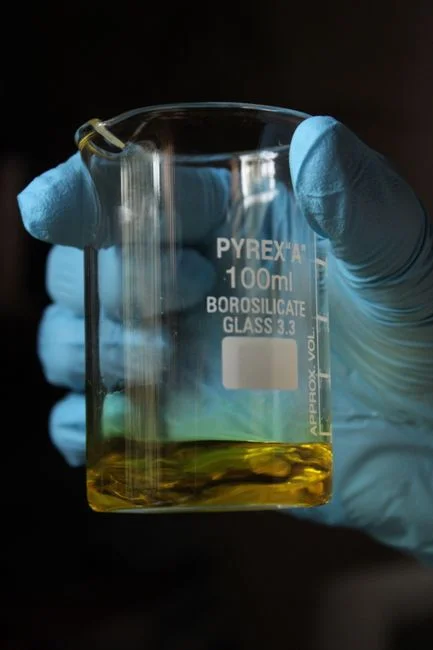
Full-scale design uses 25–35 minutes HRT—roughly 1.25–1.75× the lab value—to preserve the 80.8% COD and 85.5% turbidity targets under real hydraulic conditions. The 20.3-minute lab retention time from Mirshahghassemi 2017 does not translate directly to a full-scale cell because non-ideal mixing, electrode edge effects, and flow distribution losses extend the time required to reach the same removal efficiency.
The reactor volume calculation is straightforward: V (m³) = Q (m³/h) × HRT (h). For a 5 m³/h car wash flow at 0.5 h HRT, the EC cell is 2.5 m³, typically split into two 1.25 m³ stages in series to prevent short-circuiting and to allow intermediate pH adjustment. Electrode area scales with flow: target 0.3–0.6 m² of active anode surface per m³/h of feed at 4 mA/cm², which means a 5 m³/h car wash plant needs roughly 1.5–3.0 m² of plate area per stage, or about 8–12 plates 500 mm × 600 mm per cell at 10–15 mm spacing. Rectifier sizing follows from current density and electrode area: I = j × A. For 4.2 mA/cm² on 2 m² of iron plate, the cell draws 84 A. Cell voltage depends on solution resistivity (typically 5–20 Ω·cm for car wash effluent) and inter-electrode gap; for a 5 m³/h iron cell expect 30–60 V DC at 50–150 A, which means a 5–10 kW rectifier. Monopolar connection (used in Mirshahghassemi 2017) places every plate on its own cable and delivers higher current per plate; bipolar connection stacks plates in series with only two end-electrodes cabled, reducing wiring cost at the expense of a more uniform plate-quality requirement. For a 5 m³/h installation handling wash water with high detergent loading, an automatic chemical dosing system ahead of the EC cell can stabilize pH and chloride within the 6.5–8.0 window where the iron- and aluminum-electrode chemistries both perform.
| Design Parameter | Lab Value (Mirshahghassemi 2017) | Full-Scale Design Value |
|---|---|---|
| HRT | 20.3 min | 25–35 min |
| Current density | 4.2 mA/cm² | 3–5 mA/cm² (Fe), 4–8 mA/cm² (Al) |
| pH | 7.3 | 6.5–8.0 |
| Electrode spacing | ~10 mm | 10–20 mm |
| Stages | Single cell | 2 stages in series |
| Electrode area per m³/h | — | 0.3–0.6 m² |
Energy Use, Sludge Yield and Operating Cost Benchmarks
Energy consumption for the EC step alone is 1.5 kWh/m³ at the Mirshahghassemi 2017 optimum of 4.2 mA/cm²; adding an electro-Fenton polishing step drops further polishing energy to 0.5 kWh/m³ while pushing COD removal from 80.8% to 85.6%. At a US industrial tariff of US$0.10/kWh, EC energy cost is roughly US$0.15/m³ treated, before electrode wear and sludge handling are added.
Electrode consumption scales with current density through Faraday's law: at 4.2 mA/cm² with iron anodes, expect 0.05–0.20 kg Fe consumed per m³ treated, depending on influent chloride (which boosts conductivity and lowers cell voltage but slightly raises anode dissolution). Aluminum is consumed at roughly 70% of the iron mass rate, but aluminum stock is 30–50% more expensive per kilogram, so electrode OPEX is usually within ±10% of iron for the same throughput. Sludge yield for car wash EC is 0.3–1.0 kg dry solids per m³ treated—lower than the 1.5–3.0 kg DS/m³ typical of chemical coagulation, but still requires dewatering. A plate and frame filter press is the standard dewatering step, producing a 20–25% DS cake that can be disposed of as non-hazardous solid waste at most US POTWs.
Integrating EC into a Car Wash Water-Reuse Train
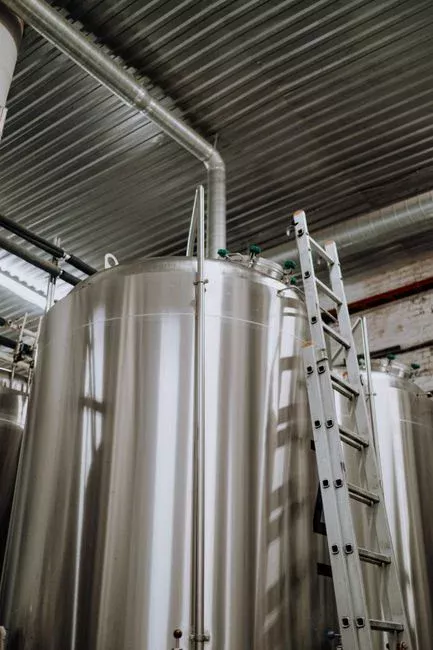
EC functions as a single component within a larger water-treatment sequence rather than a stand-alone solution. The full sequence for an 80% recycle target runs: coarse screen (2 mm) → equalization tank (8–24 h HRT) → EC cell → dissolved air flotation (DAF) system or high-efficiency lamella clarifier for float and sludge separation → ultrafiltration (UF) water treatment system at 0.03 µm PVDF for polishing → UV sterilizer at 40 mJ/cm² dose for disinfection → reuse storage. The EC + DAF combination typically drops turbidity from 200–500 NTU raw wash water to 5–15 NTU; UF then reduces that to below 1 NTU permeate, which is the threshold needed for safe reuse on rinse cycles without streaking.
For a discharge-only configuration with no recycle target, EC plus DAF is often sufficient to meet EPA categorical pretreatment limits under 40 CFR Part 401–471 for car wash discharges to a POTW. Total reuse-train hydraulic residence time including the UF loop typically adds 8–12 minutes, so a 5 m³/h wash bay can be served by a 6–8 m³/h hydraulic-capacity treatment skid sized for the 1.0–1.2 turndown typical of weekend-versus-peak demand patterns. UV dose verification at 40 mJ/cm² on the reuse storage loop also delivers ≤10 CFU/100 mL total coliform, which is the typical state-level threshold for non-potable vehicle-wash reuse in the US Southwest (per Arizona DEQ R18-5, 2025).
What to Ask Your EC Vendor Before You Sign
Four questions separate a defensible proposal from a generic kW quote. First, ask for a pilot or jar-test treatability study on your actual wash water—vendor guarantees based on Mirshahghassemi-style synthetic feed are not transferable because real car wash effluent has variable chloride (200–800 mg/L), TDS swings from rain to snow-load, and oil-in-water emulsions that change with soap inventory. Second, confirm in the proposal the electrode material, plate count, spacing, and rectifier sizing (voltage and current, not just "5 kW")—these four numbers define the cell's actual operating envelope. Third, request a complete mass balance: kg Fe or Al consumed per day, kg dry sludge produced per day, and the downstream dewatering plan, because sludge handling is the single most underestimated OPEX line in EC proposals. Fourth, specify a PLC with pH, ORP, conductivity, and current logging—EC performance collapses silently if pH drifts outside 6.5–8.0, and without trend data the operator has no warning until the clarifier overflow turns milky.
Frequently Asked Questions
What removal efficiencies can an electrocoagulation system for car wash wastewater achieve on COD and turbidity?
At the Mirshahghassemi 2017 optimum—pH 7.3, 4.2 mA/cm², 20.3 minutes on four iron electrodes in monopolar arrangement—COD removal is 80.8% and turbidity removal is 85.5%, with specific energy consumption of 1.5 kWh/m³. Phosphate removal at the same operating point is 94.9%.
Frequently Asked Questions
How effective is electrocoagulation for car wash wastewater?
Electrocoagulation (EC) is highly effective at destabilizing emulsified oils and suspended solids common in car wash effluent. When optimized, EC systems typically achieve removal efficiencies of 85% to 98% for Total Suspended Solids (TSS), 80% to 95% for Oil and Grease (O&G), and significant reductions in heavy metals and chemical oxygen demand (COD).
Should I use iron or aluminum electrodes for car wash wastewater treatment?
Aluminum electrodes are generally preferred for car wash applications because they produce less sludge and are more effective at removing light oils and surfactants. Iron electrodes are more efficient at breaking down heavy organic loads and iron oxides can provide a better floc for settling, but they often leave residual color in the treated water, which may be undesirable for wash cycle reuse.
How much electricity does an electrocoagulation system use per cubic meter?
The energy consumption for an EC system typically ranges from 1.5 kWh to 5.0 kWh per cubic meter of treated wastewater. This value fluctuates based on the electrical conductivity of the influent, the specific current density applied to the electrodes, and the required removal rates for contaminants.
Can electrocoagulation alone recycle car wash water for reuse?
While EC is an excellent primary treatment step for removing bulk pollutants, it is rarely sufficient as a standalone solution for high-quality water reuse. To meet standards for spot-free rinsing or high-pressure spray systems, EC must be paired with secondary processes such as multimedia filtration, activated carbon adsorption, or reverse osmosis to remove dissolved salts and fine particulates.
How much sludge does an electrocoagulation system produce?
Sludge production in EC systems is significantly lower than in chemical coagulation, typically yielding 0.2 to 0.5 kilograms of dry sludge per cubic meter of wastewater treated. The resulting sludge is often more compact and exhibits superior dewatering characteristics compared to the voluminous, gelatinous sludge produced by traditional chemical flocculation methods.