Why Regina Is a Special Case for Effluent Treatment Plant Design
An effluent treatment plant in Regina in 2026 typically combines screening, DAF or lamella clarification, biological treatment (MBR or SBR), and UV or chlorine dioxide disinfection to meet Saskatchewan Water Security Agency discharge limits. Cold-climate design is the binding constraint: biological reactors must be enclosed or heated to maintain 10–15°C, and flow equalization is critical to absorb spring runoff and BOD spikes common to Prairie operations.
Regina's design ambient drops below -35°C for sustained winter periods, with frozen-lagoon risk for any uncovered basin and sub-zero influent reaching headworks from January through March. Approximately 40% of wastewater treatment plants face significant compliance challenges (waterandwastewater.com, 2025) — in Saskatchewan the percentage climbs higher for any facility that ignores cold-climate design, because biological kinetics slow by roughly 50% when reactor temperature drops from 15°C to 5°C. Buried or building-enclosed package units are the default for flows under 500 m³/day, while larger plants use heated reactor halls and insulated external tanks.
The dominant industrial wastewater sources in Regina and southern Saskatchewan are food processing (canola crushing, dairy, and meat packing), potash and mining support services, oil and gas field services, and light manufacturing. Each carries a distinct pollutant profile: high FOG and BOD from food; high TDS and sulphate from potash; emulsified hydrocarbons and phenols from oil services (phenol-degrading bacteria such as Aeromonas sp. tolerate up to 800 mg/L, per a 2016 study in the International Journal of Current Research in Biosciences and Plant Biology). The Saskatchewan Water Security Agency (WSA) is the primary discharge regulator for industrial effluent to surface water; plants discharging to the City of Regina sanitary sewer must also meet the municipal POTW pretreatment bylaw.
Saskatchewan Discharge Limits and Compliance Basis for 2026
WSA industrial discharge permits in 2026 typically set envelope limits on BOD₅, TSS, total residual chlorine, oil and grease, total phosphorus, ammonia, pH 6.0–9.0, and temperature; the permit writer sets site-specific numbers based on receiving water body class and effluent volume. Engineers should confirm the exact limits against current WSA guidance and the project's specific permit when published, because provincial parameters shift as the WSA updates its Saskatchewan Environmental Quality Standards. For plants tied into the City of Regina sanitary sewer, the municipal POTW pretreatment bylaw governs BOD, TSS, FOG, pH, metals, and temperature; discharge to sewer typically does not include ammonia or total phosphorus because the POTW handles those centrally.
To frame what "poorly treated" looks like, a urea fertilizer outfall study (Scientific Research Publishing, 2023) measured turbidity 267 NTU, TDS 2,658.18 mg/L, ammonia 20 mg/L, and sulphates 26.80 mg/L — all of which would fail any reasonable WSA or POTW envelope. That same study's heavy-metal screen showed Cd 1.7 mg/L, Cr 5.1 mg/L, Cu 4.6 mg/L, Fe 2.0 mg/L, Pb 9.2 mg/L, and Ni 4.7 mg/L, which underlines why metals monitoring belongs on every Regina ETP compliance plan, not just food and dairy sites.
Compliance is not a monthly sample — it is a continuous instrument loop. Inline TSS, COD, pH, conductivity, and flow meters on the treated-effluent line, paired with automated shutoff on excursion, are the standard 2026 expectation from WSA. For higher-tier permits, a refrigerated auto-sampler retains 24-h composites for confirmation analysis.
| Parameter | Typical WSA Surface-Water Limit (industrial) | Typical Regina POTW Pretreatment Limit | Why It Matters |
|---|---|---|---|
| BOD₅ | ≤ 25–30 mg/L | ≤ 250–500 mg/L (local bylaw) | Oxygen demand on receiving water / POTW |
| TSS | ≤ 25–30 mg/L | ≤ 250–350 mg/L | Solids loading and biosolids |
| Oil & Grease / FOG | ≤ 5–10 mg/L | ≤ 50–100 mg/L | Coating, blockage, fire risk |
| Total Residual Chlorine | ≤ 0.02–0.1 mg/L | Site-specific | Aquatic toxicity (dechlor required) |
| Ammonia (as N) | Site-specific, often ≤ 1–5 mg/L in winter | Generally not regulated at sewer | Winter oxygen demand in rivers |
| Total Phosphorus | Site-specific, often ≤ 1 mg/L | Generally not regulated at sewer | Eutrophication of Wascana Creek |
| pH | 6.0–9.0 | 6.0–11.0 (typical) | Pipe corrosion, biology upset |
| Temperature | Site-specific; thermal mixing zone limits apply | ≤ 40°C typical | Cold-shock and biology protection |
The Core Treatment Train: How a Regina ETP Is Actually Built
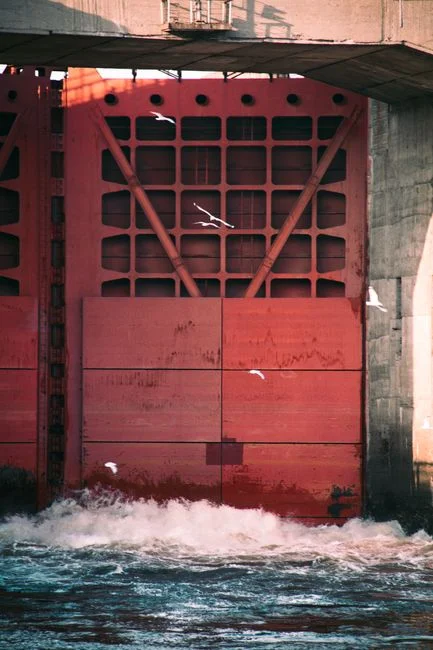
A 2026 Regina effluent treatment plant is built as a four-stage train: headworks, primary clarification, biological treatment, and polishing/disinfection. Each stage is sized to the upstream and downstream unit operation, not in isolation, and the cold-climate envelope wraps the whole train.
Stage 1 — Headworks screening. A rotary mechanical bar screen with 2–6 mm aperture removes rags, plastics, and fibrous debris that would otherwise rag up DAF pumps, blind lamella plates, and tear MBR membranes. For food and canola operations, this stage also drops rocks, seed hulls, and bone fragments that arrive in the sewer.
Stage 2 — Primary clarification. A DAF system sized from 4–300 m³/h across 13 standard models is the workhorse for FOG and light-floc removal; a lamella clarifier at 20–40 m/h surface loading and roughly 30% lower chemical use is preferred where the solids are heavier and FOG is moderate. DAF wins for canola and meat-packing effluents; lamella wins for mining-support runoff and light manufacturing with grit and metal-hydroxide floc.
Stage 3 — Biological treatment. Activated sludge, SBR, MBBR, or MBR, with design parameters including MLSS, F/M ratio, HRT, and SRT. For Regina, the reactor must be enclosed, buried, or in a heated hall so the biology never sees influent below 10°C. Selection among these four options is the central engineering decision of any 2026 ETP, and is the topic of the next section.
Stage 4 — Polishing and disinfection. UV, chlorination, or chlorine dioxide generation sized from 50 g/h to 20,000 g/h. UV is preferred for Regina food and dairy because it is effective against Cryptosporidium and Giardia with no DBPs; chlorination requires dechlorination before discharge and that adds a sulfur-dioxide dosing skid. The rotary mechanical bar screen upstream of DAF is typically the first item specified on the equipment list.
Choosing the Right Biological Process: MBR, SBR, MBBR, or CAS
For Regina in 2026, the process choice is driven by flow range, effluent quality target, available footprint, and how much cold-climate enclosure the budget can absorb. The four credible options are MBR, SBR, MBBR, and conventional activated sludge (CAS). An MBR membrane bioreactor system uses submerged PVDF membranes with sub-1 μm filtration, producing near-reuse effluent and shrinking the train footprint by roughly 60% compared to CAS. The MBR membrane bioreactor module is the field-replaceable element that operators swap out during the cold months when cleaning access is hardest.
SBR is the simplest of the four: one tank, timed phases, no separate clarifier, and easy to cover or bury — which is why it is a default pick for sub-500 m³/day Regina sites with intermittent flow. MBBR is robust to hydraulic and organic shocks and tolerates cold better than CAS because the biofilm carrier shields biomass, but it still needs a downstream clarifier or DAF for solids separation. CAS is the lowest CAPEX option above 1,000 m³/day and the largest footprint; it is also the most temperature-sensitive, and in Regina that means a fully enclosed heated hall with significant steam or hot-water capacity from October through April.
| Process | Footprint vs CAS | Effluent Quality (BOD₅/TSS, mg/L) | Cold Tolerance | Operator Skill | CAPEX Band (2026, Regina, turnkey) |
|---|---|---|---|---|---|
| MBR | ~40% (60% smaller) | < 5 / < 1 (reuse-capable) | Good — enclosed reactor + membrane scour | High (membrane care) | Highest of the four |
| SBR | ~60% (40% smaller) | < 20 / < 30 | Very good — single covered tank | Moderate (timed controls) | Moderate |
| MBBR + DAF/lamella | ~70% (30% smaller) | < 25 / < 30 | Good — biofilm carrier helps | Moderate | Moderate |
| CAS (enclosed) | 100% baseline | < 25 / < 30 | Poor below 10°C unless heated | Low–moderate | Lowest above 1,000 m³/day |
Decision rule of thumb for Regina: under 500 m³/day, default to SBR or packaged MBR; 500–2,000 m³/day with a reuse target, default to MBR; 2,000 m³/day and above, run CAS/MBBR economics and pick the lower 20-year OPEX after heat, sludge, and chemical costs are added.
Cold-Climate Design Checklist for Regina Plants
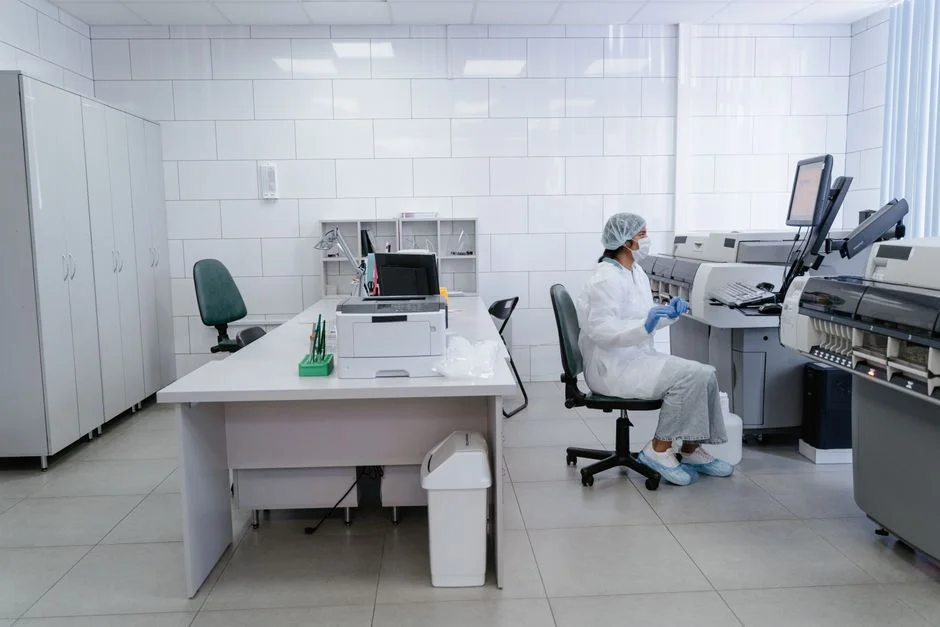
Every Regina ETP design in 2026 must answer the same cold-climate questions before the equipment list is locked. The checklist below is what to carry into a design review with WSA or with a Regina EPC.
First, enclose or bury biological reactors to hold 10–15°C; heat loss from an uninsulated 1,000 m³ steel tank at -30°C ambient is severe, so the realistic answer is a building envelope, not just insulation wrap. Second, size equalization for 2–3× average dry-weather flow so the plant can absorb spring runoff, snowmelt ingress from leaky manholes, and a Tuesday batch dump from the canola press. Third, insulate and heat-trace every exposed pipe, valve, and flow meter; place chemical dosing skids indoors, including the automatic chemical dosing system used for pH correction and phosphorus precipitation. Fourth, plan sludge handling for winter: covered sludge tanks, a heated dewatering room, and a plate and frame filter press sized from 1–500 m² of filter area so cake can be hauled off frozen rather than as liquid. Fifth, specify climate-rated electrical: PLC panels and field instrumentation in NEMA 4 or IP54 enclosures with cabinet heaters, and select instruments that are rated to -40°C operating temperature.
CAPEX and OPEX Bands for a 2026 Regina Installation
For procurement and budget sign-off, here is what 2026 Regina ETP projects are actually coming in at, broken down by scale. These are engineering-judgement ranges based on typical packaged-plant pricing and do not include building HVAC, site civil, or the WSA permit fee.
Small packaged systems at 1–80 m³/h are well served by the WSZ underground package plant, a turnkey low-CAPEX option for hotels, hospitals, residential developments, and small factories where buried installation eliminates the cold-climate enclosure problem. Mid-scale MBR at 10–2,000 m³/day carries higher CAPEX than CAS, but the OPEX case is driven by lower sludge disposal and reuse-quality water that offsets freshwater purchase; the OPEX gain is largest for sites with a process water demand that can accept MBR permeate. The high-efficiency sedimentation tank cuts sludge volume going to the plate press, and that directly reduces haul-off cost in a province where the nearest landfill can be 50+ km away.
| Plant Scale | Typical Daily Flow | Process (typical 2026 pick) | CAPEX Band (turnkey, Regina) | Dominant OPEX Drivers |
|---|---|---|---|---|
| Small packaged / underground | 1–80 m³/h | WSZ packaged or SBR | Lowest of the three bands | Electricity, sludge haul-off |
| Mid-scale, reuse target | 10–2,000 m³/day | MBR | Highest per m³ of the three | Aeration energy, membrane replacement, chemical precipitation |
| Large conventional | > 2,000 m³/day | CAS or MBBR + DAF | Lowest per m³, highest total | Heat, blower energy, sludge dewatering |
Across all three bands, the two OPEX levers worth specifying up front are VFDs on aeration blowers and chemical-optimization controls on the phosphorus precipitation skid. Skipping those is where 2026 Regina ETPs bleed budget in years 2 and 3.
Frequently Asked Questions
What is the typical WSA discharge envelope for a Regina industrial ETP in 2026?
The typical WSA envelope covers BOD₅, TSS, total residual chlorine, oil and grease, total phosphorus, ammonia, pH 6.0–9.0, and temperature, with site-specific limits set in the permit based on the receiving water body. Engineers should confirm the exact limits against current WSA guidance when published, because the underlying Saskatchewan Environmental Quality Standards are updated periodically.
Which biological process is best for a Regina site under 500 m³/day?
For Regina sites under 500 m³/day, SBR and packaged MBR are the two defaults; SBR wins on simplicity and ease of burial for cold-climate operation, and MBR wins on effluent quality and reuse potential. Both are easier to enclose for a -35°C ambient than a CAS basin would be at the same flow.
How much equalization does a Regina ETP actually need?
Size equalization for 2–3× average dry-weather flow to absorb spring snowmelt ingress and process batch discharges. Under-sizing equalization is the single most common cause of January-to-April biological upsets on Prairie ETPs.
What is the cold-climate design minimum for biological reactors in Regina?
Maintain 10–15°C in the biological stage by enclosing, burying, or housing the reactor in a heated building. The 50% loss of biological rate when reactor temperature drops from 15°C to 5°C is the reason this is non-negotiable for surface-discharge permits.
How does an MBR cut OPEX on a 2026 Regina ETP?
MBR cuts OPEX through lower sludge yield (less haul-off), reuse-quality permeate that offsets freshwater purchase, and a smaller building envelope due to the roughly 60% footprint reduction versus CAS. The trade-off is membrane replacement and aeration energy, both of which should be priced into the 20-year OPEX comparison before MBR is selected over CAS at flows above 2,000 m³/day.