Why Lawrenceburg Pulp & Paper Mills Are Re-evaluating Primary Clarifiers in 2026
Pulp and paper wastewater is characteristically high in total suspended solids (TSS), biochemical oxygen demand (BOD), chemical oxygen demand (COD), color, wood fibers, and inorganic fillers (per Ecologix, 2024). Lawrenceburg-area mills discharge to the Duck River watershed under Tennessee Department of Environment and Conservation (TDEC) NPDES permits, where tightening color, TSS, and whole effluent toxicity (WET) expectations are pushing operators toward flotation-based primary treatment. Conventional gravity clarifiers were designed for settleable suspended solids — grit, primary sludge, dense inorganics — and they struggle when the dominant particles have densities close to water, which is exactly the profile of hydrated cellulose fibers, broke, and filler clay carryover from the paper machine. In 2026, the economic backdrop has shifted: recovered fiber has a market value tied to virgin pulp substitution credits, and the cost of fresh process water makes closed-loop white water treatment a measurable OPEX line. The combination of tighter discharge limits and a recovered-fiber revenue line is forcing a re-evaluation of clarifier-based primary trains across the Tennessee mill belt.
How a DAF Actually Clarifies Fiber-Laden Mill Water
A dissolved air flotation system clarifies fiber-laden mill water by exploiting a controlled pressure drop. Pressurized recycle water is saturated with air in a saturator vessel, then released at atmospheric pressure inside the flotation tank. The pressure drop forces dissolved air out of solution as a cloud of microscopic bubbles — typically 10–100 µm in diameter — that attach to suspended fibers, fines, and filler particles (per Dagyee, 2024). Because the bubble–particle aggregate is buoyant, the suspended mass rises to the surface in minutes, where a skimmer sweeps a thick sludge blanket into a hopper. Clarified water exits beneath the blanket at the bottom of the tank, ready for biological polishing or reuse in the mill.
DAF technology provides a high-efficiency alternative to settling for fiber-laden streams. For pulp and paper operations, a DAF unit serves two distinct roles: as a process machine recovering saleable fiber from cloth wash water and broke thickener overflow, and as a wastewater TSS/COD removal step ahead of biological treatment (per Dagyee, 2024). The densified float — roughly twice the solids content of clarifier underflow — directly reduces the hydraulic and volumetric load on downstream activated-sludge or moving-bed biofilm reactors. Micro-bubbles generated in the saturator are fine enough that they do not entrain surfactants into a stable foam, which is an operating advantage when treating pulp washing effluent that carries residual defoamer, sizing agent, and surfactant residues (per Dagyee, 2024). In practical terms, the DAF trades a tall, quiescent gravity basin for a compact, aerated tank with a saturator loop, a recycle pump, and a skimmer — a footprint typically 60–80% smaller than an equivalent clarifier at the same hydraulic throughput.
DAF vs Gravity Clarifier: A Head-to-Head for Pulp & Paper Streams
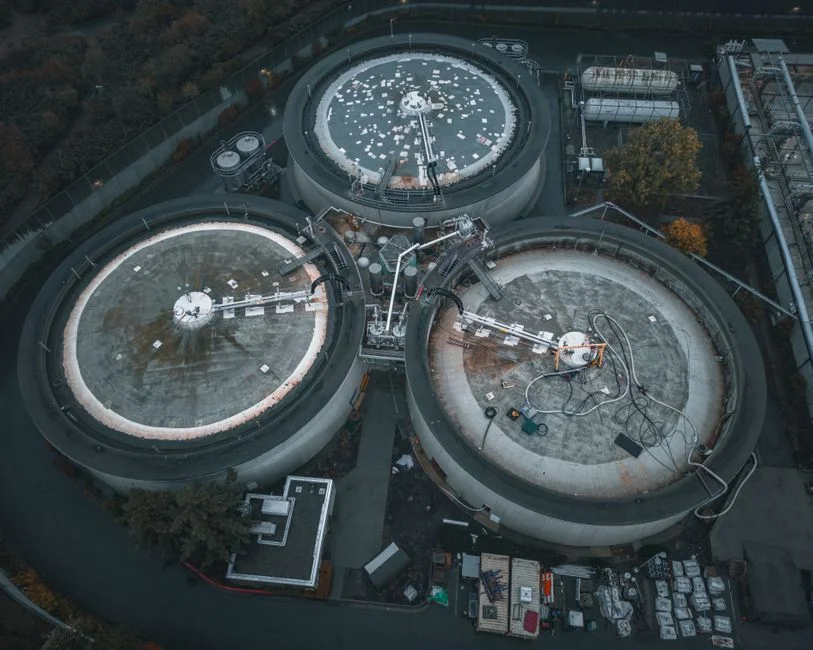
Most published comparisons treat DAF and clarifiers as generic alternatives. For a Lawrenceburg pulp and paper context, the eight parameters below are the ones a plant engineer actually has to defend in front of TDEC and mill management.
| Parameter | DAF | Conventional Gravity Clarifier |
|---|---|---|
| TSS removal efficiency | 90%+ on fiber streams (Ecologix, 2024; Dagyee, 2024) | Moderate; performance drops sharply when fiber density approaches water |
| Fiber recovery | Float blanket is a reusable fiber-rich stream suitable for return to stock prep | Underflow is a dilute slurry with limited reuse value |
| Footprint | Compact; suitable for retrofit inside existing mill buildings (Dagyee, 2024) | Large; usually requires a dedicated civil structure |
| Sludge density | Approximately 2× the solids content of clarifier underflow (Dagyee, 2024) | Dilute underflow, typically requires a separate thickening step |
| Chemical demand | Modest polymer for flocculation; otherwise low | Low; relies on gravity and long residence time |
| Sensitivity to flow swings | Tolerates moderate hydraulic variability; recycle ratio is the main tuning knob | Sensitive to peak flows; short-circuiting under shock loads |
| Retrofit ease | Commonly dropped into an existing clarifier bay or building footprint | Often the baseline; tube/lamella modules can boost capacity in place |
| Dominant OPEX driver | Recycle pump and saturator energy, polymer consumption | Sludge hauling and downstream thickening OPEX |
The two right-hand column items most often missed in generic comparisons are fiber recovery and downstream biological sizing. A DAF float returned to stock preparation offsets a fraction of CAPEX through fiber yield; a lamella clarifier alternative cannot do that because its underflow is too wet and too dilute to feed back into the headbox. The second, less obvious lever is the 2× sludge density: a denser float means a smaller recycle stream returning to the aeration basin, which in turn means a smaller oxidation tank and lower aeration blower energy. That cascade is rarely captured in vendor brochures but is exactly the line item an environmental manager in Lawrenceburg will be asked to quantify.
When a Conventional Clarifier Still Wins in a 2026 Lawrenceburg Mill
Conventional clarifiers remain the preferred choice for wastewater streams dominated by heavy grit, boiler blowdown solids, or inorganic settleables. If the wastewater is already low in fibers, a conventional clarifier — or a retrofitted tube/lamella module — remains the simpler and lower-CAPEX option. Existing clarifier basins with spare hydraulic capacity can frequently be upgraded with lamella plates to multiply their effective settling area before justifying a new DAF train. Many older integrated Lawrenceburg-area mills also run a hybrid configuration: a primary clarifier for grit and heavy solids, followed by a DAF for fiber and colloidal carryover. This is a legitimate design choice where influent characteristics swing widely between machine broke spills and routine white water. For mills evaluating this path, a lamella clarifier alternative covers the gravity-settling half of the train. For a broader cross-industry view of how the same trade-off plays out in fabricated metals, see this DAF vs clarifier decision framework for other industries.
Sizing a DAF for a Single Lawrenceburg Mill Line
The DAF line spans 4–300 m³/h across 13 standard models (HydropureWater product catalog, 2026), covering the typical single-line hydraulic envelope for a Kraft or recycled-fiber mill in the Tennessee valley. Four sizing drivers dominate the selection of a DAF for pulp and paper duty:
- Saturator pressure — sets the mass of air that can be dissolved per unit of recycle water; higher pressure raises removal efficiency at the cost of pump energy.
- Air-to-solids ratio — must be sufficient to lift the buoyant mass of incoming fibers and fillers; under-aeration leaves fines in the clarified stream.
- Hydraulic residence time — the flotation tank must give bubbles time to attach and rise; pulp streams with high fiber consistency typically need longer residence than municipal duty.
- Recycle rate — the fraction of clarified effluent that is pressurized and returned to the saturator; this is the main tuning knob during commissioning.
Inlet and outlet connection sizes on the Dagyee technical sheet run from DN50 at the smallest model up to DN300 on the largest units, with sludge and vent connections in the DN100–DN150 range (per Dagyee, 2024). For a Lawrenceburg mill line in the 50–150 m³/h band, this generally maps to mid-range DAF models sized to the dominant machine's white water flow, not the entire mill composite stream.
| DAF Sizing Driver | Role in Selection |
|---|---|
| Saturator pressure | Sets maximum dissolved air mass; trades energy for removal efficiency |
| Air-to-solids ratio | Determines whether fines are lifted or remain in clarified stream |
| Hydraulic residence time | Pulp duty typically requires longer residence than municipal duty |
| Recycle rate | Primary operational tuning knob; controls effluent level and skimmer performance |
| Flow range | 4–300 m³/h across 13 DAF models (HydropureWater catalog, 2026) |
2026 Cost and ROI Considerations for Lawrenceburg Mills
The procurement case for a DAF at a Lawrenceburg pulp and paper mill is built on three pillars: fiber-recovery revenue credit, sludge-handling OPEX reduction, and a smaller building footprint than a clarifier of equivalent capacity. The fiber-recovered DAF float can be returned to the stock preparation line as a fiber-yield credit, partially offsetting CAPEX — but the actual payback depends on local fiber pricing, which moves with virgin pulp markets and the mill's own furnish mix. The denser DAF float (roughly 2× the solids content of clarifier underflow, per Dagyee, 2024) cuts sludge disposal cost because there is less water to haul; clarifier underflow typically requires a thickening step before dewatering, and that step disappears with a DAF front-end. Energy use is dominated by the recycle pump and saturator, so a DAF does carry an electrical load that a quiescent clarifier does not — but that load is partially offset by a smaller aeration basin downstream. For a complete train, a filter press for DAF float dewatering is the typical downstream unit. Before signing a PO, Lawrenceburg procurement should run a wastewater permit checklist for Tennessee mills and review supplier qualifications against this DAF supplier selection guide.
Frequently Asked Questions
Is DAF or a clarifier better for pulp and paper wastewater in Lawrenceburg?
For fiber-laden streams, DAF is the stronger default in 2026. DAF removes 90%+ of TSS on paper-mill effluent (Ecologix, 2024; Dagyee, 2024), recovers saleable fiber from white water, and produces a sludge blanket roughly twice as dense as clarifier underflow, which shrinks downstream biological-stage sizing.
Can a DAF recover saleable fiber for return to the paper machine?
Yes. Paper mills were among the first industrial users of DAF specifically because the float blanket carries recoverable fiber suitable for return to stock preparation, reducing raw furnish cost (per Dagyee, 2024). A clarifier underflow is too dilute and too contaminated with grit to feed back to the headbox.
How much smaller is a DAF than an equivalent clarifier?
DAF units are markedly more compact than gravity clarifiers of equal hydraulic capacity, which is why DAF retrofits frequently fit inside existing mill buildings without new civil work (per Dagyee, 2024). The DAF line spans 4–300 m³/h across 13 models, covering typical single-line mill capacities.
Does a DAF work with TDEC NPDES permit limits on the Duck River?
Yes. Higher TSS and color removal upstream of biological treatment reduces load on the aeration basin and makes it easier to hold the mill within its TDEC NPDES permit envelope, particularly for color and TSS parameters that are tightening across the Duck River watershed.