Why a Packaged MBR Is the Default for a Melbourne Hotel
A packaged MBR wastewater treatment system is a skid- or container-mounted Membrane Bioreactor that combines an activated-sludge biological stage with submerged ultrafiltration (sub-1 μm pore size) in a single factory-built unit, producing reuse-grade effluent from a footprint that conventional activated-sludge plants cannot match. For a Melbourne hotel, that combination is decisive: the site constraints are tight, the receiving environment is sensitive, and the regulator increasingly expects reuse rather than disposal.
Three independent vendor positions converge on the same logic. Hydroflux Epco positions its MBR as delivering "high-quality effluent suitable for discharge into sensitive environments or reuse applications such as irrigation" (source: hydrofluxepco.au, 2026) — directly relevant to the Yarra and Port Phillip Bay catchments that frame most inner-Melbourne and bayside sites. MAK Water's MBR configuration is explicitly rated to "Class A+ treated effluent, suitable for reuse in 'risk category high' applications or for discharge to sensitive environments" (source: makwater.com.au, 2026). Imemflo publishes a hotel-specific reference: a 200-bed five-star installation running at 250 m³/d with 90–95% contaminant removal on submerged hollow-fibre membranes (source: imemflo.com, 2026).
Four site-level factors make MBR the default rather than an option in a Melbourne hotel context: (1) small setbacks and heritage overlays that rule out deep burial or large aeration basins; (2) council and water-authority pressure to reuse rather than discharge; (3) variable hotel loading from function and conference peaks that demands a robust equalisation buffer; and (4) a documented 60% footprint reduction versus conventional activated sludge (HydropureWater product specification, 2026), because the membrane cassette eliminates the secondary clarifier entirely.
Melbourne's Regulatory Frame: EPA Victoria, Water Authorities and Reuse
A packaged MBR STP for a Melbourne hotel touches three approval layers in parallel, and any one of them can stall a permit if mis-sequenced. The Environment Protection Authority (EPA Victoria) administers the Environment Protection Act 2017 and the SEPP (Waters), which sets the receiving-water quality objectives and the reuse framework; the relevant retail water authority — Yarra Valley Water, South East Water, Greater Western Water or Melbourne Water for trade waste — issues a discharge or trade-waste consent; and the local council issues the planning permit, often with conditions that flow back into the plant specification (source: EPA Victoria, 2026).
The reuse class drives the process train. Under the Victorian recycled-water risk framework, Class A+ is required for indoor dual reticulation (toilet flushing, cooling-tower make-up) and is the default expectation for hotel landscape irrigation in sensitive catchments; Class A covers restricted outdoor reuse; Class C is limited to subsurface or low-risk applications (source: EPA Victoria Guidelines for Wastewater Reuse, 2026). An MBR with submerged UF is the only one of the three common packaged processes that reliably achieves Class A+ in a single train; MBBR and SBR typically land at Class C and would need tertiary polishing (source: MAK Water product range, 2026).
Two parallel critical-path items must be coordinated early. First, the dual reticulation — coloured pipe, backflow prevention, and a separate rainwater top-up — is a civil scope that the STP supplier must hand off to the hydraulic consultant, not a builder's afterthought. Second, the trade-waste agreement with the water authority sets hydraulic loading limits, discharge-quality limits, the sampling point, and the question of whether the MBR permeate is accepted as-is or requires further polishing. A defensible design target for a Yarra or bayside catchment is total nitrogen below 10–15 mg/L (per Hydroflux Epco RoadTrain MLE sizing guidance, 2026), achieved through an upstream anoxic zone with mixed-liquor return rather than a separate tertiary stage.
Sizing a Packaged MBR for a Hotel: A Worked Example
Take a 220-key full-service hotel in inner Melbourne, with a restaurant, conference floor and on-site laundry. The sizing logic below replicates the engineering basis a consultant would put in front of a building surveyor and a water authority reviewer.
- Per-room flow. Australian hotel benchmark: 0.45–0.6 kL per occupied room per day, covering guest bathroom, kitchen prep and housekeeping (HydropureWater field data, 2026).
- Average dry-weather flow (ADWF). 220 keys × 0.55 kL × 80% occupancy = ~97 kL/d base. Add a 15% uplift for function, restaurant and conference guests not in the room count → design ADWF ≈ 110–120 kL/d.
- Peak wet-weather flow (PWWF). Size the hydraulic train for 2.5–3.0× ADWF to absorb morning guest turnover, laundry cycles and conference breakouts — the flow-variability problem Imemflo flags for hotel wastewater (source: imemflo.com, 2026). At 3×, the equalisation buffer must hold ~330–360 kL/d instantaneous capacity, typically a 30–40 kL buffer tank upstream of the bioreactor.
- Hydraulic and organic load check. Domestic-strength BOD₅ of 250–350 mg/L and total nitrogen of 40–60 mg/L are typical hotel raw-sewage values (source: Hydroflux Epco RoadTrain design basis, 2026). At 110 kL/d, the daily BOD load sits at ~30–40 kg/d, well within the 60–1,000 EP modular envelope Hydroflux Epco publishes for the RoadTrain MBR (source: hydrofluxepco.au, 2026).
- Membrane area. Vendor flux rates for submerged PVDF hollow-fibre and flat-sheet UF typically run 15–25 L/m²·h at 20 °C for municipal-strength hotel sewage (HydropureWater product specification, 2026). Use the manufacturer's net flux for the specific module; the PVDF flat sheet MBR membrane module datasheet is the reference document to demand at tender.
Where the operator wants a separate laundry stream — Imemflo notes many hotels install a dedicated greywater plant for laundry to reduce the FOG and surfactant load on the biological stage (source: imemflo.com, 2026) — the design must show the flow split and the discharge point of the greywater reject. The table below summarises the design basis for the 220-key worked example.
| Parameter | Value | Source / basis |
|---|---|---|
| Keys | 220 | Project brief |
| Per-room flow | 0.45–0.6 kL/key/day | Australian hotel benchmark (HydropureWater field data, 2026) |
| Occupancy assumption | 75–85% | Inner-Melbourne full-service benchmark |
| Design ADWF (incl. function uplift) | 110–120 kL/d | Calculated |
| PWWF / peaking factor | 2.5–3.0× ADWF | Imemflo hotel flow-variability note (2026) |
| Equalisation buffer | ~30–40 kL | Holds 3× peak diurnal swing |
| Raw BOD₅ | 250–350 mg/L | Hydroflux Epco RoadTrain design basis (2026) |
| Membrane flux target | 15–25 L/m²·h | HydropureWater DF series product specification (2026) |
| Vendor modularity check | 60–1,000 EP per train | Hydroflux Epco RoadTrain (2026) |
MBR vs MBBR vs SBR for a Melbourne Hotel
MBBR and SBR will both come in cheaper on a tender, and a defensible design needs to show the client — and the council — why they were rejected. Imemflo names the three alternatives explicitly: MBR, MBBR and SBR (plus conventional ASP) for hotel wastewater (source: imemflo.com, 2026). The table below scores them on the six axes that matter in a CBD or bayside hotel context.
| Criterion | MBR (submerged UF) | MBBR (moving bed biofilm) | SBR (sequencing batch) |
|---|---|---|---|
| Reuse class achievable | Class A+ in a single train | Class C; polishing needed for A+ | Class C; polishing needed for A+ |
| Effluent TSS / turbidity | <1 μm filtrate, near-zero TSS | 10–30 mg/L TSS typical | 10–30 mg/L TSS typical |
| Footprint | ~60% smaller than conventional (no clarifier) | Moderate; carrier media volume adds tankage | Larger due to batch volume and equalisation |
| FOG sensitivity | Moderate — pre-screening essential | Higher — biofilm fouling risk | Higher — scum management needed |
| Operator skill | Membrane cleaning, TMP trending | Lower; media carrier inventory | Moderate; timer/sequencer logic |
| Noise / odour (CBD site) | Low; enclosed skid, fine-bubble aeration | Low to moderate | Higher; batch transfers and decanting |
| Lifecycle cost driver | Energy + membrane replacement | Lower energy, higher tankage cost | Lower energy, higher civil cost |
Sources: MAK Water product range (2026) for Class A+ / Class C ratings; Hydroflux Epco MBR benefits (2026) for clarifier elimination and sludge reduction; HydropureWater product specification (2026) for footprint and pore-size data. The honest trade-off: MBR draws more power for membrane aeration and the membrane cassette is a multi-year replacement item, but for a hotel on a tight CBD or bayside site with a Class A+ reuse requirement, MBR is the only one of the three that meets both the footprint and the reuse-class constraint in a single train — without bolting on a tertiary polishing stage that adds civil cost and a second compliance boundary.
Specifying the MBR Package: Membranes, Materials and Controls
A specification that survives tender review needs to lock down the items that vary most between vendors. The list below is what a consultant's specification should require, not what a vendor's brochure will offer by default.
| Item | Specification requirement | Source / rationale |
|---|---|---|
| Membrane chemistry | PVDF (polyvinylidene fluoride) | Chlorine tolerance, lifespan; HydropureWater DF series (2026) |
| Membrane form factor | Hollow fibre or flat sheet, both acceptable; match to skid geometry | Imemflo supplies both (2026) |
| Pore size | 0.1 μm flat sheet; ultrafiltration range for hollow fibre | HydropureWater product spec; sub-1 μm filtrate enables Class A+ |
| Aeration for scour | Coarse-bubble diffuser beneath membrane cassette, continuous during filtration | Fouling control; Imemflo integrated aeration box (2026) |
| Backwash + CIP | Automatic backwash, air scour, chemical clean-in-place loop on every train | Required for Class A+ compliance and membrane life |
| Nitrogen removal | Upstream anoxic zone with mixed-liquor return (MLE configuration) | Hydroflux Epco MBR process description (2026) |
| Phosphorus removal | Coagulant dosing point on the bioreactor if sensitive catchment | Hydroflux Epco MBR (2026) |
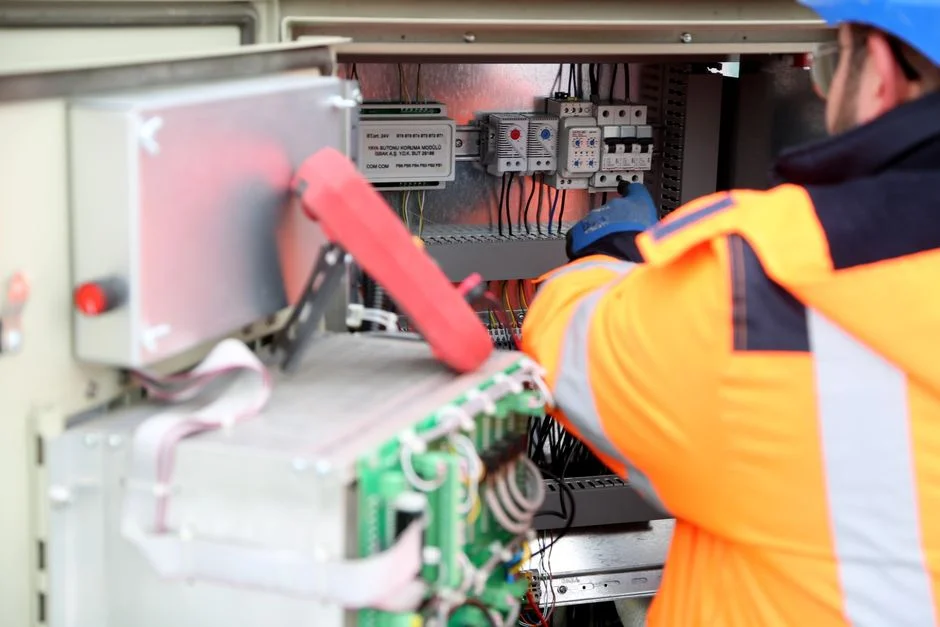
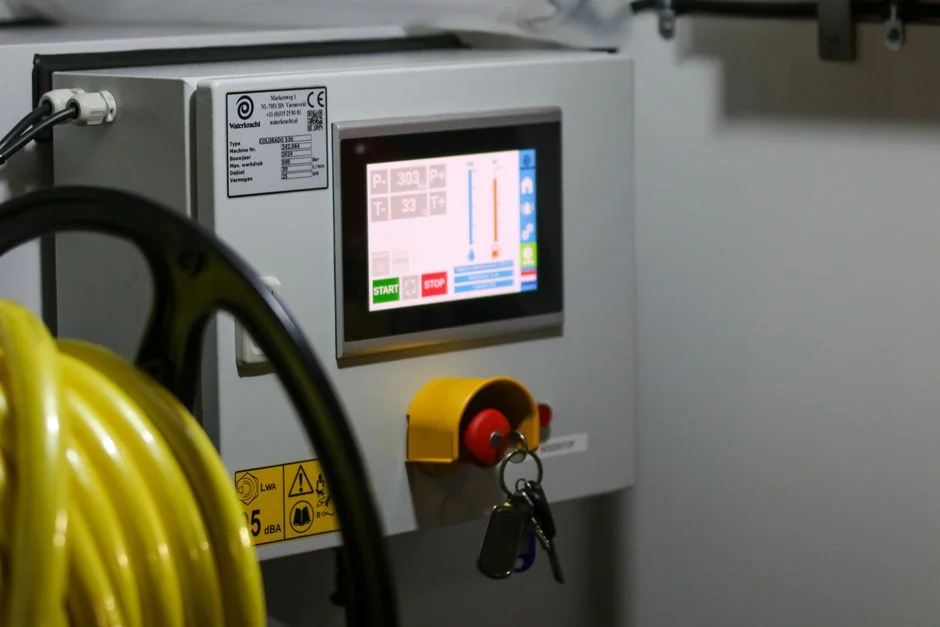
| Controls | PLC with remote telemetry, TMP trending, TMP-rise alarm, trend logging | Operational defensibility |
| Pre-treatment | 1–2 mm screening (e.g. rotary mechanical bar screen) upstream of the bioreactor | FOG and rag protection for membranes |
| Local service | Documented Victorian service team and spare-parts holding | Most brochures omit; minimum 24 h callout for a hotel |
Two further items belong in the spec but rarely do. First, demand a Factory Acceptance Test (FAT) before delivery, with a membrane integrity test on the actual cassettes shipped — not a generic certificate. Second, require the vendor to confirm the membrane model and replacement-part code at the time of tender, so the owner can budget the membrane-replacement cycle and the spare-parts shelf life from day one (HydropureWater product specification, 2026).
Cost, Installation and Whole-of-Life Considerations
CAPEX has three drivers that need to be kept on separate lines in the budget: the packaged skid itself, the civil works (tankage, buffer, dual reticulation, outlet structure), and the commissioning and validation by the water authority. The Karratha airport precedent is instructive: the supplier carried the design, manufacture, commissioning and WA Department of Health validation, then took a five-year O&M contract on the back of it (source: makwater.com.au, 2026). Bundling validation into the supply contract removes a major interface risk for a Melbourne hotel project.
OPEX is dominated by power for membrane aeration, the membrane replacement cycle (a multi-year interval, manufacturer-specific), chemical for clean-in-place, sludge handling, and operator hours. The offset is real: MBRs generate less sludge than conventional activated sludge because of the higher mixed-liquor suspended solids and longer sludge age, reducing handling and disposal cost (source: hydrofluxepco.au, 2026). On a hotel site, where sludge removal is a logistical nuisance, that saving is worth pricing in.
The packaging decision matters as much as the process decision for an inner-Melbourne site. Hydroflux Epco offers the RoadTrain in fully welded (factory-assembled, minimal site works, higher transport cost) or bolt-on (site-assembled under supervision, easier to land on a tight CBD access) configurations, with identical process performance (source: hydrofluxepco.au, 2026). For a heritage-listed CBD site with crane access constraints, the bolt-on option is often the lower-risk call. The full lifecycle picture — including the common operational pitfalls — is covered separately in MBR Wastewater Treatment System Troubleshooting: Common Issues & Solutions.
Vendor Shortlist Checklist for a Melbourne Hotel MBR
Convert the design basis into a procurement document. The checklist below is what a consultant should run against the three to five vendors invited to tender.
- Documentary evidence: EPA Victoria or water-authority reference projects in Victoria; a Class A+ reuse commissioning certificate; a documented Victorian-based service team with named contacts.
- Technical must-haves: PVDF membranes; automatic backwash and CIP loop; PLC with remote telemetry; FAT including membrane integrity test before delivery.
- Process depth: Vendor offers the full process menu (Extended Aeration, MLE, RBC, MBBR, MBR) and is recommending MBR for the right reasons, not because it is the only thing they sell (source: hydrofluxepco.au RoadTrain options, 2026; source: makwater.com.au process range, 2026).
- Integration capability: Willingness to coordinate with a separate greywater plant if the operator wants a laundry split (source: imemflo.com, 2026).
- Soft scoring: Operator training included, spare-parts lead time stated in writing, and a service-response time commitment for a Melbourne metropolitan site.
If a vendor cannot show a Victorian Class A+ reference, keep looking. A packaged MBR is only as good as the commissioning engineer who signs the validation certificate, and a fly-in commissioning team adds risk that does not show up on the tender comparison page. For a forward look at where the broader membrane sector is heading, the Membrane Technology Market Trends 2026: Size, Growth & Industrial Outlook briefing is a useful context read.
Frequently Asked Questions
What reuse class does a packaged MBR achieve for a Melbourne hotel?
A packaged MBR with submerged ultrafiltration achieves Class A+ under EPA Victoria's reuse framework in a single train, suitable for toilet flushing, cooling-tower make-up, and landscape irrigation on a hotel site (source: MAK Water, 2026; EPA Victoria Guidelines for Wastewater Reuse, 2026).
How do you size a packaged MBR for a hotel in Melbourne?
Start at 0.45–0.6 kL per occupied room per day, apply 75–85% occupancy, add 10–20% for function and restaurant uplift to get average dry-weather flow, then size the hydraulic train for 2.5–3.0× peak wet-weather flow with a 30–40 kL equalisation buffer for a 220-key hotel (HydropureWater field data, 2026).
Why is MBR preferred over MBBR or SBR for a hotel on a tight CBD site?
MBR delivers Class A+ reuse and a ~60% smaller footprint than conventional systems in a single train; MBBR and SBR typically achieve only Class C and would need tertiary polishing to meet the same reuse standard (HydropureWater product specification, 2026; MAK Water, 2026).
What is the typical contaminant removal rate for a hotel MBR?
A submerged-UF MBR on hotel wastewater achieves 90–95% removal of BOD, COD, TSS and pathogens, producing near-zero TSS filtrate at sub-1 μm pore size (source: imemflo.com, 2026; HydropureWater product specification, 2026).
How much does a packaged MBR cost to operate for a hotel?
Operating cost is dominated by membrane aeration power and the multi-year membrane replacement cycle, partially offset by lower sludge handling because MBRs produce less waste sludge than conventional activated-sludge plants (source: hydrofluxepco.au, 2026).
How often does an MBR membrane need to be replaced on a hotel plant?
Membrane replacement is a multi-year cycle driven by fouling history, cleaning discipline and raw-sewage FOG load; PVDF membranes tolerate routine chlorinated cleaning and typically outlast polyethersulphone alternatives in hotel service (HydropureWater product specification, 2026).