Why Carpet-Mill Sludge Is a Separate Engineering Problem
Carpet manufacturing wastewater sludge treatment centers on dewatering two distinct streams: iron-hydroxide sludge from Fenton pretreatment (0.3–0.6 kg dry solids per kg H2O2 dosed) and waste-activated sludge with latex and SBR fines from the DAF + MBR polishing train. A plate-and-frame filter press for carpet-mill iron sludge sized to 55–60% moisture cake is the 2026 standard; screw and belt presses top out at 75–80% and are uneconomic for hauling. Full-train CAPEX runs USD 220–380 per m³/d installed, with sludge disposal at roughly USD 35/tonne for cement-kiln co-processing.
The uncomfortable truth hits a carpet-mill engineer only after the liquid stream is stable. The same Fenton oxidation system for carpet manufacturing wastewater (2026 process) that takes COD from 3,200 mg/L down to 85 mg/L also generates 240–480 kg DS/d of iron sludge at an 800 m³/d plant on a 1,000 mg/L H2O2 dose. Three chemically distinct solids loads enter the back end: Fenton Fe(OH)3 precipitate, DAF float (latex, SBR fines, fiber lint), and MBR waste-activated sludge. Each behaves differently in a press. Latex and SBR backing residues are slowly biodegradable and produce a stringy WAS that blinds belt-press belts within hours if conditioned incorrectly. A mill that solved its liquid-side discharge still faces a USD 35–110/tonne disposal decision on the back end, and that decision — not the aeration tank — is what drives 2026 sludge-train OPEX.
Sludge Stream Characterization: Three Streams, Three Profiles
Fenton Fe(OH)3 dominates the mass balance but is the easiest stream to dewater once conditioned. It runs 0.3–0.6 kg DS/kg H2O2, carries 30–45% DS as iron, and shows a specific resistance to filtration of 1–5 × 10¹² m/kg — a value that responds sharply to cationic polyacrylamide at 3–8 kg/t DS, with 40–60% charge-density CPAM being the workhorse (HydropureWater field data, 2026).
DAF float is the contrarian stream: 2–6% DS as-received, dominated by latex and SBR polymer fragments, with a high organic fraction of 60–80% VS/DS. It floats, dewaters poorly without thickening, and consumes anionic or non-ionic polymer — the opposite charge demand of the Fenton sludge. A DAF flotation thickening step for polymer-laden industrial sludge ahead of the press is typically the difference between 80% and 90% float capture on a carpet line.
MBR waste-activated sludge at 0.8–1.5% DS, with mixed-liquor suspended solids of 8,000–12,000 mg/L and a BOD5/COD ratio around 0.25, is the most biologically active and odorous stream. Dual-polymer conditioning (a coagulant followed by a flocculant) is standard because the MLSS carries both colloidal biological solids and entrained latex fragments. A jar-test protocol of 5–10 g/L sample, 100–500 rpm mixing, and 30–60 s of polymer contact time is the right starting point before any press selection; the dose that delivers a clear supernatant and a 5–10 mm floc is the dose the plant should run.
| Parameter | Fenton Fe(OH)₃ | DAF float | MBR WAS |
|---|---|---|---|
| Yield basis | 0.3–0.6 kg DS/kg H₂O₂ | 2–6% DS as-received | 0.8–1.5% DS from membrane tank |
| Solids composition | 30–45% Fe, mostly inorganic | 60–80% VS/DS (latex, SBR, lint) | ~70% VS/DS, MLSS 8,000–12,000 mg/L |
| Filtration resistance | 1–5 × 10¹² m/kg | Floats, dewateres poorly raw | Compressible, mid-range |
| Polymer demand | 3–8 kg/t DS cationic CPAM | 5–10 kg/t DS anionic/non-ionic | 6–12 kg/t DS dual-polymer |
| Target moisture on plate press | 55–60% | 60–70% (after thickening) | 60–65% |
Dewatering Technology Comparison for Carpet-Mill Sludge
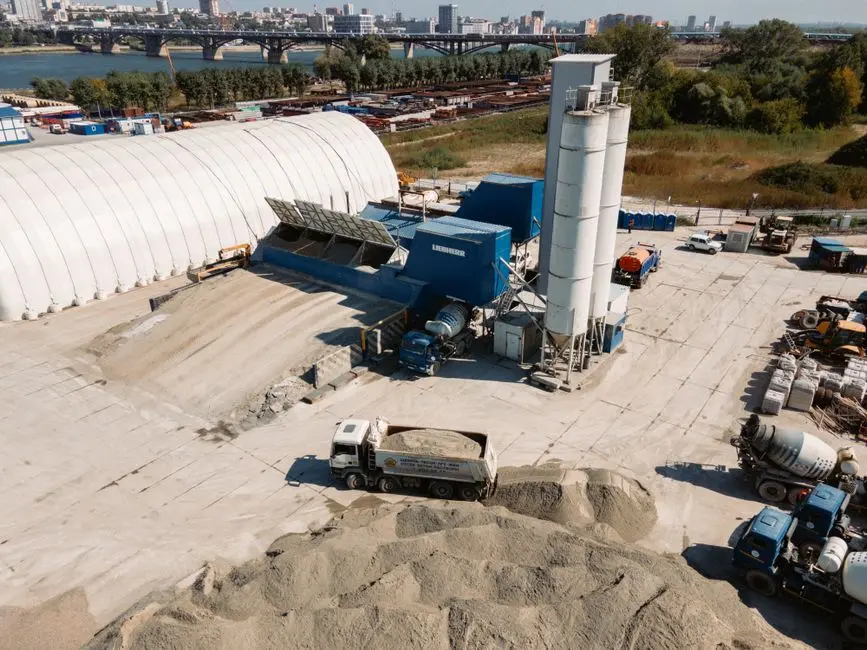
Plate-and-frame filter press is the 2026 benchmark for carpet-mill iron sludge. On Fenton Fe(OH)3 it reaches 55–60% moisture cake, on mixed WAS 60–65%, and is offered in 1–500 m² filtration area footprints. The trade-off is cycle time (90–180 min per batch) and cloth wash frequency, but cake dryness pays for both at any disposal gate fee above USD 20/tonne.
Screw press sits at 75–80% moisture on Fenton sludge, draws only 0.5–2 kW, and has the lowest CAPEX of the four options — but cake that wet is uneconomic to haul. Screw press belongs on a carpet mill only when disposal is on-site (landfill on owned property, composting, or land application that the mill controls).
Belt filter press runs 78–85% moisture, dewatering by gravity-then-shear across a moving cloth, with the lowest CAPEX and the highest polymer demand at 8–15 kg/t DS. Latex and SBR fines blind the belt within hours if conditioning is wrong, and operators typically lose 2–4 hours per shift to wash-water cycles. Belt press earns its place only on mills below 200 m³/d with cheap, local disposal.
Decanter centrifuge handles 70–78% moisture and tolerates variable feed better than any press, but the CAPEX band of USD 80K–250K and 15–45 kW power draw push it out of most carpet-mill budgets. The decision rule is direct: pick a plate press when disposal cost exceeds USD 20/tonne or when Fenton iron sludge exceeds 100 kg DS/d; pick a screw press only when disposal is on-site or free; pick a belt press only at small flows; pick a centrifuge only when feed variability or footprint rules out the others.
| Technology | Moisture (Fenton) | Polymer dose | Power | CAPEX band (2026) | Best-fit case |
|---|---|---|---|---|---|
| Plate-and-frame filter press | 55–60% | 3–8 kg/t DS | Batch, low | USD 40K–200K | Disposal > USD 20/t or Fenton sludge > 100 kg DS/d |
| Screw press | 75–80% | 2–5 kg/t DS | 0.5–2 kW | USD 15K–60K | On-site disposal; sub-300 m³/d |
| Belt filter press | 78–85% | 8–15 kg/t DS | 1–4 kW | USD 20K–80K | Small flow, cheap disposal, no latex |
| Decanter centrifuge | 70–78% | 4–10 kg/t DS | 15–45 kW | USD 80K–250K | Variable feed, tight footprint, high OPEX tolerance |
Sizing the Plate Press: From Sludge Mass to Filtration Area
The 240–480 kg DS/d figure from the Fenton mass balance becomes a filter-press selection once you apply a flux rate. Expect 8–12 kg DS/m²·h on Fenton sludge with adequate cationic polymer conditioning and 4–7 kg DS/m²·h on mixed WAS plus float. At 360 kg DS/d — the midpoint of the Fenton-only band — and 10 kg DS/m²·h, an 8-hour-per-day press operation needs about 4.5 m² of filtration area. That places the plant squarely in a small-format press (1–10 m² range).
Twenty-four-hour operation cuts the required area to roughly 1.5 m², but cloth-wash logistics, shift staffing, and cake-handling windows push the realistic design to 8–16 h/day on a larger unit. The 5 m² press selected for the 800 m³/d case study below reflects exactly that compromise: a single shift, batch operation, with the rest of the day open for cloth wash and maintenance. Downstream, a chute to a roll-off container takes 58%-moisture cake at roughly 1,100 kg/m³ — a 10–15 m³ container handles a full week of solids at the 800 m³/d scale.
Field Case: 800 m³/d Carpet Mill, South Asia (2024 Retrofit, 2026 Operating Data)
An 800 m³/d carpet line in South Asia commissioned an equalization + Fenton + DAF + MBR train in 2024 (HydropureWater field data, 2026). Influent ran COD 3,200 mg/L, color 1,800 Pt-Co, pH 6.5–9.0, BOD5/COD 0.32. Fenton dose: 60 mg/L Fe²⁺, 1,300 mg/L H2O2 (0.4 H2O2:COD ratio), 90-min reaction at 30°C. Post-Fenton: COD 1,150 mg/L (64% removal), color 220 Pt-Co (88%). Post-MBR: COD 85 mg/L, color under 50 Pt-Co. Total CAPEX landed at USD 240K (USD 300/m³/d). OPEX reached USD 0.22/m³, with H2O2 at 41% of chemical cost and sludge disposal at 18%.
Sludge mass: roughly 390 kg DS/d from Fenton Fe(OH)3 plus 80 kg DS/d from the MBR WAS, dewatered to 58% moisture on a 5 m² plate press. Cake hauled to a cement kiln at USD 35/tonne. The 0.3–0.6 kg DS/kg H2O2 laboratory band translated to about 0.30 kg DS/kg H2O2 in the field — at the low end, because latex fragments consumed hydroxyl radicals without consuming stoichiometric oxidant, so actual sludge volume ran higher than a pure-dye design would predict. This is the field trap: jar tests on actual equalized carpet effluent, not on a synthetic dye, are non-negotiable for press sizing.
2026 Cost Envelope and Disposal Routes
The sludge-train CAPEX — thickener, plate press, and cake-handling skid — runs USD 60–120 per m³/d of plant capacity, on top of the USD 220–380/m³/d figure already booked against the Fenton + DAF + MBR liquid line. OPEX breaks down as polymer at USD 0.01–0.03/m³, power at USD 0.005–0.012/m³, labor at USD 0.008–0.015/m³, and disposal at USD 0.02–0.08/m³ depending on route. An automatic polymer dosing skid for sludge conditioning typically holds reagent accuracy within ±5%, the difference between a workable and a flooded press on a Fenton stream.
Disposal routing, ranked by 2026 gate fee, runs cement-kiln co-processing at USD 25–45/tonne, secured landfill at USD 60–110/tonne, and hazardous landfill at USD 150–400/tonne if the iron classification trips a threshold. The sensitivity is real: a 5-percentage-point improvement in cake dryness from 58% to 53% cuts hauling mass by 11% — meaningful at any gate fee above USD 35/tonne, and the reason the plate press dominates the technology comparison for any mill paying to haul cake off-site.
Frequently Asked Questions
How much iron sludge does a Fenton carpet system actually generate?
0.3–0.6 kg dry solids per kg H2O2 dosed, which at a 1,000 mg/L H2O2 dose and 800 m³/d flow is 240–480 kg DS/d (HydropureWater field data, 2026).
What cake moisture should a carpet mill target on a plate press?
55–60% on Fenton iron sludge, 60–65% on mixed WAS — a 5-point improvement from 58% to 53% cuts hauling mass by 11% at any disposal fee above USD 35/tonne.
What does cement-kiln sludge disposal cost in 2026?
USD 25–45/tonne, versus USD 60–110/tonne for secured landfill and USD 150–400/tonne for hazardous landfill if iron classification triggers it.
What filtration area does a 360 kg DS/d Fenton sludge load need?
At 10 kg DS/m²·h on an 8-hour shift, about 4.5 m² — a small-format plate press in the 1–10 m² range handles the 800 m³/d carpet-mill case directly.