
Why Rosario Hotels Need a Packaged MBR Instead of a Conventional A/O Plant
Rosario Ordinance 9245/2023 mandates tertiary treatment for any industrial or commercial facility inside the urban core, which in practice forces hotels above ~50 rooms to select a packaged MBR rather than a conventional A/O plant. The MBR's typical effluent of <10 mg/L TSS and <50 mg/L COD clears the tertiary bar without an add-on sand filter or UF polish (HydropureWater field data, 2026). Nationally, CONAMA 430/11 sets ceilings at COD ≤200 mg/L, BOD ≤120 mg/L, TSS ≤100 mg/L, and FOG ≤50 mg/L, and Ley 25.688 adds hospital-style real-time monitoring for any facility discharging more than 100 m³/day. Conference hotels and resort properties cross that threshold routinely, so the real regulatory target for a 100–250-room property is not CONAMA 430/11 alone but Ordinance 9245/2023's reuse-quality line, which a buried A/O package cannot meet. A WSZ buried A/O unit is 30–50% cheaper than an MBR, but its 20–30 mg/L TSS effluent falls short of the <10 mg/L reuse ceiling for any urban-core site, so a downstream UF stage would still be required and the CAPEX gap closes. For a 60–250-room property on a tight infill lot, the Rosario wastewater treatment cost guide confirms that MBR is the default rather than the premium choice once the tertiary trigger fires.
Hotel-Specific Influent: Flow, FOG, and Laundry Loading
A 4-star urban hotel in Rosario typically designs at 200–250 L per occupied room per day; resort properties with pools, gardens, and irrigation reuse push to 300–400 L/room/day (HydropureWater engineering estimates, 2026). Kitchen effluent contributes 40–60% of total FOG load and 15–25% of total COD, so kitchen flow must pass through a grease trap and then a DAF pre-treatment unit before the bioreactor. Laundry surges during morning turn-down can double instantaneous hydraulic load for 1–2 hours, which means the equalization tank should be sized at 25–40% of daily flow. Hotel wastewater from kitchens and laundries sits at 25–35°C year-round, which keeps MBR biomass active and removes the heating line item that bites dairy and tannery plants. The table below summarizes the typical pre-DAF envelope a designer should carry into the bid documents.
| Parameter | 4-star urban hotel | Resort with gardens/pool | Conference hotel (180–250 rooms) |
|---|---|---|---|
| Design flow (L/room/day) | 200–250 | 300–400 | 220–260 |
| Influent COD (mg/L) | 500–800 | 450–700 | 600–900 |
| Influent BOD (mg/L) | 250–400 | 220–350 | 300–450 |
| Influent TSS (mg/L) | 200–350 | 180–300 | 250–400 |
| Influent FOG (mg/L, pre-DAF) | 80–150 | 60–120 | 100–180 |
| Temperature (°C) | 25–32 | 25–35 | 28–35 |
| Equalization (% of daily flow) | 25–30 | 30–40 | 30–40 |
Where A/O is being screened as the baseline, the WSZ buried A/O package is the correct reference unit; for FOG pre-treatment the DAF is the matching front-end. The cross-walk between these two product families and the hotel influent envelope is the same framework the broader Argentina wastewater treatment plant supplier guide applies to food and dairy, which has comparable FOG swings.
Packaged MBR Sizing Example: 180-Room Rosario Conference Hotel
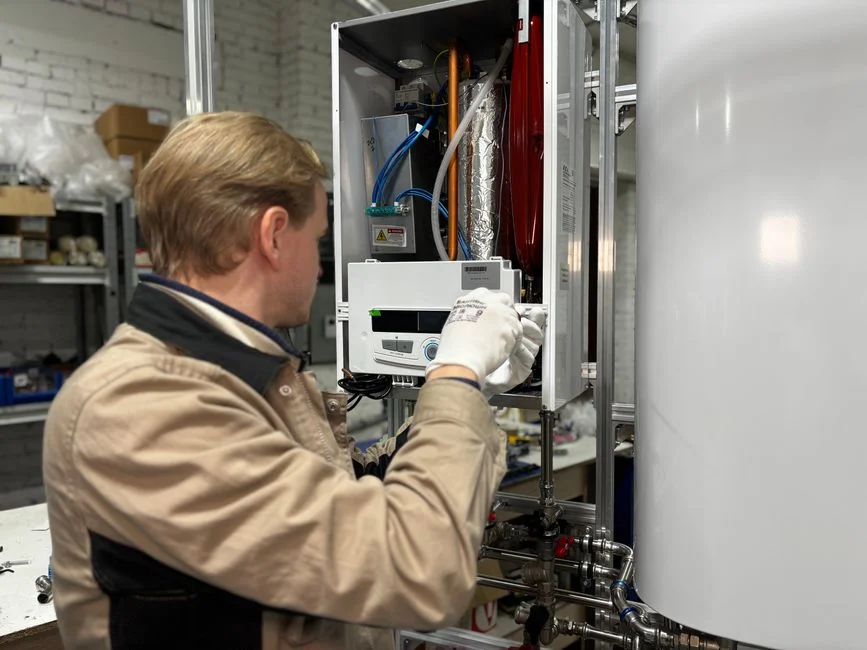
Worked example: 180 rooms × 60% average occupancy × 225 L/room/day = 24.3 m³/day average daily flow. Apply a 1.25 peaking factor for conference surges and weekend occupancy lifts, and the design flow lands at roughly 30 m³/day, with a hydraulic peak of 6–8 m³/h through the equalization tank. At 15–20 LMH flux on a submerged PVDF flat-sheet module, a 30 m³/day MBR needs 65–85 m² of membrane area, which fits comfortably inside a single skid-mounted cassette (HydropureWater engineering estimates, 2026). The spec sheet for the host packaged MBR STP system covers flows from 10 to 2,000 m³/day, and the PVDF flat-sheet MBR module spec sheet confirms the 15–20 LMH design flux and 0.08–0.12 µm nominal pore size. Specify one duty plus one standby DAF unit (4–10 m³/h) sized for the kitchen peak rather than the average flow; under-sizing the DAF is the most common reason MBR membranes foul prematurely on hotel sites. Sludge production at 0.4–0.6 kg DS per kg COD removed yields 8–12 kg DS/day, which a small plate press dewaters to 18–22% dry solids, cutting hauling volume 75–85% and paying back the dewatering skid in 12–24 months at Rosario's ARS 8,000/ton disposal rate.
MBR vs WSZ (Buried A/O) vs SBR for a Rosario Hotel
The technology choice for a Rosario hotel is not about the cheapest CAPEX number; it is about whether the technology clears Ordinance 9245/2023's tertiary trigger on its own. MBR clears it with effluent of <10 mg/L TSS and <50 mg/L COD at 0.6–1.0 kWh/m³ and roughly 60% of the footprint of a CAS train. WSZ buried A/O is 30–50% cheaper on CAPEX and uses zero surface footprint, but the 20–30 mg/L TSS effluent fails the urban-core reuse bar without an add-on UF stage, which usually erases the CAPEX advantage once civil works and a polishing skid are priced. SBR is flexible enough for variable hotel loads, comes in 20–30% below MBR on CAPEX, and runs 30–50 mg/L TSS, which still needs tertiary polish for reuse. DAF plus conventional activated sludge is 40–60% cheaper than MBR but cannot reach reuse-grade TSS and loses stability when the FOG swing is high. The comparison table below uses the CAPEX bands documented in the Rosario wastewater treatment cost guide and the broader Argentina packaged WWTP engineering guide.
| Criterion | MBR (submerged PVDF) | WSZ (buried A/O) | SBR | DAF + AS |
|---|---|---|---|---|
| CAPEX band (ARS, 30 m³/day) | 30M–120M | 18M–72M | 22M–90M | 15M–55M |
| CAPEX band (USD, 30 m³/day) | 30,000–120,000 | 18,000–72,000 | 22,000–90,000 | 15,000–55,000 |
| Surface footprint | Small (skid) | None (buried) | Medium | Medium–Large |
| Effluent TSS (mg/L) | <10 | 20–30 | 30–50 | 30–60 |
| Energy (kWh/m³) | 0.6–1.0 | 0.3–0.5 | 0.4–0.6 | 0.2–0.4 |
| Meets Ordinance 9245/2023 alone? | Yes | No (UF polish needed) | No (polish needed) | No |
| Reuse for irrigation / cooling | Yes | Marginal | Marginal | No |
For the A/O baseline the WSZ buried A/O package is the correct reference; for the conventional AS reference the same engineering guide covers DAF + AS configurations in detail.
Rosario Cost Envelope: CAPEX, OPEX, and Hidden Local Adders
For a 30 m³/day packaged MBR sized to the 180-room example above, equipment-only CAPEX sits at USD 30,000–120,000 (ARS 30M–120M); turnkey installed lands at USD 100,000–250,000 once civil works, electrical, and SCADA are added (HydropureWater field data, 2026). Energy OPEX at Rosario's ARS 120/kWh tariff is roughly USD 2,000–3,500 per year for a 30 m³/day MBR running 0.6–1.0 kWh/m³. Sludge disposal at ARS 8,000/ton is 40% above the national average, so the plate-and-frame sludge dewatering press is not optional: it cuts hauling volume 75–85% and pays for itself in 12–24 months on any hotel generating more than 2 tonnes DS/day. Skilled labor at ARS 1,200/hour in Rosario is 25% above Buenos Aires, which adds ARS 500K–1M (USD 500–1,000) to installation; this is one of the three adders that regularly bust naive budgets. The second adder is permitting: Ordinance 9245/2023 EIA work adds ARS 2M–5M (USD 2,000–5,000) and 6–12 months to the schedule. The third is the Ley 25.688 real-time monitoring mandate, which only fires above 100 m³/day and therefore does not usually apply to a 30 m³/day hotel; it is listed here so the reader knows where the line is drawn. The automatic chemical dosing system is the OPEX-controlling accessory for coagulant and polymer use, and it pairs with the plate press to keep the sludge line predictable. The table below converts the bands into a per-room number that an investor can read.
| Cost line | 30 m³/day MBR (ARS) | 30 m³/day MBR (USD) | Notes |
|---|---|---|---|
| Equipment-only CAPEX | 30M–120M | 30,000–120,000 | Skid + membranes + control panel |
| Turnkey installed CAPEX | 100M–250M | 100,000–250,000 | Adds civil, electrical, SCADA |
| Energy OPEX (per year) | 240K–420K | 2,000–3,500 | At ARS 120/kWh, 0.6–1.0 kWh/m³ |
| Sludge disposal (per year, with press) | ~600K | ~500 | ~75 kg DS/day post-dewatering |
| Permit + EIA (one-off) | 2M–5M | 2,000–5,000 | Adds 6–12 months to schedule |
| Rosario labor adder (one-off) | 500K–1M | 500–1,000 | 25% above Buenos Aires |
Five-Step Supplier Qualification Checklist for a Rosario Hotel MBR
Convert the analysis above into a procurement tool with five hard checks. Step 1: demand at least one in-country hotel or hospitality reference installation commissioned within the last 36 months, with a reachable client contact inside Argentina or the Mercosur bloc; a vendor without a domestic hotel reference is gambling with the commissioning engineer. Step 2: require Spanish-language HMI and SCADA, electrical drawings to Argentine 24V/220V/380V standards, and an on-site commissioning team that mobilizes from Buenos Aires, Córdoba, or Rosario within 72 hours; if the commissioning team has to fly in from overseas, the 6–12 month permit clock turns into a 14–18 month clock. Step 3: require a compliance letter signed by a local Argentine engineer explicitly referencing ACuMaRS Res. 336/2003 (where relevant) and the Santa Fe Ministerio de Ambiente; the letter is the document the investor's lawyer will ask for when the permit file is reviewed. Step 4: prefer containerized or skid-mounted pre-fabrication, because it cuts site civil works in dense Rosario infill lots and absorbs the concrete and labor premium in Patagonia and NOA projects by 30–60%. Step 5: lock in a 12-month warranty, 4G-compatible remote PLC/SCADA, and a local agent spare-parts warehouse that holds membrane modules, dosing pumps, and instrumentation in bond; membrane replacement at 5–7 years is non-negotiable, and an 8-week import cycle is what kills projects. The five-item framework adapts the original list from the Argentina wastewater treatment plant supplier guide to hotel commissioning realities: Spanish HMI, Santa Fe permits, and a 72-hour service radius from Rosario. A useful cross-read for first-time hotel buyers is the Córdoba hotel packaged MBR guide, which follows the same flow with provincial permit and tariff differences.
Frequently Asked Questions
What is the design flow per room for a hotel STP in Rosario?
A 4-star urban hotel in Rosario should be sized at 200–250 L per occupied room per day; resort properties with pools and irrigation push to 300–400 L/room/day, and conference hotels sit at 220–260 L/room/day at peak (HydropureWater engineering estimates, 2026).
How much does a packaged MBR STP cost for a Rosario hotel?
A 30 m³/day packaged MBR for a 100–250-room hotel lands at USD 30,000–120,000 equipment-only (ARS 30M–120M) and USD 100,000–250,000 turnkey installed once civil works, electrical, and SCADA are added (HydropureWater field data, 2026).
Do I need a DAF in front of the MBR for a hotel kitchen?
Yes, because kitchen effluent drives 40–60% of total FOG load and 80–150 mg/L of pre-DAF FOG, which fouls PVDF membranes within months if it reaches the cassette; specify one duty plus one standby DAF rated at 4–10 m³/h ahead of the bioreactor.
How long does Santa Fe permitting take for a hotel STP?
Permitting under Ordinance 9245/2023 typically takes 6–12 months once the EIA is filed, and the EIA alone adds ARS 2M–5M (USD 2,000–5,000) to upfront CAPEX (2025 Santa Fe permitting data).
Can treated hotel wastewater be reused for irrigation in Rosario?
Yes, if the effluent holds <10 mg/L TSS and <50 mg/L COD, which a submerged PVDF MBR delivers directly; Ordinance 9245/2023's urban-core tertiary line is the same threshold, so a properly sized MBR satisfies discharge and reuse with one train.
What is the typical membrane life for a hotel MBR?
PVDF flat-sheet MBR modules in hotel service typically run 5–7 years before replacement when DAF pre-treatment is correctly sized; the deciding factor is not the membrane material but the consistency of the FOG cut upstream.