Why Paper Mill Wastewater Is a UF Problem Worth Solving
Papermaking consumes 15–60 m³ of fresh water per finished tonne of product, and global effluent loads reach 38.5 m³ and 7.5 kg COD per tonne of paper, figures that put the pulp and paper sector at roughly 50% of all industrial waste streams (per Zhang et al., 2009, as reviewed in BioResources, S4). That load is what every 2026 mill manager is now defending in front of regulators and shareholders.
The strategic choice in 2026 is binary: keep treating the end-of-pipe stream to discharge, or pull a "kidney" sidestream out of the paper machine loop, polish it through ultrafiltration, and reuse it. Both routes run on UF, but the design envelope changes. End-of-pipe discharge needs a 40 CFR Part 430 compliant polishing step, while internal reuse is driven by water scarcity, steam cost, and discharge tariffs. A properly specified UF skid is the workhorse of either path, and the rest of this article builds the engineering case for picking it, sizing it, and defending it to procurement.
What an Ultrafiltration System Actually Does in a Paper Mill
UF in a paper mill context is a 0.01–0.1 µm pressure-driven membrane process that removes suspended solids, colloids, dissolved and colloidal substances (DCS), and bacteria from white water or clarified effluent under 1–3 bar transmembrane pressure, while letting monovalent salts pass (per Cainglet et al., 2021, S3). It is not a salt barrier, and it is not a final polishing step on its own; it is the workhorse between primary clarification and any downstream RO or evaporator.
Three placements show up in modern mills, each with a different design envelope:
- White-water UF on the paper machine loop for closure, typically operating at 1–2 bar TMP with daily backwash.
- Process-water reuse UF on clarified effluent fed to a kidney loop, where the permeate is split between direct machine reuse and RO feed.
- End-of-pipe UF as a final solids barrier before discharge or before a brine evaporator, where flux is usually lowest and CIP frequency highest.
The McKinley Mill in New Mexico has run a disc-screen + cyclic activated sludge + UF + RO + evaporative crystalliser train with zero effluent discharge since 1994 (per S3), and Zhang et al. (2009) reported a comparable MBR + MF + UF + RO train reaching 60% recovery at the RO stage. Both designs confirm the same hierarchy: UF sits between biological or physical clarification and any high-pressure membrane or thermal step. Procurement teams and operators should agree on this vocabulary before the datasheet goes out, because "UF" on a paper mill P&ID means different things in different plants.
PES, PVDF and Ceramic UF Membranes: How to Choose
Membrane chemistry drives lifetime, CIP tolerance, and fouling behavior on paper mill feed, so the choice between polyethersulfone (PES), polyvinylidene fluoride (PVDF), and ceramic UF is the first real procurement decision. The S4 study on a fine paper mill used a PES membrane and quantified foulants on super-clear filtrate: reversible foulants accounted for 85.52% of the total, originating mainly from retention aids, drainage aids, and wet-strength resins, while irreversible adsorptive foulants made up 14.48%, originating from sizing agents and coating chemicals.
That split is the operational signal. If reversible additives dominate, daily air-scour and backwash on PVDF hollow fiber can hold the line. If sizing and coating residues build irreversibly, the membrane's chemical tolerance, pH window, and chlorine resistance start to matter more than virgin flux.
| Parameter | PES (e.g. S4 study) | PVDF hollow fiber | Ceramic (Al₂O₃/TiO₂) |
|---|---|---|---|
| Pore size / MWCO | 0.01–0.05 µm / 10–100 kDa | 0.03–0.1 µm / 50–150 kDa | 0.05–0.2 µm |
| pH operating range | 1–13 | 1–11 | 0–14 |
| Chlorine tolerance | Limited (200–1,000 ppm short-term) | Moderate (up to ~2,000 ppm NaOCl CIP) | Effectively unlimited |
| Typical lifetime | 3–5 years | 4–7 years | 10+ years |
| Capital cost per m² | Low | Low–moderate | High (5–10× polymeric) |
| Best-fit paper mill stream | Cleaner super-clear filtrate, low-fouling DCS | High-DCS white water with daily backwash | Aggressive chemicals, hot streams, ZLD polishers |
For most 2026 fine-paper and recycled-fiber mills, the practical default is a PVDF hollow-fiber UF skid on the kidney loop, with PES reserved for cleaner super-clear filtrate where additive load is low. Ceramic UF earns its place only when the stream runs hot, pH-extreme, or carries a ZLD polishing duty that justifies the 5–10× membrane cost premium.
Operating Window: TMP, Flux and Recovery on Paper Mill Feed
Transmembrane pressure is the single knob a process engineer can turn on a UF skid, and the Cainglet et al. (2021) study on 100% recycled fiber process water is the most defensible reference point for a 2026 datasheet: low TMP at 1.35 bar produced the highest permeability and 47% COD removal, while higher TMPs raised flux and recovery but accelerated cake formation. The four Hermia fouling models, complete blocking, intermediate blocking, standard blocking, and cake layer formation, all showed up in that work, with cake formation and intermediate blocking dominating on paper mill feed (S3).
Translate that into a defensible operating envelope:
| Parameter | Typical band for paper mill UF | Engineering note |
|---|---|---|
| TMP | 1–3 bar; optimum 1.0–1.5 bar on RCF feed | Above 2 bar, cake compresses and flux gain flattens (per Cainglet et al., 2021). |
| Flux (permeate) | 40–80 LMH on clarified feed; 20–40 LMH on raw white water | Higher flux is a TMP choice, not a pump choice. |
| Cross-flow velocity | 0.5–1.5 m/s | Below 0.5 m/s, fouling dominates; above 1.5 m/s, energy cost outpaces gain. |
| Recovery | 85–95% | Push past 95% only with a stable upstream KPI. |
| Backwash | Every 20–60 min, 30–60 s | Frequency is the primary control on reversible fouling. |
| CIP | NaOH pH 11–12, then NaOCl 500–1,000 ppm | Weekly to bi-weekly depending on irreversible load. |
On a 100% recycled fiber stream, the engineering judgment is to run the low end of the TMP band and let cross-flow velocity do the work, because high TMP compresses the cake and burns irreversible fouling budget. The UF skid specification should call out the TMP operating point, not just a maximum.
Pre-Treatment Train: DAF, Disc Filter and MBR Before UF
UF on raw white water is the single most common cause of premature membrane failure, and the S4 authors are explicit: "Currently, UF technology can only be used to filter paper mill effluent that has been pre-treated and meets discharge standards." That is not a limitation of the membrane, it is a statement about the feed the membrane is being asked to swallow. A 2026 train should be designed around two upstream KPIs: turbidity below the membrane's specification, commonly <50 NTU for hollow-fiber UF, and DCS below 900 mg/L for stable paper machine reuse (per S4, citing prior work on white water reuse).
The minimum viable train for a kidney loop is a DAF unit or a rotary disc filter ahead of UF to drop TSS, FOG, and fiber carryover. For closure or zero-discharge targets, an MBR step belongs between primary clarification and UF, exactly as in the Zhang et al. and McKinley Mill trains (S3), and the HydropureWater MBR fits that slot. Mills chasing ZLD also borrow from related chemistries; for example, ammonia precipitation for paper mill condensates handles the nitrogen side of the water balance that UF cannot touch.
Fouling Diagnosis and Cleaning Strategy on Paper Mill UF
The 85.52 / 14.48 reversible / irreversible foulant split from the S4 PES study is the operator's playbook. Reversible foulants, retention aids, drainage aids, and wet-strength resins, are removed by routine air-scour and backwash every 20–60 minutes during white water duty; irreversible adsorptive foulants, sizing agents and coating chemicals, need a weekly to bi-weekly CIP with NaOH at pH 11–12 followed by NaOCl at 500–1,000 ppm to oxidize the residue. S4 further notes that the specific foulants on fine paper white water originate mostly from chemical additives and their ineffective manufacture or use, not from wood extractives, which is why chemistry selection and CIP discipline matter more than chasing raw flux.
Two operating rules follow. First, track transmembrane pressure trend and permeability decline rate as the leading indicator of irreversible fouling; by the time flux drops visibly, the CIP interval is already too long. Second, use replacement UF membrane elements from a documented supply chain, not mystery cartridges, because lifetime variance on paper mill UF is dominated by spare-part consistency, not by the original skid choice.
UF, RO and the Kidney Approach: Where to Place UF in 2026
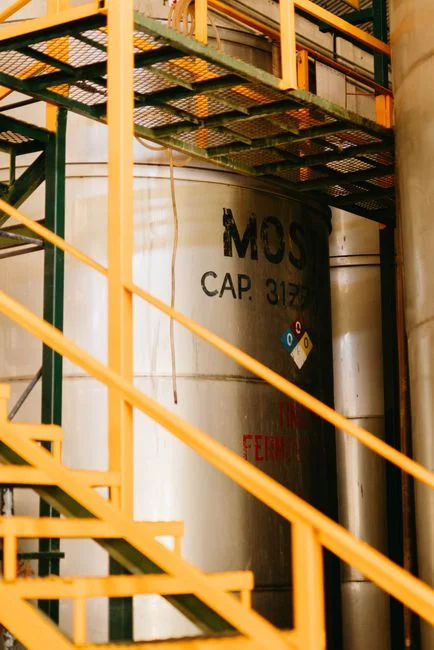
Three layouts cover almost every 2026 paper mill water strategy. UF alone delivers clarification-grade reuse suitable for showers, seal water, and dilution back into the white water loop. UF + RO targets boiler-feed quality and process closure, and the McKinley Mill and Zhang et al. trains are the proof points: 60% RO recovery with MBR + MF + UF + RO is documented (S3), and zero effluent discharge has been continuous at McKinley since 1994. UF + RO + evaporative crystalliser is the ZLD path, and on mills with 50% RCF or higher, the Negaresh result, only 22% recovery at the RO stage on 50% RCF feed (S3), is a hard warning that sodium and silica scaling will limit RO recovery unless UF upstream is doing real work.
The practical framing for 2026 is that UF is the kidney protecting both the paper machine water loop and any downstream RO, and the industrial RO skid is only as good as the UF permeate feeding it. For mills modeling total cost, filter press cost benchmarks for 2026 provide a useful reference point on the dewatering side that often runs in parallel with the water closure project.
2026 Cost, Compliance and Procurement Checklist
Compliance in 2026 still runs through 40 CFR Part 430 for mills discharging to surface water or POTW, which makes UF + RO the practical compliance route for closure rather than a nice-to-have. The supplier must-haves are membrane material certificates for PES or PVDF, an integrated PLC with TMP trending, automatic backwash and air scour, a CIP skid, and remote monitoring so plant management can defend the asset in an audit. UF skid datasheets should also call out spare-part continuity, and the parts and media supply chain behind the OEM is part of that story.
A 7-point procurement checklist for 2026:
- Feed characterization: TSS, turbidity, COD, DCS, FOG, temperature, pH, hardness.
- Membrane chemistry: PES, PVDF, or ceramic, justified by stream chemistry and CIP window.
- Skid sizing: TMP at design point, flux at design point, recovery, cross-flow velocity.
- Pre-treatment integration: DAF or disc filter upstream; MBR if closure or ZLD is the target.
- CIP automation: recipe-driven sequences for NaOH + NaOCl, with interlocks on pH and free chlorine.
- Data logging: TMP, permeability, dP per module, CIP timestamps, and alarm history retained for audits.
- Membrane supply continuity: qualified replacement elements with documented lead time.
| Spec line | Value to put on the datasheet |
|---|---|
| Pore size / MWCO | 0.01–0.05 µm / 10–100 kDa (PES); 0.03 µm PVDF hollow fiber as industrial default |
| TMP at design point | 1.0–1.5 bar (RCF) to 2.0–2.5 bar (cleaner streams) |
| Design flux | 40–80 LMH clarified; 20–40 LMH raw white water |
| Recovery | 85–95% |
| Backwash | Every 20–60 min, 30–60 s, with air scour |
| CIP | NaOH pH 11–12 then NaOCl 500–1,000 ppm, weekly to bi-weekly |
| Upstream KPI | Turbidity <50 NTU; DCS <900 mg/L for paper machine reuse |
Related guides that pair with this one include MBBR treatment of UF reject streams for handling the concentrated sidestream that UF always produces.
Frequently Asked Questions
Can UF alone meet paper mill discharge standards?
No. UF is a pre-treatment or reuse step, not a final polishing step. It removes suspended solids, colloids, DCS, and bacteria, but it does not remove the monovalent salts and low-MW organics that effluent limits target. A UF permeate still needs RO, or a comparable barrier, to meet 40 CFR Part 430 limits for direct discharge.
What pore size or MWCO should we specify?
0.01–0.05 µm or 10–100 kDa covers white water reuse, and 0.03 µm PVDF hollow fiber is the common industrial default for new builds in 2026. Go finer only if downstream RO is sensitive to colloidal fouling; coarser UF is rarely worth the flux gain because DCS, not fiber fines, is the dominant foulant on paper mill feed.
How much COD can UF remove on paper mill feed?
Up to 47% on 100% recycled fiber process water at 1.35 bar TMP, per Cainglet et al. (2021). On cleaner fine-paper super-clear filtrate, UF removes the colloidal and additive-bound COD fraction while dissolved COD largely passes; the rest has to be handled by MBR, RO, or both.
How long do UF membranes last in a paper mill?
3–5 years for PES, 4–7 years for PVDF hollow fiber, and 10+ years for ceramic, with disciplined CIP. Lifetime is dominated by irreversible fouling from sizing and coating chemicals, so CIP recipe and additive control at the paper machine are the real levers, not the membrane brand.
Do we need a DAF before UF?
Strongly recommended. S4 confirms UF needs pre-treated feed to remain economical, and field practice is consistent: a DAF or rotary disc filter dropping TSS, FOG, and fiber carryover is the difference between weekly CIP and weekly membrane replacement. Skipping it is the fastest way to burn the membrane budget.