
What Happens to Wastewater Permits When a Plant Changes Ownership in Arizona
ADEQ wastewater permits are owner-specific, and a change in ownership is a regulatory event, not a paperwork update. Under ADEQ Aquifer Protection Permit (APP) rules (Ariz. Admin. Code tit. 18, Chapter 9), permit transfers require written notice and agency approval routed through ADEQ's Water Quality Division, and the new owner typically has 30–60 days to file. AZPDES permits are stricter: a controlling-interest change generally requires a new application rather than an amendment, because the permit tracks the responsible corporate entity, not the discharge pipe. The "new owner" versus "new source" distinction is where VW's due-diligence team should focus first. Restarting a paint shop or metal-finishing line can re-trigger New Source Review under the Clean Air Act and the metal-finishing NSPS in 40 CFR 60 Subpart MM, which in turn forces a categorical wastewater review under 40 CFR 433. On top of the legal floor, VW Group's ISO 14001-aligned corporate environmental standard — which is consistent with its Chattanooga-style manufacturing playbook — typically requires internal limits that are 20–40% tighter than ADEQ minimums, so any acquisition deal should include an EHS gap analysis before LOI signing. The day the asset purchase closes, the buyer inherits all open NOVs, all DMR obligations, and all RCRA generator status from the prior operator.
The Three Arizona Permits VW Will Need to File
Every VW Arizona site has to map each of its discharge paths to a specific ADEQ authorization, and there are essentially three pillars. First, an Aquifer Protection Permit (APP) is required for any on-site wastewater disposal, including subsurface irrigation, evaporation ponds, and any drainfield handling industrial process water (Ariz. Admin. Code tit. 18, Chapter 9). Second, an AZPDES permit — Arizona's delegated NPDES program — covers any surface discharge, and most automotive assembly footprints also fall under the multi-sector Industrial Stormwater Permit (AZG2013-001) for stormwater running off the assembly pad. Third, a local pretreatment permit is issued by the control authority (City of Phoenix Water Services, Tucson Water, or the local POTW) and layers on top of 40 CFR 403 with site-specific local limits. The standard application package for all three includes a site map, process flow diagram, influent/effluent analytical data, a Pollution Prevention Plan, and a Best Management Practices plan with measurable numeric triggers. Per the EPA REUSExplorer scrape, ADEQ is still developing implementation guidance for the new AWP rule as of October 2025, so any project aiming for reuse should expect a 6–12 month pre-permit process before discharge authorization arrives. A typical VW-class assembly site can expect three to five permit actions running in parallel during the first 12 months of operation. For engineers building this package, a robust engineering data standards selection guide for fine screens is a useful reference for the headworks design.
| Discharge Path | Permit / Authorization | Issuing Authority | Triggering Rule |
|---|---|---|---|
| On-site disposal (evap pond, drainfield, subsurface irrigation) | Aquifer Protection Permit (APP) | ADEQ Water Quality Division | Ariz. Admin. Code tit. 18, Ch. 9 |
| Surface water discharge (cooling tower blowdown, storm runoff) | AZPDES individual or multi-sector | ADEQ | AZPDES / AZG2013-001 (industrial storm) |
| Sanitary/process sewer to POTW | Local pretreatment permit | City of Phoenix / Tucson Water / local control authority | 40 CFR 403 + local ordinance |
| Industrial reuse (cooling, toilet flushing, DPR) | AWPRA permit | ADEQ | Ariz. Admin. Code tit. 18, § R18-9 Article 8 |
Automotive Assembly Wastewater Streams and Their Federal Categories
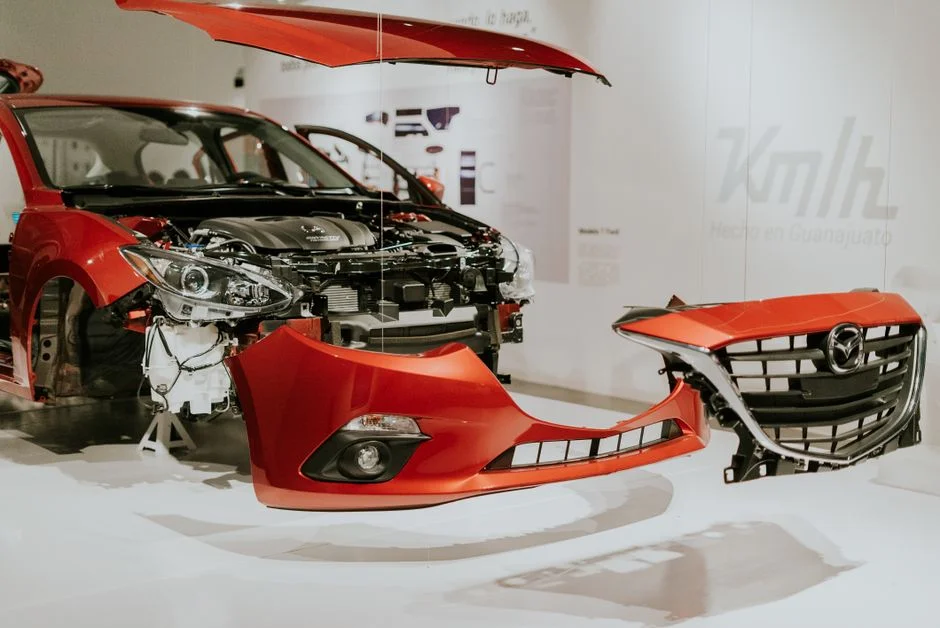
The wastewater design is driven by which manufacturing lines VW actually retains, and each line maps to a different 40 CFR categorical standard. Stamping and metal-forming operations generate oil/solvent emulsions and rinsewater containing cadmium, lead, and zinc, which fall under 40 CFR 433 (Metal Finishing) with daily maximum and monthly average limits for each regulated metal. The paint shop pulls in 40 CFR 433 plus the auto body painting NSPS in 40 CFR 60 Subpart MM (VOC control with wastewater implications for phosphate from chemical pretreatment). Coil coating and electrocoating (e-coat) lines are separately categorized under 40 CFR 465 when those lines are retained. Metal-cutting fluids, parts washers, and machine coolant sumps generate emulsified oils and tramp oils that typically fall under the oil-bearing waste subcategory — historically tied to 40 CFR 469 (Oil and Gas). Cooling tower and boiler blowdown are not categorical but still trigger local limits on TDS, chromium (hexavalent and trivalent), and zinc. A new and emerging stream on EV lines is spent battery acid and lithium-bearing rinsewater, which has no dedicated federal category yet and currently routes through RCRA hazardous-waste rules plus site-specific local limits. Across all of these streams, headworks protection is critical, and a rotary bar screen for headworks protection is the standard first unit operation, followed by a DAF system for oily automotive wastewater to break the oil-water emulsion before metals precipitation.
| Process Stream | Key Pollutants | Federal Category | Treatment Target |
|---|---|---|---|
| Stamping / metal forming rinsewater | Cd, Pb, Zn, oil & grease | 40 CFR 433 (Metal Finishing) | Chemical precipitation + DAF |
| Paint shop (pretreatment + e-coat) | Phosphate, Ni, Zn, VOC-laden wastewater | 40 CFR 433 + 40 CFR 60 Subpart MM | Coagulation/precipitation, DAF, biological |
| Coil coating / e-coat line | Chromium (hex & trivalent), Ni, organics | 40 CFR 465 (Coil Coating) | Reduction + precipitation, ion exchange |
| Metalworking fluids, parts washers | Emulsified oils, tramp oils | 40 CFR 469 (oil-bearing waste) | DAF, ultrafiltration |
| Cooling tower & boiler blowdown | TDS, Cr, Zn, scale inhibitors | Local limits / categorical industrial user | Side-stream softening, blowdown recovery |
| EV line: battery assembly rinse | Li, Ni, Co, sulfate, acid | No dedicated category — RCRA + local | pH neutralization, metals precipitation, MBR |
Arizona-Specific Discharge Limits VW Must Hit
The federal categorical standards are the floor; Arizona POTWs and ADEQ layer on local numeric limits that the procurement and EHS teams need in a table they can hand to engineering contractors. The City of Phoenix industrial waste ordinance, for example, sets pretreatment metals limits in the following typical range: lead 0.6 mg/L, zinc 2.6 mg/L, nickel 2.4 mg/L, total chromium 2.8 mg/L, and hexavalent chromium 0.3 mg/L (always cite the controlling ordinance and current revision year when the contract is signed). Oil and grease for non-domestic users typically lands at 100 mg/L daily maximum and 50 mg/L monthly average, with pH 5.0–10.0 standard for industrial discharges to the sanitary sewer. Total suspended solids (TSS) usually sits at 250 mg/L daily maximum, but a growing number of Arizona POTWs now require ≤50 mg/L for significant industrial users who want to avoid surcharges. Temperature at the headworks is capped at 104 °F (40 °C). For a comparable state-by-state pretreatment view, the Pasadena chemical plant pretreatment compliance under 40 CFR 403 write-up has a useful methodology even though the numeric limits differ.
| Parameter | Typical Arizona POTW Local Limit | Basis |
|---|---|---|
| Lead (Pb) | 0.6 mg/L | City of Phoenix industrial waste ordinance (confirm revision year) |
| Zinc (Zn) | 2.6 mg/L | City of Phoenix industrial waste ordinance |
| Nickel (Ni) | 2.4 mg/L | City of Phoenix industrial waste ordinance |
| Total Chromium | 2.8 mg/L | City of Phoenix industrial waste ordinance |
| Hexavalent Chromium | 0.3 mg/L | City of Phoenix industrial waste ordinance |
| Oil & Grease | 100 mg/L daily max / 50 mg/L monthly avg | Local sewer use ordinance (typical) |
| pH | 5.0 – 10.0 | 40 CFR 403 + local |
| TSS | 250 mg/L daily max (≤50 mg/L for SIUs) | Local sewer use ordinance (typical) |
| Temperature | ≤ 104 °F (40 °C) at headworks | Local sewer use ordinance (typical) |
Industrial Reuse and the ADEQ AWP Rule
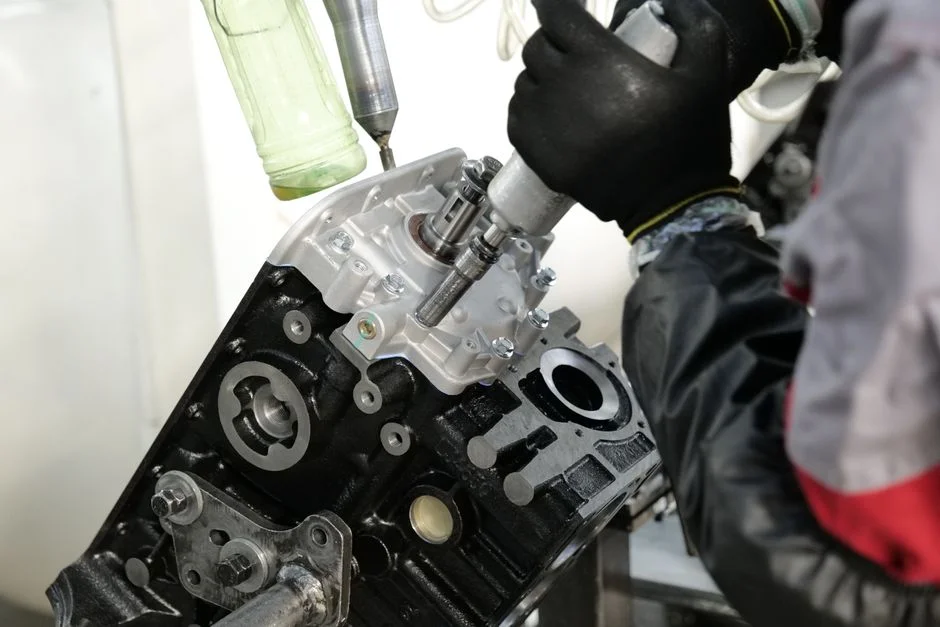
Arizona now has a formal advanced water purification (AWP) pathway, and that matters for any VW site considering closed-loop cooling, toilet-flushing reuse, or even potable augmentation. The AWP rule (Ariz. Admin. Code tit. 18, § R18-9 Article 8) authorizes direct potable reuse via an Advanced Water Purification Responsible Agency (AWPRA) permit, and a VW project would apply as a non-domestic discharger. The pathogen log-reduction targets per § R18-9-E828 are 13-log for enteric virus, 10-log for Giardia, and 10-log for Cryptosporidium, validated by a SCADA online monitoring system for surrogates and operational parameters on every credited treatment barrier. The chemical framework is tiered: Tier 1 chemicals follow the federal SDWA MCLs under 40 CFR § 141 Subpart G, Tier 2 covers site-specific non-domestic chemicals, and Tier 3 is performance-based. The standard TOC approach caps AWTF outlet at ≤2 mg/L per § R18-9-F834, with a site-specific alternative pathway also available. Per the EPA REUSExplorer scrape of ADEQ (2025a, 2025b), ADEQ is still in the implementation phase as of October 2025 and is still working out how applicants demonstrate compliance. The reuse treatment train is well understood at engineering level: an MBR system for high-strength process water upstream of UV disinfection for reuse streams (often followed by RO and AOP) is the standard configuration for an AWTF.
Pre-Acquisition ETP Due-Diligence Checklist
The EHS manager should walk into the kickoff meeting with a 12-month action list already drafted, and the following six steps cover the critical path. First, pull the last three years of Discharge Monitoring Reports (DMRs) plus any Notices of Violation (NOVs) or Compliance Notices (CNs) from the ADEQ Online Records System and the relevant POTW file. Second, commission baseline influent and effluent sampling for metals (especially the 40 CFR 433 priority pollutants), oil & grease, BOD/COD, TDS, and PFAS — Arizona's ADWR is actively tracking PFAS in groundwater, so early data is gold in negotiations. Third, run a side-by-side gap analysis of the site's historical performance against 40 CFR 433 / 40 CFR 465 categorical standards and VW Group's internal corporate standard, which is often tighter. Fourth, engage a licensed Arizona Professional Engineer for the APP and AZPDES transfer package and request a pre-application meeting with ADEQ before any filings go in. Fifth, build a capex/opex model for upgrades — DAF for oils, chemical precipitation for metals, MBR for high-strength streams, and possible UV/AOP if the site targets AWP reuse. Sixth, deploy PLC-controlled chemical dosing for metal precipitation with telemetry, and stage a filter press for sludge dewatering so the residuals side of the mass balance is not an afterthought. For a similar OEM plant template, the comparable automotive OEM plant acquisition wastewater requirements methodology is a good cross-check.
| Month | Action | Owner | Deliverable |
|---|---|---|---|
| 0–1 | Pull 3-yr DMRs, NOVs, CNs from ADEQ & POTW | EHS Manager | Compliance history memo |
| 1–3 | Baseline sampling (metals, O&G, BOD/COD, TDS, PFAS) | Lab / PE | Analytical report |
| 2–4 | Gap analysis: 40 CFR 433/465 vs. VW Group standard | EHS + Corp HSE | Gap register |
| 3–6 | Pre-app meeting with ADEQ; APP/AZPDES transfer filing | AZ PE + counsel | Filed application + meeting minutes |
| 4–8 | Capex/opex design: DAF, precipitation, MBR, optional UV/AOP | Process engineer | 30/60/90% design |
| 6–12 | Permit issuance, commissioning, training, DMR cadence locked in | Plant ops + EHS | Operating permit, training records |
Frequently Asked Questions
Does VW need a new ADEQ Aquifer Protection Permit (APP) when it acquires an Arizona plant?
Not necessarily a brand-new permit, but a written notice and agency approval is required within 30–60 days of the ownership change under Ariz. Admin. Code tit. 18, Chapter 9. The new owner must file an APP transfer package through ADEQ's Water Quality Division and cannot operate under the prior owner's APP after the legal transfer closes.
Which 40 CFR category applies to automotive assembly wastewater in Arizona?
It depends on which lines are retained. Stamping, machining, and most plating fall under 40 CFR 433 (Metal Finishing). Coil-coating and e-coat lines fall under 40 CFR 465. Emulsified oil and parts-washer streams typically fall under the oil-bearing waste category tied to 40 CFR 469. VW should map each line to its specific category before designing treatment.
What is the status of the ADEQ Advanced Water Purification (AWP) rule in October 2025?
The rule (Ariz. Admin. Code tit. 18, § R18-9 Article 8) is adopted but ADEQ is still in the implementation phase, working out how applicants demonstrate compliance. A VW project targeting industrial reuse should expect a 6–12 month pre-permit process and should engage ADEQ early for an AWPRA pre-application meeting.
How long does VW have to transfer AZPDES and pretreatment permits after acquisition?
AZPDES permits are owner-specific and typically require a new application (not an amendment) within 30–60 days. Local pretreatment permits are issued by the control authority — City of Phoenix Water Services, Tucson Water, or the local POTW — and each authority has its own transfer window, usually 30 days. Restarting a process line can re-trigger New Source Review and the 40 CFR 60 Subpart MM NSPS.
Related Equipment
- DAF system for oily automotive wastewater — specifications, capacity range, and technical data
- PLC-controlled chemical dosing for metal precipitation — specifications, capacity range, and technical data
- MBR system for high-strength process water — specifications, capacity range, and technical data
- rotary bar screen for headworks protection — specifications, capacity range, and technical data
- UV disinfection for reuse streams — specifications, capacity range, and technical data