Why the Mexico plant is a wastewater problem before it is a car problem
Tesla's Santa Catarina commitment is a binding water-stress promise, not a marketing line: the company will use only treated wastewater, fund reforestation near the plant, and back scientific research on regional scarcity, according to reporting from Rest of World (2023). Then–Foreign Minister Marcelo Ebrard said on the same trip that the facility would be the "least water-consuming auto-manufacturing plant in the world." That political envelope — made in public, on camera, in a state that ran out of residential tap water in 2022 — is the engineering constraint the buyer must design around. A site that does not credibly close its freshwater loop is politically dead on arrival.
The facility is sized to match the headline number. Government officials quoted in Rest of World (2023) project roughly $10 billion in capex, 5,000–6,000 direct jobs, and "tens of thousands" of indirect jobs through co-located suppliers. A 36Kr report cited in the same piece notes Tesla is actively pressuring its Chinese cell-component suppliers to set up operations in Mexico, so the on-site ETP is effectively a shared industrial park with one point of compliance. The Tesla 2022 ESG report cited a 15% year-on-year water reduction per vehicle, which the Santa Catarina ETP must at minimum hold flat — and ideally beat — to honor the political envelope.
The acquisition trigger matters. The user's question is what requirements apply when Tesla acquires a plant in Mexico: an existing site inherits valid NOM-001 and CONAGUA permits, but a greenfield triggers a fresh Manifestación de Impacto Ambiental (MIA), a CONAGUA Título de Concesión, and a SEMARNAT Licencia de Funcionamiento before any discharge is lawful. Both pathways still must close the freshwater loop.
The Mexican regulatory stack: NOM-001, CONAGUA, and the reuse loophole
Three federal instruments and one state overlay define the compliance envelope. NOM-001-SEMARNAT-2021 is the binding discharge standard; its parameter tables differentiate by receiving body (river, reservoir, coastal, municipal sewer) and set the daily, monthly, and instantaneous limits for BOD₅, TSS, COD, oils and grease, total nitrogen, total phosphorus, and heavy metals including Ni, Co, and Li. NOM-002-SEMARNAT-1996 (and its current successor) governs sanitary discharges to municipal sewer, including the maximum permissible loads of fecal coliforms and the prohibition of substances that interfere with downstream biological treatment. LGEEPA (the General Law of Ecological Balance and Environmental Protection) requires a Manifestación de Impacto Ambiental for any new industrial facility above defined thresholds, plus an operating license (Licencia de Funcionamiento) for the lifetime of the site.
CONAGUA's Título de Concesión is the third pillar. The 2024–2025 reform of the National Water Law (Ley de Aguas Nacionales) tightened reuse-registration requirements: a plant that promises "treated wastewater only" must register its reuse stream with CONAGUA before that claim is operationally valid, and the volume, quality, and end-use (cooling-tower make-up, irrigation, toilet flush) must match the registered values. If the discharge route crosses federal waters, the Ley de Protección y Aprovechamiento del Patrimonio Acuático (LPTA) adds a separate federal review. On top of this stack, Nuevo León's Comisión Estatal del Agua (CEA) applies a local overlay that can impose additional site-specific limits in the Santa Catarina river basin — a watershed already classified as water-stressed after the 2022 shortage.
| Instrument | Scope | What it controls |
|---|---|---|
| NOM-001-SEMARNAT-2021 | Federal discharge standard | Parameter limits by receiving body (river / reservoir / coastal / sewer) |
| NOM-002-SEMARNAT-1996 (or successor) | Federal sanitary discharge | Fecal coliforms, prohibited interfering substances, sewer-interconnect conditions |
| LGEEPA / MIA | Federal environmental impact | New-site approval, public consultation, mitigation measures |
| CONAGUA Título de Concesión | Federal water use and reuse | Freshwater withdrawal volume, reuse-stream registration, end-use constraints |
| LPTA | Federal aquatic patrimony | Discharge to federal waters, including river and reservoir crossers |
| CEA Nuevo León | State overlay | Local basin limits, monitoring frequency, drought-triggers |
The four wastewater streams every Gigafactory-class plant must treat
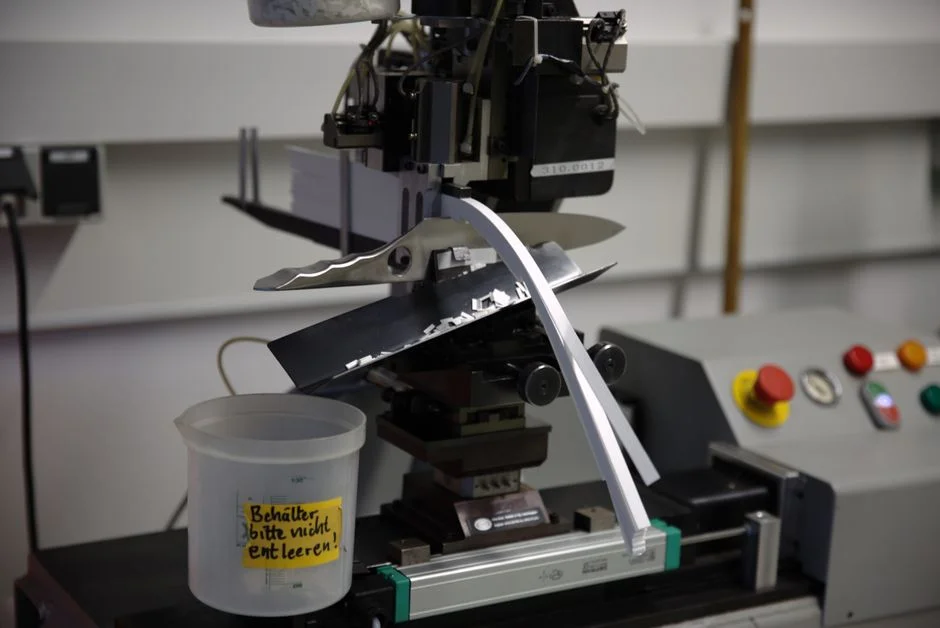
Every EV/battery plant, regardless of jurisdiction, generates four distinct streams that dictate different unit operations (per the four-stream logic documented in S5).
Stream 1 — NMP solvent condensate from cathode and anode coating. N-methyl-2-pyrrolidone is the first stream a process engineer has to think about: it dictates the upstream recovery train (typically vacuum distillation or evaporative recovery to capture NMP for reuse) before condensate reaches biology. A high-BOD, poorly biodegradable solvent passing through an MBR will kill the biomass if it spikes.
Stream 2 — Electrode-making rinse and deionized water carrying fluorinated salts, LiPF₆ electrolyte residues, and trace Ni/Co/Li. The flow is low-volume but high-specificity; metals limits in NOM-001 will drive Stage 3 biology and any Stage 4 polish.
Stream 3 — Paint-shop and general-assembly wash water with oils, fillers, surfactants, and overspray. Variable FOG and variable TSS — the stream that makes Stage 2 (DAF or lamella) non-negotiable.
Stream 4 — Sanitary sewage from the 5,000–6,000-worker workforce, peaking at shift change. The hydraulic peak — not the average — sets the equalisation basin size.
The hard co-mingling rule: never mix NMP-bearing condensate with sanitary flow upstream of biology. Route NMP condensate to dedicated recovery; route sanitary and low-solvent process water through Stage 3 MBR.
The four-stage treatment train and the Mexico-specific Stage 4 decision
Three of the four stages are largely determined by the chemistry. Stage 1 is headworks: a rotary mechanical bar screen for headworks screening at 3–6 mm aperture to remove rags, foil trims, packaging film, and overspray media before they reach pumps or fine screens (per the four-stage logic in S5). Stage 2 is primary clarification: a DAF system for high-FOG paint-shop wastewater with HRT 20–40 min and surface loading 10–25 m³/m²·h, or a lamella clarifier where footprint is constrained and the influent is mostly inorganic suspended solids. The trade-off between the two is detailed in our 2026 piece on DAF vs clarifier for EV/auto wastewater. Stage 3 is biological: an MBR system with 0.1 µm PVDF submerged flat-sheet membranes, MLSS 8,000–12,000 mg/L, with a denitrification/nitrification split to hit Mexico's total-nitrogen envelope. The MBR is preferred over MBBR where downstream reuse (Stage 4) needs low-turbidity, low-SSD effluent — see our comparison on MBR vs MBBR for industrial wastewater for the full design logic.
Stage 4 is the decision point and the one that makes Mexico different from Texas or Berlin. Three options: (a) municipal sewer under NOM-002 with UV polish only (Shanghai logic); (b) on-site reuse with an RO polish for cooling-tower make-up reuse at 60–75% recovery (Nevada / Berlin logic); (c) full ZLD with evaporation/crystallisation if the receiving watershed is the Santa Catarina river basin and the CONAGUA reuse-registration regime blocks any discharge. The political commitment to "treated wastewater only" effectively forces option (b) or (c) in Mexico, because option (a) reads as a freshwater-by-stealth through the municipal system.
| Stage | Unit operation | Design parameter | Function |
|---|---|---|---|
| 1 — Headworks | Rotary bar screen | Aperture 3–6 mm | Remove oversized solids, rag, foil |
| 2 — Primary | DAF or lamella | HRT 20–40 min; surface loading 10–25 m³/m²·h (DAF) | FOG and TSS removal |
| 3 — Biology | MBR (PVDF flat-sheet) | 0.1 µm pore; MLSS 8,000–12,000 mg/L; denitrification split | COD/BOD/TN removal; reusable effluent |
| 4 — Discharge or reuse | UV (sewer) / RO (reuse) / ZLD (zero-discharge) | RO recovery 60–75%; UV dose ≥40 mJ/cm² | Permit-driven polish |
Hydraulic-load estimation: industry estimates cited in S5 place cell-manufacturing water demand in the 1.5–3.0 m³ per kWh range; the Texas 231,000 gal/day Robstown lithium-refinery benchmark documented by Inside Climate News (2026-03) is the order-of-magnitude bound for a 35 GWh/yr-class site. For a 35 GWh/yr-class plant, the daily hydraulic envelope sits in the 5,000–9,000 m³/day range, with paint-shop and sanitary flows adding another 1,000–2,000 m³/day. A Mexican wastewater treatment plant cost benchmark is the closest 2026 capex reference for a comparable train.
Mexico vs. Texas vs. Berlin: what 'Tesla-grade' compliance looks like in each jurisdiction
Three Tesla permits are on the public record; the Mexican envelope is closest to the US regime, but the political commitment pushes it toward the German reuse logic.
Texas (Robstown lithium refinery, TCEQ). Permit WQ0005430000 issued January 2025, capped at 231,000 gal/day of treated wastewater. The plant is permitted to discharge cooling-tower blowdown, water-treatment wastes, and boiler blowdown. The TCEQ investigation in February 2026 confirmed dissolved solids, oil and grease, chlorides, sulfates, temperature, and oxygen were all within permit bounds (Inside Climate News, 2026-03). Concentration-based regime; no federal reuse-registration analogue to CONAGUA.
Berlin-Brandenburg (Grünheide EV plant, § 8a BImSchG). 19 early-start permits issued under the federal immissions-control act. Published envelope: COD ≤125 mg/L, BOD₅ ≤25 mg/L, Ni ≤0.5 mg/L, Co ≤0.5 mg/L, hydrocarbons ≤10 mg/L, TSS ≤30 mg/L. The site sits inside a Trinkwasserschutzgebiet (drinking-water protection zone), which constrains both discharge routes and on-site storage (per the Berlin case in S5).
Mexico (Santa Catarina, NOM-001-SEMARNAT-2021). Concentration-based like the US, but no German-style drinking-water protection zone review. The binding new variable is CONAGUA's reuse-registration regime, layered with Nuevo León CEA's local overlay on a stressed basin. Implication: a Mexican Tesla-class plant sits closer to the TCEQ envelope in parameter philosophy, but the "treated wastewater only" commitment effectively forces the Stage 4 decision toward RO reuse — closer to the Berlin / Nevada logic than to Shanghai's direct-discharge model.
| Site | Permit regime | Discharge logic | Reuse? | Binding constraint |
|---|---|---|---|---|
| Robstown, TX | TCEQ TPDES (issued Jan 2025) | Concentration-based, 231,000 gal/day | No mandated reuse | Receiving-water monitoring |
| Grünheide, DE | 19 × § 8a BImSchG | COD ≤125; BOD₅ ≤25; Ni/Co ≤0.5 mg/L | Yes (Trinkwasserschutzgebiet) | Drinking-water protection zone |
| Santa Catarina, MX | NOM-001 + CONAGUA Título + CEA-NL | Concentration-based, body-differentiated | Mandatory if political promise holds | Reuse registration + basin stress |
Sizing the ETP for Santa Catarina: hydraulic load, peak factors, and reuse targets
A 35 GWh/yr-class battery cell line at 1.5–3.0 m³/kWh (industry estimate, S5) plus paint-shop and sanitary flows for a 5,000–6,000-worker site gives a daily hydraulic envelope of roughly 5,000–9,000 m³/day process plus 1,000–2,000 m³/day sanitary. Peak factor of 1.5–2.0× daily average on the sanitary side during shift change; equalisation basin sized for the combined peak, not the average, to keep Stage 3 biology on a stable influent.
Reuse split target: 60–75% RO recovery feeding cooling-tower make-up and toilet flush (Nevada logic per S5). The remainder is either ZLD-evaporated or discharged under NOM-001 if the receiving body allows and the CONAGUA reuse-registration permits it. Sludge line: DAF float and MBR waste activated sludge dewatered on a plate-and-frame filter press for DAF float and MBR waste sludge with a dry-cake target ≥22% DS to control off-site disposal cost; pre-thickening via a high-efficiency sedimentation tank upstream of the press keeps the press feed homogeneous.
2026 buyer's checklist for a Mexico Gigafactory-class ETP
Six procurement-ready items, in the order the buyer should hit them:
- Confirm NOM-001-SEMARNAT-2021 discharge classification of the receiving body before sizing Stage 4. River, reservoir, coastal, and sewer each carry a different parameter table, and a Santa Catarina-class site that misses the river-vs-sewer distinction at MIA stage will overpay for Stage 4 or fail discharge compliance.
- Specify NMP recovery (vacuum distillation or evaporative) upstream of the biological stage. Do not assume the MBR will absorb solvent spikes — the biomass will not, and a single upset can knock an MBR offline for weeks.
- Specify a submerged 0.1 µm PVDF flat-sheet MBR membrane bioreactor module with denitrification split, not hollow-fiber, to handle the variable FOG load from the paint shop and meet Mexico's total-nitrogen envelope.
- RO polish sized for 60–75% recovery with CIP capability, plus a UV unit downstream for any stream destined for toilet flush or irrigation. A chlorine dioxide generator for RO membrane sanitisation on the cleaning cycle should be specified with the RO skid.
- Sludge line: lamella or DAF float → thickening → plate-and-frame press. Dry-cake target ≥22% DS for off-site disposal cost control.
- Permit pathway: MIA filing, CONAGUA Título, CEA-Nuevo León concession, SEMARNAT Licencia de Funcionamiento. Budget 12–18 months for greenfield, 3–6 months for an acquisition with valid existing permits (HydropureWater field data, 2026).
Frequently Asked Questions
Which Mexican discharge standard applies to a Tesla-class plant?
NOM-001-SEMARNAT-2021 is the binding federal standard. It sets BOD₅, TSS, COD, oils and grease, total nitrogen, total phosphorus, and heavy-metal limits differentiated by receiving body (river, reservoir, coastal, municipal sewer). Sanitary flows discharged to municipal sewer are also subject to NOM-002-SEMARNAT-1996 or its current successor.
What is the four-stage wastewater train for a Mexican EV plant?
Rotary mechanical bar screen (3–6 mm) at headworks, DAF or lamella clarifier for FOG/TSS removal, an MBR with 0.1 µm PVDF submerged flat-sheet membranes and denitrification split, and a permit-driven Stage 4 that is either UV polish (sewer), RO at 60–75% recovery (reuse), or ZLD. The political "treated wastewater only" commitment in Santa Catarina forces RO or ZLD.
How much wastewater does a 35 GWh/yr battery plant generate?
Industry estimates place cell-manufacturing water demand at 1.5–3.0 m³/kWh (S5). For a 35 GWh/yr-class site, the daily hydraulic envelope is roughly 5,000–9,000 m³/day process plus 1,000–2,000 m³/day sanitary. The Texas Robstown lithium refinery's TCEQ-capped 231,000 gal/day (≈875 m³/day) is a smaller-volume analogue for the lithium-refinery stream only.
What is the CONAGUA reuse-registration requirement?
Under the 2024–2025 reform of the Ley de Aguas Nacionales, any plant that reuses treated wastewater must register the reuse stream with CONAGUA before the claim is operationally valid, including volume, quality, and end-use (cooling-tower make-up, irrigation, toilet flush). A plant that promises "treated wastewater only" without registration is non-compliant even if the discharge itself meets NOM-001.
How does the Mexican envelope compare to Texas or Berlin?
NOM-001 is concentration-based like the US TCEQ regime, with no German-style Trinkwasserschutzgebiet (drinking-water protection zone) review. The binding new variable is CONAGUA's reuse registration plus Nuevo León CEA's local basin overlay. The political commitment effectively forces the Mexican plant toward the Berlin / Nevada reuse logic, not the Shanghai direct-discharge logic.