In Querétaro, wastewater treatment plant costs range from MXN 23 million for small municipal plants (e.g., Calamanda WWTP) to MXN 1.45 billion+ for large-scale industrial systems (e.g., Atotonilco de Tula outfall). Key cost drivers include capacity (50–50,000 m³/day), technology (A/O, MBR, or DAF), and local compliance with NOM-001-SEMARNAT-2021. For example, a 1,000 m³/day MBR plant in Querétaro costs ~MXN 45M with 95% TSS removal, while a conventional A/O system costs ~MXN 65M for the same capacity but requires 20% more land. Use this guide to compare technologies, calculate ROI, and navigate Querétaro’s permitting process.
Why Querétaro’s Wastewater Treatment Costs Are Rising in 2025
The capital expenditure (CAPEX) for wastewater infrastructure in Querétaro is undergoing a significant upward shift due to extreme water stress and a tightening regulatory environment. Currently, approximately 80% of treated water in the state is discharged into contaminated drainage ditches or rivers (HydropureWater field data, 2025), a statistic that has prompted the Querétaro government to launch a 30-year rehabilitation and construction plan. This initiative mandates that all industrial and municipal discharge must meet the updated NOM-001-SEMARNAT-2021 standards by 2027, or face fines exceeding MXN 5 million. Industrial growth in the automotive and food processing corridors—specifically in El Marqués and Colón—has further strained existing infrastructure. These sectors generate roughly 3,500 m³/day of high-COD (Chemical Oxygen Demand) wastewater (per 2023 CONAGUA report). Treating this influent requires more than basic biological processes; it necessitates advanced membrane or flotation technologies, which carry higher initial costs but lower long-term liability. For instance, the Calamanda WWTP in El Marqués required an investment of MXN 23 million for a relatively small footprint, yet many facilities of its size are already requiring upgrades to handle increased nutrient removal requirements. Querétaro’s 2025 Green Tax Law introduces a paradigm shift: while compliance costs are rising, the law offers 20% tax credits for facilities that implement high-level treatment for water reuse.This makes the selection of technology—whether it is an underground A/O systems for Querétaro’s space-constrained sites or a high-flux MBR—a critical financial decision rather than just an engineering one. Engineers must now account for the "cost of inaction," where the MXN 150/m³ cost of purchasing industrial water outweighs the MXN 10–15/m³ cost of on-site treatment and reuse.
Wastewater Treatment Plant Cost Breakdown by Capacity in Querétaro
The cost of a wastewater treatment plant (WWTP) in Querétaro requires a scalable framework that accounts for the "economy of scale" inherent in hydraulic engineering. According to 2024 CONAGUA benchmarks, the cost per cubic meter treated decreases as capacity increases, but local land prices in Querétaro’s industrial parks can invert this logic if the plant footprint is too large. For small-scale industrial operations (50–500 m³/day), costs typically range from MXN 4,000 to MXN 8,000 per m³ of installed capacity. Medium-scale plants (500–5,000 m³/day) see a reduction to MXN 2,500–5,000 per m³, while large municipal-grade systems (5,000+ m³/day) can drop to MXN 1,500–3,000 per m³. A standard 1,000 m³/day plant in a zone like El Marqués will cost between MXN 40M and MXN 65M. The variance depends heavily on whether the system is a conventional activated sludge (A/O) setup or a MBR systems for Querétaro’s high-COD industrial wastewater.| Plant Capacity (m³/day) | Estimated CAPEX (MXN) | Avg. OPEX (MXN/m³) | Footprint Required (m²) |
|---|---|---|---|
| 100 (Small Industrial) | 4M – 8M | 12 – 18 | 80 – 150 |
| 500 (Medium Industrial) | 15M – 25M | 9 – 14 | 300 – 600 |
| 1,000 (Large Industrial) | 40M – 65M | 7 – 11 | 500 – 1,000 |
| 5,000 (Municipal/El Pozo) | 120M – 180M | 5 – 8 | 2,500 – 4,500 |
Land costs in Querétaro’s premium industrial zones (e.g., Parque Industrial Querétaro) currently range from MXN 1,200 to MXN 2,500/m². Utilizing underground integrated systems can reduce land acquisition costs by up to 60%, as the surface remains available for parking or green areas. Energy consumption is the primary driver of OPEX (Operating Expenditure); MBR systems consume 0.8–1.2 kWh/m³ due to membrane scouring air requirements, whereas A/O systems are more efficient at 0.4–0.6 kWh/m³ but often fail to meet the stringent 2027 reuse standards without expensive tertiary add-ons.
Comparing Treatment Technologies for Querétaro’s Wastewater: A/O vs. MBR vs. DAF
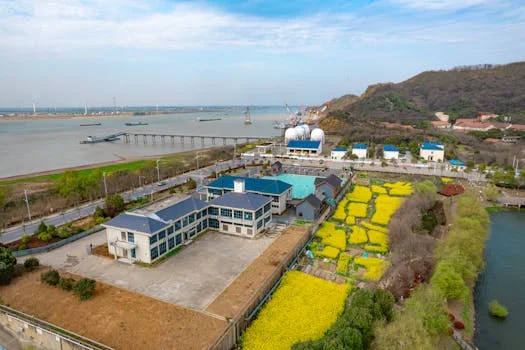
When analyzing how Taiwan’s industrial wastewater treatment costs compare to Querétaro’s, MBR technology shows a similar ROI profile due to land scarcity in both regions. DAF (Dissolved Air Flotation) systems are essential for pre-treatment in the meat processing and dairy industries of Querétaro. DAF systems for Querétaro’s high-FOG wastewater streams cost between MXN 15M and MXN 30M for a 1,000 m³/day flow.
| Feature | A/O System | MBR System | DAF (Pre-treatment) |
|---|---|---|---|
| Primary Use | Municipal/Light Industrial | High-COD/Reuse Projects | High-FOG/Pre-treatment |
| Cost (1,000 m³/day) | MXN 35M – 55M | MXN 45M – 70M | MXN 15M – 30M |
| Effluent Quality | Secondary (BOD < 30) | High-Grade (BOD < 5) | Pre-treated (TSS < 100) |
| Space Efficiency | Low (Large Tanks) | High (Compact) | Moderate |
Querétaro’s Compliance Checklist: Permits, Discharge Limits, and Penalties
Navigating the legal landscape in Querétaro is as critical as the engineering design. Failure to secure the correct permits from the Comisión Nacional del Agua (CONAGUA) or the Secretaría de Desarrollo Sustentable (SEDESU) can result in project halts or permanent plant closures. The Mexico’s 2025 package wastewater treatment plant requirements highlight that modularity and documentation are now mandatory for fast-track permitting.Required Permits & Costs:
- Environmental Impact Assessment (MIA): Issued by SEMARNAT/SEDESU. Costs range from MXN 50,000 to MXN 200,000 depending on project complexity.
- CONAGUA Discharge Permit: Mandatory for any discharge into federal bodies. Costs range from MXN 20,000 to MXN 100,000.
- Municipal Land-Use & Construction Permits: Specific to Querétaro’s municipalities (e.g., Corregidora, El Marqués). Budget MXN 10,000–50,000.
Discharge Limits (NOM-001-SEMARNAT-2021): The 2021 update significantly lowered allowable limits for several parameters. Current standards for discharge into "Type A" bodies (rivers used for irrigation) include:
- BOD: < 30 mg/L
- TSS: < 40 mg/L
- COD: < 125 mg/L
- FOG: < 15 mg/L
- pH: 6.0 – 9.0
- Pathogen Control: Often requires a chlorine dioxide generator to ensure zero fecal coliform detection.
Penalties for non-compliance are severe. Under the 2023 Querétaro Water Law, fines can reach MXN 5 million, and repeated violations lead to the revocation of water concessions. Conversely, the "Reuse Incentive" provides a 20% credit on the state’s payroll tax or green tax for companies that can prove they reuse 50% or more of their treated effluent in cooling towers or irrigation.
ROI Calculator: How to Justify Your Querétaro Wastewater Treatment Plant Budget
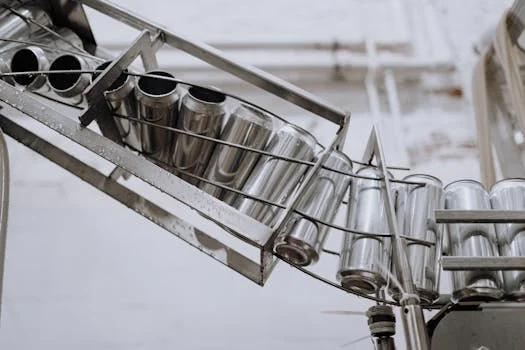
"A 1,000 m³/day MBR plant in Querétaro costs MXN 45M but saves MXN 12M/year in fines and water costs—resulting in a 3.75-year payback period." (HydropureWater Financial Modeling, 2025)
The ROI Framework (Inputs for your calculation):
- Annual Fine Avoidance: Estimate your current risk. Average industrial fines in Querétaro range from MXN 1.2M to MXN 3M per year for non-compliant discharge.
- Water Purchase Savings: Industrial water in Querétaro costs MXN 50–150/m³. If you treat and reuse 800 m³/day of your 1,000 m³/day flow, you save ~MXN 24,000/day (at MXN 30/m³ differential), or MXN 8.7M annually.