Fine Screen Wastewater Specifications: Mesh, Removal and Headloss
Fine screen wastewater specifications set opening size, TSS capture, and headloss before pumps and aeration see the load. Openings typically run from 0.25 mm to 6 mm. Municipal headworks often use 1–2 mm openings. High-hair or fiber streams may need 0.5 mm or finer, while headloss is often 150–300 mm and can exceed 500 mm on microscreens.
Mesh opening, TSS removal, and hydraulic headloss under stated flow govern screen selection. Openings range from 6 mm for coarser duty down to 0.25 mm for microscreens. Municipal wastewater commonly uses 1–2 mm mesh to capture rags and larger organics. Industrial streams rich in hair or fiber often need 0.5 mm or smaller.
Stainless steels 304 and 316 remain standard for corrosion resistance in wastewater. Wedge wire usually offers higher open area and less stringy clogging than perforated plate. Screening efficiency E = (1 − C_out / C_in) × 100, with C_in and C_out as influent and effluent TSS in mg/L. If influent TSS is 300 mg/L and effluent TSS is 24 mg/L, E = (1 − 24/300) × 100 = 92%.
According to US EPA fact sheet EPA 832-F-03-011 (June 2003), typical fine-screen openings are 1.5 to 6 mm (0.06 to 0.25 in). Very fine screens in that fact sheet use 0.2 to 1.5 mm (0.01 to 0.06 in). The 0.25 mm to 6 mm band on this page covers both classes. Most municipal reviews we do stay at 1–2 mm, because a 0.25 mm cloth blinds fast on wipes.
| Mesh Size (mm) | Typical TSS Removal (%) | Typical Flow Rate (m³/h) | Typical Headloss (mm) | Primary Use Case |
|---|---|---|---|---|
| 6.0 | 85 | 500-1000+ | 100-200 | Coarse debris removal, primary treatment |
| 2.0 | 90 | 300-800 | 150-250 | Municipal headworks, general solids removal |
| 1.0 | 92 | 200-600 | 200-300 | Enhanced municipal, some industrial streams |
| 0.5 | 95 | 100-400 | 300-500+ | Industrial high-hair/fiber, microscreening |
How does fine screening serve wastewater treatment?
Fine screening in wastewater treatment intercepts solids that would foul pumps, membranes, and aeration hardware. Coarse bars (often 10–50 mm) remove sticks and large trash; fine screens (0.25–6 mm) capture hair, fibers, and smaller debris. That step lowers rag-related failures and stabilizes secondary process loading when mesh matches influent solids and peak flow.
Why Fine Screens Matter in Wastewater Pretreatment
Fine screens protect downstream equipment by capturing rags, hair, and fine solids that coarse bars miss. A municipal plant in California reported a 40% reduction in pump maintenance costs after upgrading from 6 mm to 2 mm fine screens (IEUA RP-4 data). Clogged diffusers in aeration tanks can elevate energy use by 15–25% under reported EPA 2023 benchmarks. Bypass during peak flow can trigger NPDES permit violations, with civil penalties potentially exceeding $10,000 per day.
Common field signs include rag balls in aeration basins, frequent pump trips, and rising coagulant or flocculant use. Inadequate screening raises pump wear, diffuser fouling, and chemical demand in clarification. Rag balls in the basin are the complaint crews report first when only coarse bars are installed. According to US EPA (2003), a plant with a mechanically cleaned screen should also keep a standby unit for outages.
What wastewater fine screen tss removal efficiency should you expect?
Wastewater fine screen tss removal efficiency is about 85% at a 6 mm opening and about 95% at 0.5 mm under comparable loading in the mesh table. A 6 mm screen may remove about 85% TSS, while a 0.5 mm screen can reach about 95% TSS removal under comparable loading. Headloss rises as the opening gets finer, which is why capture and loss are specified together. On fibrous industrial influent, wash frequency decides cost more than the last few percent of capture.
According to US EPA (EPA 832-F-03-011, June 2003), fine screens are capable of removing 20 to 35 percent of suspended solids and BOD5. That bulk removal is a different result from the 85% to 95% capture rows tied to a stated opening. The same fact sheet states that very fine screens of 0.2 to 1.5 mm can cut suspended solids near primary clarification levels. Use the 20 to 35 percent band for whole-stream TSS and BOD5, and use the table for debris sized at the opening.
Broader process context for where screening sits in the plant is covered under fine screen wastewater treatment.
What fine screen mesh size for municipal wastewater is typical?
Fine screen mesh size for municipal wastewater is usually 1–2 mm, which captures rags and larger organics without the headloss of a microscreen. A 6 mm opening is the coarse end of the table and suits debris removal ahead of finer duty. About 0.5 mm is the industrial high-hair choice, not the default municipal opening. Most municipal channels we review already carry wipes, so 6 mm alone leaves stringy material for the diffusers.
For treated wastewater reuse, ISO 16075-1:2020 recommends openings of ≤1 mm where unrestricted irrigation applies. California Title 22 sets recycling criteria that often drive finer pretreatment. National codes such as China's GB 18918-2002 and Australia's AS 1546 also address screening or solids control. Match the opening to the reuse rule only when that rule is actually in the permit.
How should rotary drum vs step screen selection be made?
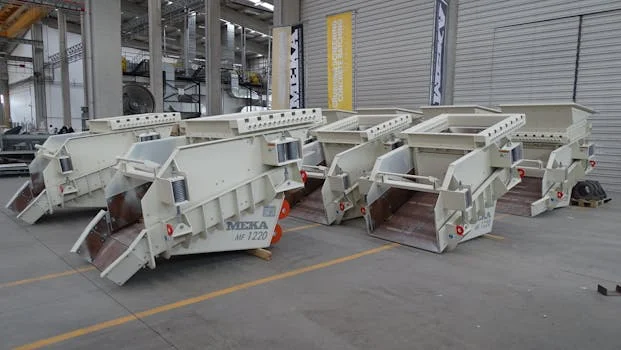
Rotary drum vs step screen selection starts from rag load, peak flow, footprint, and how often the crew can wash the unit. Rotary drum screens run continuously with typical headloss of 150–200 mm. Capacities often span 500 m³/h to over 2000 m³/h, which suits many municipal plants. Where rag mats wrap a drum every shift, a step screen is the calmer machine even when peak flow would fit the drum.
Step screens use staggered panels that handle high rag loads and self-clean with brushes and sprays, a fit for textile or food-processing streams. Band screens, a traveling-screen form, often use dual-flow layouts; capture rates can exceed 95% in large municipal headworks. Choice depends on rag content, peak flow, footprint, and cleaning interval. The comparison table keeps the flow, headloss, and maintenance bands for each type.
| Screen Type | Mesh Size Range (mm) | Max Flow Rate (m³/h) | Typical Headloss (mm) | Maintenance Frequency | Ideal Use Case |
|---|---|---|---|---|---|
| Rotary Drum | 0.5 - 6.0 | 500 - 2000+ | 150 - 200 | Low (daily checks, monthly deep clean) | High flow municipal, general industrial |
| Step Screen | 0.5 - 3.0 | 100 - 1000 | 200 - 400 | Moderate (weekly checks, cleaning as needed) | High rag load industrial, grit removal pre-screening |
| Band Screen | 0.5 - 3.0 | 800 - 3000+ | 150 - 250 | Low (daily checks, periodic spray nozzle cleaning) | Large municipal headworks, high throughput |
For high-efficiency rotary drum fine screens suitable for municipal and industrial headworks, consider the Rotary Mechanical Bar Screen (GX Series).
How does fine screen headloss calculation wastewater set the lift?
Fine screen headloss calculation wastewater practice starts from opening, open area, approach velocity, and the solids already on the cloth. Headloss for standard fine screens is typically 150–300 mm. Microscreens below 0.5 mm can exceed 500 mm and may need extra pumping capacity. Most clean-screen designs we check sit near the low end of 150–300 mm until a holiday peak blinds the mesh.
US EPA fact sheet EPA 832-F-03-011 lists an allowable headloss of 150 mm (6 in) for mechanically cleaned bar screens, at an approach velocity of 0.6–1.0 m/s (2.0–3.25 ft/s). That 150 mm figure is a bar-rack criterion, not the fine-mesh service band of 150–300 mm. Clear spacing in the same bar-screen table is 15–75 mm. The opening-area path for fine mesh is set out in the fine screen design calculation.
What microscreen headloss wastewater treatment plants should allow?
Microscreen headloss wastewater treatment duty can exceed 500 mm once the opening drops below 0.5 mm, and that loss may require extra pumping capacity. The mesh table shows 300-500+ mm at 0.5 mm, against 100-200 mm at 6.0 mm. Below 0.5 mm, the extra lift shows on the pump curve before the lab sheet moves. Do not specify a microscreen until the downstream pump can pass the blinded headloss, not only the clean-screen number.
Regulatory Standards for Fine Screening in Wastewater Treatment
US EPA practice under 40 CFR Part 503 focuses on adequate debris removal to protect downstream solids handling, without fixing a single mesh size. Designers still set openings from influent data and permit conditions. Earlier industry summaries often attributed a ≤6 mm mesh limit to Directive 91/271/EEC for plants above 2,000 p.e. The directive text defines primary treatment by performance: BOD5 reduction of at least 20% and TSS reduction of at least 50%, without prescribing a mesh opening (Council Directive 91/271/EEC, Art. 2(7)).
Directive (EU) 2024/3019 of 27 November 2024 recasts that framework, expands collection and treatment duties to agglomerations of 1,000 p.e. and above, and replaces 91/271/EEC from 1 August 2027 (EUR-Lex). According to the EUR-Lex summary of that directive, agglomerations of 1,000–2,000 p.e. must meet the collection duty by 31 December 2035. The same summary sets transposition by 31 July 2027 and secondary treatment by 2035 for agglomerations above 1,000 p.e. Article 2(6) of Directive 91/271/EEC defines 1 p.e. as a BOD5 load of 60 g of oxygen per day.
Bypass capacity for extreme wet-weather events remains a design requirement so screen failure does not force untreated discharge. A mesh number is not a permit limit when the legal test is percent removal of BOD5 and TSS. Crews who bypass a blinded screen during a storm are the ones who later explain the $10,000 per day exposure. Size the bypass before you argue about 0.5 mm versus 1 mm.
How to Select the Right Fine Screen: A Data-Driven Decision Framework
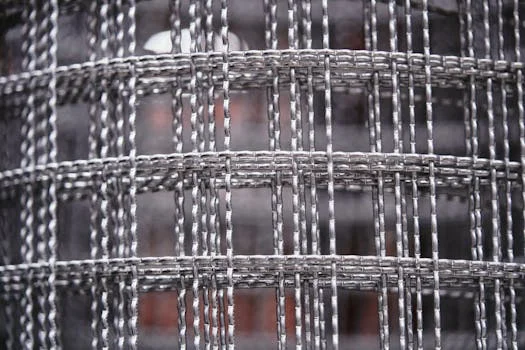
Screen selection starts with measured average and peak flow, TSS, rag content, and particle size. Match mesh to the removal goal: 6 mm for coarse debris, 1–2 mm for most municipal duty, and about 0.5 mm for high-fiber industrial streams. Then compare rotary drum, step, and band options against flow, rag load, footprint, and cleaning method. Estimate headloss and pumping energy before locking the opening; microscreens raise headloss and power use.
Capital cost for rotary drum units often falls between $50,000 and $200,000, while step screens may range from $30,000 to $150,000 (2025 market data). A June 2003 EPA fact sheet recorded contractor bids of $150,000 to $400,000 for rotary drum screenings removal, including construction. Those older bids are not a replacement for the 2025 equipment bands above. Use lifecycle cost and payback from lower pump and aeration maintenance to justify finer mesh.
| Decision Factor | Key Considerations | Recommended Action |
|---|---|---|
| Influent Characterization | Flow rate (avg/peak), TSS concentration, rag content (type/quantity), particle size distribution | Measure and document influent parameters. Differentiate municipal vs. industrial. |
| TSS Removal Goals | Required downstream protection level, regulatory requirements | Select mesh size (e.g., 1-2 mm for municipal, <0.5 mm for high-fiber industrial). |
| Screen Type Evaluation | Flow capacity, rag handling capability, footprint, self-cleaning mechanisms | Match screen type (rotary drum, step, band) to influent and operational needs. |
| Hydraulic Performance & Energy | Headloss characteristics, pumping capacity, energy consumption | Calculate total headloss and estimate energy costs. Consider VFDs for optimization. |
| Capital & Operational Costs | Initial equipment purchase, installation, ongoing maintenance, spare parts, energy | Develop a lifecycle cost analysis. Perform ROI calculations for upgrades. |
| Maintenance & Operability | Ease of cleaning, availability of spare parts, operator skill requirements | Prioritize screens with proven reliability and readily available support. |
Selection checklist: record dry-weather and peak flows in m³/h, then sample TSS and note rag or fiber type. Set mesh from downstream protection needs and compare screen types on headloss and cleaning. Size bypass for extreme events, price lifecycle energy and spare parts, and confirm 304 or 316 materials for corrosivity. Compare those readings with the fine screen wastewater specifications before the opening is frozen.
For high-efficiency rotary drum fine screens suitable for municipal and industrial headworks, consider the Rotary Mechanical Bar Screen (GX Series). For downstream TSS removal, explore DAF system specifications.
How do you calculate fine screen design parameters?
Sizing starts with peak hydraulic load, the required mesh opening, and allowable headloss. Size the screening area from peak flow and approach velocity so clean-screen headloss stays inside the 150–300 mm band typical for fine screens, or higher if microscreening is specified. Then check TSS removal with E = (1 − C_out / C_in) × 100 against the process target. For bar-screen hydraulic detail beyond fine-mesh duty, see what is mno4 in the water industry flow screen specification for headloss calculation.
Operational Best Practices: Maintenance, Troubleshooting and Optimization
Rotary drum screens usually need weekly spray and brush checks plus a monthly deep clean. Step screens often need monthly panel and cleaner inspections. Rag rolling drops when panels are asymmetric or spray angles are tuned. Finer mesh clogging often responds to higher spray pressure or more frequent wash cycles.
Lubricate chains about every 500 operating hours to limit wear. Slow drum speed during high-rag periods can raise capture without overloading drives. VFDs cut energy at low flow. Track TSS removal, headloss trend, and debris character so operators act before a bypass event.
Spray nozzles clog with the same debris the screen just caught, which is why a weekly check beats a late monthly dig-out. For related solids handling after screening, consult sludge dewatering equipment.
Who this is for: municipal and industrial plant engineers sizing headworks screens, EPC teams comparing rotary drum, step, and band options, and procurement leads building lifecycle cost cases. Who should look elsewhere: buyers seeking only coarse 10–50 mm bar racks without fine-mesh duty, or ultrapure semiconductor rinse standards unrelated to wastewater headworks. Next step: send influent flow, TSS, and rag data through the project inquiry form for a mesh and screen-type check against peak hydraulic load.
Frequently Asked Questions
Buyers usually ask about mesh, headloss, capture, and maintenance before they release a purchase order.
| Question | Answer |
|---|---|
| What is the difference between fine screen and coarse screen? | Coarse screens, typically bar screens with openings of 10-50 mm, remove large debris like rags, sticks, and plastics. Fine screens, with openings ranging from 0.25 mm to 6 mm, capture smaller solids, hair, and fibers, providing a higher level of protection for downstream processes. This difference in mesh size directly impacts TSS removal efficiency and the types of solids captured. |
| What mesh size is best for municipal wastewater? | For typical municipal wastewater headworks, a mesh size between 1 mm and 2 mm is generally recommended. This range effectively removes significant amounts of rags, grit, and other debris that could harm downstream equipment, while maintaining acceptable headloss. A 1 mm wedge wire screen, for example, can achieve up to 92% TSS removal at a flow rate of 200 m³/h with approximately 200 mm of headloss. |
| How do I calculate the headloss across a fine screen? | Headloss across a fine screen is primarily determined by the mesh opening size, the open area of the screen material, the flow rate, and the influent solids loading. While empirical data and manufacturer specifications provide typical ranges (e.g., 150-300 mm for standard fine screens, >500 mm for microscreens), detailed hydraulic calculations or pilot testing may be required for precise determination, especially for high-flow or high-solids applications. |
| What are the maintenance requirements for fine screens? | Maintenance varies by screen type. Rotary drum screens typically require weekly checks of spray nozzles and brushes, with periodic deeper cleaning. Step screens may need more frequent inspection of individual panels and cleaning mechanisms. Band screens also require regular checks of their traveling belt and spray systems. Consistent lubrication of mechanical components and prompt replacement of worn parts are crucial for all types. |
What is the difference between a fine screen and a coarse screen?
Coarse screens are usually bar racks with 10–50 mm openings that remove large trash such as sticks, plastics, and heavy rags. Fine screens use 0.25–6 mm openings to capture smaller solids, hair, and fibers before secondary treatment. The finer opening raises TSS capture and protects pumps and aeration gear. It also increases headloss and cleaning demand compared with coarse bars under the same peak flow.
What mesh size is best for municipal wastewater?
Municipal headworks typically use 1–2 mm mesh for rags and debris while keeping headloss workable. That range often removes most damaging solids without the energy penalty of microscreens. A 1 mm wedge wire unit can reach about 92% TSS removal near 200 m³/h with roughly 200 mm headloss when influent solids match municipal norms. Finer than 0.5 mm is usually reserved for high-fiber industrial streams or reuse pretreatment.
How do I calculate headloss across a fine screen?
Headloss depends on mesh opening, open area, approach velocity, and solids loading on the cloth or panels. Standard fine screens often show 150–300 mm headloss in service, while microscreens below 0.5 mm can exceed 500 mm and may need extra lift. Use manufacturer hydraulic curves at peak flow, then confirm with plant data if solids are sticky or fibrous. Keep spray water and bypass capacity in the same hydraulic check.
What maintenance do fine screens need?
Maintenance intensity follows screen type and mesh fineness. Rotary drums need weekly nozzle and brush checks plus periodic deep cleans. Step screens need panel and cleaner inspections on roughly a monthly cycle. Band screens need belt tracking checks and spray cleaning, and chains should be lubricated about every 500 operating hours before capture falls.
Related Equipment
- automated chemical dosing for downstream process optimization — view specifications, capacity range, and technical data
Need a customized solution? Request a free quote with your specific flow rate and pollutant parameters.