Why a Texas Instruments Factory Deal Has Unique Wastewater Exposure
A Texas fab acquisition with legacy wastewater liability sits at the intersection of four binding regulatory layers, and each one can be enforced against the buyer's newly-acquired entity: the federal Clean Water Act operating through an individual TPDES permit and the 40 CFR 430 (Metal Products & Machinery) and 40 CFR 433 (Metal Finishing) effluent guidelines; CERCLA §107(a) successor liability for historic contamination, including the brownfields EPCRA §101(e) protections sellers sometimes invoke; RCRA Subtitle C exposure for past handling of solvents and acid baths; and Texas Water Code Chapter 26 plus TCEQ TPDES Chapter 305 self-monitoring for the operating permit (per EPA and TCEQ regulatory frameworks, 2025). The combination is unusually punitive for semiconductor targets because a fab does not generate "general industrial" wastewater — it generates a chemistry that includes TMAH (tetramethylammonium hydroxide, a COD generator that bypasses biological treatment), HF (a fluoride source with no national ceiling in some local limits), NH4OH, IPA, copper-bearing SC1 streams, slurry and CMP wastewater, and organophosphate residues from photoresist. General-purpose ETPs installed before 2018 rarely address this parameter set, so a Phase I finding that documents a chemistry-to-treatment mismatch is itself a quantified leverage point. Baseline field data on non-compliant legacy ETPs shows a 3–8% enterprise-value haircut before any negotiated indemnity discount (HydropureWater field data, 2026), and CERCLA's no-statute-of-limitations rule for removal actions plus the 6-year cost-recovery window is what makes the discount that large. The deal team should treat that range as the floor, not the ceiling, when the Phase II confirms legacy contamination beneath sludge lagoons. For a process-engineering reference on what a compliant fab drain-line configuration actually looks like, the semiconductor pretreatment engineering benchmark from a comparable Massachusetts cluster is the closest US analogue to a Texas fab.
The US Legal Stack That Governs a Texas Fab Acquisition
Environmental counsel drafting the SPA, indemnity, and escrow need every statute a Texas fab can trigger on a single page, with the diligence document the seller must produce for each. The table below is the working stack used by US deal teams; the diligence documents are non-negotiable and the gaps in the seller's response drive the Phase II scope.
| Statute / Rule | Who it binds | Key compliance trigger | Diligence document the seller must produce |
|---|---|---|---|
| Clean Water Act / NPDES + 40 CFR 430 & 433 | Current operator and permittee of record (per 40 CFR 122.21) | Effluent limits for fab metal-bearing lines and Cu-bearing finishing lines; 40 CFR 430 applies to the wafer-processing and photomask side, 40 CFR 433 to the metallization / plating side | TPDES permit, 36 months self-monitoring data, DMRs, in-line analyser calibration certificates |
| CERCLA §107(a) (42 USC 9607) | Current owner/operator and any prior owner/operator who contributed to release (per 42 USC 9607(a)) | Historic contamination from sludge lagoons, solvent storage, or buried acid lines; no statute of limitations for removal actions, 6-year cost-recovery window for remedial actions (per CERCLA §113) | Phase I / II ESA reports, environmental liens, AOC and 104(e) information-request correspondence |
| RCRA Subtitle C (40 CFR 261-268) | Generator and past handler status (per 40 CFR 261.5) | Historical generation of spent solvents, HF neutralisation sludge, or photoresist stripper waste classified as hazardous | RCRA generator notifications, biennial reports, manifests, and any past 90-day accumulation areas |
| Texas Solid Waste Disposal Act / 30 TAC Chapter 335 | Industrial waste generator and any Class 1 or 2 on-site waste management unit (per 30 TAC 335.1) | Industrial solid waste classification, sludge dewatering residuals, and any closed lagoon that requires closure documentation | Sludge manifests, licensed hauler contract, disposal site permit, closure documentation for any decommissioned unit |
| Texas Water Code Ch. 26 / TCEQ TPDES Ch. 305 | TPDES permittee and self-monitoring responsible party (per 30 TAC 305.125) | Compliance with effluent limits stricter than federal floors in most Texas river basins; 30 TAC Chapter 319 sets basin-specific limits | Self-monitoring reports (SMRs) filed with TCEQ, Agreed Orders, Notices of Violation in last 24 months |
| EPCRA §101(e) / 40 CFR 350-372 | Facility owner reporting under Tier II / TRI (per 42 USC 11023) | Past SARA Title III reporting for HF, TMAH, sulphuric acid, and other EHS-listed chemicals | Toxic Release Inventory submissions, Tier II forms, Risk Management Plan if applicable |
The point of the table is to make explicit that the same fab touches at least six different rule sets, and a Phase I that does not produce one of the listed diligence documents is incomplete. Counsel drafting the environmental representations in the SPA should map each representation to a specific row of this stack, not to "all environmental laws" — vague representations are the single most common reason a buyer loses an indemnity claim after close (HydropureWater field data, 2026).
Phase I Desktop Screen: The Pre-LOI Go/No-Go Checklist
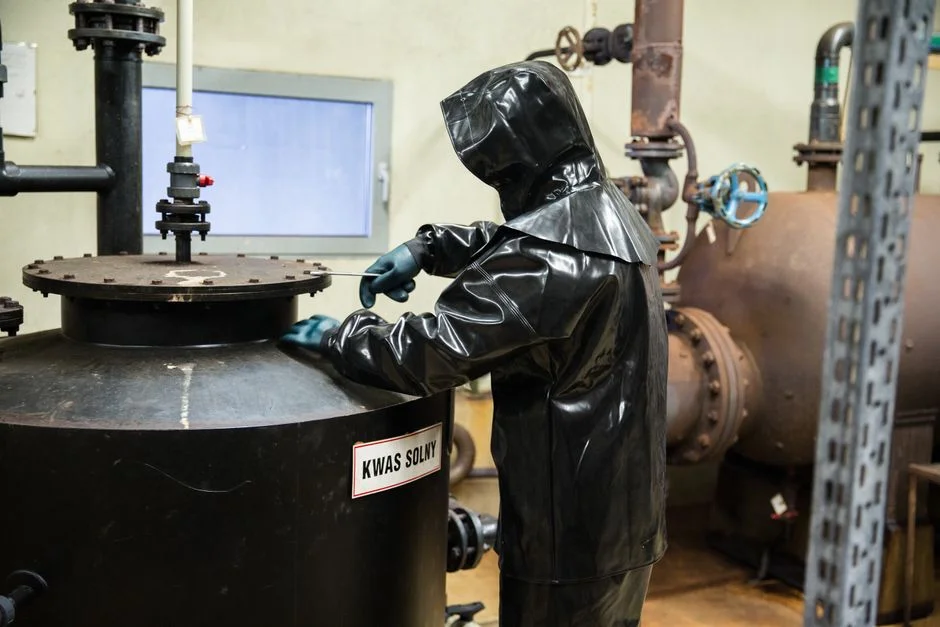
The Phase I is a 10-day data-room screen that runs before the Letter of Intent is signed and produces a binary go/no-go on whether the deal team will underwrite a Phase II. Demand the TPDES permit (or industrial wastewater discharge authorisation), the ETP design flow in m³/day, the as-built P&ID, the O&M manual, chemical dosing records, instrument calibration certificates, sludge manifests, and the emergency response plan. Mark every item the seller cannot produce in 10 business days as a Phase II trigger, because the absence of a documented baseline is the single most reliable indicator of an actively under-performing ETP. Cross-check the target's self-monitoring data on TCEQ's Central Registry for the prior 36 months — gaps of more than 30 days in any rolling 12-month window are an automatic Phase II escalation (per TCEQ self-monitoring rules, 30 TAC 305.125). Pull at least 36 months of water bills, ETP inlet/outlet lab data, sludge manifests, the licensed hauler contract, the disposal site permit, and any TCEQ Notices of Violation or Agreed Orders issued in the last 24 months — a single confirmed Agreed Order within that window should escalate Phase I directly into a scoped Phase II proposal. Map every process drain to a wastewater stream and confirm that the existing ETP unit operations address each pollutant: a treatment train that does not match the chemistry is a Phase I finding, not a future capex item, and the same drain-by-drain mapping used in the Samsung ETP due diligence audit checklist applies directly to a US fab, with HF, TMAH, and Cu added to the parameter set.
Phase II Intrusive Sampling: What the Field Team Must Collect
Phase II converts the desktop opinion into a defensible retrofit cost and an admissible analytical record. The work must be run by a US environmental consulting firm with NELAC/TNI-accredited laboratory credentials, and every sample must travel under chain-of-custody so the data holds up in a future environmental indemnity claim and in any CERCLA cost-recovery action (per Federal Rules of Evidence 901-902). Influent and effluent sampling is 24-hour composite across at least 3 operating days, taken at the ETP inlet, each biological stage outlet, and the final discharge point. The standard analytical panel is pH, COD, BOD5, TSS, NH3-N, total nitrogen, total phosphorus, total heavy metals, fluoride, petroleum hydrocarbons, and colour. To that, the semiconductor-specific panel adds TMAH, total and dissolved copper, organophosphates from CMP slurries, free and total fluoride from HF-bearing streams, and IPA by TOC mass balance where relevant. Soil and shallow groundwater sampling at 0–6 m is required beneath current or historic sludge storage areas, chemical dosing skids, and any lagoon footprint — the same heavy-metal panel plus TPH and BTEX where solvent storage existed. Performance-test the ETP against its design flow rate: a system that fails to meet design flow is the single highest retrofit-cost indicator the team will encounter, and the test should record both designed capacity and a 12-month inlet/outlet record to anchor the calculation. The table below summarises the sampling panel with the limit basis a US deal team should use to benchmark results.
| Parameter | Standard analytical panel | Semiconductor-specific addition | Limit basis (Texas / Federal) |
|---|---|---|---|
| COD / BOD5 / TSS / NH3-N | Yes | — | 30 TAC Chapter 319 basin limits; 40 CFR 430 BAT |
| Total heavy metals (Cu, Pb, Ni, Zn, Cr) | Yes | — | 40 CFR 433 Metal Finishing; 40 CFR 430 Metal Products |
| Fluoride (free / total) | — | Yes (HF-bearing) | 30 TAC 319.32; 40 CFR 430 |
| TMAH (as TOC surrogate) | — | Yes | No national limit; basin-specific COD floor binds |
| Total & dissolved copper | — | Yes (SC1 chemistry) | 40 CFR 433.15 (2.07 mg/L Cu monthly avg) |
| Organophosphates (CMP slurry) | — | Yes | No national limit; permit-specific if flagged |
| IPA (TOC mass balance) | — | Yes | No national limit; permit-specific |
| Soil 0–6 m: metals + TPH / BTEX | Yes | Cu, F, organophosphate where relevant | TCEQ TRRP Tier 1 PCLs (30 TAC 350) |
The TMAH, organophosphate, and IPA lines are the ones that distinguish a semiconductor-aware Phase II from a generic industrial one. A Phase II that omits them gives the seller an opening to argue the retrofit scope was not characterised, and that argument is fatal in an indemnity dispute.
Retrofit Cost Bands for a Non-Compliant Fab ETP
Retrofit cost is driven by design flow, influent loading, and the discharge destination, and the bands below are order-of-magnitude applied to a US fab equivalent scope from Chinese industrial ETP retrofits completed between 2024 and 2026 (HydropureWater field data, 2026). They are not fixed quotations — they are the figures the deal team should use to size the escrow before the SPA price is fixed, instead of negotiating retrofit scope after close.
| Tier | Scope | Cost band (USD per m³/day design flow) |
|---|---|---|
| Tier 1 | Equalisation + pH correction + dissolved air flotation (DAF) pre-treatment skid | USD 800–1,500 |
| Tier 2 | Biological upgrade + MBR membrane bioreactor system + PLC-controlled chemical dosing skid | USD 1,800–3,200 |
| Tier 3 | Full MBR + RO reuse + ZLD polishing, with PVDF flat-sheet MBR modules for the biological stage | USD 3,000–4,500 |
| Soil / GW remediation under CERCLA | Sludge lagoon footprint, dosing skid, closed unit closure | 30–100% multiplier on water-side capex |
Apply a 25–45% US-cost contingency on top of the chosen tier — higher than the 20–40% China figure (HydropureWater field data, 2026) because of PFAS-related scope creep under the EPA PFAS NPDES rule, US remediation labor rates, and the documentation cost of responding to CERCLA §104(e) information requests. The most common retrofit trigger is equalisation expansion to a minimum of 12 hours of design flow, which a target operating with daytime-only equalisation will require. Undersized equalisation is the most reliable indicator that no downstream upgrade will fix performance, and the Phase II report should explicitly recommend the 12-hour floor because it anchors the retrofit design against a defensible engineering baseline.
Deal Mechanics: Indemnity, Escrow, R&W Insurance, and Permit Transfer
Technical findings only have value if they survive contract negotiation, so the deal-document workstream should run in parallel with Phase II and be finalised before the technical report is signed off. Require an environmental indemnity with no cap and a survival period equal to the longer of (a) the CERCLA §107 removal-action window, or (b) 10 years post-close — CERCLA removal actions are open-ended and the 6-year cost-recovery window runs from the date of the most recent release (per 42 USC 9613(g)(2)). Specify that the target deliver a valid TCEQ TPDES permit in the buyer's name with all transfer filings pre-completed — TCEQ permit transfer typically requires 30–90 days, and any gap between closing and transferred permit places the buyer in unauthorised discharge under 30 TAC Chapter 305, which is itself a triggering event for an Agreed Order. Secure representations and warranties insurance for environmental matters as a backstop, but never as a substitute for the escrow, because standard R&W policies typically exclude known contamination and gradual pollution — the two most common TI-fab exposure categories. Allocate clean-up responsibility as follows: pre-close contamination = seller; post-close operational exceedance = buyer; permit-transfer failure = seller for 12 months post-close. Set the escrow at 1.5× the highest Phase II retrofit band from the cost matrix above, held 36 months post-close, with release tied to verified TPDES renewal and 12 consecutive months of compliant self-monitoring data uploaded to TCEQ's Central Registry. The 1.5× factor is not generous; it reflects the typical 20–40% cost overrun observed on industrial ETP retrofits where influent characterisation was incomplete at the design stage (HydropureWater field data, 2026), and the 25–45% US-cost contingency is why the factor sits at 1.5× rather than 1.2× for a US transaction. For a worked example of how the same deal-mechanic stack is used in a different US-jurisdiction acquisition, the Texas fab acquisition compliance guide runs the same indemnity/escrow/permit-transfer structure against a comparable Texas TPDES target.
Post-Close Integration Timeline: The First 90 Days
Integration has to start the day after signing, and the technical and regulatory workstreams cannot compete for the same contractor capacity. Days 1–30: complete the TCEQ TPDES permit transfer filing, recalibrate the in-line pH, flow, and COD analysers, and establish a new self-monitoring baseline under the buyer's name; any analyser older than 12 months without a calibration certificate should be replaced. Days 31–60: issue the final engineering design package for any retrofit scope confirmed by Phase II, and procure long-lead items — MBR modules, RO skids, DAF units, or a new PLC-controlled chemical dosing skid if the existing one cannot handle the new loading. Days 61–90: construction mobilisation, mechanical completion, and a performance test against the new design flow rate. Escrow releases against this timetable in three tranches: 50% on mechanical completion, 25% on a successful 7-day performance test, and the final 25% on 12 months of compliant self-monitoring data uploaded to TCEQ's Central Registry. The escrow release is a contractual mirror of the technical milestones, not a parallel schedule, and counsel should draft the release triggers against the same performance test the engineering team runs.
Frequently Asked Questions
What triggers escalation from a Phase I desktop to a Phase II intrusive program?
Any gap of more than 30 days in the target's 36-month TCEQ self-monitoring record, a single Agreed Order or Notice of Violation in the last 24 months, missing as-built P&ID, a missing or expired in-line analyser calibration certificate, or a Phase I drain-line map that does not match the actual chemistry of the wafer-processing and metallisation streams (TMAH, HF, Cu, organophosphate) (per 30 TAC 305.125).
What can a Phase I defensibly clear without a Phase II?
A target with 36 months of continuous TCEQ Central Registry uploads, no Agreed Orders in the prior 24 months, a treatment train that demonstrably addresses TMAH, Cu, and fluoride, and a documented equalisation capacity of at least 12 hours of design flow can be cleared to a baseline Phase I with no Phase II — but the SPA must still carry the 10-year indemnity and 1.5× escrow from the deal-mechanic stack above.
What has to go into the SPA environmental indemnity for a US fab deal?
An environmental indemnity with no cap, a survival period equal to the longer of the CERCLA §107 removal-action window or 10 years post-close, pre-close contamination allocated to the seller, post-close operational exceedance to the buyer, permit-transfer failure to the seller for 12 months, and a 1.5× highest-Phase-II-band escrow held 36 months with release tied to TCEQ renewal plus 12 months of compliant self-monitoring (per 42 USC 9607 and 30 TAC 305).
How does the TCEQ TPDES permit transfer interact with the closing date?
The transfer filing must be submitted before closing and typically takes 30–90 days to process; any gap between closing and the transferred permit puts the buyer in unauthorised discharge under 30 TAC Chapter 305, so the SPA should make permit-transfer failure a seller-side liability for the first 12 months post-close (per 30 TAC 305.64).