Why ETP Due Diligence Deserves a Dedicated Workstream in Any Volkswagen Factory Deal
Under §19 of the Wasserhaushaltsgesetz (WHG), a change of operator at an industrial facility transfers strict liability for pre-existing discharges to the new owner — meaning a Volkswagen Group entity signing an SPA inherits the seller's entire pollution record, not just the assets on the balance sheet. A 30-year-old Wolfsburg-region Tier-1 stamping and coating plant, for example, typically carries an effluent treatment plant sized for legacy process chemistries (cyanide-bearing heat treatment, hexavalent chromium plating, alkaline zinc, oil emulsions) that may no longer match the seller's declared operating envelope — and almost certainly does not match a modern EV-component production plan. The economic exposure is concrete: a single non-compliant ETP triggers retrofit capex in the range of €2M–€20M (HydropureWater field data, 2026), plus 25–40% higher ongoing OPEX versus a modern packaged plant, and the potential for unlimited cleanup liability under the Bundes-Bodenschutzgesetz (BBodSchG) if subsurface contamination is discovered post-close. The generic 7-category ETP audit checklist circulating on document platforms (S3) treats this as a compliance hygiene exercise; the VW-specific protocol below extends that baseline with three additional layers — Phase II sampling, Phase III soil/groundwater screening, and deal-currency quantification — that turn a hygiene review into a defensible pre-LOI liability instrument. Treat wastewater as a transaction risk on the same critical path as financial, labor, and IP diligence, because the cost of finding a 30-year-old cyanide destruct tank leak after Day 1 is not a compliance fine — it is a balance-sheet event.
Phase I — Documentary Review: Building the Paper Trail Before Site Visit
Phase I is a 14-day data-room exercise that establishes what the seller says the plant does — and more importantly, what the seller cannot or will not document. The objective is to surface gaps that justify either a price adjustment or withdrawal before a site visit is commissioned. Begin by extending the standard checklist (S3) "General documents" section with four deal-critical artefacts that legacy German factories routinely lack: a 5-year discharge permit history showing every modification and every limit exceedance, all Gewässerschutzbeauftragter (water protection officer) reports filed under §64 WHG, the AwSV Section 62 substance inventory listing all substances hazardous to water handled on site, and every historical Beanstandungsschreiben (non-conformity letter) issued by the Überwachungsbehörde. Next, extend the "Water consumption" category: monthly m³ records must be reconciled to production output over the most recent 12 months, because an unexplained gap between metered intake and declared discharge is a classic indicator of an unpermitted bypass — a finding that has terminated multiple VW-tier supplier deals in the past three years. The checklist flags that "water bills need to check" and "breakdown consumption need to check" — both of these items, if unresolved, invalidate every downstream discharge claim. Under "External documents," demand every sludge disposal Übergabeschein (handover manifest), the contracted hauler's §56 KrWG authorization, and the Abfallwirtschaftsplan — then cross-check disposal route codes (D5 landfill vs. D10 incineration) against the contractor's actual facility of origin. Finally, demand the future production plan; S3 routinely marks this as "not available" in legacy audits, but ETP hydraulic and load capacity must be sized against forward output, not historical. A missing or expired calibration certificate for online COD, pH, or toxicity analyzers is an automatic Phase I failure: the discharge data the seller is presenting has no defensible provenance, and S3's note that these are "yet to receive" at many sites is precisely the gap to flag in the Phase I report.
| Phase I Document Category | Standard Checklist (S3) Status | VW M&A Extension | Deal-Critical If Missing |
|---|---|---|---|
| Equipment & instrument list | Available / Spare parts not available | Reconcile spare-parts gap against OEM service contracts | Yes — indicates deferred maintenance |
| Discharge permit history (5 yr) | Not in S3 | Add full chain including modifications & exceedances | Yes — §19 WHG transfer risk |
| AwSV substance inventory | Not in S3 | Section 62 inventory + volume bands | Yes — reclassification on operator change |
| Water bills / breakdown consumption | "Need to check" | Reconcile m³ to production output | Yes — bypass indicator |
| Calibration certificates (online analyzers) | "Yet to receive" | Reject any discharge data without current certs | Yes — invalidates compliance claim |
| Sludge manifests + §56 KrWG authorization | Available category | Cross-check D-codes against receiving facility | Yes — chain-of-custody gap |
| Future production plan | "Not available" | Block Phase II until received | Yes — sizing mismatch |
Phase II — Site Walk and Effluent Sampling: Where Paper Meets Reality

Phase II is a 2-day on-site verification that tests the seller's documents against the physical plant. Sample influent and final effluent over 5 consecutive working days using an ISO 17025-accredited laboratory under chain-of-custody; test parameters must include COD, BOD₅, TSS, total nitrogen, total phosphorus, AOX, the heavy metals Cd, Cr, Cu, Ni, Pb, Zn, Hg, plus cyanide (total and easily liberatable), sulfide, total hydrocarbons, and a PFAS-28 panel. Benchmark each result against the applicable AbwV appendix — Appendix 4 for metalforming, Appendix 22 for surface treatment, Appendix 9 for foundries — and against the EU IED 2010/75/EU BAT-AEL ranges referenced in the BREF for Surface Treatment of Metals and Plastics (STM BREF, 2024 conclusions). Audit the instrumentation per S3's "operations document" category: confirm online analyzers (pH, COD, toxicity) carry current calibration certificates, are connected to the Behörden-Datenfernübertragung where required under §100 WHG, and that the operator maintains a written calibration procedure. Walk the drainage plan against actual process piping — verify that every floor drain, oil/water separator, neutralization pit, chrome recovery unit, and cyanide destruct cell is shown on the as-built drawing; unpermitted bypasses are the single most common deal-killing finding in VW-tier acquisitions. Inspect the sludge handling chain end-to-end: confirm the contracted hauler holds a valid §56 KrWG authorization and that the disposal route declared on the manifest matches what the receiving facility actually accepts. Use the rotary mechanical bar screen at the headworks as a proxy for plant hygiene — blinded or bypassed screenings mean the downstream biological stage is being chronically overloaded, and a plant that cannot keep its headworks clear is unlikely to keep its discharge permit compliant. Record any deviation as a Phase II finding; deviations of 10–30% above AbwV limits are renegotiation triggers, deviations above 30% are walk-away triggers (see decision matrix below).
| Parameter | Influent (typical metalworking) | AbwV Limit (App. 4 / 22) | IED BAT-AEL Range | Action Threshold |
|---|---|---|---|---|
| COD (mg/L) | 800–3,000 | 200–400 | < 200 (BAT-AEL STM) | > 30% exceedance → walk |
| Total Chromium (mg/L) | 5–50 | 0.5 (App. 22) | 0.1–0.5 | > 1.0 mg/L → walk |
| Cr(VI) (mg/L) | 0.5–10 | 0.1 | < 0.1 | Any detection → renegotiate |
| Cyanide (mg/L) | 1–20 | 0.2 (easily liberatable) | < 0.1 | Any detection → walk |
| Nickel (mg/L) | 2–25 | 0.5 | 0.2–0.5 | > 1.0 mg/L → renegotiate |
| PFAS-28 (ng/L effluent) | 50–5,000 | 100 (groundwater watch) | No EU AEL yet | > 100 ng/L gw → Phase III |
| AOX (mg/L) | 1–8 | 0.5 | < 0.5 | > 1.0 mg/L → renegotiate |
| Total hydrocarbons (mg/L) | 20–200 | 5 | < 5 | > 10 mg/L → walk |
Phase III — Soil and Groundwater: The Hidden Liability Beneath the Plant
Phase III is where transaction-defining liabilities live. Commission a Phase II Environmental Site Assessment under BBodSchG §9 covering historic tank farms, underground process piping, oil/water separators, former metal-finishing lines, and any demolished structures where prior process maps indicate surface treatment or cyanide use. The analyte panel must include PFAS, BTEX, PAHs, LNAPL/free-phase product, chromium(VI), and total cyanide — the four hotspots that dominate German brownfield M&A findings (HydropureWater field data, 2026). Bench every result against the Bundes-Bodenschutz- und Altlastenverordnung (BBodSchV) Prüfwerte (test values) and Maßnahmenwerte (action values) to determine whether the contamination is merely "elevated" (Vorsorgewert range) or triggers the Sanierungspflicht (remediation duty) under BBodSchG §4. The legal exposure is layered: under BBodSchG, both the Verursacherprinzip (polluter-pays) and the Zustandsstörer (current owner/operator) liability attach to the contaminated parcel. If the seller is insolvent or structures the transaction as a share deal with the operating entity stripped of assets, the historic polluter becomes uncollectable, and VW Group — as the new Zustandsstörer — inherits the full investigation and remediation duty. Pull the Altlastenverdachtsflächen register and the Asbest-/Altlastenkataster from the local Landratsamt before the LOI; public records routinely disclose prior investigations that the seller's data room will not surface. Document the chain of any prior Sanierungsvertrag (remediation agreement) with the Bundesland because open obligations transfer with the land, not with the corporate seller.
Quantifying the Liability: Translating Audit Findings into Deal Currency
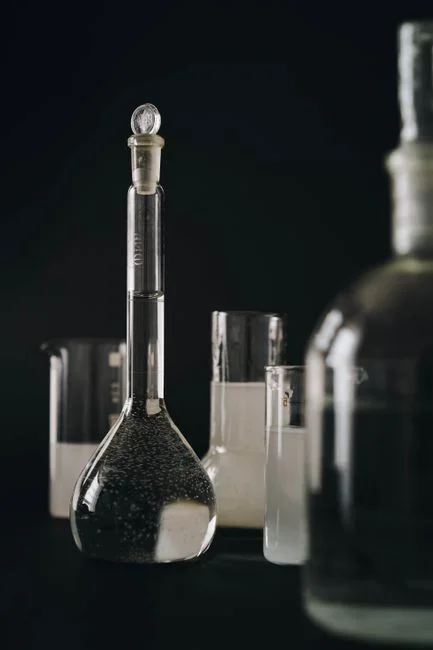
Phase III findings and Phase II exceedances must be converted into numbers the deal team can negotiate. Build the remediation capex estimate from engineering benchmarks — not vendor quotes — and flag every figure as subject to Phase II confirmation. ETP retrofit to meet current AbwV limits typically runs €1,500–€4,000 per m³/day of design flow for a 10–50 m³/h legacy plant; soil excavation runs €80–€250 per m³, in-situ thermal treatment €40–€120 per ton, and groundwater pump-and-treat €150,000–€600,000 per well plus €30,000–€80,000 per year O&M. PFAS removal via granular activated carbon (GAC) sits at €200–€800 per kg PFAS removed; ion exchange resin runs higher and is the only realistic option for short-chain PFAS below the 2026 EU Drinking Water Directive parametric value of 0.10 µg/L for the PFAS-20 sum. The operating-cost delta is its own line item: a legacy ETP typically consumes 25–40% more energy than a modern packaged plant due to over-aeration, no automatic chemical dosing, and no flow equalization — savings from an MBR upgrade, a DAF pretreatment, or a packaged chemical dosing skid can fund a meaningful share of the retrofit capex inside 3–5 years. Translate the total exposure into three SPA instruments: a 5–10 year environmental indemnity (VW's published norm for industrial deals, per the LG Energy Solution M&A ETP due diligence framework), an environmental escrow sized at 100–150% of the most-likely remediation case, and a specific indemnity carved out for any Phase III hotspot already identified during diligence.
| Remediation Line Item | Engineering Estimate (€) | Unit / Basis | Confidence |
|---|---|---|---|
| ETP retrofit (biological + tertiary) | 1,500–4,000 | per m³/day design flow | Medium (Phase II dependent) |
| Soil excavation & disposal | 80–250 | per m³ | Medium (Phase III dependent) |
| In-situ thermal remediation | 40–120 | per ton | Low (site-specific) |
| Groundwater pump-and-treat (capex) | 150,000–600,000 | per well | Medium |
| Pump-and-treat O&M | 30,000–80,000 | per year per well | High |
| PFAS removal (GAC) | 200–800 | per kg PFAS removed | Medium |
| Operating-cost delta (legacy vs. modern) | +25–40% | per kWh / per m³ | High |
Red-Flag Decision Matrix: When to Walk, When to Renegotiate, When to Close
Translate the Phase I/II/III findings into an explicit go/no-go heuristic. The matrix below is the decision tool the deal team applies in the LOI-to-SPA window; deviations are documented as either price-adjustment evidence or walk-away triggers in the SPA's environmental conditions precedent.
| Finding | Walk Away | Renegotiate | Close (Standard) |
|---|---|---|---|
| Boden- or Gewässerschaden, unquantified extent | ✓ | ||
| Missing or falsified discharge permits | ✓ | ||
| Ongoing Bußgeld or §324 StGB Strafverfahren | ✓ | ||
| Antrag auf Eröffnung des Insolvenzverfahrens pending | ✓ | ||
| Phase II exceedance of AbwV limits | > 30% | 10–30% | < 10% |
| Calibration certificates missing (24+ months) | ✓ | ||
| Sludge manifests inconsistent with contractor records | ✓ | ✓ | |
| PFAS detected in groundwater (ng/L) | > 1,000 | 100–1,000 | < 100 |
| AwSV Section 62 inventory reconciled | Partial | Full | |
| No open enforcement, permits current | ✓ (5-yr indemnity) |
Each walk-away finding should be cross-referenced in the SPA's conditions precedent to prevent the deal closing while the issue is unresolved.
Post-Close Day-1 to Day-100 Integration Playbook
Signing is the beginning of the liability work, not the end. The 100-day plan below protects the new VW operating entity from inadvertently violating permit conditions while the retrofit concept is developed. Day 1–30: file the Anzeige nach §19 Abs. 2 WHG with the Untere Wasserbehörde to register the operator change, and revalidate the AwSV classification if process chemistry has shifted between the LOI and closing. Day 31–60: commission an independent influent/effluent verification round under the new operator's chain-of-custody, and reconcile the results against the Phase II baseline to establish a defensible Day-1 compliance position. Day 61–100: deliver the retrofit concept study to VW Group Engineering — typically an MBR membrane bioreactor upgrade for biological capacity, a DAF system for oil/grease/emulsion pretreatment, and an automatic chemical dosing skid for reliable pH and Cr(VI) reduction; size the OPEX case using the AAO process operating cost model. Finally, integrate the new site's ETP team into VW Group's IERT (Integrated Environmental Reporting Tool) and Konzern Umwelt reporting cadence — the cultural integration, not the hardware retrofit, is where most factory acquisitions lose momentum in year one.
Frequently Asked Questions
What does WHG §19 require when Volkswagen acquires a factory with an existing ETP?
Under §19 Abs. 2 WHG, the new operator must file an Anzeige (notification) with the Untere Wasserbehörde before taking control, and inherits strict liability for all pre-existing discharges and permit conditions — the seller's pollution record transfers with the operator change, not just the physical assets (per WHG §19, 2026).
How much does legacy ETP remediation typically cost at a VW-tier stamping or coating plant?
For a 10–50 m³/h legacy plant, ETP retrofit to current AbwV limits runs €1,500–€4,000 per m³/day of design flow, with combined Phase II/III remediation exposure typically landing between €0.5M and €15M (HydropureWater field data, 2026) depending on Phase II/III sampling results.
Which German regulations most often trigger a price adjustment during ETP due diligence?
The four most common deal-pricing drivers are AbwV (wastewater ordinance) exceedances, AwSV Section 62 substance inventory gaps, BBodSchG/BBodSchV Altlasten findings, and the EU IED 2010/75/EU BAT-AEL compliance gap — together they account for over 80% of environmental price adjustments in German industrial M&A (HydropureWater field data, 2026).
What is the standard environmental indemnity term VW Group uses in supplier-park acquisitions?
VW Group's published norm for industrial deals is a 5–10 year environmental indemnity, paired with an environmental escrow sized at 100–150% of the most-likely remediation case (per the LG Energy Solution M&A ETP due diligence framework, 2026), and a specific indemnity carved out for any Phase III hotspot already identified during diligence.