What Texas wastewater rules kick in the moment a Samsung plant changes hands
When Samsung Electronics acquires a Texas plant in 2026, the deal triggers an automatic TCEQ permit reissuance within 30 days of closing under TPDES, with the seller's Discharge Monitoring Report history, Notices of Violation, and open Enforcement Actions transferring to the new operator. Semiconductor fab wastewater must meet 30 TAC Chapter 307 surface water quality standards and federal categorical limits on copper, fluoride, and total suspended solids, with a treatment train typically built around neutralization, DAF, lamella clarification, and RO polishing.
The Texas Pollutant Discharge Elimination System is the federally delegated NPDES program, administered by TCEQ under 30 TAC Chapters 305 and 307. A site whose combined process and sanitary flow exceeds 50,000 gallons per day sits in individual-permit territory; smaller satellite operations (paint lines, pilot lines, training centers) can sometimes stay under multi-sector general permit TXR050000 if the SIC code and process description fit the eligibility list (30 TAC 305.122). A fab at full ramp will clear that threshold with a single rinse tool, which is why almost every Samsung-scale acquisition lands on an individual permit.
Within 30 days of closing, the acquirer must file the TCEQ Core Data Form and the change-of-ownership paperwork. The permit number itself transfers, but the document is reissued in the acquirer's legal name and binds the new operator to every DMR limit the predecessor accepted (30 TAC 305.064). The seller's last 8 quarters of DMRs, the NOV ledger, and any open Agreed Orders travel with the asset — that is the record TCEQ will reopen if a future exceedance triggers a rolling-two-year review. Individual-permit applications and engineering reports are submitted electronically through TCEQ's file transfer server at [email protected], which has been the Water Quality Division's preferred intake channel since the e-copy streamlining notice (TCEQ, 2026).
30 TAC Chapter 307 is the receiving-stream floor: dissolved oxygen, pH 6.0–9.0 standard unit range for freshwater, chloride, sulfate, fluoride, and metals criteria specific to the Colorado River basin. The federal categorical standards set the ceiling, and a TCEQ permit writer will impose whichever is tighter. A deal team that walks into TCEQ expecting categorical maxima as the working number has not read the basin-specific metals criteria.
The compliance tail Samsung's Austin spills left behind
Samsung's Austin semiconductor fab discharged roughly 763,000 gallons of acidic waste over 106 days between September 2021 and January 2022 into a stormwater pond, then into Harris Branch Creek, then into the Colorado River tributary system. The release turned the tributary orange and killed fish, freshwater clams, and damselflies before the company self-disclosed on January 14, 2022 (Texas Monthly, 2022). That event is not a distant data point for an M&A team — it is the documented compliance tail any new operator inherits if the asset being acquired is the same legal entity that owned the Austin campus in 2021–2022.
A second, smaller event preceded it. In May 2021, an electrical fault disabled two transfer pumps at the same plant, spilling approximately 65,000 gallons of sulfuric and hydrochloric acid solution from a containment pond into a tributary of Harris Branch Creek during a heavy rain event. TCEQ reviewed the incident and accepted the company's "act of God" framing, closing the case without penalties at a time when Texas was actively courting Samsung's $17 billion Taylor build (Texas Monthly, 2022). The 2021 closure is the more dangerous line item in a Phase 1 memo: it shows a regulator that previously accepted the same defensive posture, and an acquirer cannot assume the same disposition will be granted twice.
Against that backdrop, the Governor's Texas Environmental Excellence Award for Samsung's copper-recovery program — a system that produces roughly $35,000 per year in resale revenue from recovered copper and reduces both sludge volume and chemical demand — was announced while the larger 763,000-gallon spill investigation was still open (Texas Monthly, 2022). The juxtaposition is the inherited reputational risk: any future NOVs are evaluated by a public that has already seen the brand paired with a state environmental award and a 106-day unmonitored release.
For a buyer, the operational implications are mechanical. The NOV and Enforcement Action ledger does not reset at closing. EPCRA Section 313 Toxic Release Inventory reporting obligations survive as successor liability if the seller failed to file Form R by the July 1 deadline covering copper, fluoride compounds, NMP, and sulfuric acid (40 CFR 372). A deal that clears the permit file without pulling the TRI history and the Agreed Order index is signing for the next headline before the ink dries on the asset purchase agreement.
Fab wastewater chemistry: why semiconductor rules are not auto-body rules
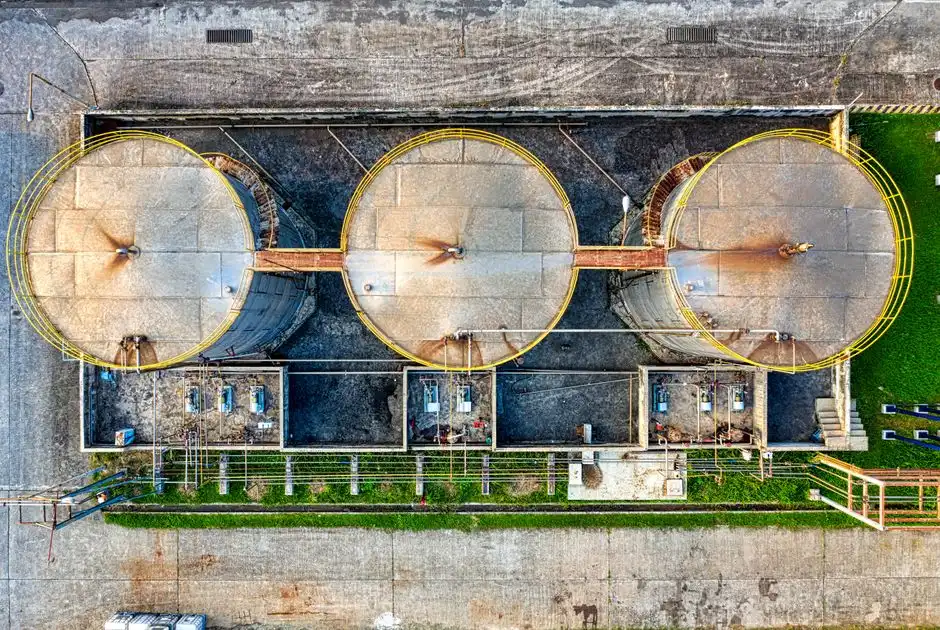
Semiconductor fab effluent is governed by the Metal Finishing categorical standard at 40 CFR Part 433 only by analogy — and that is where competing guides go wrong. A body shop's rinse water carries nickel, chromium, zinc, and phosphate from stamping and e-coat operations; a fab's rinse water carries copper from chemical-mechanical polishing slurries, fluoride from hydrofluoric acid and ammonium fluoride etchants, sulfate and low pH from sulfuric acid清洗 steps, total suspended solids from abrasive slurries, and organic solvents — NMP, IPA, and photoresist stripper residues — from the lithography bay. The applicable federal framework is the Semiconductor Manufacturing categorical standard at 40 CFR Part 469, which sets subcategory-specific limits for copper, fluoride, and TSS in wafer fabrication process wastewater.
The numbers a deal team should expect to see in the data room, drawn from typical fab operating envelopes and 30 TAC Chapter 307 receiving-stream criteria, fall in the following bands:
| Parameter | Typical fab influent range | Federal categorical / 30 TAC 307 ceiling | Treatment target for discharge / reuse |
|---|---|---|---|
| pH | 2.0–11.0 (stream-dependent swings) | 6.0–9.0 (30 TAC 307.7) | 6.5–7.5 after neutralization |
| Total copper | 5–50 mg/L (CMP stream) | 1.0 mg/L site-specific; 30 TAC 307 freshwater criterion may tighten | < 0.5 mg/L for reuse; < 1.0 mg/L for discharge |
| Fluoride | 10–500 mg/L (etch stream) | Site-specific; 30 TAC 307 freshwater criterion 4.0 mg/L | < 4.0 mg/L for discharge; < 1.0 mg/L for RO feed |
| Total suspended solids | 200–2,000 mg/L (CMP slurry) | 15 mg/L typical permit ceiling; 30 TAC 307 turbidity criteria | < 5 mg/L post-RO for cooling-tower makeup |
| Sulfate (as SO₄) | 200–2,000 mg/L (sulfuric acid清洗) | 30 TAC 307 freshwater criterion 200 mg/L site-specific | RO permeate < 10 mg/L |
| NMP / organic solvents | 500–5,000 mg/L (photoresist bay) | Whole Effluent Toxicity per EPA Semiconductor Industry WET expectations | Distillation recovery for reuse; WET pass on discharge |
A 30 TAC Chapter 307 receiving-stream assessment may tighten any of these below the federal categorical maximum if the discharge route has limited assimilative capacity in the Colorado River basin, particularly during low-flow periods under Austin's 2026 drought rule updates. The Samsung Austin copper-recovery program is a useful diligence signal on both sides: it shows the predecessor had the engineering capability to remove copper at scale, and the recovered-copper resale line of approximately $35,000 per year is a small but real revenue stream an acquirer can either preserve or write off depending on copper pricing (Texas Monthly, 2022).
The 2026 treatment train a TCEQ reviewer expects to see
The treatment train below is the one a TCEQ permit reviewer will read against the facility's process flow diagram. It is engineered to map each fab stream — copper-bearing CMP rinse, acidic etch waste, photoresist solvent concentrate, and general rinse — to a unit operation with a documented removal target, and to position the site for either discharge under an individual TPDES permit or high-percent reuse for cooling-tower makeup.
| Stage | Unit operation | Design parameters & removal target | Notes for the deal team |
|---|---|---|---|
| 1 | Equalization and neutralization | Surge basins balance 6–12 h hydraulic variation; PLC-controlled acid/caustic dosing to pH 6.5–7.5 | Brownfield acquisitions with a single combined header should add stream segregation to the Phase 1 CAPEX line |
| 2 | Dissolved air flotation | 4–300 m³/h skid; 80–95% FOG removal; TSS < 100 mg/L downstream | An industrial DAF system handles CMP slurry overflow and any oil intrusion from chiller loops |
| 3 | Coagulation / flocculation + lamella clarification | pH 9–10; surface loading 20–40 m/h; copper precipitated as hydroxide sludge | A lamella clarifier for copper precipitation cuts footprint versus a conventional clarifier by 60–80% |
| 4 | Fluoride-specific treatment | Calcium precipitation to CaF₂ or anion exchange; residual < 4 mg/L for discharge, < 1 mg/L for RO feed | Triggered only where 30 TAC 307 fluoride limits or RO membrane protection require it |
| 5 | MBR (membrane bioreactor) | PVDF submerged modules; MLSS 8,000–12,000 mg/L; effluent turbidity < 1 NTU; COD/BOD removal > 95% | A submerged MBR for fab wastewater handles the organic load from photoresist bay solvents |
| 6 | Two-pass reverse osmosis | Recovery 70–85%; permeate conductivity < 50 µS/cm; sulfate rejection > 99% | A two-pass industrial RO polishing stage is what unlocks cooling-tower reuse and shrinks intake demand |
| 7 | Disinfection | Chlorine dioxide generator (50–20,000 g/h) or UV bank; CT sufficient for reuse or discharge | An PLC-controlled chemical dosing platform ties chlorination, antiscalant, and pH trim into one supervisory loop |
For a 1,500 m³/day fab-scale train without an evaporator, a defensible Phase 1 CAPEX envelope sits in the $1.5M–$6M range depending on influent variability, discharge versus reuse target, and the existing segregation discipline on site (HydropureWater field data, 2026). In normalized units, that is roughly $1,000–$4,000 per m³/day of design capacity, or $4–$16 per gallon of daily flow — the number a deal team can paste directly into a retrofit line item in the financial model. Adding an evaporator or crystallizer for ZLD alignment multiplies the base train CAPEX by 1.5x–2.5x and is the path Samsung's own 2030 reuse commitments imply, although the present Austin permit does not require it.
Stream segregation is the single highest-impact Phase 1 retrofit line item. A site walk that counts fewer than three influent channels at the equalization basin usually means the prior owner never paid for segregation, and the resulting retrofit is what swings a CAPEX estimate from the bottom of the band to the top. The deeper engineering reference for ZLD-aligned design is in our chip fab ZLD engineering blueprint; for nickel-bearing streams, the relevant control loop is in our wafer fab nickel treatment spec.
Phase 1 due diligence checklist for a Samsung Texas plant acquisition
The diligence sequence below is the order an analyst should run it against the data room before signing. It is built around the premise that permit reissuance should be a closing-day formality, not a 90-day surprise.
- Pull 8 quarters of DMRs from EPA ECHO. Anything shorter misses the rolling two-year exceedance window that TCEQ will look at first on a permit assignment. Cross-check the parameter list against the limits in the proposed permit; mismatch is the most common surprise in a Phase 1 memo.
- Confirm NOI coverage and active status under TXR050000 for any satellite operation that may stay on the multi-sector general permit rather than being folded into the individual permit.
- File the TCEQ assignment of permit within 30 days of close through the Core Data Form, attaching the NOV/Enforcement Action history as support. The existing permit number transfers; the permit is reissued in the acquirer's legal name and binds the acquirer to every limit the predecessor accepted.
- Verify NOI and SWPPP currency for any ongoing construction under TPDES stormwater general permits. Stormwater and wastewater permits travel on separate legal rails, and a closed-out SWPPP is a common finding in a Phase 2.
- Check Travis County and any drainage district easements for conveyance rights along the discharge route. A TPDES permit is a discharge authorization; it is not a pipeline easement and it is not a drainage-district sign-off, and a buyer that assumes otherwise is repeating the Robstown pattern where the permit was 12 months old and a county drainage district was already in dispute over a pipe crossing its easement.
- File EPCRA Section 313 TRI Form R by July 1 for the prior calendar year if the seller failed to file, covering copper, fluoride compounds, NMP, and sulfuric acid. The reporting obligation survives as successor liability and is non-dischargeable in a normal asset purchase.
The Korean-parent versus US-subsidiary permit-holding question is its own diligence thread. TPDES permits are issued to a US legal entity operating the facility; the parent guarantee is not a substitute for permit assignment. A deal structured as a stock purchase where the US operating entity remains the permittee is mechanically cleaner than an asset purchase that triggers a name change on the permit mid-flight. The general framework for that decision is the same one we apply in our Korean OEM ETP due diligence checklist.
Frequently Asked Questions
How long does TCEQ have to reissue a TPDES permit to Samsung after closing?
The acquirer must file the change-of-ownership paperwork with TCEQ within 30 days of closing under 30 TAC 305.064. The existing permit number transfers, but the document is reissued in the successor's legal name and binds the new operator to every limit the predecessor accepted. The seller's DMR history, Notice of Violation ledger, and any open Enforcement Actions or Agreed Orders travel with the asset and are not extinguished by the assignment.
What categorical standards apply to semiconductor fab wastewater in Texas versus an auto-body plant?
An auto-body plant is governed by 40 CFR Part 433 (Metal Finishing) with nickel, chromium, zinc, and phosphate limits reflecting stamping and e-coat operations. A semiconductor fab is governed by 40 CFR Part 469 (Metal Finishing point source) with subcategory-specific limits for copper from CMP, fluoride from HF/NH4F etchants, and TSS from abrasive slurries. Both sites also have to meet 30 TAC Chapter 307 receiving-stream standards, which may impose tighter limits than the federal categorical maxima depending on the receiving stream's assimilative capacity.
Does acquiring a Texas plant give Samsung a clean compliance slate?
No. The compliance record is part of what is being bought. The DMR history, Notice of Violation ledger, and any open Agreed Orders transfer with the asset. EPCRA Section 313 TRI reporting obligations survive as successor liability if the seller failed to file. A buyer that treats permit reissuance as a clerical step usually discovers the open-Enforcement-Action exposure after the assignment is already filed.
What is the smallest flow that still requires an individual TPDES permit?
The 50,000-gallon-per-day combined flow line is the cleanest decision boundary a deal team will encounter. Above it, the site requires an individual TPDES permit; below it, a multi-sector general permit under TXR050000 may cover the operation if the SIC code and process description fit the eligibility list. A fab at full ramp will exceed that threshold with a single rinse tool, which is why almost every Samsung-scale acquisition lands on an individual permit.
What treatment stages are typical for a fab's copper-bearing wastewater?
The standard sequence is neutralization to pH 6.5–7.5 in equalization basins, dissolved air flotation for slurry and TSS reduction, coagulation and lamella clarification at pH 9–10 for copper precipitation as hydroxide, MBR for COD/BOD and organic solvent polishing, and two-pass reverse osmosis for cooling-tower makeup reuse. A calcium precipitation or ion exchange stage is added upstream of the MBR or RO where 30 TAC 307 fluoride limits apply.