Why US Fabs Specify Chip Fab Zero Liquid Discharge
Chip fab zero liquid discharge recovers 95–99% of process wastewater as reuse-quality water and a solid salt cake, cutting freshwater intake while controlling TDS from internal recycle loops. Typical CAPEX runs $2.5M–$40M by campus scale. Hybrid FO-NF trains often cut energy 30–50% versus RO-thermal evaporators when influent TDS stays below about 50,000 mg/L.
Semiconductor fabs commonly withdraw 5–10 million gallons per day of freshwater for a single facility (IEEE figures cited in Water Tech Online, 2024). About 38% of 108 existing and announced U.S. fab sites in 2023 sat in regions with high or extremely high physical water quantity risk, according to World Resources Institute data reported by Carollo Engineers. Earlier site screening also cited 61% of U.S. sites in medium-high to extreme stress bands (WRI Aqueduct 2023). Rising node complexity adds HF, copper, and solvent loads that foul membranes and evaporators if pretreatment is weak.
The 2022 CHIPS and Science Act still shapes campus water strategy. Earlier project framing often cited 25%–30% tax credits for water-efficient ZLD infrastructure. According to Manufacturing.gov, the Advanced Manufacturing Investment Credit equals 25% of the qualified investment in an eligible advanced manufacturing facility for semiconductors—not a water-only credit. Procurement teams therefore model ZLD as both a TDS-control unit and a qualifying capital scope under section 48D rules.
Earlier reports cited a 30% freshwater-intake cut and about $1.2 million per year in avoided municipal fees at TSMC Arizona via large-scale ZLD.That buffer matters when drought rules curtail municipal supply in the Southwest and similar water-scarce corridors.
ZLD System Components: Engineering Specs for Semiconductor Wastewater
Dissolved air flotation (DAF) in semiconductor pretreatment must remove 95% or more of suspended solids before membrane stages. In a typical ZLD train, solids removal and chemical conditioning stabilize influent and protect high-pressure surfaces. HydropureWater DAF systems for semiconductor wastewater pretreatment cover 4–300 m³/h and hold effluent TSS in the 5–100 mg/L band used to limit membrane scaling.
Forward osmosis (FO) suits high-fouling fab streams at 10–20 LMH flux and up to about 90% water recovery. Nanofiltration (NF) at 30–50 LMH then rejects roughly 90–95% of TDS at lower osmotic demand than RO. Reverse osmosis still reaches 98–99.5% TDS rejection, yet silica and organics often push RO behind FO-NF unless pretreatment is aggressive.
Mechanical vapor recompression (MVR) evaporators finish concentration at about 0.05–0.1 kWh per kilogram of water evaporated. Multi-effect distillation (MED) typically needs 0.1–0.2 kWh/kg, so lower CAPEX can still lose on long-run OPEX. A forced-circulation crystallizer then recovers up to about 90% of salts such as NaCl and CaSO₄, producing a cake with less than 5% moisture content under the same engineering benchmarks used in prior plant specs.
| Component | Key Parameter | Engineering Specification | Energy Consumption |
|---|---|---|---|
| Pretreatment (DAF) | TSS Removal | 95% - 99% Efficiency | 0.05 - 0.15 kWh/m³ |
| Forward Osmosis (FO) | Membrane Flux | 10 - 20 LMH | 0.2 - 0.4 kWh/m³ |
| Nanofiltration (NF) | TDS Rejection | 90% - 95% | 0.3 - 0.6 kWh/m³ |
| Reverse Osmosis (RO) | TDS Rejection | 98% - 99.5% | 0.8 - 1.5 kWh/m³ |
| MVR Evaporator | Evaporation Rate | 95% Water Recovery | 50 - 100 kWh/m³ (condensate) |
| Crystallizer | Solids Content | <5% Moisture | 150 - 250 kWh/m³ |
Hybrid FO-NF vs RO-Thermal Trade-offs
Hybrid FO-NF systems reach about 99% water recovery while cutting total energy 30–50% versus traditional RO-thermal trains when the draw-solution loop is stable. The osmotic driving force concentrates high-TDS brine without the extreme hydraulic pressures RO needs. FO-NF hybrids are generally limited to influent TDS below about 50,000 mg/L. Above that threshold, osmotic demand rises fast and teams shift to RO-thermal or pure thermal trains that can handle more than 100,000 mg/L TDS.
Nanofiltration removes multivalent ions such as calcium and magnesium that seed evaporator scale. To hold those membranes online, PLC-controlled chemical dosing for antiscalants and pH adjustment in ZLD systems is mandatory. Antiscalant doses of 2–5 mg/L can extend membrane life by about 40% and cut Clean-in-Place frequency when CIP chemistry matches the foulant profile.
Operational data from Intel’s Oregon facility showed a 40% cut in wastewater-treatment energy after moving selected high-load streams from RO-thermal to hybrid FO-NF (2023 sustainability report). Streams rich in silica or complex organics favor FO’s low-pressure membranes. High-salinity ion-exchange regenerant brines still often need MVR evaporation for final concentration.
| Feature | FO-NF Hybrid System | RO-Thermal Hybrid System |
|---|---|---|
| Max Influent TDS | Up to 50,000 mg/L | Up to 150,000+ mg/L |
| Energy Intensity | 0.2 - 0.4 kWh/m³ | 0.5 - 1.2 kWh/m³ |
| Water Recovery | 98% - 99.5% | 95% - 98% |
| Fouling Resistance | High (Low pressure) | Moderate (High pressure) |
| Crystallizer Load | Minimal (High concentration) | Substantial |
What Limits ZLD Reclaim Recovery and Scaling?
Semiconductor ZLD reclaim recovery is limited first by silica, fluoride, hardness, and organics that scale membranes or crystallizer heat-transfer surfaces. When influent TDS exceeds about 50,000 mg/L, FO-NF recovery targets of 98–99.5% become hard to hold without thermal polishing. Scaling risk rises further when recycle loops concentrate salts faster than antiscalant and pH control can respond.
Design teams therefore set recovery against a fouling index, not a marketing recovery claim. Checklist items that decide the ceiling include: (1) measured silica and fluoride peaks during node transitions; (2) hardness after chemical precipitation; (3) COD/solvent spikes from photolithography wastes; (4) spare membrane area of at least 20%; (5) dual-train crystallizer capacity; (6) CIP chemical inventory sized for worst-case foulants; (7) online TDS/ORP alarms tied to dosing setpoints. Miss any one and unplanned downtime climbs fast.
ZLD Cost Breakdown: CAPEX, OPEX, and ROI for Semiconductor Fabs
Capital cost for semiconductor ZLD typically spans $2.5 million for small pilots to more than $40 million for full campuses. Corrosive fluoride and chloride brines often force titanium or duplex stainless steel on evaporator exchangers and crystallizer vessels. CAPEX must be weighed against OPEX and against the 25% Advanced Manufacturing Investment Credit on qualifying semiconductor facility investment (Manufacturing.gov), which may cover eligible process equipment when ownership and placed-in-service tests are met.
Energy usually accounts for 40–60% of ZLD OPEX. Chemicals—antiscalants, acids, and cleaners—add another 15–25%. Membrane replacement is commonly budgeted at 10–20% of annual OPEX, with FO elements priced above commodity RO. Payback still hinges on municipal water at $0.50–$2.00/m³, discharge fees at $0.10–$0.50/m³, and any recovered salts or metals. Hybrid FO-NF in water-stressed regions often shows 3–7 year payback; RO-thermal trains more often land at 5–10 years when energy prices stay high.
| Cost Category | Small Fab (1-5 MGD) | Large Campus (10+ MGD) | % of Total OPEX |
|---|---|---|---|
| CAPEX (Total) | $2.5M - $10M | $15M - $40M | N/A |
| Energy Costs | $150k - $400k/yr | $1.2M - $3.5M/yr | 40% - 60% |
| Chemicals/Consumables | $60k - $150k/yr | $500k - $1.2M/yr | 15% - 25% |
| Membrane Replacement | $40k - $100k/yr | $300k - $800k/yr | 10% - 20% |
| Labor & Maintenance | $50k - $120k/yr | $200k - $500k/yr | 5% - 10% |
Why Do New US Fab Campuses Need ZLD?
New U.S. semiconductor campuses need end-of-pipe ZLD when local water stress, TDS permit pressure, or corporate reclaim targets leave no room for rising brine discharge. Water Tech Online (2024) notes that almost all major chipmakers already operate or install campus ZLD to shrink freshwater demand and hold TDS as recycle intensifies. Multi-fab buildouts—such as campuses planning tens of MGD—amplify both intake and brine mass, so ZLD becomes a siting prerequisite rather than a late sustainability add-on.
Resilient designs treat ZLD as production insurance. Membrane fouling and scaling still cause about 40% of unplanned ZLD downtime in industry reports from UltraFacility (2024). Because ZLD sits at end-of-pipe, crystallizer or high-pressure membrane failure can force fab rate cuts once storage fills. Redundant membrane capacity of at least 20% and dual-train crystallizers keep flow online during CIP or vessel outages.
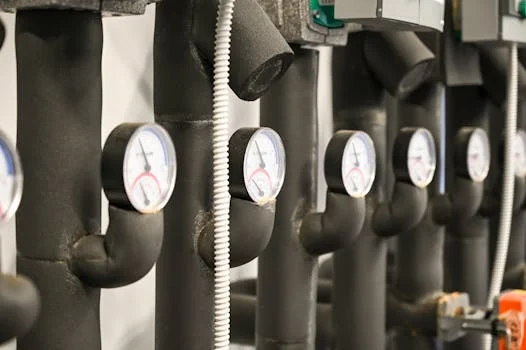
Real-time monitoring closes the remaining gap. Plants use submerged PVDF membrane systems for TDS monitoring and pretreatment as a barrier against organic excursions that foul primary ZLD membranes. MBR-integrated units track influent quality and can trigger bypass or enhanced dosing when COD or solvents spike. Close collaboration with the local POTW—monthly alignment on chemistry changes during node transitions—keeps design envelopes current.
Samsung’s Texas operations reported that redundant FO-NF trains held 100% uptime during a 2023 local water-quality excursion and avoided about $5 million in potential downtime losses. Digital twins that predict scale from dosing and membrane sensors are now common in resilient ZLD scopes for new campuses.
Case Study: 10 MGD Chip Fab Achieves 99.8% Water Recovery with FO-NF ZLD
A major fab in Phoenix, Arizona—extreme water-stress territory—built full-scale ZLD to meet corporate reclaim goals and local groundwater limits. Influent ran about 50,000 mg/L TDS, 200 mg/L COD, and 50 mg/L fluoride. Engineers chose hybrid FO-NF for energy and fouling resistance instead of thermal-only concentration.
Primary solids removal used a DAF, then FO at 15 LMH flux. NF at 40 LMH isolated multivalent ions before forced-circulation crystallization. The train reached 99.8% water recovery and about 95% industrial-salt recovery. Discover how to treat hydrofluoric acid wastewater in ZLD systems like this one to limit early membrane attack from fluoride.
OPEX landed near $0.85/m³ versus a projected $1.45/m³ for RO-thermal. CAPEX was $32 million with a four-year payback from water savings and avoided discharge penalties. Precise antiscalant control cut cleaning frequency by 60%, and redundant NF trains cut unplanned downtime by 30% in year one.
Who this is for: process engineers, EPC leads, and procurement managers sizing chip fab zero liquid discharge for new or expanding campuses in water-stressed U.S. regions. Who should look elsewhere: teams needing only UPW distribution piping cost models or municipal-only treatment without brine crystallization. Next step: share influent TDS, silica, fluoride, and target reclaim rate so a hybrid FO-NF versus RO-thermal screen can be run against your MGD envelope.
Frequently Asked Questions
What TDS limit applies to hybrid FO-NF ZLD?
Most hybrid FO-NF trains are engineered for influent TDS below about 50,000 mg/L at the stated 98–99.5% recovery band. When wastewater exceeds about 100,000 mg/L TDS, osmotic demand makes FO-NF impractical as the sole concentrator. Teams then specify RO-thermal hybrids or pure MVR evaporators before crystallization. Always confirm with a pilot flux test on your silica, fluoride, and organic profile.
How often are ZLD membranes replaced in fabs?
Well-maintained FO membranes typically last 3–5 years, while NF and RO elements last about 2–4 years under fab chemistry. Replacement cost usually falls between $50 and $200 per square meter, depending on chemical-resistant coatings. Budget membrane swap as 10–20% of annual OPEX and tie CIP intervals to online differential-pressure trends rather than fixed calendars alone.
Can fab ZLD recover copper or nickel?
Yes—pair ion exchange or chemical precipitation upstream of concentration so metals leave as a separate product, not as crystallizer contamination. Recovery above 95% is routine when dosing and pH windows are controlled before FO or RO. Learn how to recover copper from semiconductor wastewater with 95%+ efficiency before the ZLD brine stage locks metals into mixed salt cake.
What energy does a 5 MGD ZLD system need?
For a 5 MGD facility, hybrid FO-NF typically draws about 0.2–0.4 kWh/m³ under the energy-intensity ranges in the comparison table. A conventional RO-thermal train for the same capacity more often needs 0.5–1.2 kWh/m³, driven by MVR or MED duty. Final crystallizer load still dominates peak demand when recovery targets exceed 98%.
How should ZLD trains handle PFAS in fab wastewater?
ZLD concentrates PFAS into brine and salt cake; it does not destroy them. Install UV/H₂O₂ advanced oxidation or granular activated carbon pretreatment before the membrane train so the final solids are not loaded with forever chemicals. Verify destruction or capture efficiency with lab assays on both permeate and cake before claiming a PFAS-compliant solids disposition path.