Why Semiconductor HF Wastewater Treatment Is a Critical Fab Challenge
Semiconductor HF wastewater treatment starts with high fluoride loads—often near 920 ppm in older SPWCC benchmarks—and must reach residual levels that satisfy federal BAT, local permits, or reuse specs. Crystallization routes such as Crystalactor-style fluidized beds commonly remove >95% fluoride as CaF₂ pellets. Vibratory and electrodialysis membranes then push water recovery above 90% when silica and TDS are controlled.
Federal BAT under 40 CFR Part 469 Subpart A sets Fluoride (T) at 32.0 mg/L as a daily maximum and 17.4 mg/L as a 30-day average (eCFR, current). Earlier plant briefs often cited a 4 ppm target for reuse or tight local acceptance; that figure remains useful as a design goal, not as the federal categorical limit. The EU Industrial Emissions Directive 2010/75/EU is still cited at about 15 ppm fluoride, while some Taiwanese local rules run as low as 2 ppm. A typical 300 mm wafer fab draws 2–8 million gallons of water per day (SEMI S23-0716), and HF wet benches often contribute 10–20% of that wastewater volume.
Non-compliance carries real cash risk. EPA civil penalties have been described in industry practice at up to $50,000 per day, before reputational and permit-renewal damage. Water scarcity is now a Tier-1 operations risk for fabs in Arizona, Taiwan, and similar drought belts. TSMC’s 2021 push toward ZLD at newer sites shows the shift from end-of-pipe compliance to circular water. A Singapore fab case using Electrodialysis Reversal (EDR) on scrubber wastewater with 50–100 ppm fluoride achieved about 70% recovery for non-potable scrubber makeup (Veolia, commissioned 2016).
HF Wastewater Composition and Treatment Challenges
Influent fluoride in HF etch and scrubber streams often exceeds 900 ppm. Sulfuric, phosphoric, and acetic acids depress pH and compete for calcium, so precipitation chemistry must be engineered, not guessed. Mapping the full ion profile first prevents silica scaling on membranes and uncontrolled sludge mass.
| Parameter/Contaminant | Concentration (Typical ppm) | Source/Impact |
|---|---|---|
| Fluoride (F-) | 920 | Primary contaminant; regulated at 4 ppm |
| Sulfuric Acid (H₂SO₄) | 1,000 | Lowers pH; increases TDS |
| Phosphoric Acid (H₃PO₄) | 400 | Competes with fluoride for calcium precipitation |
| Acetic Acid | 300 | Organic load; potential biofouling source |
| Ammonium Hydroxide (NH₄OH) | 350 | Nitrogen load; affects pH buffering |
| Sodium Hydroxide (NaOH) | 2,920 | Used in neutralization; increases sodium load |
| Silica (SiO₂) | 50–150 | Severe membrane fouling agent |
Conventional clarifiers struggle because CaF₂ has a Ksp near 3.9 × 10⁻¹¹ and forms fine colloids that settle poorly. Silica then fouls any downstream membrane. Hydrofluoric acid neutralization is usually held near pH 9.5 to maximize CaF₂ yield. Overshooting pH burns chemical budget and inflates sludge that must be dewatered and hauled. Most plants we size for high-strength HF waste run a Ca:F molar ratio near 2:1, then watch residual fluoride and TDS together before any reuse loop.
Crystallization Methods: Engineering Specs for Calcium Fluoride Precipitation
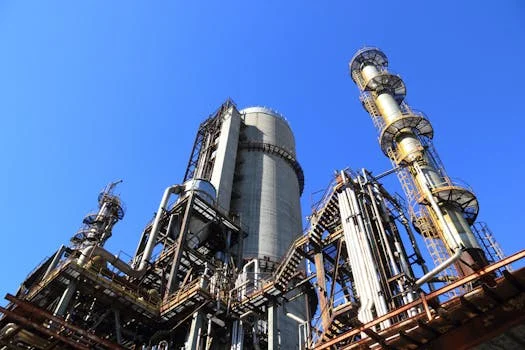
Fluidized-bed crystallizers such as the Crystalactor grow CaF₂ on seed pellets and can cut sludge volume by up to 80% versus conventional hydroxide precipitation. The product is dense pellets—often near 95% dry solids—that steel or cement plants sometimes accept as feedstock.
A typical train starts with PLC-controlled chemical dosing for precise pH adjustment and CaCl₂ injection in HF wastewater treatment. Neutralized water then enters the fluidized bed, where CaCl₂ is dosed. The reaction 2HF + CaCl₂ → CaF₂ + 2HCl proceeds on 0.2–0.5 mm seeds. Grown pellets settle for periodic removal while clarified liquor overflows.
| Engineering Parameter | Operational Range | Efficiency Benchmark |
|---|---|---|
| Operating pH | 8.0 – 9.5 | >95% Fluoride Removal |
| CaCl₂ Dosage Ratio | 2.0 : 1.0 (Ca:F molar) | Residual F <10 ppm |
| Hydraulic Retention Time (HRT) | 30 – 60 Minutes | Optimized crystal growth |
| Upflow Velocity | 30 – 60 m/h | Maintains fluidized bed |
| Sludge Production | <5% of total volume | High-density pellets (95% dry) |
Residual silica and fine CaF₂ carryover still appear after crystallization. Plants often add sludge thickening methods for CaF₂ and silica solids in semiconductor wastewater treatment before discharge or a secondary reuse loop. The weak point is influent swing: sudden fluoride spikes can fluidize unevenly and create short-term breakthrough above the permit limit.
Membrane Technologies for High-Recovery Water Reuse
Vibratory Shear Enhanced Processing (VSEP) and Electrodialysis Reversal (EDR) are the membrane options most often used when fabs need more than 90% recovery from HF-related streams. Spiral RO alone usually stalls at 50–70% recovery once silica and fluoride complexes scale the surface.
VSEP keeps colloids suspended with resonant shear at the membrane face and routinely recovers 90–95% at 5–10 bar TMP. That is well above typical spiral-wound high-recovery RO systems for polishing recycled HF wastewater in hybrid treatment trains. EDR reverses polarity to shed scale. The Singapore scrubber reclaim train cut fluoride from 50–100 ppm to less than 28 ppm at about 70% recovery when Z.Plex cartridge filters controlled silica load (Veolia). Engineers still need a clear picture of how industrial RO systems achieve 99.5% contaminant removal when designing the final polish stage of a reuse loop.
| Technology | Recovery Rate | Key Parameter | Resistance to Silica |
|---|---|---|---|
| VSEP (Vibratory) | 90% – 95% | 5–10 bar TMP | High (Shear-based) |
| EDR (Electrodialysis) | 70% – 85% | 50–100 A/m² | Moderate (Requires pre-filter) |
| Conventional RO | 50% – 70% | 15–25 bar TMP | Low (Prone to scaling) |
Hybrid ZLD trains usually follow crystallization for bulk fluoride, then VSEP or EDR for 80–90% water return to scrubbers or cooling, then thermal evaporation on the last 5–10% brine. Shrinking that thermal duty is the main lever on total cost of ownership.
Comparison Table: Crystallization vs. Membrane vs. Hybrid Systems for HF Wastewater
Treatment architecture choice hinges on CAPEX versus OPEX and on the fab’s water-recovery target, not on a single "best" unit process.
| Feature | Crystallization | Membrane (VSEP/EDR) | Hybrid (Cryst. + Membrane) |
|---|---|---|---|
| F- Removal | 95% + | 90% (as separation) | 99% + |
| Water Recovery | 0% | 85% – 95% | 90% – 98% |
| CAPEX (50 m³/h) | $1.2M – $1.8M | $2.0M – $2.8M | $3.5M – $4.5M |
| OPEX ($/m³) | $0.50 – $0.70 | $0.80 – $1.10 | $1.20 – $1.60 |
| Sludge Volume | Low (Pellets) | N/A (Liquid concentrate) | Minimal |
| Best Use Case | Compliance only | Water reuse from low F- | ZLD and high-purity reuse |
What Limits Semiconductor ZLD Reclaim Recovery?
Semiconductor zero liquid discharge reclaim recovery is usually capped by silica, CaF₂ fines, and osmotic pressure—not by membrane surface area alone. Most hybrid trains we audit stall when feed silica sits above about 50–150 ppm without dedicated pre-filtration, or when crystallization effluent still carries colloidal fluoride.
Scaling challenges stack in sequence. Calcium fluoride and silica foul spiral RO first. Phosphate competition raises TDS after lime or CaCl₂ dosing. Organic acetic load feeds biogrowth on EDR and RO. Thermal evaporators then see the concentrated brine: every extra 10% recovery left on the membrane stage shrinks evaporator CAPEX and steam or MVR power. Practical ZLD designs therefore segregate high-fluoride etch drains from lower-strength scrubber water before treatment, matching the Singapore EDR pattern of 70% recovery on a controlled 50–100 ppm fluoride feed.
How do reclaim loops hit recovery ceilings?
Reclaim loops hit ceilings when concentrate chemistry exceeds what the selected membrane can reject without rapid CIP. VSEP can push overall recovery near 90–95% after a spiral stage by shearing scale formers. EDR typically lands at 70–85% and needs cartridge or multimedia pre-filters for silica. Owners chasing true ZLD should size the thermal polish on measured brine volume after a 30–60 day pilot, not on brochure recovery.
What Drives 20-Year TCO for Fab Ultrapure Water Systems?
Twenty-year total cost of ownership for semiconductor ultrapure water systems is dominated by energy, resins or membranes, chemicals, and distribution integrity—not the initial skid price alone. HF wastewater reclaim that returns water to scrubbers or cooling cuts purchased UPW makeup, but only after fluoride and silica risk is controlled.
Brand-specific long-term cost series for UPW piping systems (including Georg Fischer-class fluoropolymer or PVDF networks common in fabs) are rarely published in open literature. Owners therefore model piping as a 15–20 year CAPEX and downtime line: leak rate, hot-UPW heat loss, and change-out labor matter more than catalogue unit price. On the treatment side, crystallization OPEX near $0.50–$0.70 per m³ looks cheap until sludge haulage and CaCl₂ are included. Hybrid trains at $1.20–$1.60 per m³ buy higher recovery and smaller evaporators. Over two decades, water purchase price, discharge fees, and evaporator energy usually outweigh the incremental membrane CAPEX.
Decision Framework: Choosing the Right HF Wastewater Treatment System
Engineering an HF wastewater solution means ranking permit risk first, then ROI from water reuse and sludge reduction. Walk the checklist below before freezing P&IDs.
Selection checklist
- Confirm the binding limit: federal BAT 32.0/17.4 mg/L Fluoride (T), or a tighter local/reuse target near 2–4 ppm.
- Measure fluoride, silica, phosphate, TOC, and flow variability on segregated HF and scrubber drains.
- Decide end use: discharge only, scrubber/cooling reclaim, or full ZLD with thermal polish.
- Pilot crystallization HRT 30–60 min at pH 8.0–9.5 and Ca:F ≈ 2:1 before buying membranes.
- Size membrane recovery against silica fouling risk; reserve VSEP/EDR for high-scaling streams.
- Calculate evaporator duty on the residual 5–10% brine after membrane recovery, not on raw flow.
- Include sludge pellet reuse options and 15–20 year piping/chemical TCO in the CAPEX case.
Campus sanitary and non-HF utility flows should stay out of the HF train. An Underground Package Sewage Treatment Plant (WSZ Series) is often the cleaner way to treat segregated domestic sewage on the same site without diluting or contaminating the fluoride process line. Where underground footprint is constrained, the same WSZ underground package plant for fab campus sanitary wastewater can sit beside the HF crystallizer yard as a parallel utility package.
Who This Is For / Who Should Look Elsewhere / Next Step
Who this is for: fab EHS and process engineers sizing HF etch and scrubber wastewater trains for compliance, partial reclaim, or ZLD; EPC teams comparing crystallization, VSEP/EDR, and hybrid CAPEX at roughly 50 m³/h.
Who should look elsewhere: sites with only low-fluoride rinse water and no silica risk may justify simpler precipitation plus conventional RO; municipal plants without semiconductor chemistry should not copy these molar ratios.
Next step: send influent analyses (F⁻, SiO₂, PO₄, TOC, flow) and the target residual—federal BAT, local ppm, or reclaim quality—so the train can be matched to crystallization, membrane, or hybrid duty. Request a scoped proposal through the HF wastewater treatment inquiry form with those numbers attached.
Frequently Asked Questions
What fluoride limit applies to US semiconductor wastewater?
Federal BAT and NSPS under 40 CFR Part 469 Subpart A set Fluoride (T) at 32.0 mg/L daily maximum and 17.4 mg/L as a 30-day average. Many fabs still design toward 2–4 ppm for local permits or reuse acceptance. Always confirm the NPDES or pretreatment permit, not only the categorical guideline.
How much fluoride can crystallization remove from HF wastewater?
Fluidized-bed CaF₂ crystallizers typically remove more than 95% fluoride when pH stays between 8.0 and 9.5 and Ca:F is near 2:1 molar. Residual fluoride after a well-run bed is often below 10 ppm before polishing. Influent swings and phosphate competition are the usual causes of breakthrough.
Can fabs reach zero liquid discharge on HF wastewater?
Yes, with a hybrid train: crystallize bulk fluoride, recover 80–95% water on VSEP or EDR, then evaporate the last 5–10% brine. Silica and CaF₂ fines set the practical recovery ceiling. Pilot data on segregated streams is required before locking evaporator size.
What recovery should EDR deliver on scrubber HF wastewater?
Documented scrubber reclaim with 50–100 ppm fluoride has delivered about 70% recovery and roughly 80% fluoride reduction when cartridge filters control silica. EDR alone is not a full ZLD device. Pair it with upstream segregation and a plan for concentrate disposal or thermal polish.
Which cost items dominate 20-year UPW and reclaim TCO?
Energy, membranes or resins, chemicals, sludge handling, and distribution piping integrity dominate two-decade cost—not the first skid invoice. Hybrid OPEX near $1.20–$1.60 per m³ can beat "cheap" precipitation if it shrinks evaporator duty and purchased water. Model piping leak and downtime risk explicitly over 15–20 years.