Why Sewer Discharge, Not NPDES, Is the Binding Constraint for Loveland Miners
Mining and metals plants discharging to the City of Loveland WWTP are governed by Clean Water Act §307(b) and 40 CFR Part 403, with categorical standards in 40 CFR Part 437 (Ore Mining and Dressing) and 40 CFR Part 433 (Metal Finishing). The binding numbers, however, are the City of Loveland's 2017 local limits — copper 4.04 mg/L, zinc 11.12 mg/L, lead 1.53 mg/L, mercury 0.0001 mg/L — set to protect the Big Thompson River and biosolids. A compliant 2026 train combines 8–24 h equalization, pH correction to 6.5–9.0, hydroxide or sulfide precipitation, DAF or lamella clarification, multimedia filtration, and plate-and-frame dewatering.
The federal hierarchy is strict. CWA §307(b) and 40 CFR Part 403 delegate pretreatment enforcement to the POTW through its sewer-use ordinance; NPDES (CWA §402) governs the separate surface-water outfall that most mines also hold, but the sewer path is the binding constraint because the local limits, sampling protocols, and enforcement triggers are tighter and more frequent than NPDES self-monitoring. Mining and metals operations qualify as Categorical Industrial Users under 40 CFR Part 437, and plants with plating, pickling, or anodizing also fall under 40 CFR Part 433 (Metal Finishing), where Cu is capped at 3.38 mg/L daily max / 2.07 mg/L monthly average and total Cr at 2.77 / 1.71 mg/L (per 40 CFR 433.15).
Loveland's 2017 ordinance (adopted 2017-03-07) replaced the 2012 local limits after a 2013–2016 technical evaluation showed arsenic, copper, iron, mercury, and selenium each consuming ≥25% of the applicable water-quality standard. The Pretreatment Coordinator's Best Professional Judgement applied safety factors for slug load control, biosolids beneficial use, and growth in residential and industrial loadings. For a parallel pretreatment framework applied to a different regulatory jurisdiction, see the Brandon-area mining and metals pretreatment guide.
The Loveland 2017 Local Limits vs Federal Categorical Standards
The Loveland 2017 MAIL table is the engineer's design target. The full set, taken from the 2017 ordinance council packet, is reproduced below with the underlying limiting criterion — Permit, WQ-A, WQ-C, Biosolids, or Threshold — shown alongside each value.
| Parameter | Loveland 2017 MAIL (mg/L) | Limiting Criterion | 40 CFR Part 437 Daily Max (mg/L) | 40 CFR Part 437 Monthly Avg (mg/L) |
|---|---|---|---|---|
| Arsenic | 0.30 | Biosolids | 1.0 | 0.50 |
| Cadmium | 0.12 | WQ (C) | 0.50 | 0.25 |
| Chromium | 1.49 | WQ (C) | 1.0 | 0.50 |
| Copper | 4.04 | WQ (C) | 1.0 | 0.50 |
| Cyanide | 0.44 | WQ (A) | 0.65 | 0.32 |
| Iron | 256 | WQ (C) | — | — |
| Lead | 1.53 | WQ (C) | 0.50 | 0.25 |
| Mercury | 0.0001 | WQ (C) | 0.002 | 0.001 |
| Molybdenum | 0.99 | Biosolids | — | — |
| Nickel | 2.49 | Biosolids | 1.0 | 0.50 |
| Selenium | 0.09 | Permit | 0.50 | 0.25 |
| Silver | 1.67 | WQ (C) | 0.50 | 0.25 |
| Zinc | 11.12 | Threshold | 1.0 | 0.50 |
Four parameters are where Loveland is most aggressive against the federal categorical floor. Mercury at 0.0001 mg/L MAIL is 20× tighter than 40 CFR Part 437's 0.002 mg/L daily max, driven by biosolids accumulation and the Big Thompson's Clean Water Act §303(d)-listed mercury TMDL. Lead at 1.53 mg/L is 3× the categorical daily max but is WQ-C driven because Loveland's headworks analysis identified it as a future pass-through risk. Zinc at 11.12 mg/L is the highest numerical MAIL on the list but is set by a "Threshold" criterion (alloy slugs and finished-electroplating batches), not by federal water quality. Selenium at 0.09 mg/L is the only Loveland parameter that decreased between 2012 and 2017 because Loveland's WWTP discharge permit already carries a selenium limit. Mining influent typically arrives at pH 2–4 with TSS in the hundreds to several thousand mg/L, so the local limits are not the design target — they are the post-treatment ceiling. Treat the raw stream as a slug-load control problem first and a metals-removal problem second.
The 2026 Regulatory Overlay: LCRR, PFAS, and Ore-Mining BAT
Three federal changes will reshape the next Loveland permit cycle, and engineering budgets in 2026 should reflect them. First, the Lead and Copper Rule Revisions (LCRR) are pushing the lead action level toward 10 µg/L, which will force Loveland and similar POTWs to re-derive local limits at much lower numbers — relevant because Loveland's current lead MAIL of 1.53 mg/L is already a WQ-C- and biosolids-driven number (per EPA Lead and Copper Rule Revisions, finalized 2024-10). Second, EPA's 2024 Multi-Sector General Permit (finalized 2024-09) added PFAS monitoring — PFOS, PFOA, PFHxS, and PFNA — for metal-mining sectors, and many POTWs are adopting the same analytical suite for indirect discharges. Third, EPA's 2025 ore-mining BAT revisions (2025-03) tightened the cost-benefit envelope on total recoverable metals.
Treat all three as the next permit-cycle risk. A single excursion carries CWA §309 civil penalties of up to $25,000/day per violation — a number that exceeds the amortized cost of compliance equipment for almost any flow band. Bench-scale treatability work for the PFAS suite (granular activated carbon, ion exchange, or reverse osmosis polishing) should be in the 2026 capital plan, even if the ordinance does not yet cite a PFAS number. For a complementary look at biological treatment alternatives that often sit downstream of the precipitation train, see the comparison of MBR vs CAS for mining wastewater.
Equalization and pH Correction: The Two Cheap Levers
The largest cost-to-performance gains in a mining pretreatment train sit upstream of any clarifier. Equalization basin sizing should be 8–24 h of average daily flow; anything under 4 h passes every batch spike (shift change, dump-leach cycle, mill clean-out) directly into the clarifier. Most existing basins in the sector are under-spec'd, and the equalization basin is the most expensive single piece of equipment to retrofit later. pH correction to 6.5–9.0 (Loveland's instantaneous range) using NaOH or lime should follow immediately. Stage the dose across two reactors if influent swings more than 2 pH units — each 1 pH unit away from the metals-precipitation optimum can cut removal efficiency by an order of magnitude, sending zinc from <1 mg/L to 10+ mg/L with no other change to the chemistry.
Reagent choice drives OPEX for the rest of the train. Lime (Ca(OH)₂) is cheaper per ton but generates 3–5× more sludge; high-TDS Loveland-area mining streams often justify the higher reagent cost of NaOH because the sludge-handling savings dominate the OPEX ledger. An automatic chemical dosing skid handling pH and coagulant on a single PLC-controlled pH and coagulant dosing skid keeps pH inside a ±0.2 band — the practical difference between meeting and missing a 0.3 mg/L zinc monthly average. Slug load control depends on this same band: a properly sized equalization basin plus tight pH control is what prevents a 4-hour batch dump from blowing through the local limit and triggering a SNUR.
Metals Precipitation: Hydroxide, Sulfide, and the Loveland pH Windows
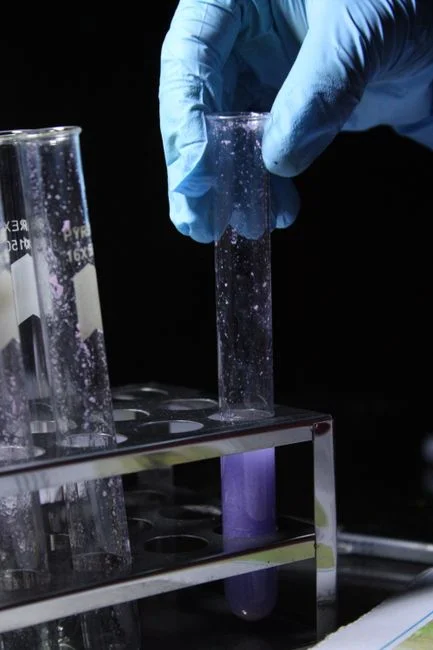
Hydroxide precipitation with NaOH or lime is the default; sulfide (NaHS, FeS, Na₂S) is reserved for streams that must drop below 0.1 mg/L. Sulfide residuals sit at 0.01–0.05 mg/L for Cu/Zn/Cd/Ni versus 0.5–2.0 mg/L for hydroxide — an order of magnitude cleaner. The trade-off is cost: sulfide reagent runs 2–4× hydroxide and requires sealed reactors with scrubbed H₂S vents. For most mining flows, hydroxide with sulfide polishing on a slipstream is the cost-effective compromise. The pH window per metal must be locked in with jar testing, not vendor literature, because Loveland-area influent matrices vary widely between pit dewatering, mill discharge, and spent process solutions.
| Metal | Hydroxide pH Optimum | Expected Hydroxide Residual (mg/L) | Expected Sulfide Residual (mg/L) | Sludge Yield Factor |
|---|---|---|---|---|
| Copper (Cu) | 8.5–9.5 | 0.5–1.0 | 0.01–0.05 | Hydroxide 3–5×, Sulfide 1.5–2× |
| Zinc (Zn) | 9.0–10.0 | 0.5–2.0 | 0.01–0.05 | Hydroxide 3–5×, Sulfide 1.5–2× |
| Cadmium (Cd) | 10.5–11.5 | 0.5–2.0 | 0.01–0.05 | Hydroxide 3–5×, Sulfide 1.5–2× |
| Nickel (Ni) | 10.0–11.0 | 0.5–2.0 | 0.01–0.05 | Hydroxide 3–5×, Sulfide 1.5–2× |
| Lead (Pb) | 9.0–10.0 | 0.2–1.0 | 0.01–0.05 | Hydroxide 3–5×, Sulfide 1.5–2× |
Properly controlled systems in operating mining/metals installations achieve 85–95% total metals removal (per Fluence, 2024-11). A polymer coagulant aid at 0.5–3 mg/L flocs the metal-hydroxide particles fast enough to run the clarifier at 20–40 m/h hydraulic loading without carryover, and reduces TDS bleed by collapsing the colloidal fraction before settling. For Loveland's mercury MAIL of 0.0001 mg/L, two-stage precipitation followed by sulfide polishing on a slipstream is the only practical route; hydroxide alone will not reliably reach three orders of magnitude below the 40 CFR Part 437 floor.
Clarification Choice: DAF vs Lamella for Loveland Flows
The decision most engineers actually face in a real project is DAF or lamella. Both work; neither is universally better. The DAF unit operates at 5–25 m/h hydraulic loading, achieves 90–98% TSS removal and 85–95% O&G removal, and is the right answer when the stream carries oil, grease, or colloidal metals — common in metal-finishing and lube-oil-contaminated mine water. A lamella clarifier runs at 20–40 m/h surface loading, uses roughly one-third the footprint of a conventional clarifier, and handles heavy metal-hydroxide flocs well; it does not remove free oil or colloidal fines as effectively as DAF.
| Selection Criterion | DAF | Lamella Clarifier |
|---|---|---|
| Hydraulic loading | 5–25 m/h | 20–40 m/h |
| TSS removal | 90–98% | 80–95% |
| O&G removal | 85–95% | 20–40% (poor) |
| Flow range | 4–300 m³/h (13 models) | 50–2,000+ m³/h |
| Footprint vs conventional | ~50% | ~33% |
| Best-fit stream | Oil, grease, colloidal fines, flow <200 m³/h | Metal-bearing hydroxide sludge, flow >100 m³/h, footprint constrained |
Use the heuristic: DAF when the stream carries oil, grease, or fine colloidal metals; lamella when the stream is primarily a metal-hydroxide sludge at high flow and the footprint is constrained. A multimedia filter (anthracite over sand over garnet) at 1–2 m/h filtration rate, backwash on differential pressure, sits between the clarifier and the sewer manhole as the safety net — strips residual TSS to <10 mg/L and absorbs clarifier underperformance on bad days.
Disinfection, Sludge Dewatering, and Final Compliance
Disinfection (UV or chlorine dioxide at 1–5 mg/L) shows up in the sewer-use ordinance whenever the collection system has long force mains or siphons. A chlorine dioxide generator delivers the residual without forming the regulated trihalomethanes that chlorine produces. Clarifier and DAF sludge is itself a regulated waste; a plate-and-frame filter press dewateres to 25–35% dry solids for Subtitle-D landfill disposal or, where metals are recoverable, for transfer to a smelter. Filtrate returns to the head of the plant.
Design for the peak 2-hour flow with 20–30% turndown capacity, and treat to the Loveland ordinance, not the federal categorical standard, because the local numbers are tighter and the penalty structure is enforced. The 2026 compliance checklist for a Loveland-area mining or metals plant is short: (1) confirm Loveland MAIL targets, not the federal floor; (2) lock jar-tested pH windows per metal against the table in the prior section; (3) install ±0.2 pH PLC control on the dosing skid; (4) add PFAS sampling (PFOS, PFOA, PFHxS, PFNA) to the QAPP; (5) budget for LCRR-driven lead re-derivation at the next permit cycle. Finally, put a written note in front of the biosolids conversation with the Big Thompson: Loveland's 2017 safety factors were sized explicitly to keep beneficial-use biosolids compliant, so any change to metals removal upstream is a biosolids-quality change downstream — and the POTW will notice before the receiving stream does.
Frequently Asked Questions
Do I need an NPDES permit and a Loveland sewer-use permit at the same time?
Yes, in most cases. NPDES permits under CWA §402 govern direct discharge to surface water (stormwater outfalls, pit dewatering, mill reclaim). Sewer discharge to the Loveland POTW is regulated under CWA §307(b) and 40 CFR Part 403, with categorical standards in 40 CFR Part 437 (Ore Mining and Dressing) and 40 CFR Part 433 (Metal Finishing) where applicable. The two authorizations are independent and run on different sampling and reporting cadences.
Which Loveland local limits are tighter than the federal 40 CFR Part 437 categorical standard?
Four parameters are tighter. Mercury at 0.0001 mg/L MAIL is 20× below Part 437's 0.002 mg/L daily max. Lead at 1.53 mg/L is 3× the Part 437 daily max but is WQ-C driven. Zinc at 11.12 mg/L is set by Loveland's "Threshold" criterion (alloy slug batches) and is wider numerically but tighter in practice because influent zinc is a slug-control problem. Selenium at 0.09 mg/L is the only Loveland parameter that decreased between 2012 and 2017, driven by the WWTP's own discharge permit limit.
When does sulfide precipitation beat hydroxide for a Loveland-area metals plant?
When the local limit is below 0.1 mg/L. Sulfide (NaHS, FeS) achieves residuals of 0.01–0.05 mg/L versus 0.5–2.0 mg/L for hydroxide — a 10–50× improvement that matters for the copper, lead, and zinc MAILs. Reagent cost runs 2–4× higher and the system requires sealed reactors with H₂S scrubbing. For most mining flows, hydroxide precipitation with sulfide polishing on a slipstream is the cost-effective compromise.
What flow range favors a DAF over a lamella clarifier for mining wastewater?
DAF below roughly 200 m³/h when the stream carries oil, grease, or colloidal fines (typical of metal-finishing plants and lube-oil-contaminated mine water). Lamella above roughly 100 m³/h when the stream is primarily a metal-hydroxide sludge and footprint is constrained. The DAF series covers 4–300 m³/h across 13 models, while lamella scales linearly from 50 m³/h upward.
How do the 2024 MSGP PFAS requirements and the LCRR lead revision change the next permit cycle?
Both will drive local-limit re-derivation. The 2024 MSGP (finalized 2024-09) added PFOS, PFOA, PFHxS, and PFNA monitoring for metal-mining sectors, and many POTWs — including Loveland — are expected to extend that suite to indirect discharges. The LCRR is pushing the lead action level toward 10 µg/L, which will force Loveland to re-derive its 1.53 mg/L lead MAIL at a much lower number. Add PFAS bench-scale treatability and lead re-derivation cost lines to the 2026 capital plan.