
Why Erbil Factories Need a DAF-Led ETP
An Erbil factory typically needs a multi-stage Effluent Treatment Plant (ETP) — a sequenced train of physicochemical and biological unit processes that converts raw wastewater into a stream meeting Kurdistan Region / Iraq Federal discharge rules — centred on dissolved air flotation (DAF), a separation process that floats suspended solids and emulsified oils to the surface using fine air bubbles, optionally preceded by an API oil-water separator, a gravity basin that skims free-phase oil before chemical treatment. At the Kawrgosk Oil Refinery, situated 28 km from Erbil in the Kurdistan Region of Northern Iraq, an API + DAF train achieved approximately 90% removal of both total suspended solids (TSS) and oil & grease (O&G) and 75% COD removal across the full pretreatment train (per the Kawrgosk refinery study, PMC10456940). DAF alone, downstream of the API, delivered 85–86% TSS and O&G removal and 69% COD removal, with a near-linear correlation between inlet and outlet loads (R² = 0.980–0.983) for all three parameters. Kurdistan's industrial mix — refineries, food plants, textiles, tanneries — produces streams that sit squarely inside the envelope DAF is built for: high TSS (often 200–1,000 mg/L), emulsified fats/oils/greases (FOG) up to several hundred mg/L, and temperatures that swing with the season and the process. The same study notes that O&G and TSS removals of 92–98% have been reported for DAF units using a 100 mg/L alum dose under optimal saturator-pressure and air-to-water conditions — a useful upper-bound ceiling when bidding DAF performance.
Erbil & Kurdistan Discharge Limits the ETP Must Hit
Before any unit process is selected, the engineer must lock the discharge envelope. Typical Kurdistan Region / Iraq Federal industrial targets for refinery and process wastewater fall in the range of COD ≤ 100–150 mg/L, BOD₅ ≤ 25–50 mg/L, TSS ≤ 30–50 mg/L, O&G ≤ 5–10 mg/L, pH 6–9, and temperature typically ≤ 35–40°C at the discharge point, with a tightening trend in notices issued during 2024–2026 — verify the current figures with the latest Kurdistan Region Environmental Protection Agency (KR-EQA) or Iraqi Ministry of Environment notice before finalising design. Each parameter maps to a specific stage in the train: the API separator takes out free oil (the bulk of the >100 µm droplets), DAF handles emulsified O&G and TSS using 25–40 mg/L polyaluminium chloride (PACl) plus polyacrylamide flocculant, and a biological or membrane bioreactor (MBR) stage strips soluble COD and ammonia. Two Erbil-specific constraints deserve their own line in the compliance check: temperature (refinery influent at the KAR Refinery runs at 70°C) and sulphur. Hot influent forces a cooling-tower stage upstream of any biological or MBR polish, because biology collapses above ~40°C; high sulphur forces FRP or stainless contact surfaces and chemical-resistant seals throughout the DAF and chemical dosing skids. The compliance check sequence is therefore: characterise the influent → confirm the latest KR-EQA / federal limit → size each unit process against the parameter it actually removes.
| Parameter | Typical Kurdistan / Iraq limit* | Unit process that removes it |
|---|---|---|
| COD (soluble) | ≤ 100–150 mg/L | MBR / activated sludge after DAF |
| BOD₅ | ≤ 25–50 mg/L | MBR / activated sludge after DAF |
| TSS | ≤ 30–50 mg/L | DAF (85–86% removal) |
| O&G | ≤ 5–10 mg/L | API separator + DAF (≈90% combined) |
| pH | 6–9 | Automatic chemical dosing skid |
| Temperature | ≤ 35–40°C at discharge | Cooling towers upstream of biology / MBR |
*Limits are framed as "typical" or "as published by the local authority"; confirm the current value with KR-EQA / Iraqi MoEnv before procurement.
Process Train: API Separator → DAF → (Optional) MBR
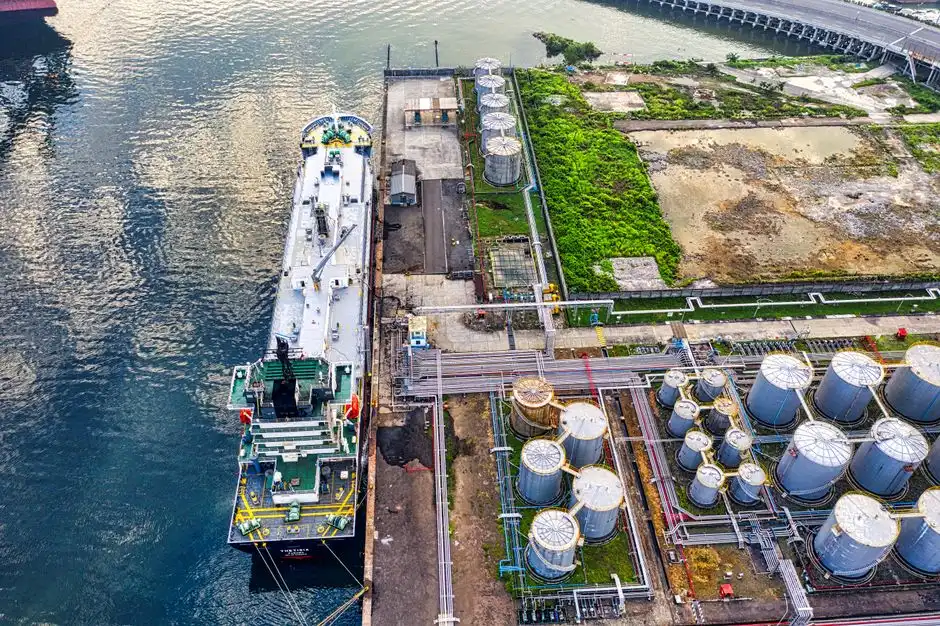
The standard Erbil train is a three-stage sequence with side-stream sludge and chemical handling bolted on. Stage 1 — API oil-water separator: a gravity basin sized on residence time (typically 30–60 min at peak flow) that skims free-phase oil and settles coarse grit. The Kawrgosk study reports the API alone achieved 29% COD removal, with the bulk of the credit coming from O&G and TSS stripping; the API is best treated as a pre-conditioner that protects the DAF from hydraulic and organic shock, not as a finishing step. Stage 2 — DAF (4–300 m³/h): the workhorse unit, where coagulant and flocculant react with emulsified O&G and colloidal TSS to form a micro-floc that attaches to 20–50 µm air bubbles and floats to the surface for skimming. The published dose window is 25–40 mg/L PACl plus polyacrylamide flocculant; at this dose the Kawrgosk DAF hit 85–86% TSS/O&G and 69% COD removal. Stage 3 — biological or MBR polishing: required only when the soluble COD or ammonia leaving the DAF still exceeds the Kurdistan limit; an integrated MBR polishing skid with submerged PVDF ultrafiltration at <1 µm delivers near-reuse quality (typically BOD₅ < 5 mg/L, TSS near zero) and replaces the clarifier in a conventional activated-sludge layout. Side streams: DAF skim (2–5% of feed) goes to a plate-and-frame filter press for volume reduction; pH correction is handled by a PLC-controlled coagulant and flocculant dosing skid; the entire train is fed by a HydropureWater DAF system (4–300 m³/h) as the central separation unit.
| Stage | Unit process | Primary removal target | Published performance (Kawrgosk, full scale) |
|---|---|---|---|
| 1 | API oil-water separator | Free oil >100 µm, grit | 29% COD; bulk O&G and TSS stripping |
| 2 | DAF (25–40 mg/L PACl) | Emulsified O&G, colloidal TSS | 85–86% TSS/O&G; 69% COD; R² 0.980–0.983 |
| 3 (optional) | MBR (submerged PVDF UF <1 µm) | Soluble COD, BOD₅, ammonia | Added when post-DAF soluble COD exceeds KR limit |
| Side | Plate-and-frame filter press | DAF skim dewatering | Sludge volume reduction for off-site disposal |
Sizing a DAF for an Erbil Factory: Flow, Surface Loading, Air-to-Solids
Use the 100 m³/h full-scale DAF at the Kawrgosk refinery as the reference case: 12.7 kW of installed power across the recirculation pump, compressor, skimmer and mixers, equating to a specific energy consumption (SEC) of 0.127 kWh/m³ at maximum flow, while accepted industry SEC for DAF sits in the 0.05–0.075 kWh/m³ band, with values as low as 0.035–0.047 kWh/m³ reported recently (per the Kawrgosk refinery study, PMC10456940). The sizing inputs a buyer must collect before any supplier quote are: peak and average flow in m³/h, influent TSS in mg/L, influent O&G in mg/L, influent COD in mg/L, temperature, and the target hydraulic surface loading rate — standard DAF practice falls in the 5–15 m/h band, with higher loadings reserved for low-TSS streams. Chemical demand scales with influent solids: the 25–40 mg/L PACl baseline in the Erbil study covers moderate TSS refinery streams, while a 100 mg/L alum pilot reported 92–98% removal as an upper-bound performance ceiling when saturator pressure and air-to-water ratio are tuned. The two operating knobs the supplier must specify on the data sheet are the air-to-solids ratio (mass of air released per mass of solids floated, typically 0.02–0.10) and the saturator pressure (typically 4–6 bar) — these set the bubble volume and the float layer stability.
| Sizing input | Reference value (Kawrgosk / industry) | Why it matters |
|---|---|---|
| Peak flow | 100 m³/h (full-scale reference) | Sets contact zone and surface area |
| Installed power | 12.7 kW | Drives pump, compressor, skimmer |
| SEC | 0.05–0.127 kWh/m³ | Energy OPEX and generator sizing |
| Hydraulic surface loading | 5–15 m/h (standard practice) | Sets tank footprint |
| PACl dose | 25–40 mg/L baseline; up to 100 mg/L alum in pilots | Chemical OPEX and removal ceiling |
| Saturator pressure | 4–6 bar (typical) | Bubble volume and float quality |
Erbil-Specific Design Constraints: Heat, Sulphur, Logistics
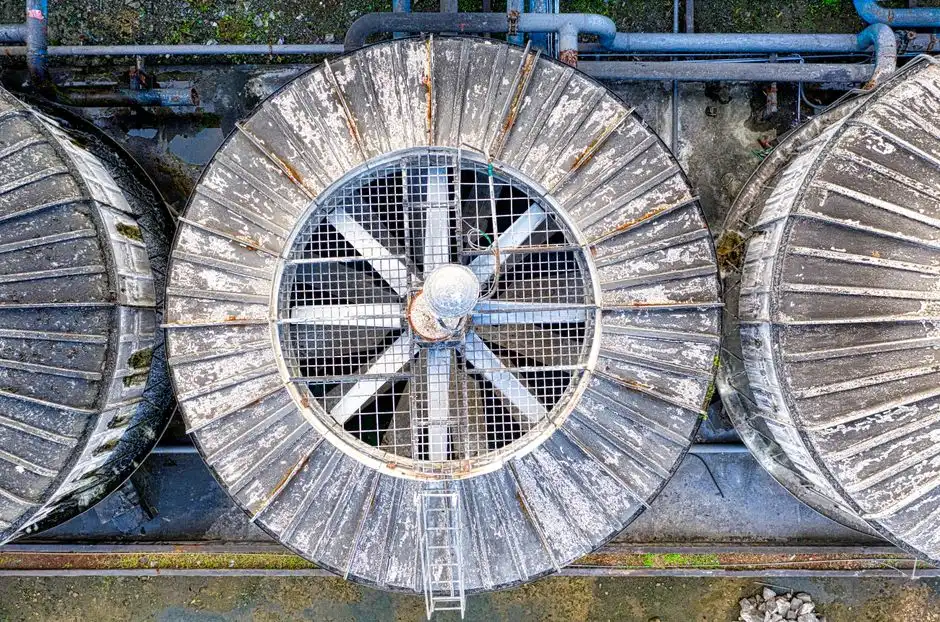
The KAR Refinery ETP in Erbil, delivered as a compact container-assembled plant, anchors every Kurdistan design constraint worth naming. Hot influent: the KAR stream arrives at 70°C, which is well above the 35–40°C ceiling for downstream biology or MBR; DAF still functions at elevated temperature because the separation physics are physical rather than biological, but the stream must pass through cooling towers before any biological or MBR polish. Sulphur and corrosion: high sulphur drives the material specification toward FRP or stainless contact surfaces, chemical-resistant seals, and the elimination of galvanic couples in skimmers and mixers — describe as engineering best practice rather than proprietary guidance. Containerised pre-assembly: the KAR Refinery ETP was manufactured and pre-assembled inside a container structure, delivered and assembled on-site, and commissioned in a short shutdown window — a field-proven approach for Erbil sites with limited laydown area and a tight outage schedule. Power and water resilience: Erbil grid stability is variable, so the DAF recirculation pump and saturator compressor should be on generator-backed power with a defined changeover; plant water for the saturator loop should be drawn from a clarified source, not raw feed, to keep the air-bubble distribution stable.
CAPEX and OPEX: What an Erbil DAF Actually Costs to Run
The Kawrgosk study gives the engineer a defensible USD/m³ baseline to put in front of a procurement committee. OPEX: chemical dosing for the DAF totals approximately USD 0.028/m³ (PACl plus polyacrylamide flocculant, conservatively estimated as similar cost to coagulant), labour-and-overhead (LO) is USD 0.043/m³ using industry SEC, rising to USD 0.053/m³ if the 0.127 kWh/m³ SEC based on installed power is applied — meaning the all-in DAF operating cost sits under USD 0.10/m³ before sludge disposal (per the Kawrgosk refinery study, PMC10456940). Energy: a conservative 0.05 kWh/m³ SEC at Erbil industrial tariffs is a small share of OPEX relative to chemicals and sludge handling. CAPEX: the DAF skid plus containerised civil works scales with surface area and flow, and the reference LC data in the same study show the DAF incurs a significantly higher capital cost than the API separator — request a sized quote against your flow and TSS envelope, and use the DAF 4–300 m³/h model range as the relevant envelope. Sludge handling: DAF skim runs at 2–5% of feed volume, and a plate-and-frame filter press dewatering step reduces that volume for off-site disposal — a meaningful OPEX line that is often left out of headline cost tables. The same study frames the NPV relationship as NPV(API+DAF) = Q × P × (LC + 5976 × LO), so labour-and-overhead is the dominant long-run lever, not chemical cost.
| Cost line | Value (USD/m³ treated) | Source / basis |
|---|---|---|
| Chemical dosing (PACl + flocculant) | ≈ 0.028 | Kawrgosk study, conservative |
| Labour & overhead (industry SEC) | 0.043 | Kawrgosk study, 0.05 kWh/m³ basis |
| Labour & overhead (installed-power SEC) | 0.053 | Kawrgosk study, 0.127 kWh/m³ basis |
| Total DAF OPEX (excl. sludge) | < 0.10 | Sum of above |
| DAF skim (volume basis) | 2–5% of feed | Standard DAF practice |
Choosing the Right DAF System Supplier for Erbil
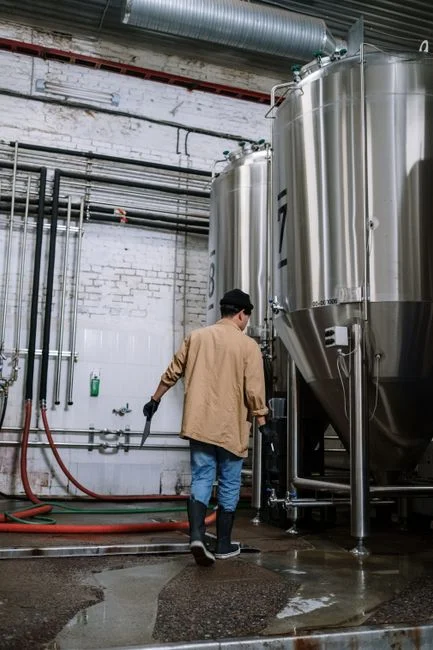
The shortlist criteria that matter in Erbil are not the ones in the brochure — they are site-specific. Reference list: documented oil-refinery or oily-wastewater reference, ideally in a hot-climate or high-sulphur context; a generic municipal-water DAF reference is not enough. Containerised skid capability: a supplier who can deliver a pre-assembled, container-built ETP, like the KAR Refinery model, collapses on-site time to a single outage window — critical when the plant cannot afford a 12-week civil programme. In-region commissioning: the supplier must commit to commissioning engineers in Kurdistan, not a remote FAT-only sign-off. Pilot data: ask each supplier for a bench or jar test on the actual Erbil-site wastewater at 25–40 mg/L PACl before signing — a supplier who refuses this step is telling you they have not engineered a refinery DAF before. Red flags: quotes based on flow alone with no TSS/O&G/COD basis, no corrosion strategy for high-sulphur streams, and no written SEC figure. HydropureWater's DAF and supporting dosing, MBR and filter-press skids are integrated in scope, which removes interface risk between four separate vendors — a procurement simplification worth weighing against any single-unit discount.
| Criterion | Pass | Fail / red flag |
|---|---|---|
| Oil-refinery or oily-wastewater reference | Named, dated refinery or petrochemical site | Municipal-only references |
| Containerised skid build | Pre-assembled container delivery model | Stick-built only, 12-week site programme |
| In-region commissioning | Kurdistan-based engineers committed | Remote FAT sign-off only |
| Pilot / jar test offered | Willing to test on site wastewater at 25–40 mg/L PACl | Refuses or quotes on flow alone |
| Corrosion strategy for high-sulphur | FRP / stainless contact surfaces specified | No material schedule in the offer |
Frequently Asked Questions
Is DAF enough for an Erbil refinery, or do I also need an API separator?
DAF alone, downstream of an API separator, hit 85–86% TSS and O&G removal and 69% COD removal at the Kawrgosk refinery near Erbil (per the Kawrgosk refinery study, PMC10456940). The API separator acts as a pre-conditioner that protects the DAF from hydraulic and free-oil shock — keep both in the train for any refinery stream with measurable free-phase oil.
When does the Erbil/Kurdistan discharge limit force an MBR stage?
Add an MBR polish when the soluble COD and ammonia leaving the DAF still exceed the Kurdistan / Iraq Federal limit (typically COD ≤ 100–150 mg/L, BOD₅ ≤ 25–50 mg/L). DAF alone strips 69% of COD; the remaining soluble fraction is what an integrated MBR polishing skid with submerged PVDF UF at <1 µm removes to near-reuse quality.
What is the typical OPEX of a DAF system in USD per cubic metre?
The Kawrgosk DAF study reports chemical dosing of approximately USD 0.028/m³ and labour-and-overhead of USD 0.043–0.053/m³, putting the all-in DAF operating cost at under USD 0.10/m³ before sludge disposal (per PMC10456940). Sludge handling via a plate-and-frame filter press is the next OPEX line to budget.
How is hot influent (e.g. 70°C refinery stream) handled before biological or MBR stages?
The KAR Refinery ETP in Erbil runs at 70°C influent and routes the stream through cooling towers to bring it into the 35–40°C window before any biological or MBR stage (per the KAR Refinery case). DAF itself still functions at elevated temperature because the separation is physical rather than biological.
What dose of polyaluminium chloride is standard for an Erbil-scale DAF?
The Kawrgosk refinery DAF used 25–40 mg/L polyaluminium chloride plus polyacrylamide flocculant to achieve 85–86% TSS/O&G and 69% COD removal (per PMC10456940). Pilots at 100 mg/L alum have reported 92–98% removal as an upper-bound ceiling when saturator pressure and air-to-water ratio are tuned to the site wastewater.