The DAF vs API separator cost comparison comes down to three numbers a buyer can verify: purchase price, operating cost, and payback. DAF systems cost 30–50% more upfront than API separators ($120–$300/m³/h versus $80–$200/m³/h for API), yet typically deliver 20–30% lower OPEX over their service life. The gap traces to performance: DAF removes 90–95% of FOG, while an API separator removes 60–75% of free oil. For high-loading streams such as food processing, DAF repays its premium in 2–3 years; for low-emulsion refinery flows, API stays the cheaper compliant route.
DAF vs API Separator Cost Comparison: The Direct Answer
A DAF unit typically costs 30–50% more upfront ($120–$300/m³/h versus $80–$200/m³/h for API) but cuts operating cost 20–30% through 90–95% FOG removal, against 60–75% for gravity separation. Food processing plants recover the premium in 2–3 years. Refineries with free oil above 150 µm often stay with API and add polishing only when permits force it.
The stakes are regulatory before they are financial. A food plant discharging FOG above the 100 mg/L permit limit can accrue fines near $10,000 per month, plus shutdown exposure that dwarfs any equipment budget line. Picking the wrong machine therefore costs more than either purchase price.
The two units also target different wastewater, which is where mis-selection begins. API separators, standardized under API Publication 421, excel at free oil droplets larger than 150 µm — the profile of raw refinery effluent. DAF units attack emulsified oils, fine suspended solids, and high FOG loads typical of food processing and metal finishing. An API separator on an emulsified stream will miss its limits continuously, whatever its lower price.
Sound procurement weighs three pillars together — capital expenditure, operating expenditure, and return on investment — because each pillar rewards a different machine. The sections below work through each pillar with the 2026 cost tables, the payback arithmetic by industry, and the refinery regulatory baseline that anchors the API-first default.
DAF vs API Separator CapEx/OPEX Benchmarks for 2026
CapEx differences start in mechanical complexity. A DAF unit brings pressurized air-saturation vessels, recycle piping, and mechanical skimmers; an API separator is essentially a gravity rectangle with a flight scraper. That simplicity is why API equipment lists 30–50% below DAF at equal flow, and why its quotation cycle runs shorter.
Capacity, bubble-generation method, and materials then move the DAF price inside its band. Stainless steel (SS304 or SS316) units for corrosive or food-grade duty price above carbon steel equivalents. API separators are modular and often pre-fabricated, which trims engineering hours. Their long retention basins, however, need 3 to 5 times the land of a DAF unit at equivalent flow — a line item first estimates routinely miss.
Retrofit logistics shift CapEx as much as steel prices do. According to WesTech, field erection "can make on-site construction up to 10 times more expensive than off-site construction." The same engineering review offers shop-built options for separators "up to 500 square feet (ft2) – or 46 square meters (m2)." Ask bidders to price both delivery routes before locking the civil budget.
| Cost Category | DAF System (Range) | API Separator (Range) | Notes |
|---|---|---|---|
| Equipment Cost ($/m³/h) | $120 – $300 | $80 – $200 | Based on system capacity; higher end for advanced features or specialty materials. |
| Installation Cost ($) | $30,000 – $100,000 | $20,000 – $70,000 | Includes civil works, piping, electrical, and commissioning. |
| Ancillary Costs (Pumps, Controls, Skimmers, Flocculators) ($) | $15,000 – $50,000 | $10,000 – $30,000 | Includes specialized pumps (e.g., recirculation), advanced control panels, and sludge handling. |
| Total CapEx Range (for 100 m³/h system) ($) | $165,000 – $450,000 | $110,000 – $300,000 | Excludes land costs; API separators require 3–5x more footprint than DAF. |
What Drives API Separator Operating Cost in Industrial Wastewater?
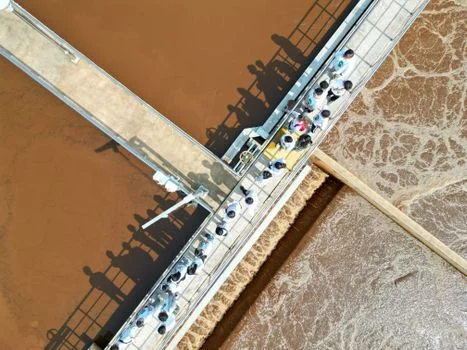
API separator operating cost in industrial wastewater service is dominated by labor and chemicals rather than power. Gravity separation consumes almost no energy, yet the large basin needs sludge removal every 1-2 weeks and daily oil skimming to prevent re-emulsification and carryover. Those routine hours are the line most plants underestimate in year one.
Energy runs the opposite direction. A DAF system consumes roughly 0.5-1.0 kWh per m³ treated, mainly for air saturation and recycle pumping, while API separation is near-zero power. At the $0.08–$0.12/kWh industrial benchmarks projected for 2026, that difference is real money at continuous flow — and it buys 90–95% FOG removal instead of 60–75%.
Chemicals flip the ledger back. DAF's grip on emulsified oil and fine solids cuts coagulant and flocculant demand by up to 40% versus gravity-only trains, and precise automated chemical dosing systems trim dosing waste further. API trains facing strict limits spend instead on aggressive pre-treatment chemistry and downstream polishing, a gap the annual table below makes visible.
| Cost Category | DAF System (Range) | API Separator (Range) | Notes |
|---|---|---|---|
| Energy ($/year) | $15,000 – $30,000 | $5,000 – $15,000 | Higher for DAF due to air compression and recirculation pumps. Based on 24/7 operation at $0.10/kWh. |
| Chemicals ($/year) | $10,000 – $25,000 | $18,000 – $40,000 | Lower for DAF due to higher efficiency; API may need more aggressive chemical treatment for emulsions. |
| Maintenance (Parts & Service) ($/year) | $5,000 – $12,000 | $3,000 – $8,000 | Includes spares for pumps, motors, skimmers, and routine service. |
| Labor (hours/year) | 200 – 400 | 400 – 800 | DAF often has more automation; API requires frequent manual skimming and sludge removal. |
| Total Annual OPEX Range ($) | $30,000 – $67,000 | $26,000 – $63,000 | Does not include compliance penalty avoidance, which significantly favors DAF for complex streams. |
ROI and Payback: When Does the DAF Premium Pay Off?
What Is the DAF System Payback Period for Food Processing Wastewater?
The DAF system payback period for food processing wastewater typically runs 2–3 years on high-FOG loads. Model a 100 m³/h plant with heavy FOG and TSS: DAF at $250,000 CapEx against API at $150,000. If DAF saves $50,000 per year across chemicals, sludge hauling, and avoided fines, the premium repays in ($250,000 − $150,000) ÷ $50,000 = 2 years. The industry table below shows 2.5–4 years in metal finishing and 3–5 years in municipal duty, where loads run lighter.
Compliance exposure shortens the same payback when an API unit is mismatched. An API separator removing 60-75% of free oil — and often less than 20% of stable emulsions — can push a plant past its FOG limit at $10,000 or more per month in penalties. The "cheaper" separator then becomes the expensive one inside a single budget year.
Downstream savings compound the case. Higher primary removal means lower sludge volumes, lighter chemical demand in later stages, and often no tertiary polishing at all. At that point ROI stops being an operating-cost subtraction and starts protecting the discharge permit itself.
| Industry | Primary Contaminant | Recommended System | Typical Payback Period (Years) | Estimated Annual Savings (OPEX & Compliance Avoidance) ($) | Compliance Risk (with incorrect system) |
|---|---|---|---|---|---|
| Petrochemical Refining | Free Oil (>150 µm), some suspended solids | API Separator (Primary), DAF (Polishing) | N/A (API is baseline) | N/A | Medium (if emulsions present) |
| Food Processing (e.g., Dairy, Meat Packing) | Emulsified FOG, proteins, fine solids | DAF System | 2 – 3 | $40,000 – $70,000 | High (with API separator) |
| Metal Finishing/Machining | Emulsified oils, heavy metals, fine particles | DAF System | 2.5 – 4 | $30,000 – $60,000 | High (with API separator) |
| Municipal Pre-treatment | FOG, suspended solids | DAF System | 3 – 5 | $25,000 – $50,000 | Medium (with API separator) |
DAF vs API vs RO Payback Period in Petrochemical Plants
The DAF vs API vs RO payback period question in petrochemical plants is settled by regulation before it reaches economics. According to the US EPA, the Petroleum Refining Effluent Guidelines and Standards (40 CFR Part 419) were promulgated in 1974 and amended in 1975, 1977, 1982, and 1985. The same rules cover wastewater discharges at over 140 refineries, so every permit limit those sites hold is written against this framework.
Inside Part 419, the BPT effluent limits for the Topping subcategory (§§ 419.10 - 419.17) sit in 40 CFR § 419.12, attainable by "the application of the best practicable control technology currently available (BPT)." The same section caps total organic carbon in once-through cooling water at 5 mg/l. Compliance at that level starts with primary oil and solids removal, which is exactly the duty an API separator performs.
Refinery flowsheets then layer the technologies, which is why payback differs by stage. According to WesTech, "the oil and water separator is also designed to act as a primary sedimentation device," and "oil that is not removed in the API-designed oil/water separator will pass into the DAF/DGF." Monroe Environmental documents the same sequence at full scale: one refinery API separator "was designed to treat 2,500 GPM" ahead of downstream biological treatment.
RO polishing enters last, treating reused water rather than replacing separation. Oil that slips past an undersized primary stage fouls membranes and stretches cleaning cycles, so the cheapest separator can end up carrying the longest RO payback. Most petrochemical sites therefore order the economics API first, DAF second where emulsions or tight limits appear, and RO only inside reuse projects.
How to Choose: A Decision Framework for Your Wastewater Stream
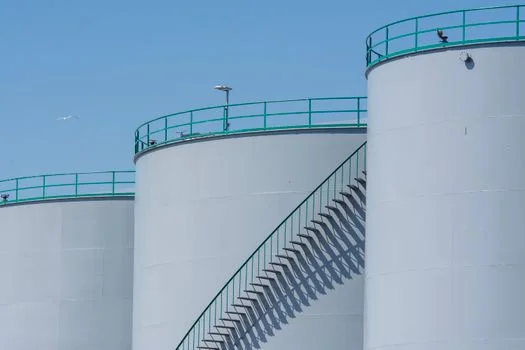
Start from a droplet profile, not a brochure. If the stream is mostly free oil above 150 µm at high flow — classic refinery primary treatment — an API separator built to API 421 is robust and cost-effective. If the stream carries emulsified oils, proteins, or fine solids from food processing, metalworking, or rendering, flotation wins on both removal and total cost.
Before shortlisting vendors, run this six-point check on every offer:
- Droplet profile: free oil above 150 µm favors API; emulsions and fines favor DAF.
- Discharge limit: a FOG permit at 100 mg/L or tighter pushes most plants toward flotation-grade removal.
- Energy price: at $0.08–$0.12/kWh, DAF's 0.5-1.0 kWh per m³ adds up at continuous flow.
- Land: budget civil works against the 3–5x footprint delta before comparing equipment quotes.
- Labor: price the 200–800 hours per year of skimming and sludge handling at your wage rate.
- Penalty exposure: recurring $10,000-per-month fines can outrun the CapEx gap within a year.
Search behavior reflects the same split. Buyers typing "what is the difference between dissolved air flotation and api separator" are usually holding a droplet-profile question. Teams comparing an "api separator vs flocculation + thickener (dissolved air flotation (daf))" train are weighing mechanical flotation with chemistry against passive gravity basins. Both comparisons collapse onto one decision: gravity for discrete droplets, microbubbles (10-100 µm) for emulsified and fine matter.
For the high-FOG end of that spectrum, HydropureWater's Dissolved Air Flotation (DAF) System is built for continuous industrial duty with automated skimming and sludge discharge. A deeper technical side-by-side, including performance curves and application cases, is in our DAF vs API Separator Comparison: Performance, Cost & Use Cases article.
Budget the lifecycle, not the invoice. Weigh upfront CapEx against chemical spend, sludge disposal, land, and penalty exposure — the full capex and opex picture, not either column alone. Plants that skip this step usually buy the cheaper tank and pay for it in chemistry.
Hybrid trains deserve a quote as well. An API roughing stage followed by a DAF polisher optimizes capital and operating cost for variable effluents while keeping compliance intact. Plants with seasonal load swings see this configuration most often, because neither unit needs oversizing when each does its own share of the removal work.
Next Step: Put the Numbers Against Your Stream
Match your wastewater analysis — FOG, emulsion stability, TSS, and flow — against the tables above, then price both routes at your duty point. Where payback lands inside three years and removal must clear 75%, DAF is usually the defensible specification; where free oil dominates and land is available, API still wins on total cost. Send your flow sheet and discharge limits through the request-a-quote page for a sized budget estimate.
Frequently Asked Questions
What Is the Difference Between Dissolved Air Flotation and API Separator?
The difference lies in the separation force and the oil each machine can catch. An API separator is a gravity basin built to API 421 that removes free oil droplets larger than 150 µm. DAF dissolves air under pressure and releases 10-100 µm bubbles that float emulsified oil, FOG, and fine solids for skimming. Use API for discrete free oil at high flow; use DAF when droplets are emulsified or limits are tight.
What FOG Removal Efficiency Can a DAF System Achieve?
DAF systems typically achieve 90-95% removal of fats, oils, and grease, including emulsified fractions and fine suspended solids. Microscopic bubbles in the 10-100 µm range attach to droplets and flocs, then float them to the surface for skimming. Performance holds best when pH and polymer dosing are matched to the waste profile.
How Much More Land Does an API Separator Need Than DAF?
API separators typically need 3-5 times the footprint of DAF units at equal flow. Gravity separation depends on long residence time in large basins, while flotation compresses the same duty into a smaller tank. On constrained sites, land and civil works can close much of the equipment-price gap on their own.
How Does DAF Affect Chemical Dosing Costs?
DAF usually cuts chemical dosing cost by 20-40% against gravity-only trains at similar loads. Flotation lifts flocs mechanically, so coagulant and flocculant doses stay moderate even for emulsified oils where API separators struggle. Dosing discipline still matters, because overdosing wastes polymer and loads the sludge stream.
Can a DAF System Treat Wastewater With Heavy Metals?
Yes, DAF removes heavy metals effectively once they are chemically precipitated. Microbubbles float precipitated metal hydroxides together with suspended solids and oils, pulling them into the skimmable scum layer. The usual train is pH adjustment, sulfide or hydroxide precipitation, then flotation with polymer support.
Further Reading
Explore these in-depth articles on related wastewater treatment topics: