
Why Industrial Plants Are Switching to Inclined Plate Settlers: Space, Cost, and Compliance
The best inclined plate settler for industrial use balances surface loading rate (20–40 m/h), TSS removal efficiency (92–98%), and footprint reduction (up to 85% vs. conventional clarifiers). For example, a Shanghai metal finishing plant avoided a $2M expansion by replacing a 400 m² clarifier with a 60 m² HydropureWater lamella system, achieving 97% TSS removal at 30 m/h loading. Key selection criteria include influent solids concentration, flow rate, and compliance limits (e.g., EPA 40 CFR Part 433 for metal finishing).
Conventional clarifiers, while familiar, often present significant challenges in modern industrial settings. Their large footprint requirements can restrict plant expansions or necessitate costly land acquisition. their reliance on extended retention times makes them susceptible to washout events during peak flow conditions, compromising effluent quality. This inefficiency frequently leads to higher chemical consumption for flocculation, increasing operational expenses. In contrast, inclined plate settlers, or lamella clarifiers, leverage the Hazen Principle to decouple settling velocity from hydraulic retention time, offering a more robust and compact solution. Regulatory drivers, such as the EPA 40 CFR Part 433 for metal finishing, the EU Urban Waste Water Directive 91/271/EEC, and China’s GB 8978-1996, all mandate stringent Total Suspended Solids (TSS) limits, often below 70 mg/L. These regulations are pushing industries towards high-efficiency, space-saving technologies like lamella clarifiers, which can achieve up to 85% footprint reduction compared to traditional sedimentation tanks.
How Inclined Plate Settlers Work: Engineering Principles and Process Physics
Inclined plate settlers operate on fundamental principles of fluid dynamics and particle settling, engineered to maximize solids separation within a compact design. The core of the technology lies in the arrangement of parallel plates set at an angle, typically between 55° and 60°. This specific angle is crucial, as it balances the gravitational force driving solid particles downward with the frictional and shear forces acting on the sludge layer. A steeper angle promotes faster sludge sliding towards the collection hopper, minimizing the risk of sludge accumulation and bridging, which could otherwise lead to reduced effective settling area or even washout. Conversely, an angle too shallow would hinder efficient sludge removal. The Hazen Principle dictates that the settling velocity of a particle is independent of the tank depth and is primarily determined by the surface area available for settling and the settling velocity of the smallest or slowest-settling particle. By increasing the effective settling area through the use of multiple inclined plates, the surface loading rate (SLR) can be significantly increased, allowing for higher flow rates within a smaller footprint. For instance, a system with 10 plates, each with an area of 1 m², angled at 55°, provides an effective settling area of approximately 10 × 1 m² × cos(55°) ≈ 5.7 m². Efficient flow distribution is paramount; uneven flow across the plates can lead to dead zones and reduced overall efficiency, potentially by 15–25%. Advanced designs incorporate patented flow distribution systems to ensure uniform liquid-solid contact across the entire plate pack. Material selection is critical for longevity and chemical compatibility. Polypropylene (PP) is often chosen for its excellent chemical resistance across a wide pH range (2–12) and its lower cost, making it suitable for many general industrial wastewater applications. For highly abrasive slurries or extreme temperature conditions, stainless steel (SS) offers superior durability and corrosion resistance, albeit at a higher initial cost.
| Parameter | Typical Range/Value | Impact on Performance |
|---|---|---|
| Plate Angle (θ) | 55° - 60° | Optimizes sludge sliding and settling efficiency. |
| Flow Distribution | Uniform (Patented Systems) vs. Weir-based | Ensures full utilization of settling area; uneven flow reduces efficiency. |
| Settling Velocity (Vs) | Particle-dependent (e.g., 0.1 - 1 mm/s) | Determines the minimum required surface loading rate. |
| Surface Loading Rate (SLR) | 20 - 40 m/h (design target) | Key design parameter; too high causes washout, too low wastes space. |
| Material: Polypropylene (PP) | pH 2-12, Good chemical resistance | Cost-effective, suitable for most industrial wastewater. |
| Material: Stainless Steel (SS) | Excellent corrosion & abrasion resistance | Ideal for aggressive chemical environments or abrasive solids. |
Explore HydropureWater’s modular lamella clarifier systems for robust industrial wastewater sedimentation.
Top 5 Industrial Inclined Plate Settlers Compared: Specs, Costs, and Use-Case Fit
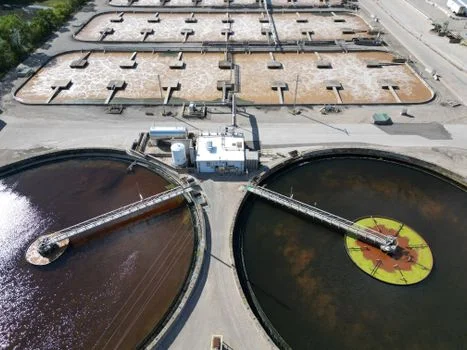
Selecting the optimal inclined plate settler requires a nuanced understanding of model-specific capabilities, cost implications, and application suitability. The following comparison matrix highlights key performance indicators, capital and operational expenditure considerations, and ideal use cases for leading industrial models, helping engineers and procurement teams make informed decisions. This evaluation aims to bridge the gap left by generic product listings by offering a direct, data-driven comparison to mitigate selection risks.
| Manufacturer/Model | Surface Loading Rate (m/h) | TSS Removal Efficiency (%) | Footprint (m²) per 100 m³/h | Estimated CAPEX Range ($) | Estimated OPEX Savings (%) | Ideal Use Cases | Red Flags |
|---|---|---|---|---|---|---|---|
| Metso IPS | 25 - 40 | 92 - 97 | 3 - 5 | $80,000 - $250,000 | 10 - 20 (Chemicals) | High-solids mining tailings, pulp & paper, mineral processing. | Not optimized for very low flow rates; can be overkill for less demanding applications. |
| MRI Inclined Plate Settler | 20 - 35 | 90 - 96 | 4 - 6 | $70,000 - $220,000 | 5 - 15 (Chemicals, Sludge Volume) | Variable flow industrial processes (food & beverage, textiles), applications requiring consistent distribution. | Patented flow system may add complexity; performance can degrade with highly viscous or oily sludges without specialized pre-treatment. |
| HydropureWater Lamella Clarifier | 20 - 35 | 92 - 98 | 3.5 - 5.5 | $50,000 - $180,000 | 15 - 25 (Chemicals, Sludge Volume) | Metal finishing, chemical manufacturing, general industrial wastewater, small to medium-sized plants. | Requires careful selection of plate material (PP vs. SS) for highly corrosive streams; consult manufacturer for specific chemical compatibility. |
| Veolia (e.g., Actiflo® with lamella settler) | 30 - 50 (often integrated) | 95 - 99 (with microsand) | 2 - 4 (as component) | $100,000 - $350,000 (system dependent) | 15 - 25 (overall system) | High turbidity, demanding effluent limits, municipal and industrial combined applications. | Often part of a larger, more complex system; higher CAPEX; requires microsand handling. |
| Evoqua (e.g., Lamella™ Settler) | 25 - 40 | 90 - 96 | 3.5 - 5.5 | $65,000 - $200,000 | 10 - 20 (Chemicals) | General industrial, food and beverage, oil and gas. | May require more frequent sludge removal for very high solids loads. |
Metso IPS units are robust for high-solids applications like mine tailings, where their high surface loading rate is advantageous. MRI's patented Flow Control System ensures even distribution, making it ideal for processes with fluctuating influent characteristics, such as in the food processing industry. HydropureWater’s modular lamella clarifier systems offer a cost-effective and flexible solution for a broad range of small to medium industrial plants, with options for both polypropylene and stainless steel construction. For demanding applications requiring very high effluent quality or dealing with difficult-to-settle solids, integrated systems or those paired with chemical aids are often necessary. Consider combining lamella clarification with an automatic chemical dosing system for optimized performance.
How to Select the Best Inclined Plate Settler for Your Industrial Application
To ensure a zero-risk selection of an inclined plate settler, a systematic approach based on influent characteristics, flow rate, and compliance targets is essential. This framework guides engineers and procurement managers through critical decision points, minimizing the likelihood of undersizing or selecting an inappropriate technology.
- Characterize Influent: The first step involves thoroughly analyzing the wastewater stream. Key parameters include Total Suspended Solids (TSS) concentration (mg/L), particle size distribution (PSD), and the average and peak flow rates (m³/h). Typical industrial wastewater TSS ranges vary significantly: metal finishing can be 200–1,000 mg/L, food processing 500–3,000 mg/L, and chemical manufacturing 100–800 mg/L. Understanding PSD is crucial, as very fine particles (< 10 microns) may require chemical pre-treatment or specialized clarifier designs.
- Calculate Required Surface Loading Rate (SLR): The SLR is the primary design parameter for clarifiers. It represents the volume of water that can be treated per unit of settling area per hour. The formula for effective SLR is: SLR = Q / (N × A × cosθ), where Q is the flow rate (m³/h), N is the number of plates, A is the area of each plate (m²), and θ is the plate angle. For example, to treat 100 m³/h with a system designed for a maximum SLR of 30 m/h, the required effective settling area is 100 m³/h / 30 m/h = 3.33 m². If using plates of 1 m² at a 55° angle, this would require approximately 3.33 m² / cos(55°) ≈ 5.8 plates.
- Match to Compliance Limits: Compare the calculated TSS removal efficiency of potential systems against regulatory discharge limits. For instance, if EPA 40 CFR Part 433 requires effluent TSS below 70 mg/L, and your influent is 500 mg/L, you need a system capable of at least 86% TSS removal. The comparison matrix in Section 3 provides estimated removal efficiencies for various models under typical operating conditions. For challenging effluents, consider technologies like Dissolved Air Flotation (DAF) systems for oily or low-density wastewater, or MBR systems for near-reuse-quality effluent, which may require pre-clarification.
- Evaluate Footprint vs. CAPEX Trade-offs: Inclined plate settlers typically have a 20–30% higher initial capital cost (CAPEX) compared to conventional clarifiers for the same flow rate. However, this is often offset by significant savings in civil engineering and construction costs. Footprint reduction can save $500–$2,000 per square meter in construction expenses, making lamella clarifiers economically viable, especially in land-constrained industrial sites.
Common Mistakes to Avoid:
- Underestimating Peak Flows: Always design for peak flow rates, typically 1.5 times the average flow, to prevent washout.
- Ignoring Chemical Compatibility: Ensure the chosen plate material (PP or SS) is compatible with the specific chemical composition of the wastewater.
- Skipping Pilot Testing: For oily, greasy, or highly variable wastewater streams, pilot testing is highly recommended to validate performance and identify potential operational challenges.
| Influent Characteristic | Typical TSS Range (mg/L) | Design Consideration |
|---|---|---|
| Metal Finishing | 200 - 1,000 | Heavy metals, potential for scale; good chemical resistance needed. |
| Food Processing | 500 - 3,000 | High organic load, fats/oils; potential for fouling. |
| Chemical Manufacturing | 100 - 800 | Wide pH range, specific chemical compounds; material compatibility is key. |
| Pulp & Paper | 500 - 5,000+ | High fiber content, sticky solids; requires robust sludge handling. |
CAPEX and OPEX Breakdown: How Inclined Plate Settlers Save Money Long-Term
The financial justification for investing in inclined plate settlers hinges on a comprehensive understanding of both upfront capital expenditure (CAPEX) and ongoing operational expenditure (OPEX) savings. While the initial investment may appear higher than conventional solutions, the long-term economic benefits, particularly in terms of space, chemical usage, and sludge management, are substantial.
CAPEX Breakdown: For a typical industrial lamella clarifier system, CAPEX includes equipment costs, installation, and any necessary civil works. Equipment costs can range from $50,000 for smaller units to over $300,000 for large-capacity systems. Installation typically adds 10–20% of the equipment cost, while civil works (foundations, piping connections) can range from $20,000 to $100,000, significantly less than required for large conventional clarifier basins. The table below illustrates estimated CAPEX ranges based on flow rate.
| Flow Rate (m³/h) | Estimated CAPEX Range ($) | Key Components |
|---|---|---|
| 10 - 50 | $50,000 - $100,000 | Smaller modular units, basic piping, standard materials. |
| 50 - 150 | $100,000 - $200,000 | Medium-sized units, advanced distribution, optional SS components. |
| 150 - 300+ | $200,000 - $350,000+ | Large-scale modular systems, extensive piping, specialized materials, automation. |
OPEX Savings: Inclined plate settlers offer significant OPEX reductions. Chemical savings can be as high as 10–30% due to more efficient solids capture and reduced reliance on aggressive flocculation agents, particularly when paired with an automatic chemical dosing system. Sludge volume can be reduced by 50–70% compared to conventional clarifiers, leading to lower sludge disposal costs. the dramatically reduced footprint (up to 80% less) minimizes land costs and associated maintenance for the surrounding area. The formula for calculating payback period is: Payback Period (Years) = CAPEX / Annual OPEX Savings. For example, a system with a $150,000 CAPEX and $50,000 annual OPEX savings would have a payback period of 3 years.
Hidden Costs to Consider: While OPEX savings are substantial, potential hidden costs include increased labor for sludge removal if not automated, necessary upgrades to chemical dosing systems, and higher sludge disposal fees if the reduced sludge volume is still significant and requires further dewatering, perhaps with a plate and frame filter press for sludge dewatering.
Frequently Asked Questions
What is the maximum TSS removal efficiency for inclined plate settlers?
Inclined plate settlers typically achieve 92–98% TSS removal efficiency for influents with solids concentrations ranging from 200 to 1,000 mg/L, as benchmarked in EPA 2024 studies. Performance can vary based on particle characteristics and influent turbidity.
How does the plate angle affect performance?
The optimal plate angle (55–60°) is critical for balancing efficient particle settling with effective sludge sliding. Angles too shallow hinder sludge removal, while angles too steep can reduce effective settling area and increase turbulence.
Are inclined plate settlers suitable for oily wastewater?
Inclined plate settlers are generally not ideal for wastewater with high oil and grease content (above 5%) or significant amounts of fibrous solids, as these can foul the plates and impede settling. For such applications, Dissolved Air Flotation (DAF) systems are often a more suitable primary treatment technology.
What is the typical surface loading rate for industrial applications?
The design surface loading rate for industrial inclined plate settlers typically ranges from 20 to 40 m/h. The specific rate is determined by the influent characteristics, desired removal efficiency, and particle settling velocity.
How do inclined plate settlers compare in footprint to conventional clarifiers?
Inclined plate settlers can reduce the required footprint by up to 85% compared to conventional gravity clarifiers, offering a significant advantage in space-constrained industrial facilities.
When should I consider alternatives to inclined plate settlers?
Alternatives like DAF systems are better for oily or very low-density solids. For near-zero discharge or extremely high purity requirements, Membrane Bioreactor (MBR) systems might be considered, though these are significantly more complex and costly.
Further Reading
Explore these in-depth articles on related wastewater treatment topics:


