Why Melaka’s Industrial Wastewater Costs Are Rising in 2025
In 2025, industrial facilities in Melaka face escalating wastewater treatment costs, driven by stricter Department of Environment (DOE) enforcement and robust economic growth. In 2024 alone, 42 industrial facilities in Melaka were fined a total of RM 2.1 million for non-compliance with effluent standards, primarily concerning Biochemical Oxygen Demand (BOD), Chemical Oxygen Demand (COD), and Total Suspended Solids (TSS). Melaka’s manufacturing output saw an 8.2% year-on-year increase in 2023, according to the Melaka State Economic Report 2024, leading to an estimated 12–15% rise in industrial wastewater volume. Influent quality from key sectors like electronics and food processing is particularly challenging, with reported COD levels ranging from 1,200 to 3,500 mg/L and TSS between 800 to 2,000 mg/L, as observed in a 2024 study of the Melaka Industrial Park. The cost of non-compliance—including hefty fines, potential operational shutdowns, and severe reputational damage—significantly outweighs the investment in effective wastewater treatment systems. Therefore, understanding and budgeting for these treatment costs is no longer optional but a critical operational imperative for Melaka's industrial sector.
Wastewater Treatment Plant Cost Framework: CAPEX vs OPEX Breakdown
Navigating the financial landscape of industrial wastewater treatment requires a clear understanding of two primary cost categories: Capital Expenditure (CAPEX) and Operational Expenditure (OPEX). CAPEX represents the one-time, upfront investment required to acquire and install a wastewater treatment plant. For a 10-year system lifespan, this typically includes the cost of equipment, civil works, and installation. In Melaka, CAPEX for industrial wastewater treatment plants can range from RM 1.2 million for a 50 m³/day packaged Anoxic/Oxic (A/O) system to RM 15 million for a 1,000 m³/day Membrane Bioreactor (MBR) plant. OPEX, on the other hand, encompasses all recurring costs associated with operating the plant. This includes energy consumption, chemical dosing, labor, and ongoing maintenance. OPEX generally falls between RM 0.80 to RM 3.50 per cubic meter of treated water, with energy (accounting for 40–60% of OPEX) and chemicals (20–30%) being the most significant cost drivers. Beyond these core components, buyers must also account for hidden costs such as DOE permit fees, which can range from RM 5,000 to RM 20,000 annually, sludge disposal costs (RM 150–RM 400 per tonne), and, for MBR systems, periodic membrane replacement, estimated at RM 0.20–RM 0.50 per cubic meter. The strategic trade-off lies between higher CAPEX, lower OPEX systems like MBR, and lower CAPEX, higher OPEX systems such as Dissolved Air Flotation (DAF) coupled with extensive chemical treatment.
| Cost Component | Definition | Typical Range in Melaka (2025) | Key Drivers |
|---|---|---|---|
| CAPEX | One-time investment for equipment, civil works, installation | RM 1.2M – RM 15M (for 50–1,000 m³/day plants) | Technology choice (MBR, DAF, A/O), plant capacity, site conditions |
| OPEX | Recurring operational costs | RM 0.80 – RM 3.50/m³ | Energy (40–60%), chemicals (20–30%), labor, maintenance |
| Hidden Costs | Ancillary expenses | DOE Permits: RM 5,000–RM 20,000/year Sludge Disposal: RM 150–RM 400/tonne MBR Membrane Replacement: RM 0.20–RM 0.50/m³ |
Regulatory requirements, sludge volume, system type |
CAPEX Deep Dive: How Technology Choice Drives Upfront Costs in Melaka
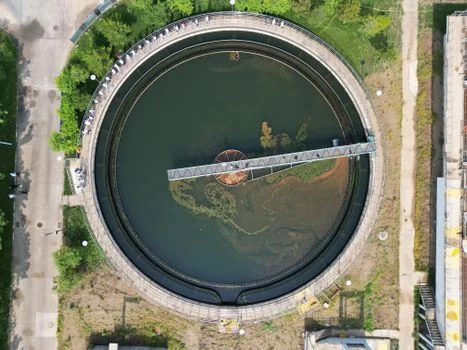
The initial capital expenditure for an industrial wastewater treatment plant in Melaka is heavily influenced by the chosen technology. Membrane Bioreactor (MBR) systems, known for their compact footprint and superior effluent quality, typically command a CAPEX of RM 8,000–RM 12,000 per cubic meter per day (m³/day). These systems are ideal for meeting stringent DOE Class IIB standards (effluent COD ≤ 30 mg/L) without requiring additional tertiary treatment. A notable case study in the Melaka Industrial Park in 2024 involved an 800 m³/day MBR plant with a CAPEX of RM 9.2 million. Dissolved Air Flotation (DAF) systems, highly effective for treating wastewater with high TSS loads, particularly from food processing industries, offer a more moderate CAPEX, ranging from RM 3,000–RM 5,000/m³/day. For instance, a 500 m³/day DAF plant installed in Alor Gajah in 2023 had a CAPEX of RM 2.8 million. A/O (Anoxic/Oxic) systems, which are biologically focused, generally fall between DAF and MBR in terms of CAPEX, at RM 4,000–RM 6,000/m³/day, while also offering lower energy consumption (0.3–0.6 kWh/m³) but requiring a larger physical footprint. A 600 m³/day A/O plant in Jasin completed in 2024 had a CAPEX of RM 3.5 million. Civil works, including excavation, tank construction, and piping, typically constitute 20–30% of the total CAPEX, with underground tank construction costing RM 250–RM 400/m² and above-ground tanks RM 150–RM 250/m². Melaka’s high water table can further inflate these civil costs by an additional 15–20% due to increased dewatering and foundation requirements.
| System Type | CAPEX Range (RM/m³/day) | Footprint (m²/m³/day) | Effluent Quality (BOD/COD/TSS) | Best Use Case |
|---|---|---|---|---|
| MBR | 8,000 – 12,000 | 0.1 – 0.3 | ≤ 10/≤ 30/≤ 10 | High-strength organics, strict discharge limits, space constraints |
| DAF | 3,000 – 5,000 | 0.4 – 0.8 | Variable (depends on pre-treatment) | High TSS, oils, greases, suspended solids removal |
| A/O | 4,000 – 6,000 | 0.5 – 1.0 | ≤ 20/≤ 50/≤ 30 | Moderate organic loads, lower energy needs |
OPEX Breakdown: Energy, Chemicals, and Maintenance Costs by System Type
Operational Expenditure (OPEX) is a critical long-term cost factor that can significantly impact the total cost of ownership for an industrial wastewater treatment plant in Melaka. Energy consumption is a primary driver, with MBR systems generally requiring the most power at 0.8–1.2 kWh/m³, followed by DAF systems at 0.5–0.8 kWh/m³, and A/O systems at the lower end of 0.3–0.6 kWh/m³. Considering Melaka's industrial electricity rate of RM 0.42/kWh as of 2024 (TNB data), these differences translate into substantial operational costs. Chemical dosing is another significant OPEX component, particularly for DAF systems, which necessitate coagulants and flocculants at an estimated cost of RM 0.30–RM 0.80/m³. MBR systems, while often requiring less chemical input for treatment, incur costs for Membrane Cleaning-In-Place (CIP) chemicals, typically RM 0.10–RM 0.25/m³. A case study of a Melaka food processing plant using DAF in 2024 reported chemical costs of RM 0.55/m³. Maintenance costs vary, but membrane replacement for MBR systems represents a substantial, albeit less frequent, expense, estimated at RM 0.20–RM 0.50/m³ over their 5–8 year lifespan; for an 800 m³/day plant, this could amount to approximately RM 180,000 annually. Labor costs, for one to two operators, typically range from RM 5,000–RM 12,000 per month, with MBR systems often requiring more skilled personnel. Sludge disposal, a considerable cost at RM 150–RM 400 per tonne in Melaka, is also system-dependent; MBR systems generally produce 30–50% less sludge volume compared to DAF, leading to significant savings.
| System Type | Energy Cost (RM/m³) | Chemical Cost (RM/m³) | Maintenance Cost (RM/m³) | Total OPEX (RM/m³) |
|---|---|---|---|---|
| MBR | 0.34 – 0.50 | 0.10 – 0.25 | 0.20 – 0.50 (incl. membrane replacement amortization) | 0.64 – 1.25 |
| DAF | 0.21 – 0.34 | 0.30 – 0.80 | 0.05 – 0.15 | 0.56 – 1.29 |
| A/O | 0.13 – 0.25 | 0.05 – 0.10 | 0.05 – 0.10 | 0.23 – 0.45 |
DOE Compliance Costs: What Melaka Buyers Must Budget for Class IIB Standards
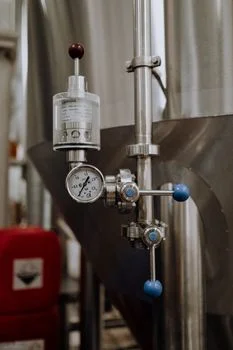
Achieving and maintaining compliance with the Department of Environment (DOE) Class IIB standards is a non-negotiable requirement for industrial facilities in Melaka, and it incurs specific costs. Class IIB standards mandate effluent limits of BOD ≤ 20 mg/L, COD ≤ 50 mg/L, TSS ≤ 50 mg/L, with pH maintained between 5.5–9.0, and E. coli levels not exceeding 100 CFU/100 mL. While MBR systems inherently produce effluent that meets Class IIB standards without further treatment, facilities utilizing DAF or A/O systems will likely require additional tertiary treatment stages. This can involve installing sand filters, which might add RM 1,500–RM 3,000/m³/day to CAPEX, or implementing disinfection processes like chlorine dioxide, costing RM 2,000–RM 4,000/m³/day. Beyond capital investments, ongoing monitoring costs are substantial. Annual expenses for DOE-approved laboratory testing, covering parameters such as BOD, COD, TSS, and E. coli, typically range from RM 15,000 to RM 30,000. A 500 m³/day plant in Melaka reported annual monitoring costs of RM 22,000 in 2024. annual DOE permit fees can range from RM 5,000 to RM 20,000, depending on the facility's classification and discharge volume. Non-compliance can result in fines ranging from RM 50,000 to RM 500,000 per offense, alongside potential operational shutdowns and severe damage to corporate reputation, making proactive investment in compliant treatment systems a prudent financial strategy.
ROI Calculator: How to Justify Wastewater Treatment Costs in Melaka
To justify the investment in industrial wastewater treatment, a Return on Investment (ROI) calculation is essential. The core ROI formula is: (Annual Savings – Annual OPEX) / CAPEX. Annual Savings are primarily derived from avoided fines, potential water reuse, and reduced sludge disposal costs. For example, a facility in Melaka could avoid annual fines ranging from RM 50,000 to RM 500,000 by ensuring consistent DOE compliance. A Melaka-based electronics plant reported saving RM 300,000 annually after installing an MBR system in 2023. Water reuse presents another significant saving opportunity. Industrial water in Melaka is priced between RM 2.50–RM 4.00/m³ (SAMB 2024 data). Effluent from MBR systems, often purified to a high standard, can be reused for cooling towers, irrigation, or process makeup water, potentially reducing overall water procurement costs by 30–50%. For a 500 m³/day plant, this reuse could translate to annual savings of RM 136,875 to RM 219,000. Reduced sludge disposal is also a contributor; an MBR system’s lower sludge production can save a 500 m³/day plant RM 50,000–RM 150,000 annually compared to DAF. By quantifying these savings against the CAPEX and OPEX, businesses can demonstrate the financial viability of wastewater treatment investments.
| Metric | Value (Example for 500 m³/day MBR Plant) |
|---|---|
| CAPEX | RM 5,000,000 (Estimate @ RM 10,000/m³/day) |
| Annual OPEX (Estimate @ RM 1.00/m³) | RM 182,500 |
| Avoided Fines (Conservative Estimate) | RM 150,000 |
| Water Reuse Savings (Estimate @ RM 3.00/m³, 40% reuse) | RM 219,000 |
| Sludge Disposal Savings (Estimate) | RM 100,000 |
| Total Annual Savings | RM 469,000 |
| ROI (Years) | ~10.6 Years (469,000 / 5,000,000) |
Zero-Risk Selection Guide: How to Choose the Right System for Your Melaka Facility
Selecting the optimal wastewater treatment system for your Melaka facility involves a systematic evaluation process to mitigate risk and ensure long-term compliance and cost-efficiency. Begin by thoroughly characterizing your influent: determine the average and peak flow rates, and precisely measure key parameters such as COD, BOD, TSS, oils, greases, and any specific contaminants unique to your industrial processes. For example, electronics manufacturing wastewater, often high in COD and heavy metals, may necessitate advanced MBR systems for compliance. Conversely, food processing plants with high TSS and organic loads might find DAF systems, potentially with pre-treatment, to be a more cost-effective solution. Next, clearly define your compliance goals. Are you aiming solely for DOE Class IIB discharge, or are there aspirations for water reuse or even Zero Liquid Discharge (ZLD)? MBR systems are often the choice for high-quality effluent suitable for reuse, while DAF may require additional polishing steps. Consider your budget constraints, balancing the upfront CAPEX against long-term OPEX. Facilities with limited operational budgets might lean towards lower CAPEX options, while those prioritizing long-term operational stability might favor higher CAPEX, lower OPEX technologies like MBR. Footprint limitations are also crucial; MBR systems offer significant space savings (up to 60% smaller than conventional biological treatment), making them ideal for sites with constrained land availability. Finally, assess the need for future scalability. Modular systems, such as those offered in DAF or MBR configurations, can be expanded incrementally to meet growing production demands without requiring a complete system redesign.
Which Wastewater Treatment System is Right for Your Melaka Facility?
Start: Influent Characterization (Flow Rate, COD, TSS, etc.)
- High COD/BOD, Low TSS (e.g., some chemical plants): Consider A/O or MBR.
- High TSS, Oils, Greases (e.g., food processing): Consider DAF.
- Mixed or Highly Variable Influent: Consider a multi-stage approach or MBR.
Decision Point: Compliance Requirements
- DOE Class IIB (BOD ≤ 20, COD ≤ 50): MBR often meets directly. DAF/A/O may need tertiary treatment (sand filters, disinfection).
- Water Reuse: MBR typically yields the highest quality effluent for reuse.
- Zero Liquid Discharge (ZLD): Requires advanced tertiary treatment and potentially evaporation/crystallization.
Decision Point: Budget & Footprint
- Low CAPEX Priority: DAF or A/O systems.
- Low OPEX Priority: MBR systems (higher CAPEX, lower OPEX).
- Space Constraints: MBR systems (smallest footprint).
End: Recommended System Type (e.g., MBR for high COD/strict limits, DAF for high TSS)
Frequently Asked Questions
What is the typical CAPEX for a wastewater treatment plant in Melaka for a 500 m³/day facility?
For a 500 m³/day facility in Melaka in 2025, CAPEX can range from approximately RM 2.5 million for a DAF system to RM 6 million for an MBR system, with A/O systems falling in between.
How much does it cost to operate a wastewater treatment plant in Melaka per cubic meter?
OPEX typically ranges from RM 0.80 to RM 3.50 per cubic meter, with energy and chemical consumption being the largest contributors, varying significantly by technology.
What are the main DOE compliance requirements for industrial wastewater in Melaka?
Key DOE Class IIB requirements include BOD ≤ 20 mg/L, COD ≤ 50 mg/L, and TSS ≤ 50 mg/L, alongside parameters like pH and microbial counts.
Is an MBR system more expensive to operate than a DAF system?
While MBR systems have higher CAPEX, their OPEX can be competitive due to lower sludge production and potentially less chemical usage for basic treatment, though energy consumption is higher. DAF systems have lower CAPEX but higher chemical and potential tertiary treatment costs.
What is the payback period for investing in a wastewater treatment plant in Melaka?
The payback period, or ROI, depends heavily on avoided fines, water reuse savings, and sludge disposal costs. For a well-designed system that maximizes these benefits, payback can range from 5 to 15 years.
Related Equipment
- MBR systems for DOE Class IIB compliance in Melaka — view specifications, capacity range, and technical data
- cost-effective DAF systems for high-TSS wastewater in Melaka — view specifications, capacity range, and technical data
- DOE-compliant chlorine dioxide disinfection for Melaka wastewater — view specifications, capacity range, and technical data
Need a customized solution? Request a free quote with your specific flow rate and pollutant parameters.