
Why Johannesburg Hotels Are Specifying Packaged MBR in 2026
Packaged MBR is now the default STP choice for Sandton, Rosebank and OR Tambo corridor hotels because the municipal safety net has visibly failed. The 2025 Green Drop assessment rated 396 of South Africa's 848 municipal wastewater treatment works as critical, with 61% performing below the minimum required level and Green Drop certified works falling from 22 to 14 (S4). Johannesburg Water has reported a R7.3 billion shortfall on wastewater treatment works, R2.9 billion on sewer mains, and R13.7 billion on capacity upgrades, after three of its six works — Northern Works, Olifantsvlei and Ennerdale — each scored 30% in the 2025 Green Drop round (S4, via GroundUp). For a hotel group whose own discharge compliance cannot depend on the metro, a self-contained MBR market growth 2026 regional analysis shows why packaged membrane plants are now specified as standard rather than premium. The DWS allocated R12.3 billion across more than 400 water projects in May 2026, split between 70 bulk schemes and 341 municipal schemes (S4, via SAnews), which signals that compliance pressure on private dischargers in a stressed catchment will intensify, not relax.
What a Packaged MBR STP Is — and What It Is Not
A packaged MBR is a factory-built, skid- or container-integrated system that combines anoxic and aerobic biological treatment with submerged membrane filtration at a pore size of 0.1 µm or tighter. The membrane replaces the secondary clarifier of a conventional works, retains the mixed liquor solids in the reactor, and produces a clarified, near-sterile permeate in a single step. An integrated MBR membrane bioreactor system in this class typically delivers TSS ≤5 mg/L, turbidity ≤1 NTU and 90–95% COD reduction — the same envelope reported by Imemflo for a 200-bed 5-star hotel installation at 250 m³/d (S5). It is not a containerised SBR (batch-fed, larger footprint, lower effluent quality, no reuse-grade turbidity), and it is not an MBBR (attached-growth, no membrane, requires a downstream tertiary stage to reach reuse quality). On dense Sandton infill sites where above-grade plant is unacceptable, the same process is available in a buried configuration such as a WSZ underground packaged sewage treatment plant, which carries the identical biological train below ground level.
Johannesburg Hotel Sizing: Per-Bed and Per-Cover Method
Size the duty first, then pick the module. The rule of thumb used in South African hospitality design is 0.20–0.30 m³ per occupied bed per day, with a 1.5–2.0× peaking factor applied to cover restaurant, banquet and conference peaks. Add kitchen greywater at 0.05–0.10 m³ per cover per day for à la carte and banquet service, and laundry at 0.04–0.06 m³ per bed per day for full-service properties with on-site laundry.
Worked example: 200-room hotel at 70% occupancy (140 occupied beds), 80 covers per meal, on-site laundry. Base = 140 × 0.25 = 35 m³/d. Kitchen = 80 × 0.10 = 8 m³/d. Laundry = 200 × 0.045 = 9 m³/d. Average dry-weather flow ≈ 52 m³/d, rounded to ~60 m³/d after a diversity allowance. Applying a 1.8× peak factor gives a peak hour flow of ~108 m³/d. This sits below the 250 m³/d reference Imemflo reports for a 200-bed 5-star luxury hotel (S5); the gap is the difference between select-service and luxury assumptions (larger suites, spa, pool backwash, higher per-bed water use). For a duty in this range, a DF series PVDF flat-sheet membrane module with 80–100 m² of membrane area will handle the peak with one module in service and one on standby.
| Parameter | Value | Source / basis |
|---|---|---|
| Per occupied bed (select-service) | 0.20–0.25 m³/d | SA hospitality rule of thumb |
| Per occupied bed (full-service / luxury) | 0.25–0.30 m³/d | Imemflo 200-bed 5-star reference, 250 m³/d (S5) |
| Kitchen greywater (à la carte / banquet) | 0.05–0.10 m³/cover/day | SA hospitality rule of thumb |
| Laundry (on-site) | 0.04–0.06 m³/bed/day | SA hospitality rule of thumb |
| Peak factor (restaurant + conference) | 1.5–2.0× ADWF | Standard municipal peak factor |
| DF series module output | 32–135 m³/d per module | Product data |
| Equalisation volume | ≥8 h at ADWF | Design standard for hotel duty |
Technology Comparison: MBR vs SBR vs MBBR vs Conventional ASP for 100–300 m³/d Hotel Duty
For a 100–300 m³/d hotel duty in the Sandton–Rosebank–OR Tambo corridor, the realistic shortlist is MBR, SBR, MBBR and conventional activated sludge. SBR and MBBR are well-suited to facilities that need automated operation or variable load handling (S1), but neither produces reuse-grade turbidity without a downstream tertiary stage. MBR produces reuse-grade permeate in a single step, occupies roughly 60% of the footprint of a conventional ASP at the same duty, and is the only one of the four that meets SANS 241 reuse targets without a polishing stage (S1, S5). The DF series PVDF flat-sheet membrane module in this class is the typical building block.
| Parameter | MBR | SBR | MBBR | Conventional ASP |
|---|---|---|---|---|
| Effluent TSS (mg/L) | ≤5 | 15–30 | 20–40 | 20–40 |
| Effluent BOD (mg/L) | ≤5 | 10–20 | 15–30 | 15–30 |
| Effluent turbidity (NTU) | ≤1 | 5–15 | 10–30 | 10–30 |
| Footprint (m² per 100 m³/d) | ~40–60 | ~80–120 | ~70–100 | ~100–150 |
| Reuse suitability (SANS 241) | Direct | Tertiary needed | Tertiary needed | Tertiary needed |
| FOG tolerance (without pre-treatment) | Low | Medium | Medium | Low–medium |
| Operator skill | Low–medium (membrane care) | Medium (cycle tuning) | Low | High |
| Indicative CAPEX band (ZAR per m³/d, packaged) | R 35,000–60,000 | R 25,000–45,000 | R 22,000–40,000 | R 30,000–55,000 (civil-heavy) |
The conclusion is direct: for a 100–300 m³/d Johannesburg hotel with constrained footprint, FOG load, and a reuse intent, packaged MBR is the lowest-risk choice. SBR remains the cost-led fallback only when reuse is explicitly out of scope.
FOG and Pre-Treatment: Protecting the Membranes from Kitchen and Laundry Load
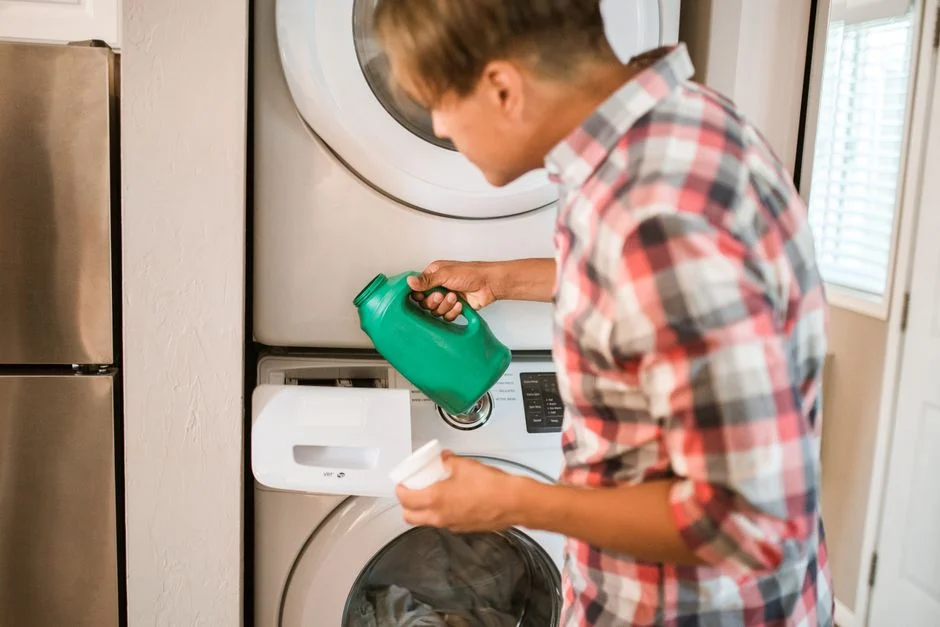
Hotel wastewater is uniquely challenging because three streams — kitchen FOG, laundry lint, and guest-room blackwater — meet in a single pipe, with sharp diurnal peaks at breakfast and dinner service (S5). If that combined stream reaches the membrane untreated, FOG coats the flat-sheet surface, lint blinds the module channels, and the membrane flux collapses within weeks. Specify the pre-treatment chain in this order: a GX rotary mechanical bar screen at the inlet for solids and lint capture, followed by a dissolved air flotation system (4–300 m³/h range across the series) for emulsified FOG removal, then an equalisation tank sized to at least 8 hours at ADWF to damp the meal-service peaks before the bioreactor. For large on-site laundries (typically >1.5 t/d wash), a separate greywater plant for the laundry stream — referenced by Imemflo as a common hotel option (S5) — is worth modelling, because lint and surfactant load is the single biggest membrane-fouling vector in full-service properties. One operational note: DAF skimmings and screenings must be removed daily, or the upstream FOG load will blind the MBR membrane within weeks, irrespective of the biological design margin.
Compliance, Reuse and the DWS / Municipal Interface
Three regulatory layers apply to a packaged hotel MBR in Johannesburg, and the specifier needs all three in the file before commissioning. First, the DWS National Water Act Section 21 water-use authorisation: triggered by any discharge to a water resource and by any reuse for irrigation or toilet flushing. Discharging treated effluent to the municipal sewer is normally classed as domestic sewage under municipal by-laws and does not by itself trigger a Section 21 licence, but the moment the same stream is reused on-site for irrigation, toilet flushing, cleaning or landscaping — all listed as defensible hotel reuse applications (S1) — the Section 21 authorisation is required. Second, the City of Johannesburg's wastewater by-law discharge limits, which set the maximum contaminant concentrations for any effluent entering the municipal sewer; these are the limits the packaged MBR must be designed to meet at the plant outlet. Third, SANS 241, which is the reuse standard for any water directed to toilet flushing or landscape irrigation on the property. A defensible specification quotes all three documents and ties the plant's performance guarantee to each one.
A municipal Green Drop failure does not relax the hotel's own discharge obligations — the hotel can still be fined or shut down by the metro for non-compliant effluent regardless of how poorly the receiving works is performing. Specifying reuse to SANS 241 actually reduces long-term regulatory exposure, because the reuse stream never enters the stressed municipal sewer at all.
Cost Picture: CAPEX, OPEX and Membrane Replacement in Rand
For a 100–300 m³/d packaged hotel MBR in Gauteng, the CAPEX envelope runs roughly R 35,000–60,000 per m³/d of design flow, with the spread driven by configuration. Containerised units sit at the lower end, skid-mounted with a small plant room in the middle, and buried WSZ underground packaged sewage treatment plant installations at the upper end once civil reinstatement is included. Membrane replacement is a scheduled OPEX line: PVDF flat-sheet modules in the DF series (80–225 m² per module, product data) typically run 5–8 years between replacements under hotel duty with proper pre-treatment. Energy is dominated by blowers and permeate pumps; submerged flat-sheet configurations cut aeration energy by an order of magnitude versus external cross-flow designs (product data on DF series). The payback case is the reuse offset: routing reuse to toilet flushing and landscape irrigation at Johannesburg commercial water tariffs typically pays back the MBR premium over an SBR or MBBR baseline in 3–5 years for a 200-room hotel.
| Cost line | Range / value | Notes |
|---|---|---|
| CAPEX, containerised, 100–300 m³/d | R 35,000–45,000 / m³/d | Factory-built, plug-and-play |
| CAPEX, skid-mounted with plant room | R 40,000–55,000 / m³/d | Includes blower room, MCC, kiosk |
| CAPEX, buried (WSZ) configuration | R 50,000–60,000 / m³/d | Adds excavation and reinstatement |
| Membrane replacement (PVDF flat-sheet) | Every 5–8 years | DF series 80–225 m² per module |
| Energy reduction vs cross-flow | 10–20× lower | Submerged flat-sheet design |
| Payback vs SBR/MBBR baseline | 3–5 years | 200-room hotel, reuse to flushing + irrigation |
A 7-Step Selection Checklist for the Specifier
- Confirm design flow using the per-occupied-bed plus kitchen plus laundry method, with a 1.5–2.0× peak factor.
- Confirm available footprint and decide between containerised, skid-mounted, or buried (WSZ) layout based on site visibility constraints.
- Confirm the discharge route — municipal sewer only, or on-site reuse — and tie the effluent specification to the matching standard (municipal by-law or SANS 241).
- Specify the FOG pre-treatment chain: rotary bar screen, DAF unit, and equalisation tank sized to ≥8 h at ADWF.
- Specify membrane type as submerged PVDF flat-sheet, with a defined flux rating (typically 15–25 L/m²·h at peak) and module count including one standby.
- Specify automation level (PLC with telemetry), alarm setpoints, and the operator skill profile required for routine membrane care.
- Request the membrane replacement schedule, recommended spares holding, and the local Gauteng service footprint before issuing the order.
Frequently Asked Questions
What design flow should I specify for a 100-room Johannesburg hotel packaged MBR?
For a 100-room select-service hotel at ~70% occupancy, expect 25–35 m³/d base guest load, plus 5–10 m³/d from kitchen and 4–6 m³/d from any on-site laundry, giving ~35–50 m³/d average dry-weather flow and 50–90 m³/d at peak. A single DF-series module in the 80–100 m² range covers this duty with one standby.
What effluent quality do I specify for reuse under SANS 241?
Specify TSS ≤5 mg/L, turbidity ≤1 NTU, BOD ≤5 mg/L and faecal coliforms below the SANS 241 limit for the intended reuse (typically ≤1,000 cfu/100 mL for toilet flushing and landscape irrigation). A packaged MBR with submerged 0.1 µm PVDF membranes hits these figures as standard permeate quality, with UV or chlorination as a polishing disinfection step.
How long do the membranes last, and what does replacement cost?
PVDF flat-sheet modules in hotel duty with proper FOG pre-treatment typically run 5–8 years between replacements. Budget membrane replacement as a scheduled OPEX line, not a contingency — and hold at least one replacement module on site from the day of commissioning to avoid a 6–10 week shipping gap if a module fails.
Does a hotel discharging to the municipal sewer need a DWS Section 21 water-use licence?
Discharge of treated domestic sewage to a municipal sewer is normally permitted under the City of Johannesburg's wastewater by-laws without a Section 21 licence. The Section 21 authorisation is triggered the moment the treated stream is reused on-site for irrigation, toilet flushing, cleaning or landscaping. Specifying sewer-only discharge keeps the permitting simpler; specifying reuse gives a faster payback but requires the Section 21 application.
Is a packaged MBR feasible on a small Sandton infill site?
Yes. Containerised or skid-mounted units fit a standard service yard, and the buried WSZ configuration puts the entire biological and membrane train below paving or landscaping with only the kiosk and access covers visible at grade. MBR's ~60% footprint advantage over conventional ASP is what makes the infill case viable where a conventional plant would not fit.