Why Hotel Sewage in Addis Ababa Is Not Sized Like a Condominium
Addis Ababa's published residential design envelope assumes 120–150 L/c·day for middle-income blocks and 80–100 L/c·day for IHDP condominium units, with BOD5 40–55 g/c·day, COD 90–130 g/c·day, TSS 45–60 g/c·day, and NH3-N 6–9 g/c·day (per the Addis Ababa packaged sewage treatment plant design guide). A hotel runs a fundamentally different hydraulic and load profile. Guest flow includes bathroom, restaurant, banquet, laundry, and pool backwash, so the per-capita envelope expands to 150–200 L/guest·day with an effective BOD5 closer to 60–80 g/c·day once kitchen prep and FOG are included. The diurnal pattern is also different: an evening banquet or check-in peak, a near-zero overnight base, and a morning checkout surge, so a 2.0× residential peak factor under-sizes the equalisation zone, and the 10–20% inflow-and-infiltration (I&I) allowance still applies on peri-urban sub-city sites with partial storm cross-connection. Treating hotel sewage as "just residential with more rooms" is the most common reason packaged plants in the 100–500 PE band fail their first AAWSA sampling round.
"Packaged" in this context means factory-built, containerised or skid-mounted, plug-and-play, and AAWSA-acceptable. A well-defined plant arrives with the biological stage, membrane cassette, disinfection, and PLC pre-assembled; on-site work is limited to the concrete pad, the lift station, the power feed, and the headworks.
Step 1 — Build the Design Population from Rooms, F&B, and Staff
Start with rooms, not people. For a business hotel in Addis Ababa, assume 1.8 guests per occupied room at 80% occupancy, plus day-use covers from the restaurant and banquet hall at roughly 30% of room count, plus staff at 0.6 per room. A 200-key business hotel works out to: 200 × 1.8 = 360 guests, +120 day covers, +120 staff ≈ 600 PE design population. A resort hotel at 2.4 guests per room runs higher, and a 100-key limited-service property with a single restaurant runs lower. Cross-check the result against the flow envelope — a 200-key hotel in Addis Ababa typically sizes in the 60–120 m³/day average daily flow band once the 150–200 L/c·day hotel envelope is applied. For mixed-use sites (hotel + serviced apartments + retail), use a weighted PE that reflects concurrent load rather than sum-of-parts, because a serviced apartment at 02:00 and a banquet at 20:00 do not stack on the same equalisation volume.
Step 2 — Convert PE into Average Daily Flow, Peak Flow, and Load
Take 175 L/guest·day as the hotel-specific midpoint of the 150–200 L/guest·day envelope, extending the 120–150 L/c·day residential band for F&B and laundry (per the Addis Ababa packaged sewage treatment plant design guide). At 600 PE the average daily flow is 600 × 175 = 105 m³/day. Apply a 2.5× peak factor for the hotel diurnal pattern (banquet surge plus morning checkout) — at the upper end of the 2.0–2.5× residential band. Peak instantaneous is 105 × 2.5 = 263 m³/day, which sets the equalisation tank to hold at least 4 hours of peak above the average base, or about 44 m³. Add a 15% I&I allowance for peri-urban sub-city sites with partial storm cross-connection (the guide flags 10–20%). The design flow becomes 105 × 1.15 ≈ 121 m³/day average, peak ≈ 300 m³/day, and the BOD5 load lands at roughly 30–48 kg/day on the 60–80 g/c·day hotel assumption. These numbers fit comfortably inside a single small-to-mid containerised MBR skid or a single WSZ buried A/O unit (per the same guide's capacity bands: 10–2,000 m³/day MBR or 1–80 m³/h WSZ).
Step 3 — Match Technology to Site: Containerised MBR vs Buried A/O
The two AAWSA-acceptable packaged options diverge sharply on footprint, reuse intent, and plot constraints. A WSZ buried A/O packaged sewage treatment plant (1–80 m³/h, A/O + sedimentation + chlorination, fully buried) disappears under a lawn and costs less. A containerised MBR wastewater treatment system (10–2,000 m³/day per skid, A/O + submerged DF series 0.1 µm PVDF flat-sheet membrane modules + disinfection) sits above grade but produces near-reuse effluent in a 60% smaller footprint than an equivalent CAS plant (per the Addis Ababa packaged sewage treatment plant design guide). For a 200-key hotel with a tight basement or service-yard footprint, that 60% footprint reduction is usually decisive. Hotels targeting landscape irrigation, green-roof irrigation, or toilet-flushing reuse need MBR-grade effluent (BOD5/TSS ≤5 mg/L); a WSZ A/O effluent needs additional filtration to reach the reuse bar. Where the plant discharges only to the AAWSA sewer, WSZ A/O is acceptable and cheaper, but a banquet surge can push clarifier performance — membrane retention eliminates that risk. AAWSA already operates MBR units inside the city, which shortens the technical-review conversation. For membrane logistics, specify individually replaceable DF modules so spares can move through the Djibouti corridor into Addis Ababa without full cassette replacement.
| Parameter | WSZ buried A/O packaged plant | Containerised MBR (DF series) |
|---|---|---|
| Capacity band | 1–80 m³/h (≤ ~1,000 PE) | 10–2,000 m³/day per skid (~1,000–5,000 PE) |
| Process train | A/O + sedimentation + chlorination, fully buried | A/O + submerged 0.1 µm PVDF flat-sheet + disinfection |
| Typical effluent BOD5 / TSS / NH3-N | ≤30 / ≤30 / ≤15 mg/L (with disinfection) | ≤5 / ≤5 / ≤5 mg/L; near-reuse quality |
| Footprint | Smallest visual footprint; landscaping recoverable | 60% smaller than equivalent CAS; containers visible above grade |
| Reuse suitability | Limited; disinfection-only barrier for irrigation | High — suitable for landscape irrigation and toilet flushing |
| Maintenance profile | Low; sludge wasting and chlorination checks | Low–medium; transmembrane pressure logging and CIP cycles |
| Indicative 2026 CAPEX (Ethiopia, FOB + install) | USD 25,000–90,000 (100–500 PE) | USD 180,000–450,000 (1,000–3,000 PE) |
| OPEX profile | Lower; sludge-hauling dominated | 8–15% higher; membrane aeration + 5–8-year membrane replacement |
Step 4 — Confirm the AAWSA Effluent Envelope
AAWSA's typical residential envelope to design against: BOD5 ≤30 mg/L, COD ≤100 mg/L, TSS ≤30 mg/L, NH3-N ≤10 mg/L, faecal coliform ≤200 CFU/100 mL, pH 6.5–8.5 (per the Addis Ababa packaged sewage treatment plant design guide). A WSZ A/O unit with chlorination meets this envelope; a containerised MBR clears it with margin, typically BOD5 and TSS below 5 mg/L because the 0.1 µm PVDF flat-sheet retains nearly all particulates. Note that the Ethiopian Environmental Protection Authority (EEPA) sets the national limit, not AAWSA; AAWSA may impose tighter site-specific conditions for hotels near watercourses or where the effluent is reused for irrigation. Recommend a 6–10 week pre-design engagement with AAWSA covering design flow, peak factor, the compliance plan, and the sampling schedule — submitting the hotel diurnal-pattern justification up front defuses one of the most common review comments.
Step 5 — Budget the 2026 CAPEX and OPEX
Indicative 2026 Ethiopia CAPEX bands, FOB + install (per the Addis Ababa packaged sewage treatment plant design guide): WSZ buried A/O USD 25,000–90,000 at 100–500 PE; containerised MBR USD 180,000–450,000 at 1,000–3,000 PE; USD 650,000–950,000 for a 5,000 PE containerised MBR. Hotel flows around 100–200 m³/day sit at the lower end of the MBR band. OPEX drivers are aeration power, membrane replacement every 5–8 years for the MBR, and sludge hauling. Power draw benchmark: 0.8–1.1 kWh/m³ treated for a containerised MBR — at Addis Ababa industrial tariffs this is the largest single OPEX line. A buried A/O generates more waste activated sludge; MBR's higher biomass retention reduces yield, but the sludge still requires a plate-and-frame filter press or off-site hauling. The reuse credit matters: a 100–200 m³/day hotel that irrigates landscaping and uses treated water for toilet flushing typically saves 30–60% of its municipal water bill, enough to retire the MBR CAPEX premium in 3–5 years. Flag the Djibouti-corridor import duty on membrane spares as a hidden lifecycle cost line that should be priced into the AMC, not the initial CAPEX.
| Hotel size (keys) | Design flow (m³/day) | Technology fit | Indicative 2026 CAPEX (USD, FOB + install) | Dominant OPEX line |
|---|---|---|---|---|
| 50–80 (limited-service) | 30–60 | WSZ buried A/O | 25,000–60,000 | Sludge hauling, chlorination |
| 100–150 (mid-scale) | 60–110 | WSZ A/O or single-skid MBR | 60,000–180,000 | Aeration power, sludge hauling |
| 200–300 (full-service, reuse intent) | 110–220 | Containerised MBR (DF series) | 180,000–350,000 | Membrane aeration 0.8–1.1 kWh/m³, membrane replacement at year 5–8 |
| 300+ (large resort or mixed-use) | 220+ | Multi-skid MBR | 350,000–650,000 | Same as above, plus standby genset fuel |
Step 6 — Specify the Pre-Treatment and Sludge Train
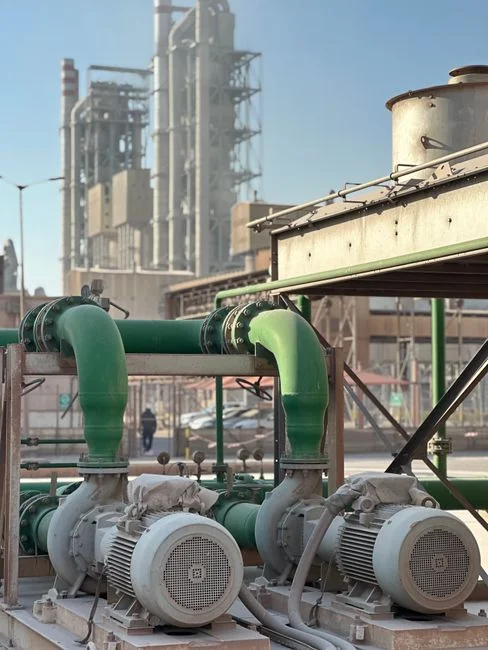
Hotel sewage carries high FOG from kitchens and fibrous material from laundry, so the headworks protect the membrane warranty. Specify a rotary mechanical bar screen at 1–3 mm aperture upstream of the biological stage. If kitchen flow is separated at source, add a dissolved air flotation (DAF) unit ahead of the MBR; otherwise an internal grease trap is the minimum. Sludge line: a plate-and-frame filter press sized to the MBR wasting rate, typically 0.3–0.5 kg TSS per kg BOD removed, dewatering to 18–22% dry solids for off-site disposal. Chemical dosing: an automatic chemical dosing system for the DAF and the sludge press, with a spare-parts kit sized for Djibouti–Addis Ababa lead times rather than 48-hour domestic delivery.
Step 7 — Procurement, Installation, and AAWSA Commissioning
Require a factory acceptance test (FAT) at the manufacturer's site with a documented clean-water flux test on every DF module before shipment. The spare-parts kit should include at least one replacement DF cassette, a set of aerator diaphragms, a PLC backup, and a year of dosing chemicals, all sized for Djibouti-corridor lead times. Site prep differs by technology: a reinforced concrete pad with proper ballasting and vibration control for a containerised MBR, below-grade concrete for a buried WSZ, a lift for the 40-ft ISO container, and a dedicated mains plus standby genset feed sized for 0.8–1.1 kWh/m³ (per the Addis Ababa packaged sewage treatment plant design guide). Commissioning covers biological seeding, a 14–21 day ramp, the AAWSA sampling schedule, and a one-week operator-training handover to the hotel engineering team before the plant is signed over.
Frequently Asked Questions
How many litres per guest per day should an Addis Ababa hotel STP be sized for?
Size at 150–200 L/guest·day, with a 2.5–3.0× peak factor and a 10–20% I&I allowance. This extends the documented 120–150 L/c·day Addis Ababa residential band for hotel F&B, laundry, and pool backwash (per the Addis Ababa packaged sewage treatment plant design guide).
Does AAWSA accept packaged MBR systems for hotel projects?
Yes. AAWSA already operates MBR units at municipal WWTPs inside Addis Ababa, so a containerised MBR is a regulator-accepted technology provided the design meets EEPA national limits and any AAWSA site-specific conditions (per the same guide).
What is the 2026 CAPEX for a packaged MBR STP for a 100–200-key Addis Ababa hotel?
USD 180,000–450,000 FOB + install for the 1,000–3,000 PE containerised MBR band, with a 100–200 m³/day hotel typically sitting in the lower half of that range (per the Addis Ababa packaged sewage treatment plant design guide). Excludes civil works, influent lift station, and Djibouti-corridor import logistics.
Can a hotel reuse treated STP water for irrigation and toilet flushing?
Yes with MBR-grade effluent. BOD5 and TSS ≤5 mg/L plus faecal coliform ≤200 CFU/100 mL meet the AAWSA envelope with margin and satisfy typical non-potable reuse guidance for landscape irrigation, green-roof irrigation, and toilet flushing (per the same guide).
How often do MBR membranes need replacement in Ethiopia, and are spares available locally?
Every 5–8 years is typical. Specify individually replaceable DF modules so a single module can ship through the Djibouti corridor into Addis Ababa without replacing the full cassette, and price membrane spares into the AMC rather than the initial CAPEX (per the Addis Ababa packaged sewage treatment plant design guide).
Related Equipment
- WSZ buried A/O packaged sewage treatment plant — specifications, capacity range, and technical data