Rivian's Stanton Springs North plant at a glance
Rivian is building an on-site wastewater treatment plant at its 1,800-acre, $5 billion Stanton Springs North EV factory in Georgia, with AEI as engineer of record, SOM as design architect, and Clayco (via the CJ Adventures joint venture with JE Dunn) handling construction. The plant must handle the same waste streams every modern EV factory produces — paint-shop overspray, phosphate and conversion-coating rinse water, oily machining effluent, battery-area water, and sanitary flow — before meeting Georgia EPD discharge or reuse limits tied to the facility's industrial permit.
The 1,800-acre site sits in Stanton Springs North, near Social Circle, Georgia, abutting I-20 about an hour east of Atlanta, and is planned to be operational by 2028 (per the Clayco project page). Total announced investment is $5 billion, with approximately 7,500 jobs targeted by 2030 (per the Architects' Newspaper coverage cited in a 2025-12 industry LinkedIn post). The delivery team includes SOM as design architect, AEI as engineer of record, and CJ Adventures (Clayco + JE Dunn) as the general contractor; LJC and CJ Adventures are also delivering the paint shop and civil scopes via design-build. The campus scope lists stamping, body, paint, general assembly, battery and drive unit production, a central utility plant, wastewater treatment, offices, and a main entry building (Clayco project page, 2025).
Stanton Springs North is a multi-tenant industrial megasite, which is why the on-site WWTP is sized for Rivian's full process mix rather than one shop. The Architects' Newspaper renderings show the treatment plant inside the master plan — the only public visual confirmation to date that the WWTP sits within Rivian's fence line rather than at a regional utility. For engineers benchmarking against this scope, the Atlanta-area industrial wastewater compliance guide details what a Georgia-anchored permit cycle looks like in 2026.
What wastewater an EV factory actually produces
Modern EV plants generate multiple distinct waste streams, requiring the WWTP process train to be sized for the worst-case combination rather than average flow. Paint shops are the largest and most complex source: overspray, solvent-bearing rinse water, electrodeposition (e-coat) rinse, and deionized-water final rinses all carry high COD, TSS, and residual solvents. Pre-treatment and conversion-coating stages add phosphate, nickel, zinc, and fluoride from cleaning, phosphating, and sealer/rinse steps — these metals typically trigger most NPDES permit limits at auto plants.
Stamping and body-in-white operations generate oily emulsions, drawing compounds, and high TSS from blank washing and lube carry-off. Battery and drive-unit operations add trace solvents, coolants, and possible electrolyte constituents depending on cell supplier integration. General assembly contributes low-flow oily waste from parts washing plus a large sanitary component from the 7,500-person workforce at full build-out. Stormwater and chiller/boiler blowdown are typically segregated and handled under a separate Industrial Stormwater Permit (Georgia EPD GAR040000 general permit), not through the industrial WWTP.
| Waste stream | Typical pH | TSS (mg/L) | COD (mg/L) | O&G / FOG (mg/L) | Key metals / flags |
|---|---|---|---|---|---|
| Paint shop (e-coat + overspray rinse) | 6.0–9.0 | 200–1,500 | 800–4,000 | 50–300 | Ni, Zn, residual solvents, COD load |
| Phosphate / conversion coating rinse | 4.5–7.5 | 100–500 | 200–1,000 | 10–50 | Phosphate, Ni, Zn, F |
| Stamping / body-in-white (oily) | 6.5–9.0 | 500–3,000 | 1,000–5,000 | 500–5,000 | Emulsified oils, drawing compounds |
| Battery / drive unit area | 6.0–8.5 | <200 | 200–800 | <50 | Trace solvents, coolants, electrolyte constituents (case-by-case) |
| General assembly parts washing | 6.5–9.0 | 100–500 | 300–1,500 | 100–800 | Oily waste, low flow |
| Sanitary (7,500-person workforce) | 6.5–8.0 | 150–350 | 300–700 | 50–150 | Conventional BOD, pathogens |
These ranges are industry-typical for U.S. greenfield auto and EV plants, drawn from municipal pretreatment program data and standard engineering references. Rivian has not publicly disclosed stream-specific values for Stanton Springs, but the table illustrates why a single biological stage cannot treat this mix and why the upstream chemical-physical train (equalization, DAF, pH adjustment) is necessary.
How an on-site EV plant WWTP is typically designed
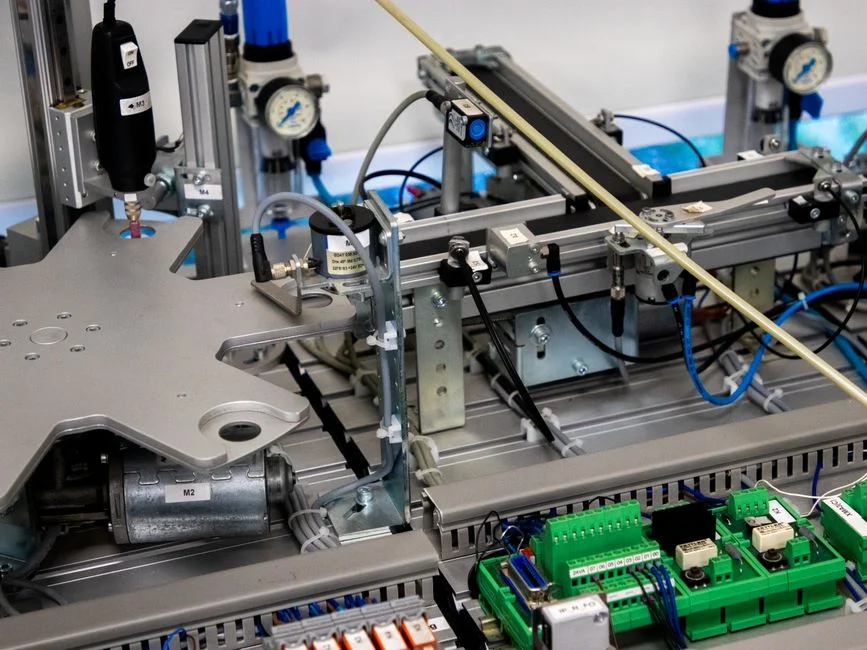
On-site WWTPs at Rivian-scale campuses are built as staged process trains rather than single tanks. Headworks start with a rotary mechanical bar screen and grit removal to protect downstream biological and membrane stages from rags, plastics, and large debris common in combined auto-plant flow. Equalization and pH adjustment homogenize batch flows from paint and pre-treatment, which arrive in slugs tied to production shifts — a 60–90 minute EQ basin is standard.
The first chemical-physical step is typically a dissolved air flotation system or a high-rate lamella clarifier, which removes emulsified oils, FOG, and suspended solids before biological treatment. DAF is the common choice for paint-shop effluent because it handles emulsified oil loadings of 500–5,000 mg/L. The biological stage is usually either activated sludge, sequencing batch reactor (SBR), or an MBR membrane bioreactor; MBR is increasingly preferred on greenfield U.S. auto plants because the <1 µm effluent suits downstream water reuse loops for cooling tower make-up, paint-line rinses, or toilet flushing.
Polishing follows biological treatment through multi-media filtration, sometimes UF or RO, depending on whether the goal is discharge to a publicly owned treatment works (POTW) or on-site reuse. Sludge handling is the final stage — a plate and frame filter press or belt press brings chemical and biological sludge to a cake suitable for off-site disposal or recovery. For a plant the size of Stanton Springs, hydraulic loading on the biological stage is typically in the 0.2–0.5 kg BOD/m³·day range when MBR is used (HydropureWater field data, 2026), which sets the aeration tank volume requirements.
Georgia EPD rules Rivian's on-site plant has to meet
Industrial process wastewater at an EV plant in Georgia routes under an NPDES Industrial Permit and local POTW pretreatment limits if any flow goes to sanitary sewer. Paint-shop effluent commonly triggers limits on metals (Ni, Zn, Cr), total phenols, oil & grease, and conventional parameters (TSS, COD, pH) under the site's permit — these are enforceable daily-maximum and monthly-average values. Battery-area flow is reviewed case-by-case; the on-site WWTP gives Rivian the buffer to handle future cell-chemistry changes without re-permitting an off-site facility.
An on-site WWTP provides the cleanest path to on-site reuse, supporting Rivian's 2024 disclosure of 79% waste recovery (Tracenable, 2024). For peer plants in the Southeast, the transportation equipment pretreatment compliance playbook outlines how monthly self-monitoring and slug-control plans are integrated into the permit.
What Rivian has already disclosed on waste in 2024
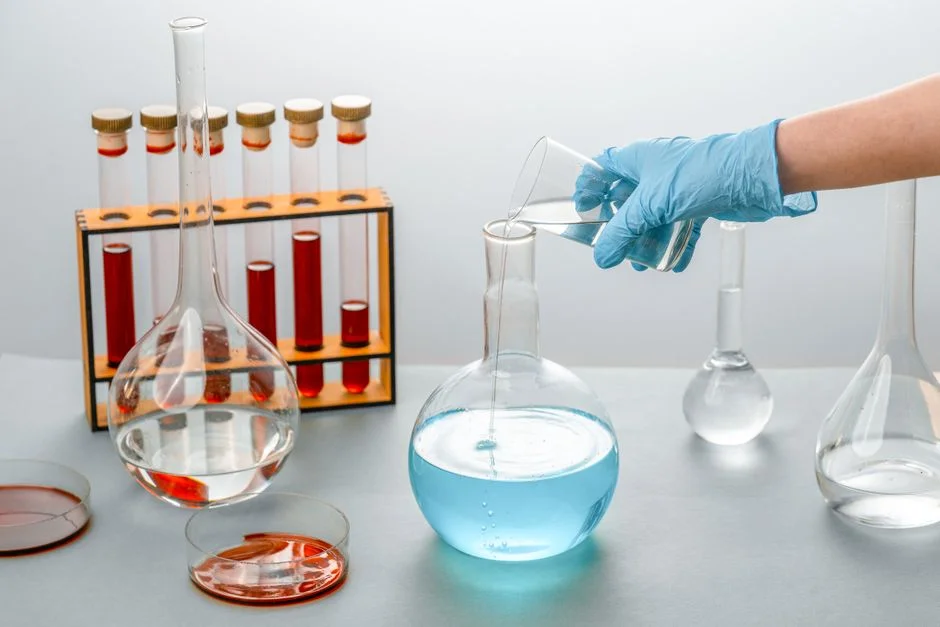
Rivian generated 88,541 metric tonnes of total waste in 2024, of which 79% was recovered through recycling, reuse, or composting, and 21% was disposed via landfill, incineration, or combustion (Tracenable ESG summary, 2024 disclosure). This ratio establishes the strategic backdrop for the on-site Georgia WWTP, as Rivian builds capacity to keep process water inside the fence and out of landfill or off-site incineration pathways. The Georgia plant's "city in the forest" framing from Elle Navarro, Rivian senior director of facility operations and workplace development, reinforces the on-site treatment-and-reuse logic. While the 79% recovery figure is a corporate-wide number, it serves as the benchmark the new plant will be measured against once it ramps.
What other EV and battery plants can learn from Rivian's setup
On-site WWTP is a baseline scope line for greenfield U.S. EV plants, listed alongside stamping, paint, body, battery, drive unit, and the central utility plant. Design-build delivery (CJ Adventures + LJC) allows the WWTP to scale with the paint shop and the rest of the campus as an integrated package. Pairing the on-site plant with a water-reuse loop — such as cooling tower make-up, paint-line rinse, or toilet flush — translates a high waste-recovery ratio into lower freshwater draw. At design freeze, confirm separate stormwater segregation, a segregated battery-area drain, dedicated oily-waste storage, and a sludge-handling path that meets the operator's disposal or recovery contract. For a peer comparison on the battery side, the LG Energy Solution battery plant wastewater treatment breakdown shows how a cell supplier scopes the same problem.
Frequently Asked Questions
Where is Rivian building its new EV factory with an on-site wastewater treatment plant?
Rivian is building the plant at Stanton Springs North, near Social Circle, Georgia, on an 1,800-acre site abutting I-20 about an hour east of Atlanta. The campus is planned to be operational by 2028.
What waste streams does a Rivian-scale EV factory WWTP have to treat?
The on-site plant must handle paint-shop effluent (e-coat rinse, overspray, solvents), phosphate and conversion-coating rinse water (Ni, Zn, F), stamping and body-in-white oily waste, battery and drive-unit area flow, general-assembly parts-washer waste, and sanitary flow from a workforce of roughly 7,500 people at full build-out.
What treatment process train does a modern U.S. EV plant WWTP use?
Typical trains run headworks screening and grit removal, equalization and pH adjustment, dissolved air flotation (DAF) for emulsified oils and FOG, an MBR membrane bioreactor or activated sludge stage for organics, multi-media or RO polishing for reuse, and a plate and frame filter press for sludge dewatering. MBR effluent below 1 µm is the preferred path for on-site reuse.
How does Rivian's 2024 waste performance relate to the Georgia WWTP?
Rivian disclosed 88,541 metric tonnes of total waste in 2024, with 79% recovered through recycling, reuse, or composting (Tracenable, 2024). The on-site Georgia WWTP provides the infrastructure to keep process water inside the fence line and support that recovery ratio as the new campus ramps toward 2028.