What 'Industrial Wastewater Treatment in Belfast' Actually Means in 2026
Industrial wastewater treatment in Belfast in 2026 means designing a process train — typically screening, flow equalisation, DAF or lamella clarification, biological treatment (MBR or activated sludge), and tertiary disinfection — to meet an NIEA Pollution Prevention and Control permit and either a NI Water trade-effluent consent or a direct-to-lough discharge standard. Belfast Lough's hydrodynamic sensitivity, modelled in the 2013 Marine Pollution Bulletin coupled plume study, means consent limits on BOD, ammonia, and metals are tighter than for an inland site.
This is not the same job as designing for Belfast WwTW, the municipal works at Duncrue Street that serves a 365,000-population catchment (utilityradar, 2026) and discharges treated effluent to Belfast Lough. That facility is a sewer-treatment asset, not a trade-effluent sink. Industrial sites in food, dairy, pharma, metal finishing, and petrochemical sectors cannot discharge untreated trade effluent to the public sewer without a NI Water consent, and they cannot discharge to surface water or Belfast Lough without an NIEA water discharge consent.
Two compliance paths exist in 2026. Path A is pre-treat to meet a NI Water trade-effluent consent and send the balance to the public sewer. Path B is treat-to-standard on-site and seek an NIEA PPC permit for a direct or indirect discharge to Belfast Lough. The choice is driven by flow, load, location, and the regional sludge-disposal ceiling. NI Water's Duncrue Street Incinerator No. 1 is rated at 24,000 tonnes dry solids per year in a fluidised bed at approximately 850°C (niwater.com, Belfast Sludge Incinerators), and the Omega PPP contract runs to 2032. On-site dewatering %DS directly controls haulage cost to that ceiling, which is why the plate and frame filter press is treated as a unit operation, not an afterthought.
The Belfast Regulatory Cage: NIEA, PPC and Belfast Lough
The Pollution Prevention and Control Regulations (Northern Ireland) 2003 are the primary instrument gating emissions from industrial installations. The Duncrue Street sludge incinerator itself operates under a PPC permit issued by NIEA — so the same regulator sets the bar for any new Belfast plant (niwater.com). For a process engineer, this matters: a single regulator, one set of application forms, and a single compliance audit trail across air, water, and sludge.
Key permit triggers in 2026 are threefold. First, discharge of trade effluent to sewer requires a NI Water consent under the Trade Effluent Northern Ireland framework, with volumetric and load-based charges set by NI Water's published tariff. Second, discharge to surface water or Belfast Lough requires an NIEA water discharge consent, which carries continuous emissions monitoring obligations for BOD, COD, ammonia, and flow. Third, sludge transport and disposal falls under the Safe Sludge Matrix, which restricts where cake can be spread and effectively funnels most Belfast industrial cake to the Duncrue Street incinerator or licensed landfill.
Belfast Lough is ecologically sensitive. The 2013 Marine Pollution Bulletin coupled hydrodynamic and wastewater plume model showed limited dispersion and elevated residence time for effluent plumes, which is why NIEA applies conservative consent loadings to direct discharges. Engineers should plan against a 2026 direct-discharge envelope of BOD below 20 mg/L, COD below 125 mg/L, ammonia below 5 mg/L (as N), and total phosphorus below 2 mg/L, plus site-specific metals — but treat these as planning benchmarks, not guaranteed limits. The exact values are negotiated against receiving-water modelling and the operator's monitoring record.
How to Characterise Your Belfast Site's Influent
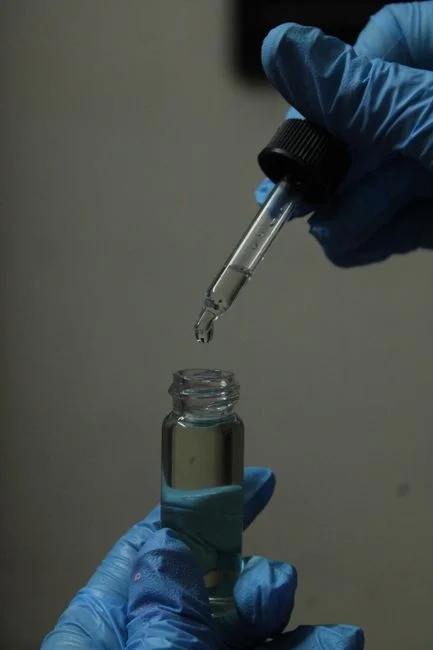
Sample across at least two production shifts and a full clean-in-place (CIP) cycle; Belfast food, dairy, and pharma plants typically see 3–10× flow and load swings between product changeovers. A composite sampler on the main trade-effluent manifold, plus 24-hour flow-proportional composites, is the minimum data set to size a biological stage correctly.
Quantify the headline parameters — flow (m³/h), pH, temperature, BOD, COD, TSS, FOG, ammonia, total N, total P, and the metal panel (Cr, Ni, Cu, Zn, Pb, Hg) — before any equipment is selected. The three parameters that most often kill a Belfast design are high temperature from CIP (which drives aeration tank sizing and oxygen demand), oil and grease (which kills biological kinetics if not removed upstream), and periodic solvent slugs from metal finishing (which can shock an activated sludge system or foul an MBR membrane in minutes).
Convert the sampling campaign into a design envelope: peak daily flow, 95th-percentile load, and maximum instantaneous values for pH and temperature. The table below shows typical industrial ranges a Belfast engineer should benchmark against before detailed design.
| Parameter | Food / Dairy | Pharma | Metal Finishing | Petrochemical |
|---|---|---|---|---|
| Flow (m³/day) | 50–2,000 | 10–500 | 5–200 | 100–5,000 |
| BOD (mg/L) | 800–4,000 | 200–1,200 | 50–400 | 150–800 |
| COD (mg/L) | 1,500–8,000 | 400–2,500 | 200–1,500 | 300–2,000 |
| TSS (mg/L) | 300–1,500 | 100–500 | 50–300 | 100–600 |
| FOG (mg/L) | 200–2,000 | <50 | 10–100 (oils) | 50–500 |
| pH | 4–11 (CIP swings) | 6–9 | 2–10 (plating baths) | 6–9 |
| Temperature (°C) | 25–55 | 20–40 | 20–35 | 25–45 |
A rotary mechanical bar screen at 3–6 mm bar spacing protects the downstream pumps from rag and solids; in food and dairy duty, expect to handle high FOG carry-through that the bar screen will not remove, which is why DAF sits immediately downstream.
The 2026 Process Train for Belfast Industrial Sites
The unit operations in a Belfast industrial process train earn their place in sequence — each protects the next. The flow sheet is screening, equalisation, primary separation, biological treatment, tertiary polishing, and sludge handling, with a return loop for backwash and chemical cleaning.
Step 1 — Headworks. A rotary mechanical bar screen at 3–6 mm bar spacing removes rags, fibres, and large solids that would damage downstream pumps and clog DAF nozzles. For high-FOG streams, a heated drum screen or grease trap upstream is worth specifying.
Step 2 — Flow equalisation. Sized for at least 8–24 hours of hydraulic retention to flatten CIP and shift-end peaks. Equalisation is the cheapest insurance against hydraulic and load shock on the biological stage, and Belfast food and dairy sites rarely regret oversizing it.
Step 3 — Primary separation. A DAF pre-treatment system in the 4–300 m³/h range is the workhorse for FOG- and TSS-heavy streams from food, dairy, and metalworking. A lamella clarifier suits chemical or precipitation duties where surface loading of 20–40 m/h is adequate and FOG is low.
Step 4 — Biological stage. An MBR membrane bioreactor in the 10–2,000 m³/day range is the right choice for sites with tight footprint or water-reuse targets, and for direct-discharge consents where effluent BOD and ammonia must be reliably below 20 mg/L and 5 mg/L respectively. Conventional activated sludge remains the lower-cost option for higher flows where footprint is not binding, though it needs careful attention to activated sludge bulking troubleshooting.
Step 5 — Tertiary. Multi-media filtration followed by UV or chlorine dioxide disinfection to meet the coliform targets common in NI consents. For water-reuse duties, RO or UF polishing sits on top of the MBR.
Step 6 — Sludge handling. A plate and frame filter press dewatered to approximately 25% dry solids — the same target the Duncrue Street incinerator expects for off-site cake — minimises haulage to the Omega PPP facility operating until 2032 (niwater.com).
| Stage | Unit Operation | Typical Removal / Target | Design Driver |
|---|---|---|---|
| Headworks | Rotary bar screen | >50% TSS gross removal | Pump protection |
| Equalisation | Buffer tank, 8–24 h HRT | Flow / load damping | Shock load control |
| Primary | DAF or lamella | 60–90% TSS, 70–95% FOG | FOG / TSS reduction |
| Biological | MBR or activated sludge | >95% BOD, >90% ammonia | Consent compliance |
| Tertiary | MMF + UV / ClO₂ | <10 NTU, <100 CFU/100 mL | Discharge / reuse |
| Sludge | Plate and frame filter press | ~25% DS cake | Haulage to Omega PPP |
Equipment Selection: DAF, MBR, Clarifier or Package Plant?
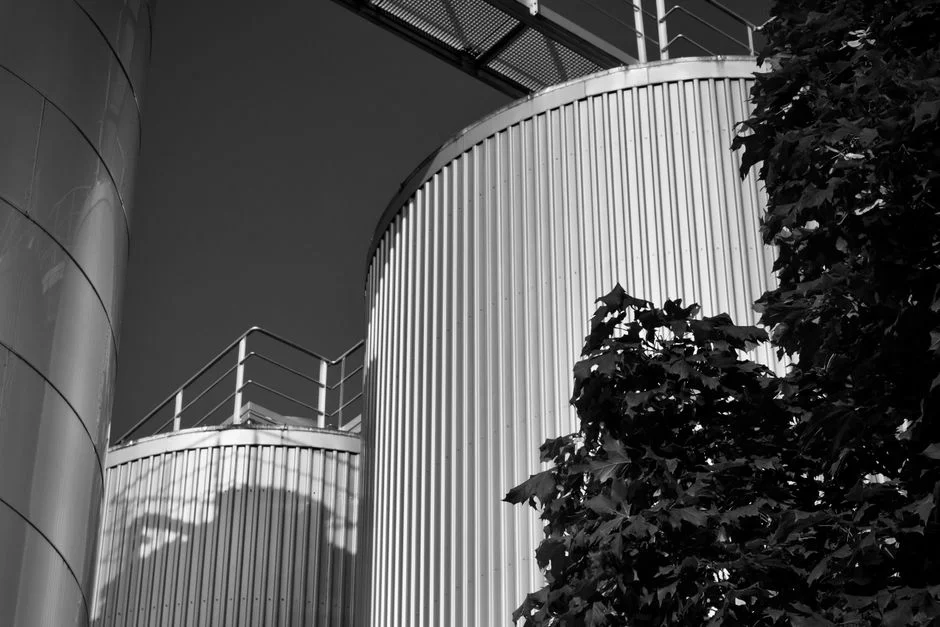
Procurement decisions in Belfast rarely come down to a single equipment line. The question is which combination of pre-treatment, primary, biological, and sludge unit operations matches the site. The decision table below maps Belfast industrial sectors to recommended packages, drawn from the equipment ranges cited earlier.
| Sector | Pre-treatment | Primary | Biological | Sludge |
|---|---|---|---|---|
| Food / Dairy | Rotary bar screen | DAF | MBR or activated sludge | Plate and frame press |
| Pharma | Rotary bar screen + pH correction | Lamella / DAF | MBR (submerged PVDF) | Plate press to ~25% DS |
| Metal Finishing | Bar screen + cyanide/Chrome destruction | Lamella + precipitation | Activated sludge | Plate press, metal sludge |
| Petrochemical | Bar screen + oil-water separator | DAF (API / CPI) | Activated sludge or MBR | Plate press, oily cake |
| Small mixed site (<80 m³/h) | Package headworks | Integrated clarifier | WSZ underground package plant | Belt press or drying bed |
For high-FOG and high-TSS streams, lead with a DAF pre-treatment system ahead of any biological stage to protect aeration basins and MBR membranes. For pharma and electronics sites targeting water reuse, lead with an MBR using submerged PVDF membranes at less than 1 μm filtration, so the effluent already meets reuse turbidity and SDI targets without a separate UF polishing step. For small sites below 80 m³/h, a WSZ underground package plant in the 1–80 m³/h range can replace civil-built concrete tanks and cut install time on constrained Belfast brownfield sites. Containerised options are also worth reviewing for fast-track projects — see this containerised wastewater treatment selection guide for the engineering specs.
Discharge Path: Trade Effluent to Sewer vs Direct to Belfast Lough
The highest-stakes project decision is whether to design for sewer pre-treatment or for a full direct-discharge consent. The trade-effluent-to-sewer path has lower CAPEX, but NI Water charges per m³ and per kg of BOD and SS — and the 2025–2026 tariff cycle has continued the upward trend seen in published NI Water trade-effluent schedules. Cost drivers are volumetric flow, BOD load, and SS load, and a site that ignores load reduction upstream pays twice: once in operating cost at the on-site plant, and again in NI Water charges.
The direct-to-lough path requires full treatment to consent limits, continuous emissions monitoring, and an NIEA PPC permit. The 2013 Belfast Lough plume model's finding of limited dispersion is the engineering justification: dilution is not a design parameter, so the consent envelope is tight by design. CAPEX is higher, but for high-load sites the avoided trade-effluent charges and the option of water reuse often justify the spend inside a 5–7 year payback.
A hybrid path is increasingly common in 2026: pre-treat on-site to reuse standards for cooling tower or CIP make-up, sending only the residual bleed to sewer. Water reuse is a strategic driver for Belfast sites facing NI Water cost escalations and rising abstraction charges, and it pairs well with an MBR-based flow sheet. A practical decision rule: flows above approximately 50 m³/day with high load typically justify on-site MBR plus sludge dewatering; small low-load flows are usually best served by pre-treatment plus a NI Water consent. Real-time online wastewater analyser selection is worth specifying early, since both consent routes increasingly require continuous monitoring of COD, ammonia, and total phosphorus.
Frequently Asked Questions
Do I need an NIEA PPC permit to discharge industrial effluent in Belfast?
You need either a NI Water trade-effluent consent to discharge to the public sewer, or an NIEA water discharge consent backed by a PPC permit under the Pollution Prevention and Control Regulations (Northern Ireland) 2003 to discharge to surface water or Belfast Lough. The Duncrue Street sludge incinerator itself operates under a PPC permit issued by NIEA (niwater.com), so the same regulator audits your site.
What consent limits should I plan against for a direct discharge to Belfast Lough?
Use the 2026 planning envelope of BOD below 20 mg/L, COD below 125 mg/L, ammonia below 5 mg/L (as N), and total phosphorus below 2 mg/L, plus site-specific metals. These reflect the limited dispersion shown by the 2013 Marine Pollution Bulletin plume model, but final limits are negotiated against your site and discharge point.
What dewatering %DS should I target to minimise sludge haulage cost?
Target approximately 25% dry solids, the cake specification the Duncrue Street Incinerator No. 1 expects (24,000 tds/yr capacity, fluidised bed at ~850°C). A plate and frame filter press reaches this consistently from mixed primary and waste-activated sludge; the Omega PPP contract runs to 2032.
When is an MBR the right biological stage for a Belfast site?
Specify an MBR when footprint is constrained, when the consent envelope is tight (BOD <20 mg/L, ammonia <5 mg/L), or when you need reuse-quality effluent for cooling tower or CIP make-up. Submerged PVDF membranes at <1 μm filtration deliver reuse turbidity and SDI without a separate UF polishing step, which is the main CAPEX argument for pharma and electronics sites.