
What Is Activated Sludge Bulking and Why It Matters
Activated sludge bulking occurs when mixed-liquor suspended solids (MLSS) fail to settle, producing a Sludge Volume Index (SVI) above 150 mL/g. Settling rates drop below 200 mg/L·h, sludge overflows the clarifier, and effluent turbidity can climb past 30 NTU. The economic hit shows up quickly: more chemicals, unscheduled sludge disposal, and a real risk of permit violations.
The secondary damage is what concerns most plant engineers. A municipal plant that ran at SVI 180 mL/g saw total nitrogen removal fall from 85% to under 50% because loose sludge shortened the contact time for ammonia-oxidizing bacteria. Regulators commonly cap SVI at 150 mL/g; exceeding that figure usually triggers corrective-action deadlines or fines. Early detection saves both compliance status and downstream biology.
7 Root Causes of Sludge Bulking in Wastewater Treatment
Filamentous bacteria overgrowth drives roughly 80% of reported bulking incidents in industrial plants. The seven drivers below cover most field cases we see during troubleshooting audits.
- Low dissolved oxygen (DO) in the aeration basin – DO < 1.0 mg/L favors fast-growing filaments such as Sphaerotilus natans and Nocardia. A 0.3 mg/L drop in DO can raise their relative abundance by about 15% within 24 hours, particularly during peak influent loads.
- Nutrient deficiency – A BOD:N:P ratio above 100:5:1 starves floc-formers of nitrogen or phosphorus, giving filaments a competitive edge. Operators often see SVI climb after a plant switches to low-strength influent, such as after a water-conservation campaign, unless supplemental nutrients are added.
- Improper food-to-microorganism (F/M) ratio – Low F/M (< 0.25 kg BOD/kg MLSS·d) or high SRT (> 15 days) creates a selector environment for filamentous growth. One municipal plant that extended SRT to 20 days to cut sludge production later reported a 30% rise in filamentous counts.
- High F/M with low DO – When F/M exceeds 0.55 kg BOD/kg MLSS·d and DO stays below 1.0 mg/L, Type 021N filaments dominate. This pattern shows up during storm events when influent BOD spikes but aeration capacity is already maxed out.
- Toxic shocks – Heavy metals (Zn²⁺, Cd²⁺), chlorine, or ammonia spikes inhibit floc-formers while many filaments tolerate the stress. A sudden 5 mg/L ammonia increase can suppress nitrifiers for days while filamentous bacteria proliferate unchecked.
- Acidic pH – pH < 6.0 suppresses most bacteria but selects for filamentous fungi that behave like filaments. In a food-processing plant, a pH dip to 5.8 after a cleaning-in-place (CIP) cycle coincided with a 45% rise in SVI.
- Poor mixing or dead zones – Stagnant pockets turn anaerobic and favor septic filamentous species. A simple diffuser rearrangement that eliminated a 2 m³ dead zone cut SVI by 20% within a week.
Pinpointing the dominant driver steers the fix. If low DO is the primary factor, raising blower capacity or repositioning diffusers usually resolves bulking faster than chemical dosing.
| Filament Type | Typical DO (mg/L) | F/M Ratio (kg BOD/kg MLSS·d) | SRT (days) | Visual Cue (microscopy) |
|---|---|---|---|---|
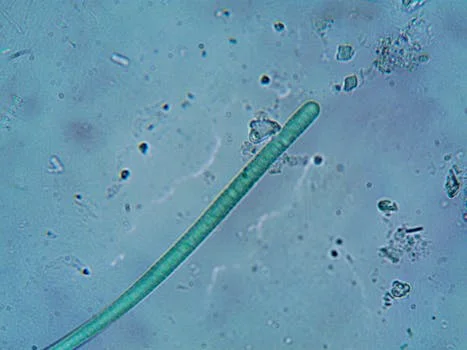
| Sphaerotilus natans | ≤ 1.0 | 0.30 – 0.55 | 5 – 12 | Long, unbranched threads forming "brush-like" mats |
| Nocardia | ≤ 1.0 | 0.25 – 0.45 | 8 – 15 | Thick, branching filaments with irregular angles |
| Type 021N | ≤ 0.8 | > 0.55 | 3 – 8 | Fine, hair-like filaments that create a "fluffy" bulk |
| Filamentous fungi (e.g., Trichoderma) | Any (pH < 6.0) | Varies | Variable | Septate hyphae, often with swollen tips |
Matching the observed filament type and process metrics to the most likely cause points to a targeted fix from the list further down.
How to Diagnose the Cause: From Symptoms to Lab Analysis
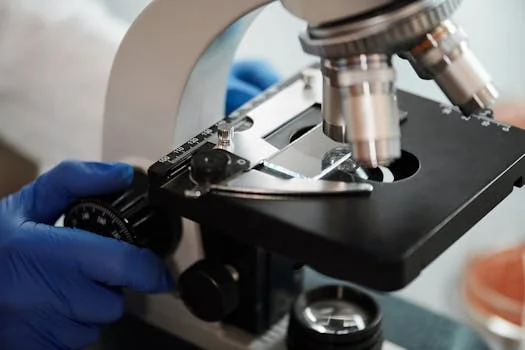
A five-step workflow turns field observations into a confirmed root cause.
- Measure dissolved oxygen in the aeration basin. If the probe reads < 1.0 mg/L, flag low-DO-induced filament growth. Record readings at surface, mid-depth, and near the diffuser for at least three consecutive cycles to confirm a persistent deficiency.
- Run a 30-minute settleometer test. SVI > 150 mL/g confirms bulking severity. Repeat the test after a 10-minute static period and compare the slope; a steep early-time slope signals a high share of light, filamentous flocs.
- Analyze nutrient concentrations. Total nitrogen < 3 mg/L or total phosphorus < 1 mg/L points to a BOD:N:P imbalance. A portable spectrophotometer works for on-site phosphorus checks, with laboratory COD/BOD assays cross-checking the carbon load.
- Perform microscopic examination of a fresh sludge sample. Identify dominant filament morphology (long unbranched threads point to S. natans; branching suggests Nocardia). Calcofluor White staining highlights fungal hyphae; Gram staining helps differentiate bacterial filaments.
- Review recent operational events. Flow spikes, aeration failures, or toxic discharges can all stress the microbial community. Keeping an incident log and aligning timestamps with SVI spikes often reveals the hidden link.
For plants with recurring bulking, weekly 16S rRNA amplicon sequencing on bulk samples can quantify filamentous taxa to within 1% accuracy, enabling proactive adjustments before SVI crosses critical thresholds.
For a broader view of system-wide failures beyond bulking, see the guide on how to diagnose other system failures beyond sludge bulking.
Proven Control and Prevention Strategies
Targeted process adjustments combined with equipment upgrades can bring SVI back below 120 mL/g within two weeks. The list below is ordered by how quickly each step takes effect in our field audits.
- Increase aeration intensity. Raise DO above 2.0 mg/L in the basin; this suppresses most filamentous bacteria while supporting floc-formers. Variable-frequency drive (VFD) blowers allow real-time DO set-point control and can cut energy use by up to 15% versus fixed-speed units.
- Optimize sludge age. Hold SRT between 5 and 10 days for typical industrial streams, with automatic wasting controls to prevent drift. Online SRT monitors tied to a PLC can trigger waste pumps once calculated age exceeds 10 days, blocking filamentous selection.
- Correct nutrient imbalances. Dose ammonia (as NH₄Cl) or orthophosphate to reach a BOD:N:P ratio near 100:5:1. An automated nutrient dosing system to correct BOD:N:P imbalance keeps the ratio on target. Quarterly nutrient audits fine-tune feed rates as influent composition shifts seasonally.
- Implement selective wasting. Pull mixed liquor from the mid-aeration zone where filaments accumulate, lowering their relative abundance without sacrificing overall biomass. A draw-off port installed at 0.6 m depth can cut filament concentration by 30% in a single pass.
- Deploy chemical coagulants. Dose FeCl₃ at 10–20 mg/L to promote floc aggregation and improve clarifier hydraulics. Monitor downstream turbidity; a target under 5 NTU is usually achievable.
- Install a high-efficiency DAF system. A high-efficiency DAF system to remove bulking sludge and protect clarifier performance can recover settled flocs and shield downstream equipment. DAF units typically remove over 90% of filamentous sludge, lowering the load on secondary clarifiers.
- Use pH control. Keep mixed liquor pH between 6.8 and 7.5 to avoid fungal filament selection. Automated pH probes coupled with acid/base dosing pumps hold the window within ±0.1 pH units even during rapid influent swings.
- Eliminate dead zones. Reconfigure diffusers or add low-speed mixers for uniform oxygen distribution. CFD modeling has shown that adding two diffusers in a 10 MG plant can cut dead-zone volume by 25% and improve DO homogeneity across the basin.
- Adopt routine filament monitoring. Run weekly microscopy checks and record filament percentages. A baseline under 5% filamentous bacteria helps detect early deviations before SVI spikes.
- Train operators on rapid response protocols. A clear SOP covering immediate actions (raise blower speed, start selective wasting, notify the control room) can cut remediation time from days to hours.
Selection Checklist Before You Invest
Most engineers we work with run through this list before specifying equipment for a chronic bulking problem.
- Confirm baseline DO profile with multi-point logging across at least three cycles.
- Verify SVI trend with daily settleometer readings for one week before any capital change.
- Map dead zones using portable DO probes or tracer studies before adding mixers.
- Review the BOD:N:P ratio against influent sampling, not lab composite alone.
- Match DAF or chemical dosing capacity to peak wet-weather flow, not average daily flow.
- Plan for downstream dewatering: a plate and frame filter press for sludge dewatering handles the higher solids load that bulking events leave behind.
Frequently Asked Questions
What causes bulking in activated sludge?
Overgrowth of filamentous bacteria drives most bulking events, triggered by low DO (< 1.0 mg/L), BOD:N:P imbalance above 100:5:1, F/M outside the 0.25–0.55 kg BOD/kg MLSS·d window, toxic shocks, pH below 6.0, or stagnant dead zones. Identifying the dominant filament through microscopy narrows the fix.
How do you fix sludge bulking fast?
Raise DO above 2 mg/L, adjust SRT to 5–10 days, and apply selective wasting or chemical dosing (FeCl₃ at 10–20 mg/L) to remove filaments. Most plants we work with see SVI drop below 150 mL/g within one to two weeks once the primary cause is corrected.
What is the difference between bulking and foaming sludge?
Bulking is a settling problem caused by filamentous bacteria that produce a loose, poorly compacting floc. Foaming is a surface-active problem caused by surfactant-producing microbes such as Nocardia that create a stable foam layer on basin surfaces. Both can occur at the same plant but need different controls.
Can low pH cause sludge bulking?
Yes. pH below 6.0 suppresses most floc-forming bacteria and selects for filamentous fungi, which behave like bacterial filaments and drag SVI upward. Holding mixed liquor pH between 6.8 and 7.5 with automated dosing prevents this pathway.
How does dissolved oxygen affect sludge settling?
DO below 1 mg/L reduces the activity of floc-formers, allowing filamentous organisms to dominate and produce a loose, poorly settling sludge. Maintaining DO above 2 mg/L with VFD-controlled blowers restores floc-former activity and typically pulls SVI back under 150 mL/g within days.
Send your current SVI, DO, and F/M readings and our engineers will size an aeration, DAF, or dosing upgrade for your specific basin.