Containerized wastewater treatment systems deliver 90–98% COD removal and 95–99% TSS reduction inside a 20–40 ft footprint. For industrial duty, MBR trains with 0.1 μm membranes typically reach effluent COD ≤50 mg/L, while DAF units remove 92–97% TSS at 4–300 m³/h. Module CapEx usually falls between $50,000 and $500,000 for 50–500 m³/day capacity, with OpEx of $0.20–$0.80/m³ treated depending on process intensity and automation.
Why Industrial Sites Adopt Modular Plants
Industrial buyers choose modular packaged plants for 90–98% COD removal and 95–99% TSS reduction in deployable 20–40 ft modules. These units can meet EPA NPDES and EU Urban Waste Water Directive discharge targets without a multi-year civil build. CapEx for a 50–500 m³/day module typically sits at $50,000–$500,000, while OpEx usually lands between $0.20 and $0.80 per m³ treated.
Remote construction camps, food plants facing short compliance windows, and fabs expanding into sites without existing infrastructure are the usual buyers. Most plants we size for temporary duty run at the lower end of the CapEx band because civil works stay minimal. Units often commission up to 70% faster than stick-built plants. For temporary sites, OpEx can run 30–50% lower than fixed plants once construction overhead is removed, based on published modular-plant benchmarks in the original case set.
A food plant in Spain cut CapEx by about 40% and shortened deployment from 12 months to 8 weeks with a modular MBR train. A Chilean food processor used a packaged system to meet DS 90/2000 discharge deadlines without a large concrete works package. For Chile-specific limits and hybrid layouts, see Chile’s DS 90/2000 compliance for food processing wastewater.
Relocation and phased expansion matter when production lines move or permit renewals arrive on short notice. Packaged skids also help EPC teams hold schedule when local concrete or skilled trades are scarce. Keep the civil scope to pads, drains, and utility tie-ins whenever the process train already fits a standard ISO envelope.
Containerized Wastewater Treatment: Process Options and Specs
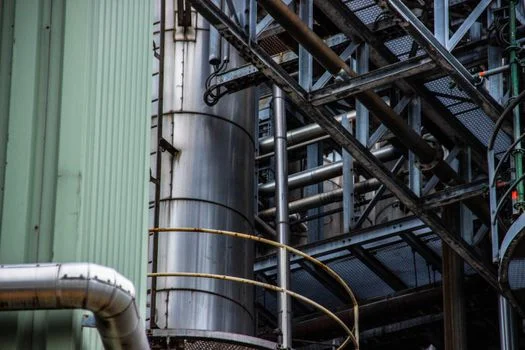
Matching process technology to influent strength and the required effluent quality decides whether a site needs biological, physical-chemical, or hybrid trains. The three packages below cover most industrial influents we see on packaged projects.
Biological systems (MBR/AO): Membrane bioreactors combine activated sludge with membrane filtration. Typical influent COD is 500–5,000 mg/L. Effluent targets of COD ≤50 mg/L and TSS ≤5 mg/L are common with a 0.1 μm pore size. Hydraulic loading often sits at 10–50 m³/m²/day, and energy use is usually 0.5–1.2 kWh/m³ for aeration plus membrane scour. A 20 ft module treats about 16–20 m³/day; a 40 ft module handles 40–50 m³/day. Explore our containerized MBR systems for industrial reuse.
Physical-chemical systems (DAF): Dissolved air flotation removes TSS, FOG, and some metals after coagulation and flocculation. Influent TSS of 500–3,000 mg/L with FOG of 50–500 mg/L is typical. Removal of 92–97% TSS yields effluent TSS of 30–100 mg/L at hydraulic loadings of 4–300 m³/h. Energy use is lower, usually 0.2–0.5 kWh/m³ for compression and pumping. Our high-efficiency DAF systems for TSS and FOG removal fit primary or pre-treatment duty.
Hybrid systems (DAF + MBR): High-strength food, pharma, or chemical streams often need DAF upstream of MBR. Design influent COD of 2,000–10,000 mg/L with TSS of 1,000–5,000 mg/L is common, targeting effluent COD ≤100 mg/L and TSS ≤10 mg/L. Energy use rises to about 0.6–1.5 kWh/m³ because both stages run. For COD above 5,000 mg/L, see our guide on hybrid systems for high-strength organic wastewater (COD >5,000 mg/L).
When FOG spikes above about 200 mg/L, most plants we size put DAF ahead of biology rather than relying on membranes alone. That choice protects flux and cuts cleaning chemical use even when COD is only moderate. Document peak FOG hours, not just daily averages, before you freeze the flowsheet.
| Process Type | Key Function | Influent Specs (Typical) | Effluent Specs (Typical) | Hydraulic Loading Rate | Energy Consumption | Footprint (Container Size) |
|---|---|---|---|---|---|---|
| MBR (Biological) | Organic removal, BOD/COD reduction, nitrification | COD 500–5,000 mg/L, TSS 100–500 mg/L | COD ≤50 mg/L, TSS ≤5 mg/L, BOD ≤10 mg/L | 10–50 m³/m²/day | 0.5–1.2 kWh/m³ | 20 ft (16–20 m³/day), 40 ft (40–50 m³/day) |
| DAF (Physical-Chemical) | TSS, FOG, heavy metal removal (pre-treatment) | TSS 500–3,000 mg/L, FOG 50–500 mg/L | TSS 30–100 mg/L (92–97% removal) | 4–300 m³/h | 0.2–0.5 kWh/m³ | Customizable, often part of larger containerized system |
| Hybrid (DAF + MBR) | High-strength organic, TSS, FOG removal to high standards | COD 2,000–10,000 mg/L, TSS 1,000–5,000 mg/L | COD ≤100 mg/L, TSS ≤10 mg/L | Varies by stage, up to 100 m³/h | 0.6–1.5 kWh/m³ | Multiple 20/40 ft containers |
Compliance Limits Your Packaged System Must Hit
Discharge permits drive equipment selection more than brochure performance curves. A packaged train must meet the numeric limits written into the local permit, not a generic marketing target.
Earlier guidance often listed COD ≤125 mg/L, TSS ≤30 mg/L, and pH 6–9 as typical U.S. NPDES targets.secondary treatment standards set BOD5 and TSS at ≤30 mg/L as 30-day averages, with effluent pH held between 6.0 and 9.0. Industrial permits still add case-specific COD, nutrients, and metals on top of those floors.
In the European Union, Directive 91/271/EEC Annex I still uses COD ≤125 mg/L, BOD ≤25 mg/L, and TSS ≤35 mg/L as core discharge benchmarks. According to EUR-Lex, Directive (EU) 2024/3019 will repeal and replace 91/271/EEC as of 1 August 2027, so new EU projects should track the recast timeline during design review.
Regional rules can be tighter. Chile’s DS 90/2000 for food processing can require COD ≤250 mg/L, TSS ≤80 mg/L, and FOG ≤20 mg/L. China’s GB 18918-2002 Class 1A reuse path often needs COD ≤50 mg/L and TSS ≤10 mg/L, which usually means MBR or hybrid packages. When semiconductor or similar permits demand COD ≤30 mg/L or strict nutrients, add tertiary modules such as RO systems for tertiary polishing in containerized setups, ozone, or UV. A Wisconsin MBR package met DNR phosphorus ≤1 mg/L with chemical dosing; see Wisconsin DNR compliance strategies for containerized systems.
Build a one-page permit matrix early: each parameter, limit, averaging period, and sampling point. That sheet prevents oversizing membranes for a limit that is actually monthly average, or undersizing chemicals for a daily maximum. Share the matrix with vendors before they quote flux and chemical dose.
What Does a Containerized Water Treatment Plant Cost?
Packaged plant cost is driven by process type, capacity, and automation depth, not by the steel box alone. Use the unit rates below to build a first-pass CapEx and OpEx model before vendor bids arrive.
CapEx per m³/day capacity: MBR packages typically run $1,200–$1,500/m³/day for membranes, PLC controls, and the housing. DAF units usually sit at $800–$1,200/m³/day for dissolution, dosing, flocculation, and the container. Hybrid DAF + MBR trains rise to $1,500–$2,000/m³/day because both stages and larger footprints are included.
OpEx per m³ treated: MBR OpEx is commonly $0.50–$0.80/m³ for energy, cleaning chemicals, sludge handling, and membrane replacement every 5–8 years. DAF OpEx is usually $0.20–$0.50/m³ for coagulants, flocculants, compression energy, and sludge disposal. Hybrid OpEx often lands at $0.60–$1.00/m³ because both stages consume power and chemicals.
What Does a 500,000 gpd Onsite Plant Cost?
A 500,000 gpd onsite recycle plant equals about 1,890 m³/day. At $800–$2,000 per m³/day of capacity, rough packaged CapEx spans roughly $1.5 million to $3.8 million before site piping, power, and tertiary polishing. Cooling-tower recycle often needs RO or a Commercial Direct Drinking Water System grade polishing train after biological treatment, which adds CapEx but cuts freshwater purchase and discharge fees.
ROI patterns we see most often: Temporary sites can pay back in 12–24 months versus a fixed plant. Remote sites that stop trucking wastewater off-site often cut OpEx 30–50%. Reuse for cooling, boiler make-up, or washdown can return capital in 2–3 years when water tariffs and discharge fees are high. For a wider CapEx/OpEx breakdown, see wastewater treatment plant cost in Oran.
| Cost Category | MBR Systems | DAF Systems | Hybrid Systems (DAF + MBR) |
|---|---|---|---|
| CapEx (per m³/day capacity) | $1,200–$1,500 | $800–$1,200 | $1,500–$2,000 |
| OpEx (per m³ treated) | $0.50–$0.80 (energy, membrane replacement, chemicals) | $0.20–$0.50 (chemicals, sludge disposal, energy) | $0.60–$1.00 (combined energy, chemicals, maintenance) |
| Typical ROI Payback | 12–36 months (reuse, compliance) | 6–24 months (pre-treatment, FOG reduction) | 18–48 months (high-strength, zero-discharge) |
How to Select the Right Packaged System
Engineers should lock influent data, flow, and permit limits before comparing vendor sketches. The five steps below keep selection tied to measurable decision rules rather than catalog claims.
Step 1: Characterize wastewater. Measure COD, TSS, FOG, pH, salinity, metals, and nutrients. High FOG/TSS points to DAF first. Soluble organics above about 1,000 mg/L COD usually need MBR or another biological stage. Both conditions together favor a hybrid train.
Step 2: Fix flow and peaks. Size on average m³/day and documented peaks. A 20 ft MBR module typically covers 16–20 m³/day; a 40 ft module covers 40–50 m³/day. Larger flows need parallel modules and a clear redundancy plan for maintenance outages.
Step 3: Map permit limits. List local, national, and industry limits. COD ≤30 mg/L or strict nutrient caps usually require tertiary RO, UV, or chemical phosphorus removal after secondary treatment.
Step 4: Compare CapEx and OpEx. Model 5–10 year total cost of ownership with energy, chemicals, sludge disposal, and membrane replacement. Credit avoided trucking, fines, and freshwater purchase where reuse is real.
Step 5: Set automation needs. Unstaffed or remote sites need PLC control, alarming, and remote access so operators can correct drift before a permit exceedance.
Selection checklist before award:
- Pilot or reference data on your wastewater type and target effluent.
- ISO/CE container and electrical certifications for the shipping envelope.
- Local service coverage and spare-parts lead times for membranes, pumps, and blowers.
- Clear sludge handling path and disposal cost at the site.
- Documented energy use at design flux and design MLSS, not brochure minima.
- Permit matrix showing each limit versus guaranteed effluent.
- Reuse path defined if polishing water will feed cooling or process make-up via a Commercial Direct Drinking Water System or RO train.
Who this is for: Plant engineers, EPC teams, and procurement managers sizing 50–500 m³/day industrial packages for compliance, temporary sites, or reuse. Who should look elsewhere: Sites that already have a stable civil plant with spare capacity, or flows far above multi-module practicality without a phased plan. Next step: Send influent data, permit limits, and target reuse quality through our request-quote form for a sized MBR, DAF, or hybrid package.
Frequently Asked Questions
What is the typical lifespan of a containerized wastewater system?
Structural steel and major process equipment usually last 15–25 years when coatings, anchors, and load paths are maintained. MBR membranes commonly need replacement every 5–8 years, depending on FOG load, cleaning discipline, and operating flux. Pumps and blowers often need overhaul every 3–5 years under continuous industrial duty.
Can packaged plants treat high-strength industrial wastewater?
Yes. Hybrid DAF + MBR packages are built for high-strength industrial streams. With DAF removing bulk solids and FOG first, biological polishing can handle influent COD above 10,000 mg/L in staged designs. Effluent is then tuned to the permit, often COD ≤100 mg/L and TSS ≤10 mg/L for hybrid trains listed in the process table.
How fast can a containerized treatment plant be deployed?
Most packaged trains move from order to commissioning in about 8–12 weeks when civil works are limited to pads, tie-ins, and power. Stick-built plants commonly need 12–18 months for the same duty. That schedule gap matters when a permit renewal or temporary camp has a hard start date.
Are containerized systems suitable for water reuse?
MBR effluent is already low in TSS and often suitable for non-potable reuse after disinfection. Adding RO or UV modules can meet cooling-tower, irrigation, or boiler make-up specs where the permit and metallurgy allow. Reuse projects that cut freshwater purchase and discharge fees often show 2–3 year payback in the cost model above.
What energy use should we budget for packaged trains?
Budget 0.2–0.5 kWh/m³ for DAF pre-treatment, 0.5–1.2 kWh/m³ for MBR, and 0.6–1.5 kWh/m³ for hybrid DAF + MBR at design load. Actual draw rises with cold weather aeration demand, high MLSS, and aggressive membrane scour. Ask vendors for kWh/m³ at your design flux, not at idle.