What Is a Membrane Bioreactor (MBR) System?
An MBR membrane bioreactor manufacturer builds integrated trains that couple activated sludge with submerged membrane filtration, delivering effluent with TSS below 5 mg/L (US EPA reports typical MBR TSS below 1 mg/L) and a footprint up to 60% smaller than a conventional activated sludge (CAS) plant at the same flow. Unlike CAS, which relies on gravity clarifiers, an MBR decouples hydraulic retention time (HRT) from solids retention time (SRT) by retaining solids on a physical membrane barrier.
The biological stage runs at MLSS of 8,000 to 12,000 mg/L versus the 2,000 to 4,000 mg/L typical of CAS. That higher biomass accelerates the reaction rate and produces effluent that meets non-potable reuse targets under US EPA reuse guidance and the EU Urban Waste Water Treatment Directive discharge framework. Two membrane architectures dominate: hollow fiber, which packs densely for large municipal trains, and flat sheet, which resists fouling in oily or fibrous industrial streams. Submerged designs remain standard because aeration bubbles scour the membrane surface and avoid the high cross-flow pumps that drive energy use in external loops.
How MBR Systems Work: Process Flow and Key Components
An MBR train starts with grit removal and screening, then an anoxic zone for denitrification, followed by an aerobic tank that houses the submerged membrane modules. Aerobic bacteria oxidize BOD and COD while the membranes finish solid–liquid separation. Permeate is pulled through the membranes by low suction, holding transmembrane pressure (TMP) below 0.5 bar in a typical PVDF flat sheet MBR membrane module; this low TMP keeps the cake layer loose and lengthens clean-in-place (CIP) intervals. Air diffusers under the membrane cassette supply process oxygen and create the upward cross-flow that scours foulants off the sheet surface.
Engineers usually design industrial MBR trains for an HRT of 4 to 8 hours and an SRT of 20 to 40 days, with operating flux of 15 to 25 LMH. Compared with CAS, MBR waste sludge volume runs 25–40% lower because the long SRT pushes biomass into endogenous respiration. Wasted sludge goes to a plate and frame filter press or centrifuge for dewatering before disposal.
Flat Sheet vs Hollow Fiber MBR Membranes: Performance Compared
Flat sheet MBR membranes use a 0.1 μm PVDF sheet mounted in stainless steel cassettes that survive high-intensity aeration. The PVDF flat sheet MBR membrane module (DF Series) allows individual element swap-out, which keeps lifetime membrane cost down compared with hollow fiber bundles that often need full-module replacement when a few fibers break. Hollow fiber stacks win on packing density, but the dense center of each bundle is prone to "sludging," an irreversible fouling pattern that air scour cannot always clear. Submerged flat sheet systems draw 10–20× less energy than external cross-flow designs because they ride on the existing aeration system instead of high-velocity recirculation pumps.
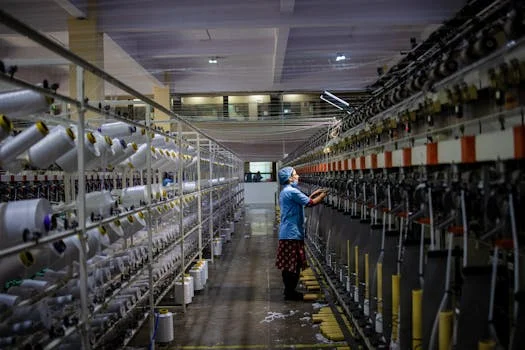
Field experience on textile and food processing lines shows flat sheet modules handling FOG and fiber loads that would blind a hollow fiber stack within weeks. For plants running a PVDF flat sheet MBR system, surface fouling is the dominant failure mode, and physical air scouring plus periodic backwash restores flux without deep chemical cleaning.
| Feature | Flat Sheet (FS) MBR | Hollow Fiber (HF) MBR |
|---|---|---|
| Pore Size | 0.1 μm (Nominal) | 0.03 – 0.1 μm |
| Packing Density | Moderate (60–100 m²/m³) | High (150–600 m²/m³) |
| Fouling Resistance | High (Resistant to hairballing) | Moderate (Prone to sludging) |
| Cleaning Method | Air Scouring + Gravity/Suction | Backwashing + Air Scouring |
| Maintenance | Individual element replacement | Entire module replacement |
| Typical Energy Use | 0.3 – 0.6 kWh/m³ | 0.4 – 0.8 kWh/m³ |
Top Global MBR Membrane Bioreactor Manufacturers
The global supply picture mixes European engineering firms, North American packaged-plant specialists, and Asian high-volume producers. Alfa Laval leads with its LowResist flat sheet design, which can run on gravity with as little as 1 m of water head and has logged over 300 municipal and industrial installations worldwide. Smith & Loveless focuses on the North American market with the TITAN MBR™ packaged system for decentralized municipal sites. MANN+HUMMEL sells a self-healing laminate flat sheet aimed at pharma and chemical waste, where solvent resistance matters more than packing density.
For buyers sourcing cost-efficient flat sheet modules with responsive technical support, HydropureWater supplies the DF Series PVDF flat sheet line in 80 to 225 m² module sizes, each rated for 32 to 135 m³ of daily permeate, which fits the flow range of an integrated MBR wastewater treatment system for a single industrial line. Hydranautics closes the list with HYDRAcap™ hollow fiber modules, typically used as a tertiary polishing or RO pretreatment step rather than as the main biological reactor.
| Manufacturer | Primary Membrane Type | Key Technical Advantage | Target Applications |
|---|---|---|---|
| Alfa Laval | Flat Sheet / Hybrid | Gravity-driven (Low TMP) | Municipal & Large Industrial |
| HydropureWater | PVDF Flat Sheet | DF Series (High Flux/Low Energy) | Industrial Effluent & Reuse |
| Smith & Loveless | Hollow Fiber | Packaged TITAN MBR™ systems | Decentralized Municipal |
| MANN+HUMMEL | Laminate Flat Sheet | Self-healing membrane tech | Pharma & Chemical Waste |
| Hydranautics | Hollow Fiber | High-density HYDRAcap™ | Tertiary Treatment / RO Pre |
MBR System Costs: CAPEX, OPEX, and ROI vs Conventional Systems
CAPEX for an MBR system typically runs 20% to 30% above a comparable CAS system, but land and civil savings often close that gap on urban or space-constrained sites because the MBR train drops secondary clarifiers and tertiary sand filters and needs about 60% less footprint. For a 500 m³/day industrial plant, MBR equipment and installation lands near $350,000 against roughly $270,000 for CAS, and the $80,000 delta is frequently absorbed by avoided civil works on brownfield projects.
OPEX on MBR is driven by aeration energy and cleaning chemicals, but modern flat sheet designs narrow the gap with CAS. According to HydropureWater field data (2025), the high SRT cuts waste activated sludge volume by 25–40%, which removes a large recurring hauling and dewatering cost for most plants we size. ROI on a reuse case, where MBR permeate feeds cooling towers or process lines instead of municipal make-up, typically lands inside 3 to 5 years; a discharge-only CAS plant usually needs 7 to 10 years to clear the same hurdle.
| Cost Factor | MBR System (500 m³/day) | Conventional (CAS) System |
|---|---|---|
| CAPEX (Equipment & Install) | $700 – $900 per m³/day | $500 – $600 per m³/day |
| Footprint Requirement | 200 – 300 m² | 600 – 800 m² |
| Sludge Disposal Cost | Lower (High SRT) | Higher (Low SRT) |
| Effluent Quality (TSS) | < 5 mg/L | 15 – 30 mg/L |
| ROI (Reuse Scenario) | 3 – 5 Years | 7 – 10 Years |
Industrial Applications and Compliance Standards
MBR technology is the workhorse for industries chasing strict discharge limits or a Zero Liquid Discharge (ZLD) target. Food and beverage plants, with high BOD and FOG load, routinely see COD removal above 95% on an MBR train where a CAS clarifier would bleed solids. Textile and pharmaceutical facilities depend on the high MLSS to break down dyes, sizing agents, and active pharmaceutical ingredients (APIs) that pass straight through conventional biological stages.
Compliance is the other main driver. Trains are sized against limits like Nigeria NEQS (COD <50 mg/L), the EU Urban Waste Water Treatment Directive (earlier briefs often cited BOD <10 mg/L; Annex I Table 1 sets BOD5 at 25 mg/L O2), and the industrial effluent limits in Malaysia (earlier guidance used TSS <30 mg/L; the Environmental Quality (Industrial Effluent) Regulations 2009 Fifth Schedule sets Suspended Solids at 50 mg/L Standard A and 100 mg/L Standard B). MBR permeate also lands at a Silt Density Index below 3, which is the right feed profile for a downstream Reverse Osmosis (RO) unit and lets a plant recycle up to 80% of its wastewater.
Who this is for / who should look elsewhere
An MBR makes sense for plants that need reuse-grade effluent, tight TSS or BOD limits, or a small brownfield footprint. Plants with very dilute, low-COD streams and no reuse mandate often find CAS cheaper over the project life. Before sizing, confirm influent FOG, fiber, and temperature ranges with the membrane vendor, since those three variables drive flux and aeration sizing more than any other.
Next step
Send your daily flow, influent COD/BOD, and target effluent limits to our engineering team, and we will return a sized MBR train, an MBR vs CAS cost comparison, and a draft P&ID for review. Request a sized MBR quotation.
Frequently Asked Questions
Where is MBR made?
MBR systems and modules are built in Sweden (Alfa Laval), the United States (Smith & Loveless, Hydranautics), Germany (MANN+HUMMEL), and China (HydropureWater). Chinese suppliers have grown into major exporters of PVDF flat sheet modules because of high-volume production and competitive pricing for industrial buyers who need fast lead times on cassette replacements.
Who are the major MBR membrane manufacturers?
The leading MBR suppliers are Alfa Laval, MANN+HUMMEL, HydropureWater, Hydranautics, and Pure Aqua. Each supplies both the membrane elements and the integrated biological reactor, though their strengths sit in different niches: municipal reuse, pharma, industrial effluent, RO pretreatment, and packaged plants for decentralized sites.
How much does an MBR system cost?
Industrial MBR CAPEX runs $700 to $900 per m³/day of capacity. A 500 m³/day industrial MBR plant typically requires around $350,000 of equipment and installation, with the final figure driven by influent variability, effluent targets, and the level of automation and remote monitoring included in the package.
What is the lifespan of MBR membranes?
MBR membranes usually last 5 to 8 years with proper pretreatment and a regular CIP schedule. Flat sheet PVDF modules tend to outlast hollow fiber bundles because they resist mechanical breakage and irreversible internal fouling, which is the more common failure mode in oily or fibrous industrial streams.
Can MBR handle high-COD industrial wastewater?
MBR systems are built for high-strength waste and can treat influent COD of 500 to 2,000 mg/L at removal efficiencies of 95% or higher. The high MLSS in the aeration tank buffers against organic shock loads that would push a CAS clarifier into solids washout during peak shift discharges.