Prefabricated wastewater plant cost price in 2025 ranges from $180,000 for a 10 m³/day MBBR unit to $1.4 million for a 500 m³/day MBR system. Real-world installed costs, including engineering and site prep, average $300–$600 per gallon per day (GPD) depending on technology, with MBR systems commanding 25–40% premiums over conventional A/O.
What Determines Prefabricated Wastewater Plant Cost?
Capacity is the primary cost driver for modular systems, where units under 50 m³/day average $200–$350 per m³, while 500+ m³/day plants drop to $120–$180 per m³ due to economies of scale. This inverse relationship between volume and unit cost occurs because the fixed expenses of engineering, PLC programming, and control panel assembly are distributed over a larger hardware footprint in high-capacity systems (HydropureWater field data, 2025).
Technology selection represents the second most significant variable in the cost equation. A Membrane Bioreactor (MBR) system typically carries a 25–40% price premium over Moving Bed Biofilm Reactor (MBBR) or Anaerobic/Oxic (A/O) systems of identical capacity. This premium covers the cost of PVDF or PTFE membrane modules, specialized aeration manifolds, and more complex permeate pumping infrastructure. While the initial CAPEX is higher, the smaller footprint and superior effluent quality often justify the investment for facilities with limited space or strict discharge mandates.
The choice of construction materials—ranging from epoxy-coated carbon steel for budget-conscious projects to 304 or 316L stainless steel for highly corrosive industrial environments—can shift the base price by 15-25%. Advanced automation features, such as remote SCADA integration and real-time sensor arrays for nitrate, phosphate, or dissolved oxygen monitoring, also contribute to the initial investment but significantly reduce long-term labor requirements and operational risk.
Regional installation factors and compliance standards add layers of complexity to the final quote. Shipping, import duties, and civil works—such as reinforced concrete foundations and drainage tie-ins—typically add 15–30% to the equipment's base price. Meeting stringent environmental regulations, such as ensuring compliance with GB 18918-2002 and local discharge limits, can increase costs by another 10–20%. These increases are usually tied to advanced tertiary treatment stages, including UV disinfection, ozone oxidation, or enhanced phosphorus removal modules.
Cost by Treatment Technology and Capacity
MBR systems represent the high end of the modular market, averaging $450–$600 per GPD for 50–200 m³/day units. MBR systems are favored for industrial reuse applications because they deliver effluent with turbidity below 1 NTU and 95%+ COD removal.
For facilities requiring high-purity discharge, an integrated MBR system with 0.1 μm filtration provides the most reliable pathway to meeting non-potable reuse standards.
For more robust, lower-maintenance requirements, MBBR and A/O systems offer a cost-effective alternative at $250–$400 per GPD. These plants are ideal for BOD and COD reduction (typically 85–92% efficiency) in rural or remote industrial sites where operator intervention must be kept to a minimum. A compact A/O-based prefabricated plant for 1–80 m³/h is frequently selected for its lower energy profile and simplified sludge management compared to membrane-based alternatives.
Additionally, for projects requiring zero liquid discharge (ZLD) or near-ZLD performance, the integration of secondary polishing stages like activated carbon filters or specialized ion exchange resins can increase the system price by $50,000 to $150,000. Sludge dewatering modules, such as multi-plate screw presses or automated filter presses, are also critical add-ons that influence the final footprint and project budget, often adding 10% to the total CAPEX but reducing waste disposal costs significantly.
Specialized industrial streams, such as those from food processing or textile manufacturing, often require a high-efficiency DAF system for FOG and TSS removal. These DAF-based plants range from $300–$500 per GPD for 20–100 m³/day capacities. In the medical sector, specialized systems like the compact medical wastewater system cost between $180,000 and $350,000 for 5–20 m³/day capacities, incorporating multi-stage disinfection to meet EPA and EU Urban Wastewater Directive 91/271/EEC requirements. For a deeper financial analysis, procurement managers should compare MBR vs conventional activated sludge CAPEX and OPEX before finalizing technology selection.
| Technology Type | Capacity Range (m³/day) | Estimated CAPEX (USD) | Primary Application |
|---|---|---|---|
| MBR (Membrane Bioreactor) | 50 – 200 | $350,000 – $750,000 | Water reuse, high-purity industrial discharge |
| MBBR / A/O Process | 50 – 500 | $220,000 – $650,000 | Domestic sewage, general industrial BOD removal |
| DAF (Dissolved Air Flotation) | 20 – 100 | $150,000 – $400,000 | Food & Beverage, Oil/Water separation |
| Medical Grade | 5 – 25 | $180,000 – $380,000 | Hospitals, clinics, pharmaceutical labs |
Hidden Costs That Impact Total Price
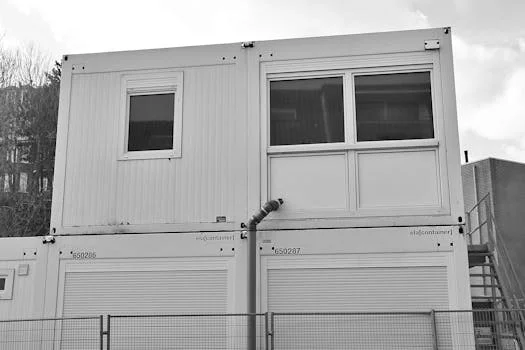
Logistics and site preparation typically account for 15% to 35% of the total project budget beyond the ex-works equipment price. International shipping for 20ft or 40ft containerized units can add $15,000–$50,000 depending on the destination port and inland transport requirements. This is particularly relevant for EPC contractors who must account for crane rentals and heavy-haul permits at the site. To mitigate these surprises, engineers often explore custom skid-mounted solutions for complex sites that minimize the physical footprint and simplify the "plug-and-play" connection process.
Site preparation is frequently underestimated, with costs ranging from $20,000 to $100,000 for grading, concrete pad pouring, and electrical hookups. Most vendor quotes exclude these civil works. Additionally, commissioning and operator training are critical "soft costs," usually billing at $10,000–$25,000. This includes PLC fine-tuning, biological seeding (for MBR/MBBR systems), and ensuring the inlet works and coarse screens are properly calibrated to protect downstream equipment.
Permitting and environmental impact assessments represent another often-overlooked expense, with legal and consultancy fees ranging from $5,000 to $30,000 depending on local jurisdiction requirements. Many facilities also overlook the necessity of a dedicated "spare parts kit" for the first two years of operation—including replacement mechanical seals, UV lamps, and gaskets—which typically adds 2-4% to the total equipment cost but prevents costly downtime during minor failures.
Operating expenses (OPEX) create significant long-term price variance between technologies. MBR systems consume 20–30% more energy than MBBR due to the air scouring required to prevent membrane fouling. Chemical consumption is another variable; for instance, an automatic chemical dosing system might use $0.05–$0.12 per m³ in coagulants or polymers depending on the influent quality. Over a 10-year lifecycle, these OPEX differences can outweigh the initial CAPEX savings of cheaper systems.
How to Compare Vendor Quotes and Avoid Overpaying
Procurement teams must carefully evaluate vendor quotes to ensure accurate comparisons.Procurement errors in scope definition for skid-mounted systems often result in 15-25% cost variances between competing vendor quotes. When evaluating a proposal, the first step is to verify the "Scope of Supply." A low-cost quote may only include the reactor vessel, whereas a comprehensive quote includes the PLC control system, internal piping, feed pumps, and aeration blowers pre-installed on the skid. For a baseline on component costs, refer to an industrial pricing guide for DAF systems and similar sub-assemblies.
Effluent guarantees must be specific and legally binding. Vague statements like "meets local standards" should be replaced with hard data points for COD, BOD, TSS, Total Nitrogen (TN), and fecal coliform. Evaluate the warranty beyond the standard 12-month period. Leading manufacturers often provide 2–3 year warranties on critical components like membranes and PLC hardware, which provides significant insurance against early-life failures.
It is advisable to inquire about Factory Acceptance Testing (FAT) protocols. A rigorous FAT process, conducted at the manufacturer's facility before shipping, ensures that all components, from the aeration blowers to the PLC logic, function as intended. This reduces the risk of expensive on-site troubleshooting during the commissioning phase. Finally, ensure the electrical components and control panels comply with local standards, such as UL, CSA, or CE, to avoid costly field modifications required by local electrical inspectors.
| Evaluation Factor | Standard Quote (Caution) | Comprehensive Quote (Preferred) |
|---|---|---|
| Automation | Manual valves, basic relay logic | Full PLC integration with remote HMI monitoring |
| Materials | Coated carbon steel | 304/316 Stainless Steel or FRP for corrosion resistance |
| Filtration | Sand filters or settling tanks | Integrated ultrafiltration membranes (0.03–0.1 μm) |
| Support | Email/Phone only | On-site commissioning and quarterly performance audits |
Always request a 10-year lifecycle cost model. This model should account for energy consumption (kWh/m³), chemical dosing rates, and the scheduled replacement of consumables. For MBR systems, the membrane replacement cycle (typically every 5–7 years) is a major planned expense that must be factored into the ROI calculation to avoid budget shortfalls in the second half of the decade.
Frequently Asked Questions
How much does a 1000 GPD prefabricated wastewater plant cost?
For a fully automated MBBR or A/O system of this size, expect an installed cost between $250,000 and $400,000. Small-scale systems have higher per-gallon costs because the control and pumping systems represent a larger percentage of the total price.
Do prefabricated plants save money vs. concrete plants?
Yes. Prefabricated systems typically offer 20–30% lower CAPEX and 30–50% faster deployment. Because they are factory-built, they eliminate the weather delays and labor-intensive quality control issues associated with on-site concrete pouring.
What is the lifespan of a modular wastewater plant?
With a standard maintenance schedule, the structural steel or FRP tanks last 15–20 years. Internal mechanical components like pumps and blowers usually require overhaul or replacement every 5–8 years, while MBR membranes last 5–7 years.
Can I expand a prefabricated system later?
Modular design is specifically intended for scalability. You can add parallel treatment trains or stack containerized units