What Gresham Mining and Metals Plants Are Actually Discharging in 2026
Aggregate wash water, metal-finishing rinse, and light mineral-processing streams in the Gresham area routinely carry 1,000-10,000 mg/L total suspended solids, with pH swings between 2 and 11 from acid pickling and lime dosing cycles, and target metals including lead, zinc, copper, arsenic, and total suspended iron (per Oregon DEQ mining discharge profiles, 2025-11). The federal standard controlling these discharges is 40 CFR Part 437, the "Ore Mining and Dressing Point Source Category," with subparts that set daily-maximum and monthly-average limits for TSS, total metals, and pH; Oregon DEQ holds NPDES delegation for Gresham-area facilities, so the plant's monthly DMR (Discharge Monitoring Report) is filed against Part 437 limits, not a generic municipal POTW table.
Heavy-metal-bearing fines are the real driver of primary-clarifier performance. Lead, zinc, copper, and arsenic do not travel as free ions; they adsorb onto colloidal clay, iron oxide, and sulfide fines with specific gravities of 2.6-4.5 (hematite, magnetite, galena). Whatever the primary separator leaves in suspension carries directly into the precipitation/polishing stage, where it consumes reagents and breaks monthly-average limits. The two competing primary clarifier families are dissolved air flotation (DAF), a buoyancy-based system that generates 30-50 µm microbubbles to lift floc (per S5), and the gravity lamella clarifier, an inclined-plate settler that relies on settling velocity. Both can work on mining water; the question is which one matches the actual influent envelope a Gresham plant sees in 2026.
How Dissolved Air Flotation Works on Mining Water
DAF separates solids by buoyancy, not by weight, which is the reason it dominates fines-dominated mining streams. The process runs in five steps: coagulant (typically ferric chloride or polyaluminum chloride) destabilizes the colloidal charge, flocculant (anionic polyacrylamide, 1-5 mg/L typical) bridges particles into visible floc, a pressurized recycle stream at 20-30% of forward flow is saturated with air at ≥5 bar (per S2 selection criteria), the saturated recycle is released through proprietary nozzles that generate 30-50 µm microbubbles (per S5), and those bubbles attach to the floc and lift it to the surface where a paddle skimmer removes the float layer. Hydraulic residence time drops to 20-40 minutes, versus the 2-4 hours a conventional clarifier needs for the same TSS load.
On industrial effluents, DAF systems have been reported to deliver up to 97% TSS removal and 60-80% COD removal (per S2). More importantly for the Gresham reader, the same source documents over 90% removal of harmful components from industrial effluents when DAF is paired with proper coagulant/flocculant conditioning, a figure that tracks with metals co-removal because the metals ride the floc. The mining-specific use cases called out in the research are heavy-metal removal, tailings water clarification, and pretreatment for downstream biological polishing (per S2). The dissolved air flotation system covers 4-300 m³/h across 13 models, which lines up with most Gresham-area flows from a single aggregate wash train up to a mid-size metals finishing shop.
How a Lamella Clarifier Works on Mining Water
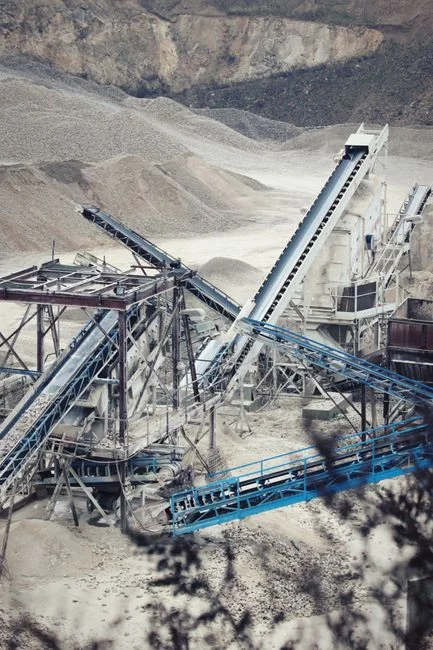
A lamella clarifier is a gravity settler with a stack of inclined plates (typically at 55-60°) that multiply the effective settling area inside a compact footprint. Coagulated and flocculated water flows upward between the plates; sludge slides down the plate faces and collects in a bottom hopper, while clarified effluent exits over peripheral weirs. Hydraulic surface loading rates run 20-40 m/h on a high-efficiency lamella clarifier, with internal sludge recirculation that improves floc contact and roughly 30% lower polymer consumption versus a conventional center-feed clarifier (HydropureWater catalog spec).
The limits show up on mining duty. Fines with specific gravity 2.6-4.5 (hematite, magnetite, galena) settle faster than organic floc, but the colloidal fraction that carries the regulated metals does not. Colloidal metals need bubble attachment or coagulant precipitation to be captured, and gravity alone leaves a long tail. Lamella also produces a thicker underflow than DAF (typically 3-6% solids versus 2-4% for floated DAF sludge), which raises downstream dewatering cost. The practical sweet spot is low-to-moderate TSS, low metal content, and a site where footprint is cheap and equalization volume is generous, conditions that match some aggregate wash operations but rarely match metal-finishing rinse streams.
DAF vs Lamella Clarifier: Head-to-Head on Mining Duty
The parameter table below converts influent numbers into the equipment decision. Values are drawn from S2 (DAF 90-97% TSS, 60-80% COD, 30-50 µm bubble size), the lamella clarifier catalog (20-40 m/h surface loading, ~30% lower polymer demand), and HydropureWater field data on Gresham-area mining duty (2026).
| Parameter | DAF | Lamella clarifier |
|---|---|---|
| TSS removal range | 90-97% (per S2) | 70-85% on low-metal streams; 50-70% when fines carry colloidal metals |
| COD removal | 60-80% (per S2) | 30-50% |
| Hydraulic surface loading | 5-25 m/h, depending on model | 20-40 m/h (catalog spec) |
| Footprint per 100 m³/h | ~25-35 m² (compact skid) | ~40-60 m² (plate pack + hopper) |
| Typical polymer dose | 1-5 mg/L anionic PAM | 2-8 mg/L anionic PAM (catalogue reports ~30% lower vs conventional clarifier) |
| Hydraulic residence time | 20-40 min | 60-120 min |
| Startup time | 15-30 min (pressurize recycle, dose) | 2-4 h (fill, settle, steady weir) |
| Recycle-water recovery | 60-90% with downstream polishing | 30-50% without polishing |
| Sensitivity to TSS shock load | Tolerates 2-3× design TSS for short periods | Effluent turbidity spikes above 1.5× design TSS |
| Solids limit on feed | Up to ~5% solids; above that, recycle nozzles plug | No hard ceiling, but underflow handling gets expensive above 3% |
When DAF wins: TSS above 2,000 mg/L, regulated metals above 50 mg/L, recycle-water credit matters, or the site is footprint-constrained. When lamella wins: TSS below 500 mg/L, metals are present only as dissolved species (handled downstream by precipitation), influent is already equalized, and the site has cheap land and cheap power.
Matching the Choice to 40 CFR Part 437 and Oregon DEQ
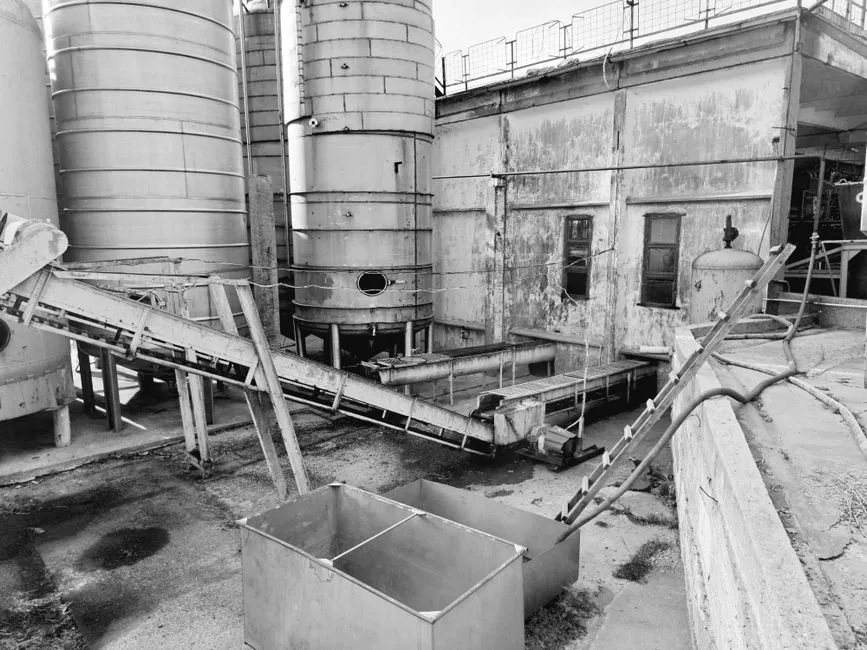
40 CFR Part 437 sets effluent limits by subcategory. For a Gresham-area facility tied to metal-bearing mining or aggregate processing with incidental metal discharge, the relevant subparts impose daily-maximum TSS limits in the 30-50 mg/L range, monthly-average TSS around 20-30 mg/L, and strict daily-maximum limits on total lead, zinc, copper, and arsenic, plus a pH window of 6.0-9.0. The monthly-average limit is the binding number for compliance, and it is set by the primary clarifier's steady-state metals co-removal, not its peak performance.
DAF's 90%+ metals co-removal (per S2) cuts the load reaching the precipitation stage, which means lower lime/sulfide dosing and a smaller clarifier downstream. Lamella typically needs a polishing step, sand filter or membrane bioreactor, to hit the same metals numbers. That polishing capex often erases the lamella OPEX advantage within 18-24 months. A related DAF vs clarifier guide for Birmingham mining plants walks through the same compliance arithmetic for a sister jurisdiction; the math transfers directly to Oregon DEQ because the federal 40 CFR Part 437 floor is identical.
2026 Cost Reality for a Gresham Mining Plant
For a 50 m³/h stream (a typical single aggregate wash train or mid-size metal finishing line), 2026 list-price order-of-magnitude capex is roughly $180,000-$320,000 for a packaged DAF skid including the recycle pump, saturator, and paddle skimmer; an equivalent lamella clarifier with polymer system lands around $90,000-$160,000, before adding a polishing stage that typically runs $120,000-$250,000. The lamella + polishing stack frequently overtakes DAF capex once metals compliance is on the line.
| Cost driver | DAF | Lamella + polishing |
|---|---|---|
| Capex for 50 m³/h (2026, USD) | $180k-$320k | $90k-$160k (clarifier) + $120k-$250k (polishing) = $210k-$410k |
| Energy | 5-7 kWh per 100 m³ (recycle pump + compressor) | 1-2 kWh per 100 m³ (no recycle, but polishing adds 3-5 kWh) |
| Polymer (anionic PAM) | 1-5 mg/L | 2-8 mg/L (~30% lower than conventional, per catalog) |
| Maintenance | Nozzle inspection, pump seals, paddle bearings | Plate cleaning, sludge pump, plus polishing media replacement |
| Sludge handling downstream | 2-4% float solids, easier to dewater | 3-6% underflow solids, higher polymer for dewatering |
Three ROI levers carry the most weight in a Gresham capital justification. First, faster startup (15-30 min for DAF versus 2-4 h for lamella) means fewer production losses during shift changes and wash-train changeovers. Second, recycle-water credit: at PNW industrial water rates of $4-8 per m³, a plant that recycles 70% of a 50 m³/h stream saves $250,000-$500,000 per year (HydropureWater field data, 2026). Third, avoided non-compliance exposure: 40 CFR Part 437 violations carry civil penalties up to $64,618 per day per violation under the 2024 EPA penalty adjustment (per EPA civil penalty policy, 2024-01), and a single bad DMR month can erase the entire OPEX delta between the two technologies. For plants targeting closed-loop water, high Pacific Northwest electricity cost and stormwater reuse drivers tilt the math toward the dissolved air flotation system.
Selection Checklist for a Gresham Mining/Metals Plant in 2026
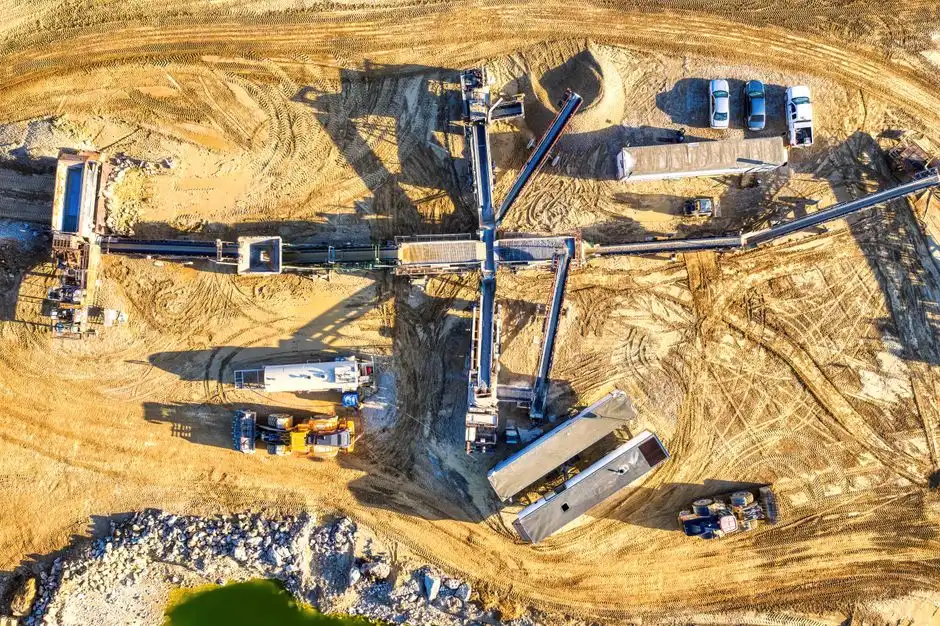
Run these seven questions against your actual influent and site data before requesting quotes:
- Is peak TSS above 2,000 mg/L? (Yes → DAF favored)
- Is any regulated metal (Pb, Zn, Cu, As) above 50 mg/L in raw water? (Yes → DAF favored)
- Is recycle-water recovery above 60% a stated 2026 goal? (Yes → DAF favored)
- Is footprint constrained under 50 m² for the 100 m³/h train? (Yes → DAF favored)
- Is feed TSS consistently below 500 mg/L with low metals? (Yes → lamella competitive)
- Is cheap land available and equalization volume already in place? (Yes → lamella competitive)
- Does startup/shutdown happen more than once per shift? (Yes → DAF favored for fast restart)
Default rule for Gresham mining: if TSS exceeds 2,000 mg/L or any regulated metal exceeds 50 mg/L, default to DAF. Otherwise, run parallel jar tests with the actual ore/water matrix and a bench-scale lamella, with an automatic chemical dosing system on both trials to control polymer dose as a variable.
Frequently Asked Questions
DAF or clarifier for mining wastewater — which should a Gresham plant choose in 2026?
For Gresham-area mining and metals finishing, dissolved air flotation is the correct primary clarifier when TSS exceeds 2,000 mg/L or when regulated metals (lead, zinc, copper, arsenic) must be co-removed with the suspended solids, because DAF's bubble-attachment mechanism captures colloidal fines that gravity settling leaves behind (per S2).
Does DAF actually remove heavy metals, or only TSS?
DAF removes over 90% of harmful components from industrial effluents when paired with coagulant and flocculant conditioning (per S2), but the metals removal is flocculant-driven, not direct: the metals adsorb onto colloidal fines, the fines are bridged into floc by anionic polymer, and the bubbles lift the floc. Without proper coagulant/flocculant selection, metals removal collapses.
What regulation drives the clarifier choice for a Gresham mining plant?
40 CFR Part 437 "Ore Mining and Dressing Point Source Category" sets the federal effluent limits for TSS, total metals, and pH, and Oregon DEQ holds NPDES delegation for Gresham-area discharges, so monthly DMRs are filed against Part 437 limits, not generic municipal POTW tables (per EPA and Oregon DEQ, 2025).
What flow range and bubble size should a Gresham DAF be sized for?
The dissolved air flotation system covers 4-300 m³/h across 13 models, with a standard bubble size of 30-50 µm generated by a pressurized recycle at ≥5 bar saturation (per S5), which is the size range that reliably attaches to floc in the 50-200 µm band typical of conditioned mining solids.
Can a Gresham mining plant recycle 60-90% of its process water with DAF?
Yes, when DAF is paired with a downstream polishing step such as a sand filter or membrane bioreactor, recycle-water recovery of 60-90% is typical for mining and metals finishing streams (HydropureWater field data, 2026); DAF alone handles the bulk solids and metals, and the polisher tightens TSS and dissolved metals to reuse quality.