
Why the Brownfield Civil Rectangle Drives the Technology Choice
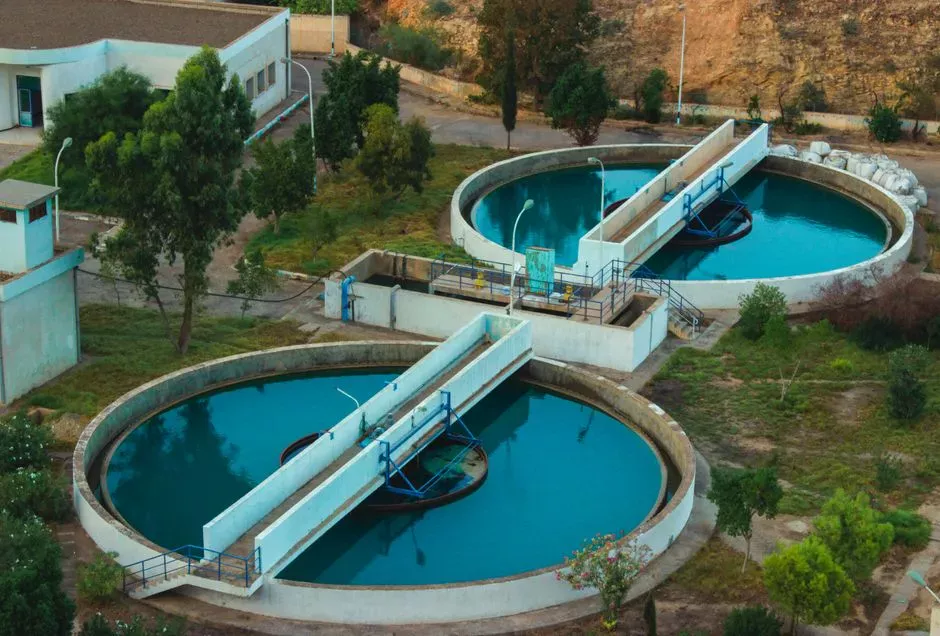
Industries consume roughly 22% of the global water supply and up to 60% in high-income economies, with mining among the heaviest per-tonne users (npj Clean Water, 2022). On a brownfield concentrator, the binding constraint is almost never the cubic metres per day of treatable flow; it is the square metres of civil footprint an older CAS plant leaves behind. A typical retrofit inherits a fixed aeration basin and one or two secondary clarifiers from the 1990s or early 2000s, and the surrounding bund walls, cable trenches, and chemical dosing skids leave no room to add a second clarifier or a larger aeration tank. Engineers who arrive at this constraint with a 1,000 m³/day flotation tail water reuse target quickly learn that the real engineering question is not "can the biology cope?" but "can a new technology fit inside the rectangle drawn by the existing civil?"
That framing matters because the chemistry on these sites is unforgiving. Mining influent TDS routinely sits between 0.5% and 5% (5,000–50,000 mg/L) on arid concentrators that already recycle process water and draw brackish makeup, which is the operating envelope any upgrade must survive (HydropureWater mining MBR field reference, 2026). The same feed carries residual flotation reagents — potassium ethyl xanthate, dithiophosphate (DTP) collectors, frothers — plus dissolved Pb, Zn, Cu, and Cd at concentrations that vary with ore body and reagent scheme. A 1,000 m³/day tail water train from a copper-lead-zinc concentrator in the Atacama, the Pilbara, or the high Andes is the scenario this article uses as a running example; the numbers below all scale to that envelope.
The Three Physical Differences That Decide Everything Else
An integrated MBR for flotation tail water runs at 8,000–12,000 mg/L mixed liquor suspended solids (MLSS) versus 2,000–4,000 mg/L for a conventional activated sludge (CAS) system, and that single ratio is the largest physical difference between the two technologies. Higher MLSS means a smaller aeration basin for the same food-to-microorganism ratio, and it means the secondary clarifier can be eliminated entirely because the ultrafiltration membrane retains all biomass inside the bioreactor. On a 1,000 m³/day train, the integrated MBR occupies roughly 60% of the equivalent CAS footprint, with the savings coming almost entirely from the absence of clarifiers and the reduced aeration basin volume (HydropureWater integrated MBR field data, 2026).
Effluent quality follows the same logic: MBR permeate sits below 1 mg/L total suspended solids (TSS) because the membrane is an absolute physical barrier with a 0.1 μm PVDF pore size, while a well-run secondary clarifier with polymer aid still discharges 5–15 mg/L TSS (HydropureWater mining MBR field reference, 2026). Sludge retention time (SRT) and biology are the second decisive gap. An MBR sustains 30+ day SRT, which drives 85–95% removal of residual xanthate and DTP and brings potassium ethyl xanthate from 5–20 mg/L in the feed to below 1 mg/L in the permeate. CAS, held at 5–10 day SRT to keep settleability workable, leaves 2–4 day half-life residuals in the effluent because the slower-growing degraders get washed out before they can establish. That single SRT number controls every biological outcome downstream — reagent removal, nitrification, and sludge yield.
What the Membrane Actually Buys on a Mining Feed
The MBR premium is justified by mining-specific chemistry outcomes that CAS cannot hit. On a properly sized MBR running at 10,000 mg/L MLSS and 30+ day SRT, residual xanthate and DTP removal reaches 85–95%, with potassium ethyl xanthate dropping from 5–20 mg/L in the feed to under 1 mg/L in the permeate. CAS leaves 2–4 day half-life residuals because the slower-growing degraders wash out at 5–10 day SRT (HydropureWater mining MBR field reference, 2026).
For heavy metals, the mechanism is biosorption onto the membrane cake layer and onto the biomass itself, plus bioaccumulation inside the cells, contributing 30–60% of total removal before the permeate is polished downstream. Combined, total Pb, Zn, Cu, and Cd removal lands at 70–95% when influent pH is held at 6.5–7.5. With methanol or waste-process glycerol supplementation, MBR pushes total nitrogen past 75% on mining feeds with an unfavourable C:N ratio. CAS relies on the same biosorption principle but on wasted activated sludge rather than on membrane-retained biomass, so removal is limited to 30–60% and the dissolved organics pass through largely untouched. Chemical precipitation upstream of CAS can hit the metals target but generates 3–8 kg of dry hazardous solids per m³ treated and does not address the dissolved reagent load at all. For module selection on mining duty, a DF-series flat-sheet MBR cassette is the default because influent TSS of 500–5,000 mg/L is often abrasive; hollow-fiber wins only when the feed is already pre-filtered to under 100 mg/L TSS.
MBR vs CAS: The 2026 Head-to-Head Comparison
The table below is structured for direct extraction into a slide deck. Numbers reflect mid-2026 installed equipment and operating cost on a 1,000 m³/day train; aeration share is benchmarked against the 2022-05 Global NEST pilot (DOI 10.30955/gnj.004278) and the 2022 MDPI produced-water MBR review.
| Parameter | Conventional Activated Sludge (CAS) | Integrated Membrane Bioreactor (MBR) |
|---|---|---|
| MLSS | 2,000–4,000 mg/L | 8,000–12,000 mg/L |
| SRT | 5–10 days | 30+ days |
| Secondary clarifier | Required | Eliminated |
| Footprint share (same throughput) | 100% | ~60% |
| TSS in effluent | 5–15 mg/L | <1 mg/L |
| Xanthate and DTP removal | Limited (washout at low SRT) | 85–95% |
| Heavy-metal removal (Pb, Zn, Cu, Cd) | 30–60% (biosorption on WAS) | 70–95% (biosorption + bioaccumulation) |
| Total N removal (with supplemental C) | 40–60% | 75%+ |
| Membrane area per 1,000 m³/day | N/A | 1,800–3,200 m² (DF-series cassettes) |
| Installed CAPEX per m³/day (2026) | USD 550–1,700 (with tertiary filter) | USD 800–2,500 |
| Aeration share of OPEX | 40–55% | 36–68% |
The CAPEX row already carries the trade the engineer has to defend. CAS membrane-free CAPEX is 30–50% lower, but that figure assumes the site reuses existing clarifier volume and does not need a tertiary media filter ahead of any downstream reverse osmosis. Once those civil and polishing items are priced in, the gap narrows quickly.
The Train Around the Reactor Is Almost Identical
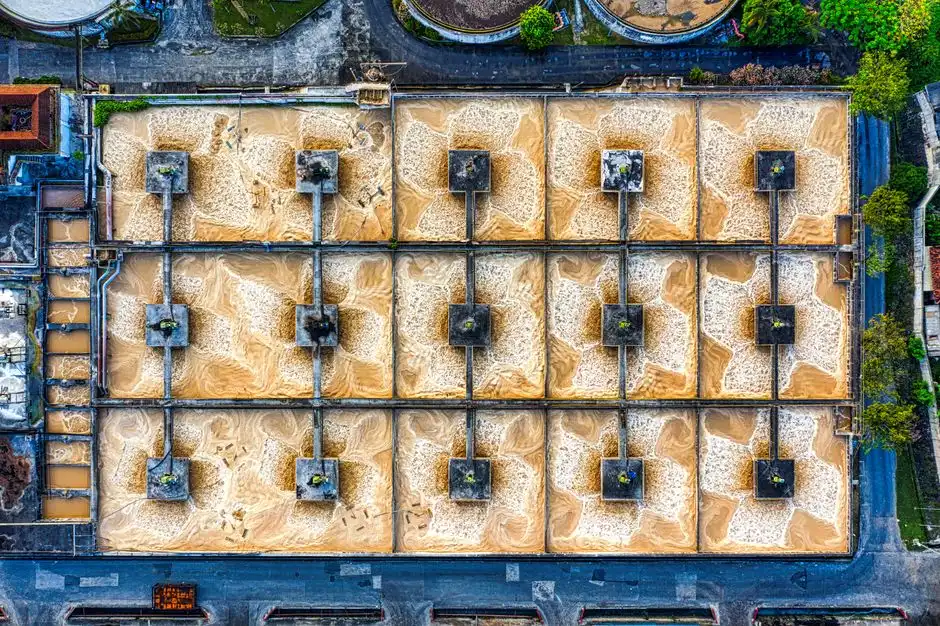
The technology choice is rarely MBR or CAS in isolation; it is MBR or CAS as the middle of a three-stage train, and the upstream and downstream stages are nearly identical for both options. A DAF upstream of the biological step in the 4–300 m³/h range removes 60–80% of influent oil and 30–50% of TSS, which extends MBR cleaning intervals from weekly to monthly and cuts chemical clean-in-place (CIP) consumption by 50–70% (HydropureWater mining MBR field reference, 2026). The same DAF protects a CAS clarifier from sludge loss during shock loads, so the upstream choice does not move the needle between the two technologies.
The downstream stage does move the needle. MBR permeate at 5,000–20,000 mg/L TDS is the correct feed strength for a brackish-water reverse osmosis (BWRO) unit running at 70–85% recovery, and an industrial RO system bringing permeate below 500 mg/L TDS is suitable for grinding dilution water or heap-leach makeup. CAS effluent at 5–15 mg/L TSS typically needs an additional sand or media filter before the RO to protect the membranes from fouling, and that filter partially erodes the CAS footprint advantage. For zero-liquid-discharge (ZLD) finishing, RO concentrate at 30,000–60,000 mg/L TDS feeds an evaporator or crystallizer, and this final stage is technology-agnostic between MBR and CAS. The MBR-vs-CAS decision is genuinely localized to the middle step.
When CAS Is Still the Right Call in 2026
An honest 2026 guide has to name the cases where CAS is still the correct call, and there are four that recur on operating mining and metals sites. First, where existing clarifier volume has 20+ years of remaining service life and there is no flow increase, re-rastering the aeration basin to an MBR is hard to justify on CAPEX alone. Second, where influent TDS sits under 5,000 mg/L and the plant does not run a closed-loop reuse target, the heavy-metal and reagent removal advantages of MBR are not yet needed and a well-tuned CAS will meet the discharge consent.
Third, where the operator pool has no membrane CIP training, the 36–68% aeration share of MBR operating expense (per the 2022 MDPI review of MBRs for produced water treatment) is dwarfed by the cost of unplanned membrane-replacement events when CIP discipline is poor. Fourth, where there is no RO polishing downstream, the <1 mg/L MBR TSS advantage is wasted because the effluent is going to a polishing pond or a controlled discharge rather than back into the process. In any of these four scenarios, upgrading the existing CAS — adding a selector zone, fine-bubble diffusers, and a polymer dosing skid — delivers more value per dollar than a greenfield MBR. For a deeper read on the same trade-off in a different jurisdiction, see this DAF vs clarifier for mining and metals wastewater working through the upstream step in parallel.
The Greene Township Lens: Permits, Power, and Logistics
Greene Township, PA falls under PADEP Chapter 91 reporting and the federal 40 CFR 440 effluent limitation guidelines for ore mining and dressing, both of which set the metal and TDS targets that drive the MBR advantage on a brownfield site. When the site is recycling flotation tail water for grinding dilution or heap-leach makeup, the BWRO permeate target under 500 mg/L TDS is the binding constraint — and that target effectively requires MBR-grade feed water at <1 mg/L TSS, because CAS effluent at 5–15 mg/L TSS would force a tertiary media filter ahead of the RO and erode the footprint case.
Short-line logistics in Greene County matter more than they look on a national comparison: a single regional supplier of cassettes and CIP chemicals shortens membrane-replacement lead time, which materially changes the OPEX calculation and reduces the operational risk premium that usually attaches to MBR retrofits in remote mining camps. The site-specific overlay turns the technology decision from a generic trade-off into a permitting-led one.
10-Year Cost Stack: Where MBR Pays for Itself (and Where It Doesn't)
For a mining-grade integrated MBR sized to treat 500–10,000 m³/day of flotation tail water or thickener overflow, total installed CAPEX in 2026 typically runs USD 800–2,500 per m³/day of capacity, with the wide range driven by influent variability, seismic class, automation scope, and containerized versus skid build (HydropureWater mining MBR field reference, 2026). A CAS upgrade on the same throughput typically runs 30–50% lower on membrane-free CAPEX but adds clarifier civil works, polymer dosing skids, and a tertiary media filter ahead of any RO, which closes roughly half of the gap.
Over 10 years, the OPEX layers that actually move the answer are aeration kWh at the 36–68% share of MBR OPEX, membrane replacement cadence (typically 5–8 years on flat-sheet PVDF, accelerated by poor CIP discipline), polymer dosing on the CAS-precipitation route at 3–8 kg of dry hazardous solids per m³ for sludge disposal, and CIP chemical cost — the last cut 50–70% with an upstream DAF. The decision rule is mechanical: payback lands inside 5 years when the site is on a closed-loop reuse train with a downstream BWRO; payback stretches past 10 years when there is no reuse target and discharge is the only goal. The same operating picture, framed against the broader regulatory picture, is laid out in this mining pretreatment limits in 2026 working for a different jurisdiction. The baseline MBR vs CAS engineering comparison also covers the general industrial case.
Monday-Morning Selection Checklist
- Plot existing clarifier service life on a 20-year axis. If more than 15 years remain and flow is flat, default to CAS upgrade.
- Confirm influent TDS. Under 5,000 mg/L keeps CAS competitive, over 10,000 mg/L pushes toward MBR.
- Confirm downstream treatment. If BWRO or ZLD is in scope, MBR permeate quality at <1 mg/L TSS is non-negotiable.
- Confirm operator CIP capability. If not, budget 12 months of membrane-replacement risk into the MBR case or stay on CAS.
- Confirm the upstream DAF. A DAF in the 4–300 m³/h range protects both options and cuts MBR CIP chemical use 50–70%.
Run the five steps on the actual site data before the kickoff meeting and the technology recommendation will hold up under procurement and PADEP review. The DF-series flat-sheet MBR cassette at 32–135 m³/day per unit is the right building block for 500–10,000 m³/day mining duty and integrates directly with the upstream DAF and downstream RO already on the bill of materials.
Frequently Asked Questions
How much smaller is an MBR footprint compared to CAS at the same throughput?
An integrated MBR occupies roughly 60% of the footprint of an equivalent CAS train at the same throughput, primarily because the 8,000–12,000 mg/L MLSS operating range eliminates the large secondary clarifiers CAS requires (HydropureWater integrated MBR field data, 2026).
When does CAS still win against MBR in 2026?
CAS still wins when the site has existing clarifier volume with 20+ years of service life remaining, influent TDS stays under 5,000 mg/L, there is no downstream RO polishing, and the operator pool has no membrane-CIP training (HydropureWater mining MBR field reference, 2026).
How well does an MBR remove residual xanthate and DTP from flotation tail water?
A properly sized MBR running at 10,000 mg/L MLSS and 30+ day SRT removes 85–95% of residual xanthate and DTP, reducing potassium ethyl xanthate from 5–20 mg/L in the feed to below 1 mg/L in the permeate (HydropureWater mining MBR field reference, 2026).
Which MBR module type is right for mining and metals duty?
Flat-sheet PVDF MBRs handle 500–5,000 mg/L TSS at flux 15–25 L/m²·h with monthly CIP cycles; hollow-fiber UF/MBR has higher packing density but only wins when feed is pre-filtered to under 100 mg/L TSS (HydropureWater mining MBR field reference, 2026).
What is the 2026 installed CAPEX for an MBR retrofit versus a CAS upgrade?
Installed CAPEX in 2026 runs USD 800–2,500 per m³/day for an integrated mining MBR (500–10,000 m³/day); a CAS upgrade on the same throughput is 30–50% lower on membrane-free CAPEX but adds clarifier civil works, polymer dosing skids, and a tertiary media filter ahead of any RO, which closes roughly half the gap (HydropureWater mining MBR field reference, 2026).