Why Chemical-Manufacturing Wastewater Is a Different Decision Than Food-Processing Wastewater
Chemical-plant wastewater in the High Point, NC Triad region carries a distinct influent signature: pH swings from 2 to 12 between batch reactors, emulsified oils and nonionic surfactants from dye and adhesive production, suspended pigment and resin TSS, and dense metal-hydroxide floc generated when nickel, copper, chromium, or zinc are precipitated in pH-adjustment steps. Total dissolved solids routinely sit at 5,000–25,000 mg/L, well above the 1,000–2,000 mg/L typical of food-processing streams (per EPA 40 CFR Part 437 effluent guidelines for the chemicals manufacturing point source category).
Benchmarks that circulate in generic DAF-vs-clarifier articles — 95% FOG removal in DAF and 70% in a clarifier, per the 2026 Ecologix industrial selection update — are drawn from food and meat-processing case studies and do not transfer directly. Chemical streams contain a heavier settled-solids fraction, more aggressive emulsifiers, and temperature swings that High Point operators know firsthand: summer effluent routinely reaches 32 °C while winter effluent drops to 2–5 °C, and that 30 °C swing changes both clarifier underflow concentration (viscosity shifts roughly 40% across the range) and DAF micro-bubble release dynamics. A local, 2026-vintage decision framework — not a generic guide — is what a Triad environmental engineer needs to shortlist primary clarification equipment.
DAF or Clarifier: A 60-Second Decision Logic for High Point Plants
The fastest way to shortlist equipment in 2026 is to read your influent matrix against four if-then rules. The table below maps stream character to primary technology, footprint driver, and the 2026 CAPEX band a procurement manager should expect for a 5–50 m³/h skid. Use it before opening a vendor drawing.
| Influent profile | Dominant mechanism | Primary technology | CAPEX 2026 band (USD) |
|---|---|---|---|
| Emulsified oil, surfactant, plasticizer, or low-specific-gravity TSS (<1.1 g/cm³) | Buoyant floc + micro-bubble attachment | DAF (e.g. DAF system) | $25,000–$90,000 |
| Ni, Cu, Cr, Zn hydroxide or sulfate floc from pH adjustment | Gravity settling on inclined plates | Lamella (high-rate) clarifier | $15,000–$55,000 |
| Mixed FOG + heavy floc, or seasonal flow swings | Flotation primary, sedimentation polish | DAF primary + lamella polish (2026 hybrid default) | $40,000–$140,000 combined |
| Peak flow >100 m³/h, floor area constrained | Flow-per-footprint priority | DAF primary, optional lamella polish | $60,000–$180,000 |
For dye and adhesive producers in Greensboro, High Point, and Winston-Salem, the mixed-stream case is the rule rather than the exception. When influent carries both emulsified oil and metal-hydroxide solids, a single-technology train either under-removes FOG (clarifier-only) or loads the DAF float with heavy floc that the skimmer cannot lift cleanly — so the 2026 default is DAF primary followed by a lamella polish.
How a DAF System Removes Contaminants From Chemical Wastewater
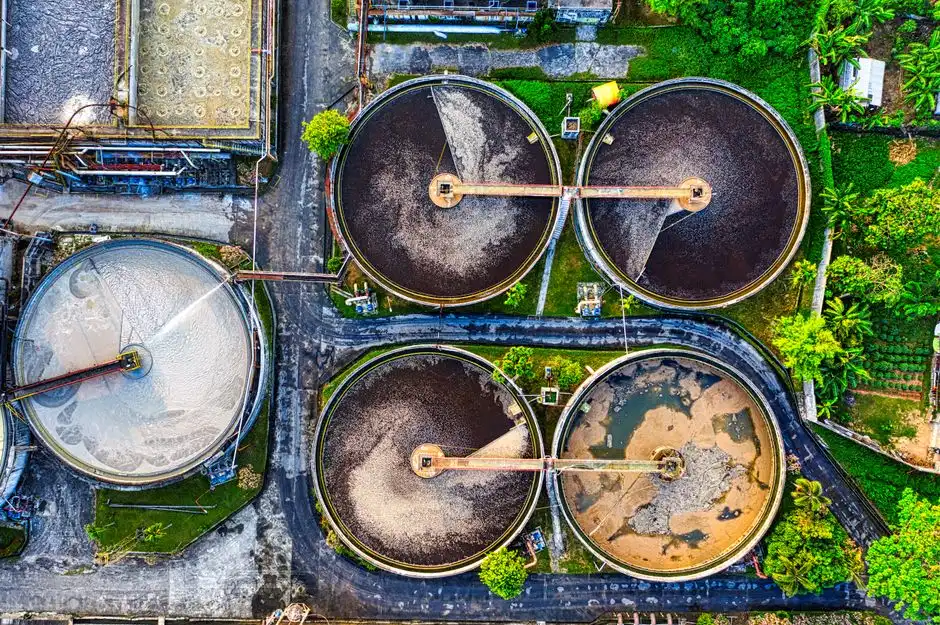
A dissolved air flotation system generates 30–50 µm micro-bubbles by pressurizing clarified recycle water to 4–6 bar, saturating it with air, and depressurizing into the flotation tank (per Clearwater Industries process documentation). The bubbles nucleate on coagulated and flocculated particles, lowering their effective density and lifting them to the surface as a float blanket that a mechanical skimmer scrapes into a collection trough.
For chemical streams, the conditioning train upstream of the flotation cell is the dominant performance variable. Operators adjust pH with acid or caustic to the optimum for the target metal or emulsion, dose a coagulant — typically polyaluminum chloride (PAC) at 50–250 mg/L or ferric chloride at 75–300 mg/L — for charge neutralization, then add an anionic or cationic polymer flocculant at 1–10 mg/L to build bridging floc. Flash-mix residence time in floc tubes runs 15–45 s; longer contact in mix tanks is reserved for reactions that need it (per Clearwater Industries). A PLC-controlled coagulant and polymer dosing skid holds these ratios inside ±5% of jar-test setpoints and is the single biggest reliability lever on a DAF in chemical service.
DAF tanks still include a sediment compartment at the cone bottom because the heaviest metal floc will settle even in a flotation tank. Ignoring that fact is how plants end up with plugged underflow lines and unplanned outages.
How a Lamella (High-Rate) Clarifier Handles Chemical-Plant Solids
A lamella clarifier stacks 60° inclined plates at roughly 50 mm spacing, multiplying the effective settling area inside a small footprint. Per the HydropureWater high-rate lamella clarifier specification, surface loading reaches 20–40 m/h on the projected plate area — versus 2–6 m/h for a conventional clarifier — which is why these units are called "high-rate." That footprint advantage matters in a chemical plant where headroom and slab space are both at a premium.
Chemical-plant operation looks different from municipal lamella duty. Operators recycle a portion of the settled sludge to act as a ballast blanket, accelerating precipitation of heavy-metal hydroxides and cutting fresh polymer demand by up to 30% (HydropureWater field data, 2026). External mixing with a high-solids impeller handles the dense, sometimes sandy floc that municipal lamellas never see.
The limitation is sharp: lamella plates cannot capture sub-50 µm emulsified oil droplets, because oil rises slowly against the cross-flow on the plates. A surfactant-bearing stream — which every dye, adhesive, and personal-care surfactant plant in the Triad produces — will pass oil through a lamella and into the POTW. That is the technical reason chemical plants with mixed influent pair a lamella with a DAF polisher rather than running either unit alone.
Side-by-Side Comparison: DAF vs Lamella Clarifier for NC Chemical Plants
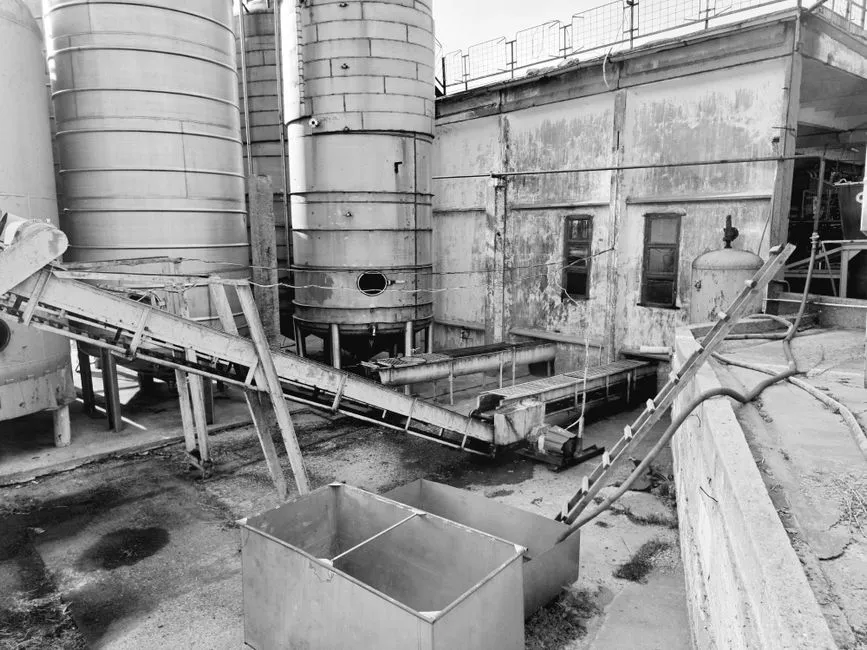
This is the table your procurement lead will screenshot and forward. Numbers are 2026 USD bands unless noted; removal efficiencies are typical operating ranges, not nameplate maxima.
| Parameter | DAF (chemical service) | Lamella clarifier (chemical service) | DAF + lamella hybrid |
|---|---|---|---|
| TSS removal (floatable / settleable) | 80–95% | 70–90% | 92–97% |
| FOG / oil removal | 85–95% (Ecologix 2026 update) | 30–50% | 90–96% |
| Heavy-metal hydroxide capture | 40–60% (settled in cone) | 85–95% | 90–98% |
| Footprint (m² per 10 m³/h) | 6–10 | 3–5 | 8–12 combined |
| CAPEX 5–50 m³/h skid (2026 USD) | $25,000–$90,000 | $15,000–$55,000 | $40,000–$140,000 |
| Chemical dosing skid (2026 USD) | $8,000–$25,000 | $5,000–$15,000 | $10,000–$30,000 |
| OPEX per m³ treated (2026 USD) | $0.08–$0.18 (air-saturation pump + polymer) | $0.03–$0.07 (sludge recirculation + polymer) | $0.10–$0.22 |
| Operator skill focus | Bubble/pressure management, skimmer speed | Sludge blanket level, plate fouling | Both, plus inter-stage pH control |
| Polymer dose (jar-test confirmed) | 1–10 mg/L | 1–8 mg/L | 1–10 mg/L each stage |
| Best influent signal | Low-specific-gravity TSS, FOG, surfactant | Metal hydroxide / sulfate floc | Mixed stream, seasonal swings |
Two numbers from the table that drive the technology choice: jar-test budgets run $1,500–$4,000 per material change, and that line item is what your CFO will ask about before greenlighting CAPEX. Build it into the project cost, not as a surprise line.
NCDEQ, 40 CFR Part 437, and High Point POTW: The Compliance Stack
Three regulatory layers stack on top of whatever primary clarifier you select, and the technology choice changes how easily you satisfy each one. The federal floor is 40 CFR Part 437, which sets categorical pretreatment standards for the chemicals manufacturing point source category — BOD, TSS, O&G, and metals limits vary by subcategory (organic, inorganic, fertilizer, pesticide, pharmaceutical, etc.). The North Carolina layer is 15A NCAC 02H .0900, with local limits enforced by the High Point POTW under the .0909 procedure, typically tighter than the federal floor on copper, nickel, zinc, and lead because the receiving wastewater plant's biomass and biosolids program have finite metal capacity.
Most Triad chemical plants indirect-discharge to the High Point POTW rather than direct-discharge to surface water. Indirect discharge means monthly self-monitoring and POTW sampling rather than twice-yearly compliance monitoring under an NPDES permit, but it also means every kilogram of copper, nickel, or oil-and-grease that slips past primary clarification shows up as a POTW surcharge on the monthly bill. Underperformance cascades into surcharges that, over a year, can exceed the incremental CAPEX of a properly sized DAF or lamella train. That is the financial argument that converts the technology choice from an engineering preference into a CAPEX line item.
The 2026 Hybrid Default: DAF Primary + Lamella Polish for High Point Chemical Plants
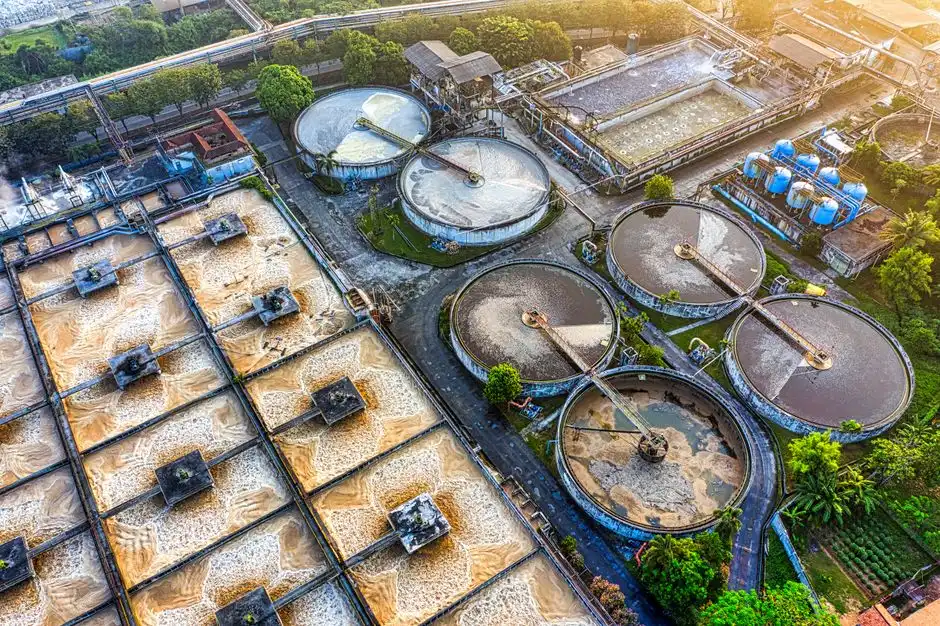
The process flow that more NC Triad chemical capacity additions specified in 2025–2026 than any single-technology train is: equalization → pH adjustment → coagulation → DAF → lamella polish → sand filtration or MBBR depending on reuse targets. A DAF first lifts the floatable FOG, surfactant, and low-density TSS, then the lamella captures the heavy metal-hydroxide floc that the DAF cone could not retain and that arrives with the DAF underflow recycle.
Quantify the footprint win: a hybrid train sized for a 50 m³/h mixed chemical stream runs 30–40% smaller than a single oversized DAF trying to do both jobs, because the heavy-floc load is removed by the lamella in a switch-preference installation (HydropureWater field data, 2026). The 2026 design point most NC chemical EPCs are writing into P&IDs is 95% FOG removal plus 90% TSS removal — a number that no single-technology train hits reliably on a mixed chemical stream. See the parallel mining/metals wastewater DAF-vs-clarifier guide for comparison with high-TDS mineral streams, and the inorganic chemicals plant pretreatment compliance guide for the broader North Carolina pretreatment stack.
5-Step Selection Protocol Before You Talk to a Vendor
Use this workflow to convert the article into a project plan. It mirrors the process HydropureWater application engineers run with new chemical-plant customers in 2026.
- Pull two weeks of composite influent data. Characterize TSS, FOG, total metals (especially Cu, Ni, Zn, Cr, Pb), pH range, temperature, and peak instantaneous flow. One set of jar-test results is worth a week of vendor meetings.
- Run jar tests at three pH setpoints. Test PAC and ferric chloride as coagulants and at least two polymer charges (typically anionic and cationic) at pH 6, 8, and 10. Document whether the floc settles, floats, or breaks — that single observation tells you whether DAF, lamella, or hybrid is correct. Budget $1,500–$4,000 per material change.
- Map unit operations against your influent matrix. Use the decision logic from earlier in this article. If the matrix shows mixed character, default to the 2026 hybrid train rather than forcing a single-technology fit.
- Request vendor P&IDs sized to peak flow × 1.25. Verify saturation-tank pressure rating (4–6 bar working), plate spacing (50 mm is the chemical-industry standard), and hydraulic residence time (20–30 min for the DAF contact zone, 45–60 min equivalent in the lamella). A vendor that cannot produce a mass balance on a single page is not ready for the FAT.
- Validate controls scope and spare-parts logistics. Confirm PLC platform, online TSS and pH meter locations, chemical dosing interlocks, and US-based spare-parts lead times. The 2026 procurement pain point for Triad chemical plants has been 6–10 week lead times on European-built DAF components; a domestic inventory position is a real schedule risk reducer — see how the same protocol applies in our parallel Nashville chemicals-wastewater buyer's guide.
Frequently Asked Questions
What is the actual FOG and TSS removal difference between a DAF and a clarifier for chemical wastewater?
For a typical chemical-plant stream, a DAF removes 85–95% of FOG and 80–95% of floatable TSS, while a clarifier removes 30–50% of FOG and 70–90% of settleable TSS (FOG and oil benchmarks per the 2026 Ecologix industrial selection update). The gap exists because emulsified oil droplets in the 10–50 µm range rise too slowly against cross-flow on clarifier plates but attach readily to DAF micro-bubbles. Free oil that has already separated is easy for both technologies; chemically stabilized emulsions are not.
Can a DAF replace a clarifier in a chemical plant?
Only if the stream is dominated by floatable contaminants. A DAF replaces a clarifier cleanly on surfactant, plasticizer, dye, and FOG streams, but it does not replace a clarifier on a metal-hydroxide floc stream, where 85–95% of the contaminant settles rather than floats. The 2026 default for mixed streams — which is most Triad chemical plants — is DAF primary plus lamella polish, not a like-for-like swap.
How much does a DAF system cost for a High Point chemical plant in 2026?
A 5–50 m³/h DAF skid runs $25,000–$90,000 in 2026 USD, with a chemical dosing skid adding $8,000–$25,000 and installation typically 30–60% of skid cost depending on building and electrical scope. OPEX runs $0.08–$0.18 per m³ treated, dominated by the air-saturation pump and polymer consumption. Budget $1,500–$4,000 for jar testing per material change before locking the design.
Does a chemical plant in High Point need both a DAF and a clarifier?
If the influent carries both FOG and metal-hydroxide floc — the common case at NC dye, adhesive, and specialty-chemical plants — yes. A hybrid DAF-primary plus lamella-polish train reliably hits 92–97% TSS and 90–96% FOG, which is the only configuration that consistently satisfies the High Point POTW's local limits under 15A NCAC 02H .0909 without surcharges. Single-technology trains either miss FOG (lamella-only) or carry heavy floc into the float layer (DAF-only).
What influent characteristics disqualify a DAF and require a clarifier instead?
Three signals push a plant toward a clarifier: (1) a metal-hydroxide-dominant stream where 90%+ of TSS settles rapidly under jar testing; (2) high TDS above roughly 30,000 mg/L, where DAF micro-bubble attachment is impaired by ionic strength (per Water Quality Research Journal, 2013); and (3) high-temperature processes above 60 °C, where dissolved-air saturation efficiency drops and the DAF air-saturation pump must be oversized. Outside those conditions, a DAF or hybrid train is the more flexible 2026 default for chemical-plant service.
Related Equipment
- HydropureWater high-rate lamella clarifier — specifications, capacity range, and technical data