Why Fort Wayne Mining and Metals Operators Are Revisiting the CAS Plant in 2026
Fort Wayne-area steel stamping, powdered-metal sintering, electroplating, and legacy metals finishing operations typically run 250–2,000 m³/day of process wastewater with influent total dissolved solids (TDS) of 1,000–8,000 mg/L on sites that already recycle rinse water, plus residual dissolved Pb, Zn, Cu, Cd, oils, and high carbon-to-nitrogen (C:N) ratios that defeat a settling tank. The brownfield constraint is a 1990s-era aeration basin and one secondary clarifier with no room to add a second clarifier, so the binding constraint is square metres of footprint, not cubic metres of treatable flow (per HydropureWater mining MBR field reference, 2026). The 2026 driver is tighter Indiana Department of Environmental Management (IDEM) effluent expectations on heavy metals and TDS, plus reuse economics that pay for a polishing reverse osmosis (RO) loop only when the upstream biological step delivers under 1 mg/L total suspended solids (TSS). The chemistry is also different from a sulfide flotation mill: residual flotation reagents are not the Fort Wayne feed, but dissolved metals and oily emulsions create the same dissolved-metal and biosorption problem an MBR architecture solves on mining sites, and the upstream removal math is covered in the DAF vs clarifier for mining and metals wastewater guide.
MBR vs CAS at the Process Level: MLSS, SRT, and Effluent Quality
An integrated MBR runs at 8,000–12,000 mg/L mixed liquor suspended solids (MLSS) versus 2,000–4,000 mg/L for a conventional activated sludge (CAS) system, and that single ratio is the largest physical difference between the two technologies (per HydropureWater mining MBR field reference, 2026). Higher MLSS means a smaller aeration basin for the same food-to-microorganism (F:M) ratio, and it eliminates the secondary clarifier entirely because the ultrafiltration membrane retains all biomass inside the bioreactor. On a 1,000 m³/day train, the integrated MBR occupies roughly 60% of the equivalent CAS footprint, with the savings coming from the absence of clarifiers and the reduced aeration basin volume. Effluent quality follows the same logic: MBR permeate sits below 1 mg/L TSS because the 0.1 µm membrane is an absolute physical barrier, while a well-run secondary clarifier with polymer aid still discharges 5–15 mg/L TSS.
Sludge retention time (SRT) is the second decisive gap. An MBR sustains 30+ day SRT, which lets slower-growing degraders establish and keeps the biomass population diverse enough to strip recalcitrant organics; CAS, held at 5–10 day SRT to keep settleability workable, washes those degraders out before they can establish (per HydropureWater mining MBR field reference, 2026). The mechanism is simple: in an MBR the membrane is the clarifier, so biomass is never lost to a sludge blanket failure; in CAS, settleability is a biological property that can collapse during hydraulic or toxic shock loads, which is why CAS needs a selector zone and a polymer dosing skid to stay inside its own operating envelope. Operator impact differs accordingly: MBR training centres on clean-in-place (CIP) discipline, trans-membrane pressure (TMP) trending, and cassette replacement cadence; CAS training centres on MLSS, sludge volume index (SVI), and wasting rates. Both skills are real, but they fail in different ways — a CAS clarifier failure dumps solids to the effluent within hours, while an MBR failure usually degrades gradually through rising TMP and is caught on the daily log.
| Parameter | Conventional Activated Sludge (CAS) | Integrated Membrane Bioreactor (MBR) |
|---|---|---|
| MLSS operating range | 2,000–4,000 mg/L | 8,000–12,000 mg/L |
| SRT | 5–10 days | 30+ days |
| Effluent TSS | 5–15 mg/L (with polymer aid) | <1 mg/L (0.1 µm absolute barrier) |
| Footprint at 1,000 m³/day | Baseline | ~60% of CAS |
| Secondary clarifier | Required | None (membrane replaces) |
| Membrane area per 1,000 m³/day | N/A | 1,800–3,200 m² (DF series cassettes) |
| Total N removal (with supplemental C) | 60–75% | 75–90% |
An integrated MBR wastewater treatment system sized for 500–10,000 m³/day is the default configuration that delivers those numbers on a brownfield site, and the DF series flat-sheet MBR membrane module is the cassette-level building block most Fort Wayne retrofits are quoted against.
Heavy-Metal and Reagent Removal: Where the Two Technologies Actually Diverge
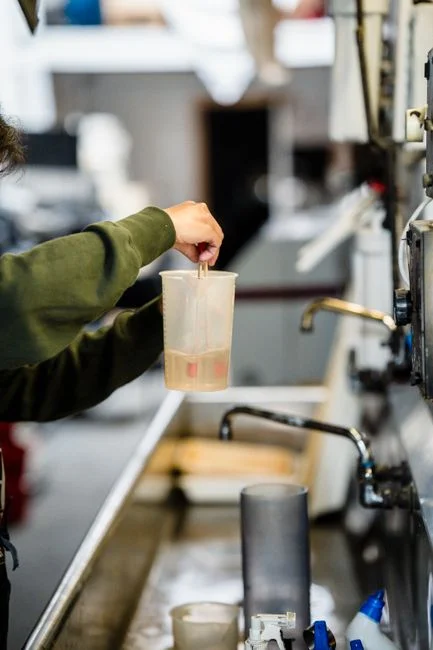
The right way to compare the two trains is to split the question in two: can the train hit metal targets, and can it strip residual organics? On dissolved heavy metals (Pb, Zn, Cu, Cd), a properly run MBR delivers 70–95% removal through biosorption onto the cake layer plus bioaccumulation inside the biomass, while CAS delivers only 30–60% because metal-laden sludge is wasted and the dissolved organics pass through (per HydropureWater mining MBR field reference, 2026). The MBR operating envelope for metal removal holds at influent pH 6.5–7.5; outside this band both technologies lose capacity and lime or sodium hydroxide (NaOH) dosing is needed to keep the metals in the bioavailable particulate fraction.
On residual reagents, the MBR advantage widens. At 30+ day SRT, an MBR removes 85–95% of potassium ethyl xanthate and dithiophosphate (DTP) collector, pulling a feed of 5–20 mg/L down to below 1 mg/L in the permeate; CAS at 5–10 day SRT cannot establish the slow-growing degraders required and the half-life residuals pass through. When CAS still wins on metals, a chemical precipitation stage upstream of CAS can hit the metal target, but it generates 3–8 kg of dry hazardous solids per m³ treated and does not address the dissolved reagent load at all (per HydropureWater mining MBR field reference, 2026). For Fort Wayne specifically, dissolved metals and oily emulsions are the dominant concern rather than flotation reagents, so the MBR advantage tilts toward metal stability and TSS polish rather than xanthate stripping, but the same cake-layer biosorption mechanism still applies.
| Removal target | CAS (5–10 day SRT) | Integrated MBR (30+ day SRT) | Operating note |
|---|---|---|---|
| Dissolved Pb, Zn, Cu, Cd | 30–60% | 70–95% | Hold influent pH 6.5–7.5 |
| Potassium ethyl xanthate | Marginal (2–4 day half-life residuals) | 85–95% (5–20 mg/L → <1 mg/L) | Requires 30+ day SRT |
| DTP collector | Marginal | 85–95% | Requires 30+ day SRT |
| Oils and emulsions (post-DAF) | Limited | Cake layer captures | DAF upstream still required |
| Hazardous solids (with chem ppt) | 3–8 kg dry/m³ | Not generated | CAS precipitation trade-off |
The Three-Stage Train: DAF Upstream, Biological Middle, RO or ZLD Downstream
The MBR-vs-CAS decision sits in the middle of a fixed envelope, and the upstream and downstream stages either magnify or erase the difference between the two options. Upstream, a dissolved air flotation unit in the 4–300 m³/h range removes 60–80% of influent oil and 30–50% of TSS, extending MBR cleaning intervals from weekly to monthly and cutting CIP chemical consumption by 50–70% (per HydropureWater mining MBR field reference, 2026). The same DAF protects a CAS clarifier from sludge loss during shock loads, so the upstream choice does not move the needle between the two technologies.
The downstream stage does move the needle. MBR permeate at 5,000–20,000 mg/L TDS is the correct feed strength for a brackish-water reverse osmosis (BWRO) unit running at 70–85% recovery, and an industrial RO system bringing permeate below 500 mg/L TDS is suitable for grinding dilution water or rinsing reuse. CAS effluent at 5–15 mg/L TSS typically needs an additional sand or multi-media filter ahead of the RO to protect the membranes from fouling, and that filter partially erodes the CAS footprint advantage. For zero-liquid-discharge (ZLD) finishing, RO concentrate at 30,000–60,000 mg/L TDS feeds an evaporator or crystallizer, and this final stage is technology-agnostic between MBR and CAS.
2026 CAPEX and OPEX: Reading the Two Numbers Honestly
Installed CAPEX in 2026 runs USD 800–2,500 per m³/day for an integrated MBR versus USD 550–1,700 for a CAS upgrade with tertiary filter, but only when the existing clarifier civil works are reused (per HydropureWater mining MBR field reference, 2026). The CAS membrane-free CAPEX is 30–50% lower than the MBR figure, but that number assumes no new clarifier, no polymer dosing skid, and no tertiary media filter ahead of any RO; once those items are priced in, the gap closes quickly. On the MBR side, the installed-cost range itself is wide because it tracks influent variability, seismic class, automation scope, and containerized versus skid build.
The operating-cost picture is where the finance team will push back, and the line to defend is aeration. Aeration accounts for 36–68% of MBR operating expense, dominated by coarse-bubble scour across flat-sheet modules, which uses 10–20× less energy than the membrane-aeration energy of external cross-flow configurations (per the 2022-05 Global NEST pilot, DOI: 10.30955/gnj.004278). Membrane replacement is the second MBR line item: a DF series cassette set runs on a 5–8 year replacement cadence, and the finance model should carry that as a capitalized overhaul at year six rather than an annual opex hit. On the chemical side, MBR uses less polymer than CAS because the membrane replaces the clarifier, but it consumes CIP chemicals monthly; CAS uses polymer continuously and, if upstream chemical precipitation is added to meet the metal target, generates 3–8 kg of dry hazardous solids per m³ treated.
| Line item | CAS upgrade (2026) | Integrated MBR (2026) | Note |
|---|---|---|---|
| Installed CAPEX | USD 550–1,700/m³/day | USD 800–2,500/m³/day | CAS assumes reused clarifier civil |
| Membrane-free CAPEX delta | −30 to −50% | Baseline | Erodes once polymer skid + media filter added |
| Aeration share of OPEX | 40–55% | 36–68% | MBR dominated by flat-sheet scour |
| Membrane replacement cadence | N/A | 5–8 years | Cassette-level swap, not annual |
| Polymer consumption | Continuous | Minimal (membrane replaces clarifier) | MBR uses CIP chemicals monthly instead |
| Hazardous solids (with chem ppt) | 3–8 kg dry/m³ | None from biological step | Disposal cost adder on CAS |
| Operator skill required | MLSS / SVI / wasting | CIP / TMP / cassette swap | Both real, fail differently |
Fort Wayne Decision Framework: Five Quantified Go/No-Go Thresholds
Five thresholds let the engineer walk into a Monday-morning review with a defensible call rather than a vendor preference. Threshold 1 — footprint: if the existing clarifier volume has 20+ years of remaining service life and there is no flow increase, re-rastering the aeration basin to an MBR is hard to justify on CAPEX alone (per HydropureWater mining MBR field reference, 2026). Threshold 2 — TDS envelope: if influent TDS sits under 5,000 mg/L and there is no closed-loop reuse target, a well-tuned CAS will meet the discharge consent and the MBR metal-stability advantage is not yet monetized. Threshold 3 — reuse: if there is no RO polishing downstream, the <1 mg/L MBR TSS advantage is wasted because the effluent is going to a polishing pond or controlled discharge rather than back into the process.
Threshold 4 — operator pool: if the site has no membrane CIP training, unplanned membrane-replacement events will erase the aeration savings; the 36–68% MBR OPEX share is dwarfed by poor CIP discipline. Threshold 5 — feed TSS: flat-sheet PVDF MBR handles 500–5,000 mg/L TSS at flux 15–25 L/m²·h with monthly CIP cycles; if feed is already under 100 mg/L TSS after the upstream DAF, a hollow-fiber MBR becomes viable and packing density improves (per HydropureWater mining MBR field reference, 2026). The decision rule: pick MBR if any two of Thresholds 1, 3, or 5 are unmet; pick CAS upgrade if Thresholds 2 and 4 are both met and reuse is not on the roadmap. Reagent feed and pH are routed through the automatic chemical dosing system regardless of which middle stage wins, so pH control is not a differentiator.
Frequently Asked Questions
How much smaller is an MBR train than a CAS train at the same flow?
An integrated MBR occupies roughly 60% of the footprint of an equivalent CAS train at the same throughput, primarily because the 8,000–12,000 mg/L MLSS operating range eliminates the large secondary clarifiers CAS requires (per HydropureWater integrated MBR field data, 2026). On a 1,000 m³/day Fort Wayne retrofit that typically frees 200–350 m² of civil footprint for RO or chemical dosing skids.
Does an MBR permeate meet TDS limits without a downstream RO?
No. MBR permeate at 5,000–20,000 mg/L TDS still requires a downstream BWRO polishing step to reach sub-500 mg/L TDS for grinding dilution water or surface discharge under most 2026 IDEM industrial permits (per HydropureWater mining MBR field reference, 2026). The MBR delivers the <1 mg/L TSS that lets the RO run at 70–85% recovery without fouling.
What removal rates can an MBR hit on residual xanthate and DTP collectors?
A properly sized MBR running at 10,000 mg/L MLSS and 30+ day SRT removes 85–95% of residual potassium ethyl xanthate and DTP, reducing xanthate from 5–20 mg/L in the feed to below 1 mg/L in the permeate (per HydropureWater mining MBR field reference, 2026). CAS at 5–10 day SRT cannot establish the slow-growing degraders required and leaves 2–4 day half-life residuals in the effluent.
What feed TSS range can a flat-sheet MBR handle?
Flat-sheet PVDF MBRs handle 500–5,000 mg/L TSS at flux 15–25 L/m²·h with monthly CIP cycles, making them the default for mining and metals feeds with abrasive particulates (per HydropureWater mining MBR field reference, 2026). Hollow-fiber UF/MBR has higher packing density but only wins when upstream DAF or media filtration has already cut feed TSS below 100 mg/L. The DF series flat-sheet MBR membrane module at 32–135 m³/day per cassette is the right building block for 500–10,000 m³/day mining and metals duty.
When does a CAS upgrade still beat an MBR retrofit?
CAS still wins when the site has existing clarifier volume with 20+ years of service life remaining, influent TDS stays under 5,000 mg/L, there is no downstream RO polishing, and the operator pool has no membrane-CIP training (per HydropureWater mining MBR field reference, 2026). In those four cases, upgrading the existing CAS with a selector zone, fine-bubble diffusers, and a polymer dosing skid delivers more value per dollar than a greenfield integrated MBR install.