Why Carrollton Food & Beverage Plants Are Rethinking Activated Sludge in 2026
Carrollton sits inside the Upper Trinity River watershed, and every industrial discharger over a few hundred gallons per day operates under 30 TAC Chapter 305 and a TCEQ TPDES permit — the framework that governs whether treated water goes to the Trinity, to irrigation, or to a closed-loop reuse system. The 2024 Texas Water Reuse Program updates have pushed more F&B plants toward non-potable reuse, which forces a different effluent quality than simple discharge. On top of that, the typical Carrollton F&B influent is far stronger than municipal sewage: COD 2,000–15,000 mg/L, BOD 1,000–8,000 mg/L, FOG 100–800 mg/L, and TSS 500–3,000 mg/L (HydropureWater field data, 2025-Q4). A conventional activated sludge clarifier running at 2,000–5,000 mg/L MLSS simply cannot keep a stable blanket under those loadings — SVI climbs past 200 mL/g, filamentous organisms take over, and the plant ends up with sludge washout and TSS excursions. That is the path to a TCEQ notice of violation. Land compounds the problem: Carrollton industrial parcels routinely run $8–$15/ft² annualized, so a 40–60% footprint reduction is a real CAPEX line, not a sustainability talking point. Together, FOG spikes, permit pressure, and urban land cost are the three reasons a 2026 capital project is rarely a like-for-like CAS rebuild.
MBR vs CAS: The Core Engineering Difference
Conventional activated sludge is a two-stage process: an aeration tank where heterotrophs oxidize BOD, followed by a secondary clarifier where gravity settling separates the mixed liquor from the clarified effluent. Settled sludge is split into return activated sludge (RAS) and waste activated sludge (WAS). The clarifier is the single point of failure — bulking, rising sludge, or hydraulic overload all collapse the system. An MBR replaces that clarifier with submerged MF/UF membranes, most commonly PVDF flat sheet at 0.1–0.4 μm pore size, and operates at 8,000–12,000 mg/L MLSS instead of the CAS 2,000–5,000 mg/L (per HydropureWater 2026 engineering comparison). Because separation is now a defined pore size barrier rather than a gravity step, HRT and SRT are decoupled and F/M drops to 0.05–0.15 d⁻¹. The empirical basis for trusting MBR at industrial scale is real: Banu et al. ran an A2O-MBR at 77 LMH for 270 days at high MLSS with stable performance, demonstrating the long-SRT operation that CAS cannot match (Banu et al., 2009). For an F&B plant where FOG pushes SVI past 250, that decoupling is the engineering argument that wins the conversation.
Operating Envelope for F&B Wastewater: Side-by-Side Parameters
The table below consolidates the design basis a process engineer in Carrollton can paste into a P&ID review. Anchors come from Banu et al. (2009) on flux and MLSS stability, the HydropureWater 2026 engineering comparison, and HydropureWater 2025-Q4 field data on FOG tolerance. Two things stand out: MBR effluent routinely lands at TSS <5 mg/L, turbidity <1 NTU, and SDI <3, which is the bridge to RO for cooling tower or boiler feed; and FOG >50 mg/L will damage PVDF membranes, so a dissolved air flotation system upstream is non-negotiable for both trains in slaughterhouse and dairy service. CAS technically tolerates FOG in the aeration tank but pays for it in the clarifier — the same grease kills settling.
| Parameter | CAS | MBR (submerged PVDF) |
|---|---|---|
| MLSS (mg/L) | 2,000–5,000 | 8,000–12,000 |
| SRT (days) | 5–15 | 20–60 |
| HRT (hours) | 6–12 | 4–8 |
| F/M (d⁻¹) | 0.20–0.50 | 0.05–0.15 |
| Design flux (LMH) | N/A | 15–25 typical; 77 demonstrated (Banu 2009) |
| Effluent TSS (mg/L) | 10–30 | <5 |
| Effluent BOD (mg/L) | 10–25 | <5 |
| Effluent turbidity (NTU) | 5–20 | <1 |
| FOG tolerance (mg/L influent) | Damages clarifier | <50 at membranes (DAF pretreatment required) |
| Temperature ceiling | ~40 °C | ~40 °C (PVDF limit) |
| Footprint | Baseline | 40–60% smaller |
| Specific energy (kWh/m³) | 0.3–0.6 | 0.6–1.2 (process air only) |
Food & Beverage Sub-Segments: Which Influent Fits Which Reactor
F&B is not one waste stream. Dairy and whey plants push COD past 10,000 mg/L with lactose shock loads that crash a clarifier; MBR's long SRT and high MLSS absorb that shock, and a downstream RO is typically required for any reuse — the engineering is covered in the dairy whey MBR configuration and reuse guide. Slaughterhouse and meat plants run FOG 500–2,000 mg/L, which means DAF pretreatment is mandatory before either train; the Kunnukuzhy abattoir design-flaw precedent is a textbook example of what happens when that step is skipped. Breweries swing the other way — high carbohydrate BOD, low FOG, large diurnal flow swings — both technologies work, but MBR's modularity makes phased capacity build-out practical, and its reuse-grade effluent suits cellar cleaning and CIP rinse loops. Sauce, dressing, snack, and pet food lines throw pH 5–9 envelopes with periodic salt spikes; MBR's buffering from high MLSS rides through those excursions in a way CAS cannot, provided equalization is sized for at least 12–24 hours of peak flow. For a deeper side-by-side on high-BOD and FOG specifically, the MBR vs activated sludge footprint guide for high-BOD FOG wastewater walks through the same comparison with FOG-emphasis.
Capex, Opex and 20-Year Cost of Ownership in 2026 Dollars
Indicative 2026 turnkey CAPEX for skid-integrated, EPC-scope plants runs $80–$220 per m³/d for CAS and $180–$420 per m³/d for MBR; the range is wide because influent strength and stainless vs carbon steel material swing the number (HydropureWater 2026 cost ranges). OPEX lands at $0.10–0.22/m³ for CAS and $0.18–0.42/m³ for MBR. The MBR premium decomposes into three lines: scouring air at 30–50% of MBR energy, CIP chemicals (NaOCl 300–500 mg/L followed by citric or oxalic acid), and membrane replacement amortized over 7–10+ years (HydropureWater 2026) — longer than the 5–8 year assumption older analyses used because flat-sheet PVDF prices have fallen roughly 60% since 2010. CAS gets partial credit back: WAS volume is 20–40% lower at matched SRT in MBR, which trims sludge hauling on the OPEX line (Banu et al., 2009; HydropureWater 2026). The decision point is what the CAS baseline includes. If it carries a tertiary filtration train plus UV to meet TSS <10 mg/L or to feed a reuse loop, the 20-year MBR premium shrinks to roughly 13% on a 500 m³/d project (HydropureWater 2026). Reuse credits flip the sign entirely.
| Cost line (2026 USD) | CAS | MBR | Notes |
|---|---|---|---|
| Turnkey CAPEX ($/m³/d) | 80–220 | 180–420 | Skid-integrated, EPC scope |
| OPEX ($/m³ treated) | 0.10–0.22 | 0.18–0.42 | Includes energy, chemicals, labor, sludge hauling |
| Energy (kWh/m³) | 0.3–0.6 | 0.6–1.2 | 30–50% of MBR kWh is scouring air |
| Membrane replacement ($/m³ amortized) | N/A | 0.02–0.06 | PVDF flat sheet, 7–10+ yr life |
| CIP chemicals | None | NaOCl 300–500 mg/L + citric/oxalic | 1–4 week cycle |
| WAS volume vs CAS | Baseline | −20 to −40% | Sludge hauling saving |
| Tertiary filtration needed for reuse? | Yes (multimedia + UV) | No — permeate meets SDI <3 | Hidden CAS CAPEX line |
| 20-yr LCC premium (500 m³/d baseline) | Baseline | +13% | Shrinks to parity with reuse credit |
Carrollton Permitting, Reuse, and Site Constraints
The TCEQ TPDES permit renewal is usually the trigger event. Plants in Carrollton that have logged a TSS excursion, a 30-day BOD average above their limit, or a FOG reading that trips the permit are the ones sitting in front of a capital request in 2026. MBR's stable TSS <5 mg/L and BOD <5 mg/L performance eliminates the repeat-violation exposure that drives most of these conversations (HydropureWater 2026). For plants choosing reuse, Texas non-potable reuse rules under 30 TAC Chapter 285, Subchapter D cover cooling, irrigation, and toilet flush, and the typical reuse train pairs MBR permeate with UV or ClO₂; the MBR + RO combination is the standard when industrial reuse thresholds require turbidity <2 NTU and BOD <10 mg/L. NTMWD and the Upper Trinity Regional Water District have reuse incentives that reward plants meeting those thresholds. Urban infill is the third constraint: many Carrollton sites already have an aeration basin and a clarifier. An existing CAS basin can be retrofitted by dropping in submerged membrane cassettes, removing the clarifier, and upgrading screening to ≤2 mm and aeration to handle both BOD and scouring — for a packaged approach, the integrated MBR membrane bioreactor system and the DF series PVDF flat sheet membrane module pair directly with that retrofit sequence.
Selection Matrix: When to Pick MBR, When CAS Still Wins
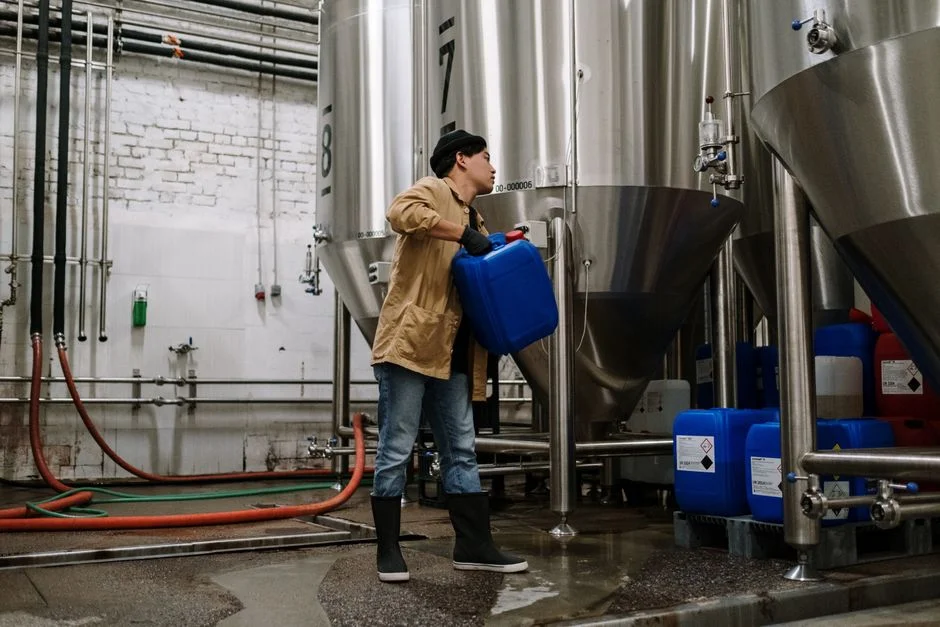
The 5-row matrix below is the one-pager to take into a CFO conversation. For the 50–2,000 m³/d F&B range that covers most Carrollton plants, MBR is the default 2026 answer unless the deciding criterion is first-cost CAPEX alone and the plant has no reuse obligation and ample land. Pick MBR when reuse is required, FOG shock is real, footprint is constrained, the discharge consent demands TSS <10 mg/L, or phased modular build-out is needed. Pick CAS when the project is greenfield >50,000 m³/d with no reuse obligation, ample land, and an established operator skill base. For sites where containerized or buried installation is the only physically feasible layout, the WSZ underground integrated sewage treatment package is often the only option that fits a tight Carrollton site envelope.
| Decision driver | MBR | CAS | 2026 verdict for 50–2,000 m³/d F&B |
|---|---|---|---|
| Flow 50–500 m³/d, reuse required | Reuse-grade effluent, modular cassettes | Needs tertiary + UV; larger tanks | MBR |
| FOG shock (slaughterhouse, dairy, sauce) | Tolerates with DAF pretreatment | Clarifier bulking risk | MBR (with DAF) |
| Urban infill, footprint constrained ($8–$15/ft²/yr) | 40–60% smaller | Baseline | MBR |
| TCEQ permit with TSS <10 mg/L consent | Stable <5 mg/L | 10–30 mg/L; needs cloth-media disc | MBR |
| Greenfield >50,000 m³/d, no reuse, ample land | Over-specified; CAPEX premium unjustified | Lowest cost-to-compliance | CAS |
Frequently Asked Questions
What is the main difference between MBR and conventional activated sludge for F&B wastewater?
An MBR replaces the secondary clarifier with a 0.1–0.4 μm PVDF membrane and operates at 8,000–12,000 mg/L MLSS versus 2,000–5,000 mg/L for CAS, which decouples HRT from SRT and lets the system absorb FOG and COD shock loads that crash a clarifier (HydropureWater 2026).
How much does a 500 m³/d MBR cost in 2026 versus CAS?
Turnkey CAPEX runs $90,000–$210,000 for CAS and $180,000–$420,000 for MBR, with a 20-year lifecycle cost premium of roughly 13% that flips to parity once reuse credits and tertiary filtration are priced into the CAS baseline (HydropureWater 2026).
Can an existing CAS basin in Carrollton be retrofitted to MBR?
Yes — the typical retrofit drops submerged membrane cassettes into the existing aeration basin, removes the secondary clarifier, and upgrades screening to ≤2 mm plus aeration capacity for both BOD and membrane scouring, typically doubling capacity inside the existing footprint (HydropureWater 2026).
What FOG level requires DAF pretreatment before MBR?
Any F&B stream with FOG above 50 mg/L at the membranes needs DAF pretreatment, and most slaughterhouse and dairy plants in Carrollton run 500–2,000 mg/L FOG, so a package wastewater treatment plant in Texas almost always pairs DAF upstream of either CAS or MBR.