
Why the Housing Decision Sits Downstream of the Metals Stream
At a copper, zinc, gold, or rare-earth operation, the camp sewer and the process sewer are almost always the same pipe before they reach the treatment train, so the STP housing decision is constrained by what the metals side forces on the upstream chemistry, not the other way around. A 250-person Andean copper camp or a 1,500-person Pilbara iron-ore camp will typically combine canteen, locker-room, and admin sewage with process bleed from neutralized acid mine drainage, thickener overflow, and raffinate streams into a single blended header. The metals envelope that header carries is hostile to biology: dissolved Cu at 1-50 mg/L, Zn at 5-100 mg/L, Fe at 10-200 mg/L, Mn at 1-20 mg/L, sulfate at 500-4,000 mg/L, and pH 2-4 from un-neutralized AMD (HydropureWater field data, 2025). No activated-sludge consortium, packaged or concrete-housed, survives that envelope without pretreatment, which is why metals precipitation (lime or NaOH to pH 9-9.5 for Cu/Zn, pH 10+ for Mn) followed by DAF or UF is mandatory regardless of what tank the biology sits in. Once that gate is closed, the housing decision is really a domestic-envelope decision: BOD 200-400 mg/L, surfactants, and diurnal swings of 3-5× at shift change. The same H2S that breaks down standard Portland cement in a clarifier also attacks coated steel in a packaged skid, which is why mine-site spec sheets increasingly call for sulfate-resistant cement with W/C below 0.40 and compressive strength of 4,000-6,000 PSI (projul.com construction guide). The cement call and the skid-coating call both come from the same chemistry, and both are downstream of the metals gate.
The Eight Attributes That Actually Move the Decision
Procurement meetings on a mine site rarely argue about biology; they argue about schedule, seismic risk, and the 25-year lifecycle line. The eight attributes that resolve most of those arguments are CAPEX, OPEX, lead time, footprint, design life, seismic suitability, indoor/cold-climate siting, and water-reuse compatibility. Re-anchored to a 50-300 m³/day camp range, packaged (metals precipitation + MBR) lands at roughly $80K-$1.5M with most camps in the $300K-$900K band; cast-in-place (DAF-RO-MBR concrete) lands at $1.2M-$2.5M+ (HydropureWater field data, 2026). OPEX sits at $0.50-$2.50/m³ for both options, but the labor line is decisive: at a remote site, a single skilled operator runs $80K-$150K/year, which is where packaged skids earn their keep, while concrete basins save on membrane and liner replacement cycles. Lead time is the schedule-killer: packaged units ship in 8-12 weeks ex-works; poured concrete takes 6-12 months, and that delta is often the difference between opening the camp with the process plant and opening it six months behind. Footprint favors packaged A/O + MBR at roughly 60% smaller than cast-in-place for the same daily flow, a hard constraint on high-altitude or footprint-locked camps. Design life splits 10-15 years for packaged steel or FRP versus 25-30 years for properly dosed concrete. Seismic Zone 3-4 plus a high water table is the buried-package failure mode: empty or partially empty tanks can float or shift in a seismic event, and most tailings-storage-adjacent camps sit in exactly that combination. Cold-climate siting is the indoor-siting gate: at altitude in the Andes or Central Asia, freezing rules out open concrete basins unless they are covered, odor-controlled, and given make-up air handling, which is why enclosed packaged skids are the only practical option for sub-zero camps. The table below condenses the comparison.
| Attribute | Packaged STP (precipitation + MBR) | Cast-in-Place Concrete STP (DAF-RO-MBR) |
|---|---|---|
| CAPEX (50-300 m³/day camp) | $80K-$1.5M; typical $300K-$900K | $1.2M-$2.5M+ |
| OPEX | $0.50-$1.50/m³ (labor-driven) | $0.80-$2.50/m³ (membrane/liner cycles) |
| Lead time | 8-12 weeks ex-works | 6-12 months on-site |
| Footprint | ~60% smaller for same daily flow | Larger; needs 4-6 h equalization volume |
| Design life | 10-15 years before liner/membrane replacement | 25-30 years |
| Seismic (Zone 3-4 + high water table) | Risk of float/shift if buried | Engineered for seismic load |
| Cold-climate/indoor siting | Enclosed skid, PLC-controlled; no open-tank odor | Open basins need covers, odor control, make-up air |
| Water-reuse compatibility | RO add-on skid-mountable | Concrete buffer tanks ideal for RO/crystallizer |
On a remote site where the labor line is the OPEX driver, a WSZ underground packaged STP paired with an integrated MBR system covers the 1-80 m³/h range unattended. On a long-life concrete basin, the same biology sits in a tank the operator will not have to rebuild.
The Process Train Is the Same Either Way — Only the Tank Changes
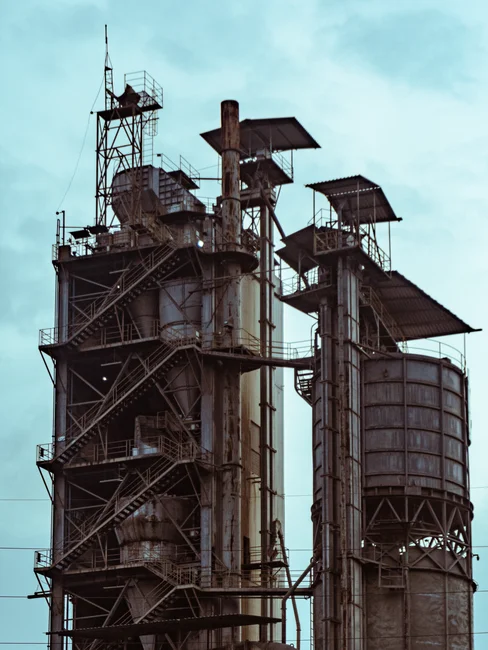
Once the metals gate is closed, the process train is identical regardless of housing, which is the point most procurement debates miss. Step 1 is metals precipitation: lime or NaOH to pH 9-9.5 for Cu/Zn, pH 10+ for Mn, dosed via an automatic chemical dosing skid at 1.2-2.0× stoichiometric. Step 2 is equalization for 4-8 hours to dampen pH and COD swings and protect downstream biology. Step 3 is a dissolved air flotation system or UF stage to strip residual TSS and colloidal metals, the same DAF engineering logic described in the DAF engineering guide for industrial wastewater. Step 4 is the biological stage — A/O or SBR, in a packaged compartment or a concrete basin. Step 5 is MBR flat-sheet polishing using DF-series MBR flat-sheet modules at 0.1 μm pore size (32-135 m³/day per cassette), or a tertiary sand/activated-carbon train. Sludge yield across the train runs 0.2-0.5 kg dry solids per cubic meter treated, dewatered via a plate-and-frame filter press for disposal; on a mine site, that cake is often classified as hazardous and routed back to the tailings facility or a secure landfill. Both housing options can be paired with RO for 50-80% water reuse, recovering $0.50-$1.50/m³ of fresh process water, a number that matters on a remote site where water costs $5-$20/m³ to truck in (HydropureWater field data, 2026). The same compliance gates apply on either path: local mining environmental permits plus reuse standards modeled on EPA 40 CFR Part 469 (COD <120 mg/L, TSS <30 mg/L) are the spec the engineer carries into the meeting. The regional industrial wastewater engineering guide walks the same compliance logic for a different jurisdiction, but the housing call does not change.
Scenarios That Force a Verdict
Five named scenarios cover the bulk of 2026 mining camp STP specifications. Scenario A is a 250-person Andean copper camp at roughly 60 m³/day, seismic Zone 3, 6-month construction window: the packaged WSZ + MBR skid wins on schedule, cold-climate indoor siting, and 60% smaller footprint. Scenario B is a 1,500-person Australian iron-ore camp at 300 m³/day, flat terrain, low seismic risk, 18-month build horizon: cast-in-place concrete wins on lifecycle and OPEX across a 25-year horizon, and the 6-12 month concrete schedule is absorbed by the project timeline. Scenario C is a 400-person Central Asian gold camp at 100 m³/day, adjacent to tailings storage, seismic Zone 4, high water table: cast-in-place concrete is the only defensible answer, because the buried-package float/shift risk is uninsurable on most mine policies in that geotechnical combination. Scenario D is a 50-person exploration camp at 10 m³/day with no grid power and an 8-week mobilization: a trailer-mounted packaged unit with solar-assisted aeration is the only realistic option; concrete is not buildable in that window. Scenario E is the hybrid Phase 1/Phase 2 expansion, which has become the most common 2026 mining answer: a packaged skid for Phase 1 commissioning tied into a temporary outfall, then a concrete basin extension for Phase 2 once production cash flow is established, the same fab-hybrid pattern that recurs across process-water sites. The table below locks the verdicts.
| Scenario | Camp / Flow / Site | Winner | Decisive attribute |
|---|---|---|---|
| A: High-altitude Andean Cu | 250 people, 60 m³/day, Zone 3, 6-month build | Packaged WSZ + MBR | Schedule, cold-climate indoor siting, 60% smaller footprint |
| B: Australian iron ore | 1,500 people, 300 m³/day, flat, low seismic, 18-month build | Cast-in-place concrete | 25-year lifecycle and OPEX |
| C: Central Asian Au, tailings-adjacent | 400 people, 100 m³/day, Zone 4, high water table | Cast-in-place concrete | Seismic + buoyancy; insurance |
| D: Remote exploration | 50 people, 10 m³/day, no grid, 8-week mob | Trailer-mounted packaged | Only realistic option |
| E: Hybrid Phase 1/2 | Phased camp expansion | Packaged Phase 1 + concrete Phase 2 | Cash-flow alignment, expandability |
The 5-Condition Scoring Rule for the Next Project
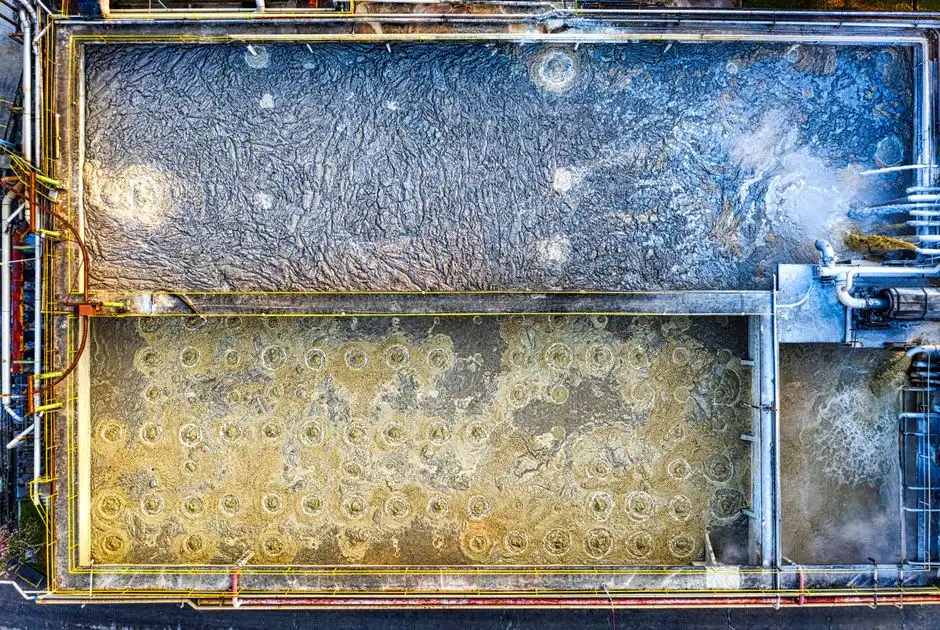
Five conditions resolve most decisions on a mining or metals site, and the engineer can apply them without rereading the article. (1) If flow is ≤100 m³/day, packaged wins on cost and schedule. (2) If the site is seismic Zone 3-4 or has a high water table, concrete wins regardless of flow, because the buried-package float/shift risk is uninsurable. (3) If design life must exceed 20 years, concrete wins on lifecycle. (4) If the construction window is under 12 months, packaged wins because 6-12 months of civil work is not compressible. (5) If cold-climate or indoor siting is forced, packaged wins because open concrete basins need covers, odor control, and make-up air handling that packaged enclosed skids do not. If two or more conditions point to the same housing, the choice is made; if they conflict, the schedule and seismic conditions win on a mine site because both are gating, not optimizing. Adapted from the semiconductor fab scoring rule (HydropureWater field data, 2026), this mining variant re-anchors the flow break from 50 m³/h to 100 m³/day to match camp hydraulic loading and adds the tailings-adjacent seismic override.
Frequently Asked Questions
Which housing wins for a 200-2,000 person mining camp in 2026?
Packaged WSZ + MBR wins below ~100 m³/day and on any site with a sub-12-month build, indoor siting, or no grid power; cast-in-place concrete wins above ~200 m³/day, in seismic Zone 3-4 with a high water table, or when design life must exceed 20 years. The hybrid (packaged Phase 1, concrete Phase 2) is the most common 2026 answer for phased camp expansions (HydropureWater field data, 2026).
Does the camp sewer really share a pipe with metals-laden process bleed?
Yes. At most copper, zinc, gold, and rare-earth operations, neutralized AMD, thickener overflow, and raffinate feed the same header as canteen, locker-room, and admin sewage. The blended envelope carries Cu 1-50 mg/L, Zn 5-100 mg/L, Fe 10-200 mg/L, sulfate 500-4,000 mg/L, and pH 2-4 from un-neutralized streams, which is why metals precipitation plus DAF or UF is mandatory before the biology regardless of housing.
What CAPEX and OPEX should I put in front of the CFO?
For a 50-300 m³/day camp, packaged precipitation + MBR lands at $80K-$1.5M CAPEX (typical $300K-$900K) and $0.50-$1.50/m³ OPEX. Cast-in-place DAF-RO-MBR concrete lands at $1.2M-$2.5M+ CAPEX and $0.80-$2.50/m³ OPEX. RO add-on water reuse at $0.50-$1.50/m³ offsets 20-50% of OPEX on either path (HydropureWater field data, 2026).
Is indoor siting realistic for a packaged STP at altitude?
Yes, and it is often the only option at high-altitude Andean or Central Asian camps where freezing rules out open concrete basins. Enclosed packaged skids are PLC-controlled with no open-tank odor or VOC release, so they sit inside a heated enclosure without contaminating camp HVAC, whereas open concrete basins need covers, dedicated odor control, and make-up air handling that double the mechanical scope.
Related Equipment
- automatic chemical dosing skid — specifications, capacity range, and technical data