Why Mining and Metals Process Water Is a Different ZLD Problem
Mining and metals plant process streams are not generic industrial wastewater, and treating them as such is the single fastest way to scale an RO membrane into a non-recoverable fouling event. Four canonical feed sources drive nearly every 2026 mining brine-mandate discussion: concentrator tailwater at 2,000-6,000 mg/L TDS with high sulfate and silica; acid mine drainage (AMD) at 1,000-10,000 mg/L TDS dominated by sulfate, iron, and aluminum; metal-finishing rinse water carrying Cr, Ni, and Zn species (see the Cr(III) electroplating ZLD work, SSRN, 2022); and heap-leach raffinate with variable Fe, Al, and 3,000-8,000 mg/L sulfate. Conventional RO recovers only 50-80% of these feeds, leaving 20-50% as a brine concentrate that is uniquely punishing to membrane and thermal systems alike because of gypsum (CaSO4·2H2O) saturation, barium and strontium sulfate scaling, and amorphous silica polymerization above ~120 mg/L reactive silica at pH >7.5.
The canonical ZLD train per Met-Chem (2025) is UF → RO → deionization → thermal evaporator → filter press dewatering, and it is technically sound. The problem is that for a 5,000 mg/L TDS mining feed, the evaporator becomes the OPEX line that breaks the budget, because energy demand at 15-30 kWh/m³ of brine is high and scaling potential forces frequent acid wash cycles. The proof point that this constraint is solvable came from a Chilean power plant running a cooling-tower blowdown with high scaling potential, where a fluidized-bed reactor combined with cyclic RO pushed recovery past 93% and reduced the thermal stage to a polishing step (WCP Online, 2026-01). The same toolkit transfers directly to mining streams, which is why a properly configured industrial RO system with upstream FBR and UF pretreatment is now the default front-end for any 2026 mining brine-management project.
| Feed source | Typical TDS (mg/L) | Dominant scalant / foulant | Conventional RO recovery limit |
|---|---|---|---|
| Concentrator tailwater | 2,000-6,000 | Silica, gypsum, strontium sulfate | 60-75% |
| Acid mine drainage | 1,000-10,000 | Fe/Al hydroxide, gypsum, sulfate | 50-70% |
| Metal-finishing rinse (Cr/Ni/Zn) | 500-3,000 | Heavy metals, organics from plating baths | 65-80% |
| Heap-leach raffinate | 3,000-8,000 | Sulfate, Fe, Al, residual cyanide traces | 55-70% |
How High-Recovery RO Plus MLD Actually Works in 2026
Minimum Liquid Discharge (MLD) is a hybrid train that uses membranes to recover 90%+ of feedwater and routes only a 5-10% brine fraction to a thermal evaporator or crystallizer, shrinking thermal load by 60-90% versus a full ZLD train (WCP Online, 2026-01). For a metals-laden mining or metals plant feed stream, four 2026-era innovations make MLD economically defensible where it was not five years ago. First, the fluidized-bed crystallization reactor (FBR) circulates a slipstream of RO concentrate through a bed of seed particles, so gypsum, silica, and other sparingly soluble salts nucleate on the seeds and are bled out as a slurry rather than fouling the membrane. Second, cyclic or pulsed-flow RO alternates production and high-velocity flush phases, dislodging nascent scale at high shear and keeping flux stable without heavy chemical intervention. Third, an integrated membrane-thermal hybrid design ensures that the evaporator sees only the concentrated reject from the second-pass RO, never the raw feed. Fourth, digital process control with online scaling-index sensors and AI-driven CIP scheduling lets the system operate near saturation without crossing the irreversible-fouling threshold.
For mining specifically, the FBR is the single most important unlock, because it is what decouples RO recovery from the saturation index of calcium, barium, strontium, and silica. A well-designed FBR can produce a saleable byproduct stream (CaCO3, gypsum, or mixed salt) that partially offsets OPEX, turning brine from a disposal liability into a small revenue line. On small metal-finishing streams under ~200 m³/day, high-pressure batch RO has also been demonstrated as a credible ZLD-adjacent option for Cr(III) electroplating rinse water (SSRN, 2022). For any larger mining flow, the train starts with robust UF pretreatment to protect the RO from suspended solids and colloidal metals, then runs the FBR-RO loop as the workhorse, with a small brine-polishing crystallizer at the tail.
When Full ZLD Still Beats High-Recovery RO
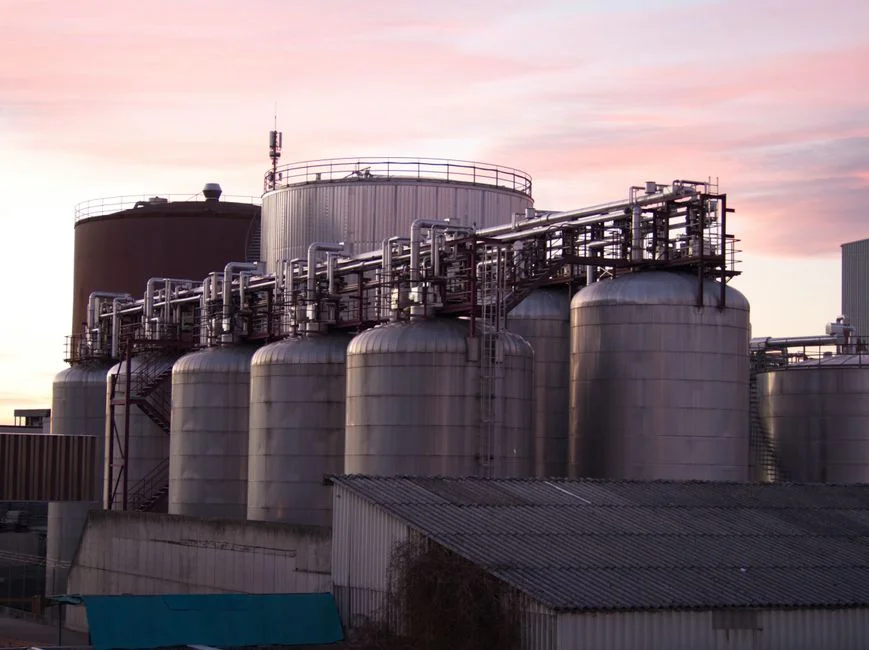
An honest engineering memo has to name the niche where full ZLD still wins, or the verdict later reads as one-sided. Three trigger conditions justify the thermal CAPEX in 2026. First, permit language that forbids any liquid brine bleed — parts of Western Australia under specific DWER licence conditions, several Chinese mining provinces, and certain Indian state pollution control boards effectively require a true zero-liquid-effluent outcome, not a reduced one. Second, free or waste-heat availability below ~$0.02/kWh thermal, where the evaporator OPEX collapses and the 15-30 kWh/m³ energy penalty stops being a deal-breaker; co-located smelters and geothermal sites sit in this category. Third, brine that contains recoverable saleable salts — lithium, magnesium chloride, or high-purity sodium sulfate — where crystallizer product revenue meaningfully offsets OPEX and converts a cost center into a byproduct line (Met-Chem, 2025).
The Met-Chem canonical train — UF → RO → DI → thermal evaporator → filter press — remains the default reference design, and the thermal step is the cost driver, not the membrane step. For very small flows (under ~100 m³/day) or remote sites without skilled operators, an atmospheric evaporator can be cheaper than building a hybrid RO train, because it has no high-pressure pumps and no membrane replacements; a Chilean or Andean site that only needs to evaporate 3-4 gallons per hour falls into this regime, per Met-Chem guidance. The SSRN Cr(III) electroplating ZLD case is the cleanest published evidence that true ZLD is well-proven and commercially deployed for metal-finishing streams where any discharge of brine-bearing heavy metals is non-negotiable (SSRN, 2022). For all other scenarios covered in the next section, the answer is not a thermal train.
ZLD vs High-Recovery RO: 2026 Decision Matrix for Mining Sites
Below is the head-to-head matrix for a typical 1,000 m³/day feed at ~5,000 mg/L TDS — the size and concentration that covers most concentrator tailwater, AMD equalization, and mid-scale metal-finishing flows in Chile, Peru, the Pilbara, and the US Southwest. RO+MLD refers to FBR + cyclic RO + small thermal polish; full ZLD refers to the Met-Chem canonical train with mechanical vapor recompression evaporation. CAPEX and OPEX are presented as engineering bands, not point estimates, because site-specific scaling chemistry, energy cost, and balance-of-plant swing the numbers by 30-50%.
| Dimension | High-Recovery RO + MLD | Full ZLD (thermal) |
|---|---|---|
| Water recovery | 90-95% | 99%+ |
| Residual brine volume | 5-10% of feed | <1% of feed (solid cake only) |
| CAPEX (1,000 m³/day reference) | $1.5-3.0M (USD) | $4.0-9.0M (USD) — typically 2-4× RO+MLD |
| OPEX (kWh/m³ treated) | 1.5-3.5 kWh/m³ | 15-30 kWh/m³ thermal |
| Footprint | Compact; modular skid expansion | Large evaporator hall + boiler skid |
| Operational complexity | Medium — membrane CIP, FBR seed management | High — scale control, heat-loop chemistry, condensate polishing |
| Permit compliance | Meets brine-volume limits; small liquid bleed | Meets true ZLD / no-discharge permits |
| Future upgrade path | Add crystallizer later if mandate tightens | Already at endpoint; little headroom |
The decision tree reduces to three questions. (1) Does your discharge permit allow any brine bleed? If yes — and this covers most of Chile under current DS 90 framework applications, Peru's LGA mining-effluent guidance, and standard US NPDES permits with mass-load limits — go RO+MLD. (2) Is feed TDS >35,000 mg/L or sulfate >5,000 mg/L? If yes, full ZLD is safer, because RO brine saturation indices cross the recoverable threshold for FBR and irreversible membrane fouling risk becomes material. (3) Is feed flow <100 m³/day with free heat available? If yes, an atmospheric-evaporator ZLD or a packaged thermal unit is cheaper and operationally simpler than a hybrid RO train. For roughly 80% of mid-size 2026 mining and metals plants — concentrator tailwater, AMD equalization basins, and metal-finishing rinse at 200-2,000 m³/day — the answer is a properly engineered industrial RO system front-end with FBR and cyclic operation, terminating in a plate and frame filter press for the residual solids cake. This is consistent with the same toolkit that delivered 93%+ recovery on a high-scaling Chilean cooling-tower blowdown (WCP Online, 2026-01).
5-Year TCO Snapshot: What the Numbers Actually Look Like
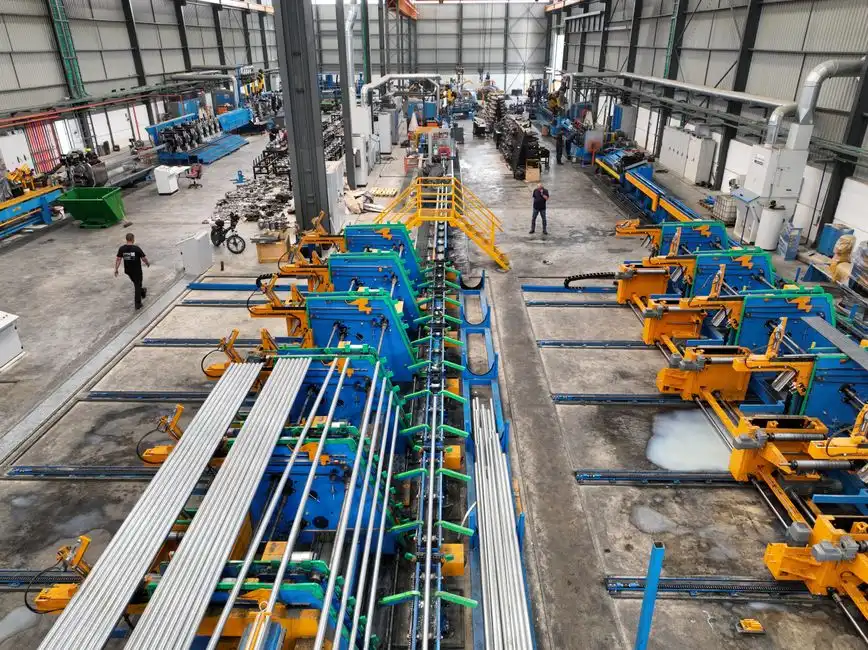
The 5-year total cost of ownership question is what the sustainability committee actually asks. For a 1,000 m³/day feed at ~5,000 mg/L TDS, the engineering bands below represent 2026 pricing for equipment, installation, membrane replacement, energy, chemicals, and labor, but exclude site-specific civil works, concentrate disposal transport, and any saleable byproduct credit. The RO+MLD case carries lower energy intensity (1.5-3.5 kWh/m³) and no large thermal skid; the full ZLD case carries 15-30 kWh/m³ thermal and a materially larger CAPEX base. The result is a 30-50% lower 5-year TCO for RO+MLD in the typical mid-size mining scenario.
| Cost line (5-year, 1,000 m³/day, ~5,000 mg/L TDS) | RO + MLD | Full ZLD (thermal) |
|---|---|---|
| CAPEX (equipment + install) | $1.5-3.0M | $4.0-9.0M |
| Energy (5-year) | $1.1-2.6M | $11-22M |
| Membrane replacement + CIP chemicals (5-year) | $0.4-0.8M | $0.2-0.4M (membranes); scale-control chemicals higher |
| Labor + maintenance (5-year) | $0.5-0.9M | $0.8-1.4M (thermal specialty) |
| 5-year TCO band | $3.5-7.3M | $16-33M |
Full ZLD only closes this gap under three conditions: a crystallizer product line that generates meaningful revenue (lithium carbonate at >$10/kg, magnesium chloride at >$0.30/kg), a thermal energy cost below ~$0.02/kWh, or a permit that absolutely forbids any liquid brine discharge. RO+MLD also has option value: if the 2026 brine mandate tightens in 2028 or 2029, a crystallizer can be added at the back end without scrapping the front-end RO and FBR assets, whereas building ZLD first with no near-term mandate is hard to justify in a capital-constrained mining cycle. For procurement committees evaluating water-treatment parts, valves, and media over a multi-year horizon, this means the RO-led train is also the lower-risk procurement path. Engineers scoping similar decisions in non-mining sectors can also review the ZLD vs high-recovery RO comparison for pharmaceutical wastewater and the ZLD vs high-recovery RO for food and beverage brine management to confirm the same hybrid verdict; the industrial wastewater treatment in Arequipa and Andean mining regions guide also covers site-specific Andean permitting realities.
Frequently Asked Questions
Which brine-mandate jurisdictions in 2026 push a mining site toward full ZLD rather than RO+MLD?
True no-discharge permit language in parts of Western Australia (DWER), certain Chinese mining provinces, and some Indian state pollution control boards is the main 2026 driver, while Chile, Peru, and most US NPDES permits accept a reduced brine bleed under MLD (WCP Online, 2026-01; Met-Chem, 2025).
What scaling failure mode is most likely to disable a mining RO system running above 85% recovery?
Barium and strontium sulfate scaling is the most common irreversible failure because their solubility products drop sharply above 85% recovery, and unlike gypsum they do not respond to acid cleaning; amorphous silica polymerization above ~120 mg/L reactive silica is the second-highest risk.
Is a hybrid RO+MLD train defensible for a small metal-finishing stream with Cr or Ni rinse water?
Yes for flows above ~200 m³/day with an FBR and appropriate pH control, and the SSRN high-pressure batch RO study (2022) confirms ZLD is proven for sub-200 m³/day Cr(III) electroplating streams where any brine discharge is non-negotiable.
What is the realistic 5-year TCO difference between RO+MLD and full ZLD for a 1,000 m³/day mining feed?
For a 1,000 m³/day feed at ~5,000 mg/L TDS, RO+MLD sits in a $3.5-7.3M 5-year band while full ZLD sits in a $16-33M band, driven by 15-30 kWh/m³ thermal energy demand versus 1.5-3.5 kWh/m³ for the RO-led train (WCP Online, 2026-01; Met-Chem, 2025).