
The Paper Mill Sewer Is a Blended Stream, Not a Domestic Line
For a pulp and paper mill's factory domestic sewage, a packaged skid STP wins below 50 m³/h and on fast-track mill builds, while cast-in-place concrete wins above 200 m³/day, in seismic Zone 3-4 sites, or when design life must exceed 20 years. The blended envelope — fibre colour 500-3,000 Pt-Co, condensate-driven COD 800-2,500 mg/L, pH 4-9, plus 200-400 mg/L BOD domestic flow — forces equalization and DAF or MBR polishing on both housings, so the choice is operational and financial, not regulatory.
The single factory sewer at a typical Indian or Southeast Asian integrated mill carries three unrelated flows: canteen and locker-room sanitary discharge (BOD 200-400 mg/L, surfactants, routine peaks), broke-pulping and machine-house wash-down (fibre colour 500-3,000 Pt-Co, suspended solids 300-1,500 mg/L), and evaporator/condensate side-streams that bleed into the floor drain (COD 800-2,500 mg/L, pH 4-9 swings, 40-65 °C). Diurnal flow swings of 3-5× occur across three shift changes, with cooking liquor carryover and black-liquor spills pushing COD above 2,500 mg/L for 30-90 minute windows. Sizing the STP off the canteen line alone — the default mistake — undersizes equalization and starves the biological stage of buffering capacity.
Condensate temperature is the sleeper parameter. Hot condensates above 40 °C inhibit nitrification and shift the A/O biomass toward thermophilic poor-flocs, which destroys MBR membrane performance. Equalization of 4-8 hours is non-negotiable in either housing, and condensate cool-down to below 38 °C via a plate heat exchanger or a forced-draft cooling tower should be specified before the aeration stage regardless of which housing wins. Compliance anchors are CPCB's ZLD trajectory for paper mills (residual discharge <100 mg/L COD, <10 mg/L TSS, near-zero liquid waste for new mills) and the EU/IPC BREF effluent expectations of COD <80-150 mg/L, TSS <10-30 mg/L for integrated mills. Site-specific consent values from the State Pollution Control Board are the binding gate; the STP must be sized to meet the strictest parameter in the consent, not the average.
How Each Housing Handles the Blended Pulp & Paper Envelope
The process train is identical for both housings; only the tank material changes. A WSZ packaged STP skid integrates A/O biological contact oxidation, sedimentation, and disinfection in a single buried or slab-mounted unit rated 1-80 m³/h, fully automatic with PLC control (HydropureWater field data, 2026). Upstream, a DAF for fibre colour and TSS removal at 4-300 m³/h knocks colour from 3,000 Pt-Co down to 200-500 Pt-Co and TSS from 1,500 mg/L to under 50 mg/L with 0.5-2 mg/L polyaluminium chloride or alum dosing. Downstream, DF-series MBR flat-sheet cassettes at 0.1 μm pore size deliver 32-135 m³/day per cassette and polish effluent to under 30 mg/L TSS and under 50 mg/L COD, hitting CPCB reuse norms without a separate clarifier. Because the A/O and clarification stages share tankage inside the skid, the packaged footprint runs roughly 60% smaller than cast-in-place for the same daily flow.
Cast-in-place concrete, by contrast, is a series of separate poured basins: equalization tank, aeration basin, secondary clarifier, each sized to the mill's hydraulic profile and built by on-site civil crews over 6-12 months. Concrete tolerates HF-vapor carryover and accidental acid or black-liquor dumps better than coated steel, and the alkalinity of the concrete itself (pH 12-13 in the cement matrix) buffers low-pH excursions. A future basin extension — a third or fourth compartment for a Phase 2 mill — pours into the existing footprint without replacing the structure, which is the sleeper argument for any mill with a funded Phase 2.
No housing choice removes the need for upstream DAF or UF when colour exceeds 500 Pt-Co. Pretreatment is identical: screening to 1-3 mm, pH correction to 6.5-8.5 via the automatic chemical dosing for pH and colour coagulation, DAF or ceramic UF for colour and TSS, and condensate cool-down if temperature exceeds 40 °C. The packaged WSZ skid does not replace pretreatment; it only consolidates the biological and clarification stages.
| Parameter | Packaged (WSZ + DAF + DF MBR) | Cast-in-Place Concrete |
|---|---|---|
| Treatment stages | A/O + sedimentation + disinfection in one skid; DAF upstream, MBR downstream | Separate cast equalization, aeration, clarifier basins |
| Flow range | 1-80 m³/h (1-1,920 m³/day) | Unlimited; practical floor ~100 m³/day |
| Footprint at 100 m³/day | ~60% smaller than concrete | Larger; multiple basins plus 3 m walkways |
| Colour/TSS reduction | DAF + MBR cassette train | Same DAF + MBR; only tankage differs |
| Temperature tolerance | Polymer/FRP; cool condensate to <38 °C upstream | Concrete tolerates vapor carryover; cool <40 °C upstream |
| pH excursion tolerance | Limited by coating chemistry | Concrete alkalinity (pH 12) buffers low-pH swings |
| Future expansion | Forklift-out replacement; add parallel skid | Add compartment to existing basin |
| Lead time | 8-12 weeks ex-works | 6-12 months on-site civil |
Eight Attributes That Decide the Housing for a Paper Mill
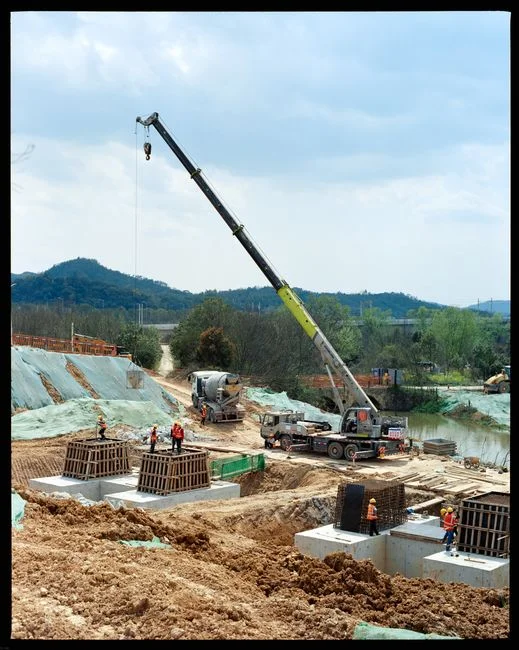
The housing decision reduces to eight attributes that move a procurement memo. CAPEX at 100 m³/day sits at $600K-$1.5M for a packaged precipitation + MBR train versus $1.2M-$2.5M+ for a cast-in-place DAF-RO-MBR system (HydropureWater field data, 2026). OPEX runs $0.50-$1.50/m³ for packaged (labor-light, but membrane and liner replacement at year 10-12) versus $0.80-$2.50/m³ for concrete (membrane cycles are similar; labor is higher on-site). The OPEX gap is small enough that schedule and seismic risk usually decide it.
Lead time is decisive on fast-track mill builds. 8-12 weeks ex-works for a packaged skid versus 6-12 months of on-site civil for concrete — the difference between hitting and missing a paper-machine commissioning date. Footprint at 100 m³/day runs ~60% smaller for packaged because A/O and clarification share tankage inside the skid shell. Design life lands at 10-15 years for packaged (coated steel or FRP with liner/membrane replacement at year 10-12) versus 25-30 years for properly dosed concrete.
Seismic suitability is non-negotiable. Buried packages can float or shift in high water-table + seismic events in Zone 3-4, particularly in mill sites with alluvial soil. Engineered concrete basins handle the seismic load by design. Indoor siting favors packaged: skids are fully enclosed, PLC-controlled, and emit no open-tank odor, which lets them sit inside a process building without an independent make-up air system. Open concrete basins release H₂S and VOCs that block indoor HVAC integration. Expandability favors concrete; a third or fourth compartment pours into the existing basin, while a packaged unit is a forklift-out replacement. For a parallel pharma wastewater comparison with the same scoring framework, the pharma wastewater packaged vs concrete STP comparison walks the same eight attributes against a different influent envelope.
| Attribute | Packaged (WSZ + MBR) | Cast-in-Place Concrete |
|---|---|---|
| CAPEX (100 m³/day) | $600K-$1.5M | $1.2M-$2.5M+ |
| OPEX | $0.50-$1.50/m³ | $0.80-$2.50/m³ |
| Lead time | 8-12 weeks ex-works | 6-12 months on-site civil |
| Footprint at 100 m³/day | ~60% smaller than concrete | Larger (multiple basins + 3 m walkways) |
| Design life | 10-15 years (liner/membrane replace year 10-12) | 25-30 years |
| Seismic Zone 3-4 | Risk of float/shift in high water table | Engineered for seismic load |
| Indoor siting | Enclosed, PLC-controlled; no open-tank odor | Open basins problematic indoors; need covers + odor control |
| Expandability | Forklift-out replacement; add parallel skid | Add compartment in existing basin |
Pulp & Paper-Specific Decision Rules
Four rules cover most mill builds. Rule 1 — flow ≤50 m³/h, fast-track mill (less than 12 months to commissioning), low seismic zone: a packaged WSZ packaged STP skid paired with a DAF for fibre colour and TSS removal and DF-series MBR flat-sheet cassettes wins on every dimension including OPEX, schedule, and footprint. Rule 2 — flow ≥200 m³/day, seismic Zone 3-4, or design life requirement over 20 years: cast-in-place concrete wins outright, with HF-vapor tolerance and alkalinity buffering as engineering bonuses.
Rule 3 — ZLD or >85% water reuse mandate: housing is secondary to the RO and crystallizer train. Either option works as long as upstream DAF or UF is correctly specified, and the recovered permeate at $0.50-$1.50/m³ offsets 20-50% of OPEX on both options. Rule 4 — phased mill build with a funded Phase 2: hybrid is the 2026 norm. Install a packaged skid for Phase 1 (1-80 m³/h coverage hits most start-up envelopes) and pour a concrete basin extension for Phase 2 once the cash flow profile supports the 6-12 month civil schedule.
Across all four rules, fibre colour above 500 Pt-Co needs dedicated coagulant dosing — alum, PAC, or polyaluminium chloride at 0.5-2 mg/L — handled by the automatic chemical dosing for pH and colour coagulation. Housing does not substitute for chemistry. The colour train and the equalization basin are upstream of the housing decision, not downstream of it.
2026 Cost Bands and Payback for a 100 m³/day Paper Mill STP
For a 100 m³/day packaged STP built on chemical precipitation + MBR, the 2026 CAPEX band is $600K-$1.5M and OPEX runs $0.50-$1.50/m³. The same flow in cast-in-place DAF-RO-MBR concrete lands at $1.2M-$2.5M CAPEX and $0.80-$2.50/m³ OPEX (HydropureWater field data, 2026). If the mill is targeting ZLD or >85% water reuse with a ceramic UF + RO train, CAPEX climbs to $1.5M-$3M regardless of housing, because membrane cost dominates and the housing decision becomes a footnote.
Sludge handling across the train runs 0.2-0.5 kg dry solids per cubic meter, dewatered via a plate-and-frame filter press for paper mill sludge to 22-28% dry solids for landfill or incinerator disposal. Energy sits at 0.3-1.2 kWh/m³; a packaged MBR with submerged flat-sheet modules runs 10-20× lower aeration energy than external cross-flow systems because coarse-bubble scour below the cassette replaces the recirculation pump. RO membrane replacement runs $15K-$30K/year, and a properly designed UF stage upstream cuts RO cleaning frequency by roughly 60%, a saving equal for both housing types.
Payback framing for the CFO: packaged CAPEX payback via avoided civil works typically lands at 18-30 months at Indian and Southeast Asian mill labor rates. Concrete wins on membrane and liner replacement avoidance across a 25-year horizon. The two payback curves cross around year 7-8, which is the question to put to the procurement committee: are you still on the same asset in 2033?
| Cost Line (100 m³/day, 2026) | Packaged (Precipitation + MBR) | Cast-in-Place Concrete (DAF-RO-MBR) |
|---|---|---|
| CAPEX | $600K-$1.5M | $1.2M-$2.5M+ |
| OPEX | $0.50-$1.50/m³ | $0.80-$2.50/m³ |
| Energy | 0.3-1.2 kWh/m³ (submerged MBR) | 0.3-1.2 kWh/m³ + aeration basin blowers |
| Sludge | 0.2-0.5 kg DS/m³ | 0.2-0.5 kg DS/m³ |
| Membrane replacement | $15K-$30K/year (year 10-12 cycle) | $15K-$30K/year (year 8-10 cycle) |
| Civil premium | Avoided (18-30 month payback) | 15-25% premium over package equivalent |
| ZLD upgrade path | Skid-mountable RO add-on | Larger buffer tanks for RO/crystallizer |
| 25-year lifecycle | 1-2 liner/membrane replacements | Membrane cycles dominate; structure intact |
Frequently Asked Questions
Where is the 50 m³/h break-point between packaged and cast-in-place for a paper mill?
Use 50 m³/h (roughly 1,000-1,200 m³/day) as the rough break. A WSZ packaged skid covers 1-80 m³/h and stays cost-effective up to about 100 m³/day; above 200 m³/day, equalization volume and basin count push the design toward cast-in-place. Seismic Zone 3-4 and design life requirements exceeding 20 years override the flow trigger and force concrete even at lower flow rates (HydropureWater field data, 2026).
Can a packaged STP hit CPCB and State PCB effluent norms on a paper mill blended sewer?
Yes, when paired with upstream DAF for colour and TSS, automatic chemical dosing for pH and coagulant, and DF-series MBR flat-sheet cassettes at 0.1 μm for polishing. CPCB's ZLD trajectory for paper mills sets residual discharge under 100 mg/L COD and 10 mg/L TSS for new mills; an A/O + MBR train on blended mill effluent consistently hits those values, as does the reuse envelope under 50 mg/L COD, 30 mg/L TSS, and pH 6.5-8.5.
When does seismic risk force concrete over a packaged skid?
Seismic Zone 3-4 with a high water table is the trigger. Buried packaged units can float or shift during a seismic event if buoyancy exceeds the hold-down load, and the mill site sits in alluvial soil common to river-adjacent paper mills. Engineered concrete basins are designed for the seismic load and sit on a raft or pile foundation sized to the local peak ground acceleration. The same is true for any mill within 50 km of a seismic Zone 4 boundary.
Does a ZLD mandate force a specific housing choice?
No. Housing is secondary once ZLD is on the table; the RO and crystallizer train drive CAPEX and OPEX either way. A packaged skid can host an RO add-on, while concrete offers larger equalization and buffer tanks that smooth the brine stream into a crystallizer. The decision pivots on whether the membrane train is skid-mounted or requires in-ground buffer capacity.
Does fibre colour alone disqualify a packaged skid?
No. A WSZ skid does not see colour directly because the DAF upstream drops colour from 3,000 Pt-Co to 200-500 Pt-Co before the biological stage, and MBR polishing removes residual colour-bearing colloids. What disqualifies a packaged skid is flow above 80 m³/h, indoor siting where seismic float risk is unresolved, or a 25-year design life that outweighs the civil premium. For a related decision tree on high-BOD FOG effluent with a different housing trigger, the packaged vs concrete STP for high-BOD FOG effluent comparison runs the same framework against a FOG envelope.