Why Wichita Transportation Equipment Factories Are Asking This Question in 2026
Wichita's industrial cluster requires diverse treatment solutions due to the varied nature of its wastewater. Aerospace machining at Spirit AeroSystems and Textron Aviation generates coolant emulsions and honing oils; Boeing Wichita and Spirit composite layup produce paint overspray and primer wash; heavy-equipment suppliers feed grinding swarf and quench oils through floor drains; and tier-1 stamping plants push drawing compounds and heat-treat scale into the sewer. All of those streams ultimately flow to the City of Wichita Industrial Pretreatment Program, which enforces 40 CFR 413 (Metal Finishing) categorical limits on oils, TSS, lead, cadmium, nickel, chromium, and zinc.
In 2026, two forces are pushing the DAF-versus-clarifier decision onto Q1 capex agendas. First, EPA's expanded PFAS monitoring rules and tightened local discharge limits for zinc and nickel are forcing pretreatment upgrades before permit renewals. Second, the 2026 Ecologix selection guide frames the choice as a wastewater-composition question, not a vendor preference, which is the baseline this article builds on. The shop floor needs a defensible recommendation, not a generic primer.
What Each Technology Actually Does Inside Your Factory
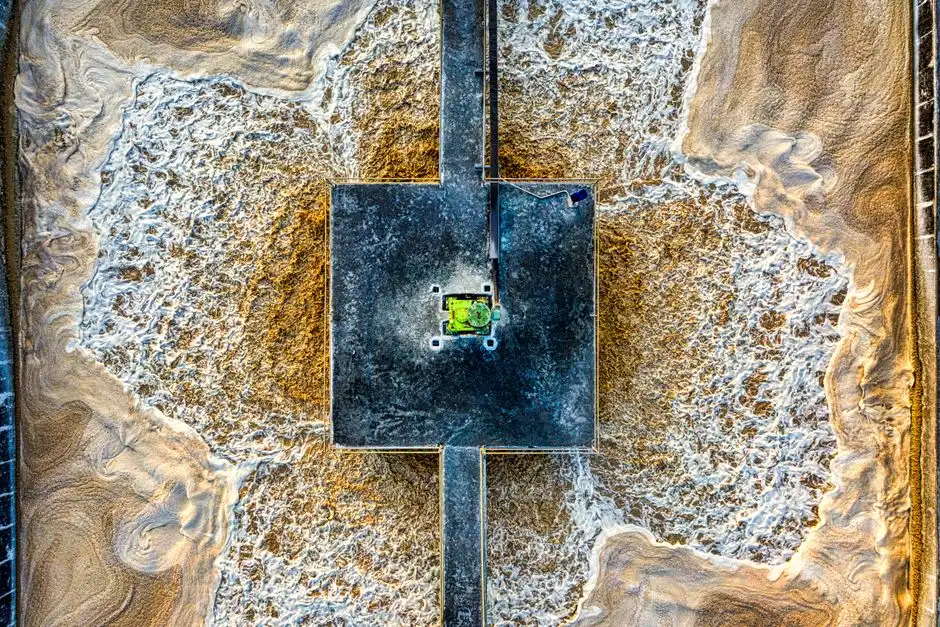
Dissolved air flotation (DAF) works by pressurizing a recycle stream — typically 4–8 m³/h of clarified effluent — to 4–6 bar in a saturation tank, then releasing it through needle valves into the flotation cell. The pressure drop generates 30–50 µm microbubbles (per SigmaDAF / Clearwater Industries, 2026) that attach to oil droplets, free fats, and light solids, lifting them into a surface blanket that a paddle or full-width scraper removes. Hydraulic residence time runs 5–15 minutes, and the float typically reaches 3–6% dry solids, which is why a downstream dewatering device is almost always paired with a DAF.
A clarifier (gravity or lamella plate) uses gravity to separate settleable solids. Lamella plates installed at 55–60° compress the effective settling footprint, supporting surface loading rates of 20–40 m/h (per the HydropureWater lamella spec) and achieving 60–90% TSS removal. The trade-off is chemistry: a lamella clarifier without coagulant removes only 30–50% of emulsified FOG, and even with polymer the free-oil fraction stays well below what a DAF can reach.
For a Wichita plant, the practical mapping is coolant emulsions, hydraulic oil leaks, and parts-washer sump overflow → DAF; grinding swarf, iron fines, and paint-booth sludge water → clarifier or lamella. Both units need upstream pH adjustment and coagulant/polymer conditioning, so the chemical feed system is a prerequisite. Skipping it is the single most common reason a DAF underperforms in the field.
Head-to-Head: DAF vs Clarifier on the Parameters Wichita Plants Care About
The table below scores each technology against the parameters that drive a Wichita EHS manager's recommendation. All numbers are typical operating ranges, not best-case lab results.
| Parameter | Dissolved Air Flotation (DAF) | Lamella / Gravity Clarifier |
|---|---|---|
| TSS removal | 85–95% (H2Flow 2026 spec) | 60–90% with polymer; lower without |
| Total FOG removal | 90–95% (per H2Flow, Ecologix 2026) | ~70% free oil only; poor on emulsified FOG |
| Free oil removal | 95%+ at >100 mg/L feed | 50–70% by skimming; dependent on residence time |
| Emulsified oil removal | 85–90% with chemical program | 20–40% without coagulant; rarely meets 40 CFR 413 oil limits alone |
| Heavy-metal sludge handling | Good — float carries hydroxides if pH-controlled upstream | Better — dense metal sludges settle readily under lamella |
| Footprint per 10 m³/h | ~8–12 m² (skid) up to 1,000 m³/h units (H2Flow) | ~1/3 the floor of an equivalent DAF at the same flow |
| CAPEX index (equipment, 5–50 m³/h) | $80K–$350K (skid) | $60K–$220K (package) |
| OPEX index | Higher — compressor, recycle pump, 5–15% more polymer | Lower — no saturator, lower air, lower polymer |
| Operator skill required | Moderate; saturator and air-to-solids ratio are tunable | Low to moderate; mostly sludge withdrawal and plate inspection |
| Sensitivity to flow spikes | Forgiving — equalization and recycle smooth surges | Sensitive — lamella can re-suspend at >1.5× design flow |
| Sludge volume / consistency | 3–6% DS float; 70%+ volume cut achievable with plate-and-frame dewatering (per H2Flow) | 1–2% DS underflow; needs thickener or thickener + filter press |
Compliance depends on these metrics: 95% FOG removal is reachable on a DAF with proper chemistry, while clarifier-based FOG removal rarely clears 70% on the emulsified oils typical of metalworking fluids (per Ecologix, 2026). If your downstream limit is the 40 CFR 413 oil-and-grease ceiling, the DAF column is the only safe choice.
Matching the Technology to Your Wichita Sub-Sector
The following table maps the dominant waste streams in the Wichita transportation cluster to the technology that handles them best.
| Wichita sub-sector | Dominant waste streams | Recommended primary | Recommended polish / backup |
|---|---|---|---|
| Aerospace machining & assembly (Spirit AeroSystems, Textron) | High-pressure coolant, honing oils, aluminum fines | HydropureWater DAF skid | Lamella clarifier for metal-bearing fines |
| Aerospace painting & composites (Boeing Wichita, Spirit composites) | Paint booth water, primer overspray, surfactant-laden wash | HydropureWater lamella clarifier | DAF as backup for surfactant upsets |
| Heavy equipment & rail (Caterpillar, John Deere, rail suppliers) | Grinding swarf, quench oils, phosphate wash | DAF for the oil stream | Lamella clarifier for the metal sludge stream |
| Tier-1 auto parts (stamping, heat treat) | Quench scale, drawing compounds, small footprint | Compact DAF 5–50 m³/h | Small lamella for TSS polishing |
| General aviation MRO & parts washers | Light, intermittent flow; batch dumps | Containerized DAF rental, ~10 m³/h | Optional polymer feed for variable loads |
Wichita plants often require a hybrid approach to meet effluent standards. Aerospace and heavy-equipment facilities rarely reach 40 CFR 413 compliance with a single unit because process drains are fundamentally different—one stream is oil-rich, another is metal-rich. Pairing the oil-handling DAF in front of the metal-handling clarifier, with shared chemical feed, is the configuration that consistently meets the City of Wichita sewer-use ordinance.
Costs, Footprint, and Payback for a 2026 Wichita Retrofit
Directional CAPEX envelopes for equipment only, 2026 USD, US Midwest: skid DAF 5–50 m³/h sits in the $80K–$350K range; containerized DAF runs $200K–$500K; a lamella clarifier package with sludge recirculation at the same flow range is roughly $60K–$220K. Total installed cost on a brown-field retrofit typically multiplies the equipment-only figure by 1.6–2.2× once civil work, interconnecting piping, and controls are added; green-field aeronautical sites run 1.3–1.5×.
OPEX is dominated by polymer consumption (typically $0.10–$0.40 per m³ treated for an optimized DAF), air compressor power (10–25% of DAF OPEX), and sludge haulage. Pairing the DAF float or clarifier underflow with a filter press for dewatering DAF float or clarifier underflow typically cuts sludge volume by 70%+ (per H2Flow, 2026). An automatic coagulant and polymer dosing skid keeps coagulant spend in the lower half of the range and stabilizes effluent during flow spikes.
Payback for a Wichita plant that has been paying FOG-excursion surcharges on its City of Wichita sewer bill typically runs 18–36 months once surcharge avoidance and reduced sludge haul are combined. Plants that have not yet been surcharged but face tightening 2026 local limits should still expect 30–48 months because the savings are tariff-driven.
How to Decide in One Sitting: A Three-Step Selection Workflow
Step 1 requires pulling 5-day composite samples of each process drain (machining coolant, parts wash, paint booth, quench, and any combined floor drain). Tabulate FOG, TSS, total metals (zinc, nickel, chromium), flow, and temperature to create a baseline.
Step 2 involves applying simple rules: if FOG is consistently above 100 mg/L, the stream is DAF territory; if TSS is above 500 mg/L and FOG is below 50 mg/L, lead with a clarifier or lamella; if the stream is mixed, run a DAF primary and clarifier polish. A 40 CFR 403 industrial pretreatment compliance primer is useful here, as pretreatment limits sometimes dictate the technology more than the chemistry does.
Step 3 involves running a one-week pilot on the worst-case drain with a 5 m³/h skid such as the H2Flow Alpha 5 Pilot or a HydropureWater DAF pilot. Confirm TSS, FOG, and metals at your real temperatures and flow spikes, then size the production unit from the pilot data. A regional comparison for sister facilities in other transportation clusters is available in this transportation equipment wastewater treatment guide for other regions, and the underlying DAF oil-water separator engineering is covered in this DAF oil-water separator engineering deep-dive.
Frequently Asked Questions
What FOG level should drive a Wichita plant toward DAF instead of a clarifier?
Once total FOG on a process drain runs consistently above 100 mg/L, a stand-alone clarifier will struggle to meet the 40 CFR 413 oil-and-grease limit, because emulsified metalworking oils do not settle efficiently. A DAF with proper coagulant and polymer dosing typically reaches 90–95% FOG removal using 30–50 µm microbubbles, which is the technology's defining advantage on oily streams.
Can a clarifier handle the heavy-metal sludge from machining and grinding on its own?
Yes, and it often performs better than a DAF for the metal-rich fraction. Lamella clarifiers settle iron fines, aluminum hydroxides, and grinding swarf effectively at 20–40 m/h surface loading, and the underflow consolidates cleanly for downstream dewatering. The catch is FOG: a clarifier alone rarely meets 40 CFR 413 oil limits, which is why most Wichita aerospace and heavy-equipment plants run a DAF in front of a clarifier rather than choosing one.
How long does a 2026 DAF retrofit typically take to pay back at a Wichita factory?
Plants that have been paying City of