Why Auburn EV and Auto Plants Are Revisiting Primary Treatment in 2026
40 CFR 433 (Metal Finishing Point Source Category) sets daily maximums of 60 mg/L TSS and 52 mg/L oil and grease for discharges from automotive parts plants, with additional categorical limits on lead, nickel, total chromium, and zinc (per 40 CFR 433.102). Alabama ADEM tightened pretreatment enforcement during the 2024–2026 review cycle, and a tier-1 or tier-2 supplier in Auburn discharging to a regional POTW now faces both federal categorical limits and a local FOG cap as low as 100 mg/L on the sanitary sewer. A typical Auburn EV/auto parts plant runs 3–5 segregated streams — cathodic e-coat paint, phosphate/nickel conversion coating rinse, machining coolant, alkaline cleaning, and general rinse water — each of which behaves differently in primary treatment and triggers a different combination of EPA subcategories.
The headline efficiency gap that drives the 2026 DAF vs clarifier decision is documented in food-processing data: a DAF system removed 95% of oils and greases versus 70% for a clarifier on the same feed (Ecologix 2026). A mining analog showed a clarifier reducing heavy sediment loads by 90% at lower cost (Ecologix 2026). Neither benchmark is automotive-specific, which is precisely the gap a stream-by-stream selection framework fills. Komline-Sanderson also notes that a DAF is "essentially a hands-off machine that requires little operator attention" beyond lubrication and occasional wear-part replacement — a meaningful advantage in Auburn plants operating with lean EHS staffing.
How a DAF and a Clarifier Actually Treat EV Wastewater
A dissolved air flotation (DAF) system saturates a pressurized recycle stream with air, then releases it through needle valves to generate 10–100 µm micro-bubbles. Those bubbles attach to oil droplets and floated floc, reducing particle density and lifting the contaminant blanket to a top-skimmed froth. Bottom collectors handle the fraction that settles rather than floats (Komline-Sanderson). The three energy-using subsystems are the recycle pump, the air-dissolving system (compressed air), and the skimmer drive; controls and chemical pretreatment tanks are typically packaged with the unit (Komline-Sanderson).
A HydropureWater high-efficiency lamella clarifier relies on gravity sedimentation in a rectangular or circular tank. Inclined plates at 55–60° shorten the effective settling distance and push surface loading to 20–40 m³/m²/h, versus the 1–2 m³/m²/h typical of a conventional clarifier. In practice, the lamella geometry means a clarifier sized to polish 50–80% more flow per unit footprint than a DAF of the same plan area. DAF handles FOG, light TSS, emulsified oils, and low-density floc; the lamella clarifier handles dense metal-hydroxide sludge, sand/grit from vibratory finishing, and heavy inorganic TSS. Both technologies rely on chemical conditioning to meet 40 CFR 433 — coagulant plus flocculant for DAF, and pH adjustment plus flocculant for the metal-hydroxide clarifier step — and that conditioning is the dominant opex line in either case.
Matching DAF or Clarifier to Each EV/Auto Wastewater Stream
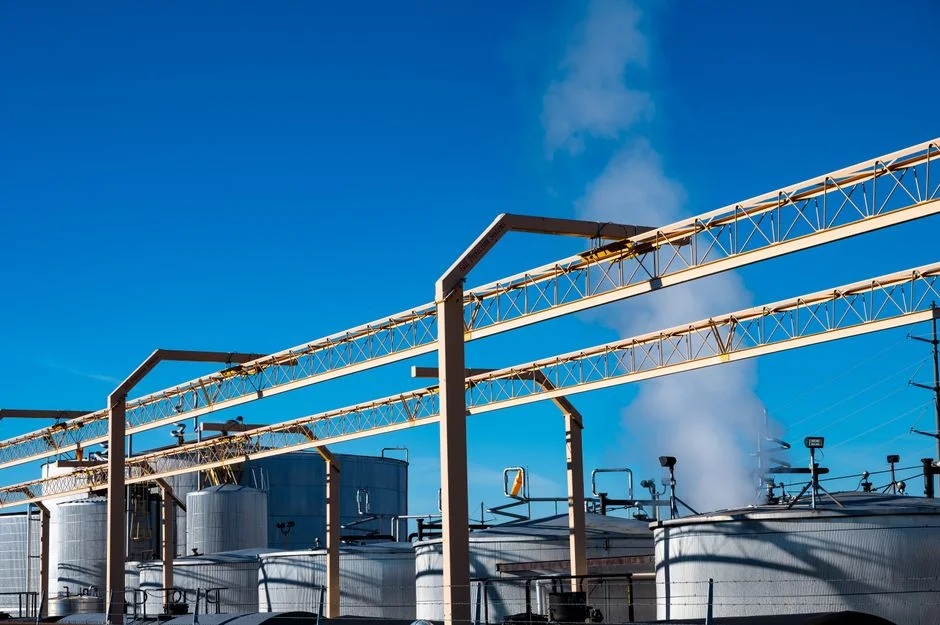
Stream selection is the single highest-leverage decision in the spec. The table below maps each segregated stream in a typical Auburn EV/auto parts plant to its primary unit, the dominant contaminant class, and the chemistry that makes it work.
| Stream | Dominant Contaminants | Typical pH | Primary Unit | Conditioning Chemistry |
|---|---|---|---|---|
| E-coat paint detackifier overflow | FOG, organic-bound paint solids | 7–9 | DAF | Coagulant + flocculant |
| Machining coolant / stamping lubricant | Free and emulsified oils, metal fines | 7–9 | DAF (after emulsion break) | Coagulant + flocculant; heat or chemical break |
| Alkaline cleaning rinse | Surfactants, light metals, oil sheen | 9–11 | DAF | pH adjust + flocculant |
| Phosphate / Ni conversion coating rinse | Ni, Zn, phosphate, metal-hydroxide floc | 8–10 | Lamella clarifier | pH adjust + flocculant |
| Vibratory finishing / grinding slurry | Abrasive grit, metal fines | 6–8 | Lamella clarifier (with grit removal) | Flocculant |
| Battery cathode / black-mass washwater | Co, Ni, Li salt precipitates, residual FOG | 8–11 | Lamella clarifier after caustic precipitation; DAF polish for FOG | Caustic precipitation + flocculant |
| Stormwater / contact cooling water | Low FOG, low metal, high volume | 6–8 | Clarifier or bypass to retention | None or minimal |
The 2026 default for a mixed sewer is DAF first, lamella clarifier second, with chemical dosing in between. The clarifier fails on emulsified oil because emulsion droplets are typically 1–20 µm and settle far too slowly in a gravity tank; DAF is the only practical primary for coolant overflows and e-coat detackifier. Conversely, the lamella clarifier outperforms DAF on dense metal-hydroxide floc because the particles have already settled by the time the stream reaches the unit, and the 20–40 m³/m²/h loading rate handles the volume at one-half to one-third the DAF footprint. Battery black-mass washwater is the most common case where a single unit is not enough: caustic precipitation generates a metal-hydroxide sludge that wants gravity settling, while residual FOG from anode coating wants a DAF polish step downstream.
DAF vs Clarifier: 2026 Comparison Matrix for Auburn Factories
The matrix below distills the decision for a procurement meeting where a CFO and an environmental manager need a single screenshot. Numbers are drawn from the equipment specs of the dissolved air flotation (DAF) system and the HydropureWater high-efficiency lamella clarifier, the Ecologix 2026 removal benchmarks, and Komline-Sanderson operating notes.
| Parameter | Dissolved Air Flotation (DAF) | Lamella Clarifier |
|---|---|---|
| FOG removal efficiency | ~95% (Ecologix 2026, food-processing analog) | ~70% (Ecologix 2026, same feed) |
| Heavy metal-hydroxide TSS removal | Moderate; not the design case | ~90% (Ecologix 2026, mining analog) |
| Surface loading / footprint | Lower; larger plan area per m³/h | 20–40 m³/m²/h; 50–80% less area than DAF per m³/h |
| Hydraulic residence time | 20–40 minutes | 1–3 hours |
| Chemical conditioning | Coagulant + flocculant | pH adjustment + flocculant only |
| Operator attention | "Hands-off" beyond lubrication (Komline) | Rake torque and sludge pump monitoring |
| Utility drivers | Compressed air, recycle pump, skimmer drive | Low energy; intermittent sludge pump |
| Standard flow range | 4–300 m³/h across 13 DAF models | Engineered to combined flow |
| Position in typical EV train | Primary on oily streams; polish on FOG in black-mass | Primary on metal-hydroxide; secondary after DAF |
| Capex order of magnitude | Higher unit cost; smaller tank volume | Lower unit cost; larger tank volume |
For any stream with both FOG and metal-bearing solids, a hybrid train outperforms either unit alone. That single conclusion is the bridge from the comparison matrix to the 2026 specification recommendation in the next section. Comparable framing for adjacent geographies is in our DAF vs clarifier for EV/auto wastewater in Bradenton, FL guide and the DAF or clarifier for transportation equipment wastewater in Milton companion piece, and the broader pretreatment context is covered in the Elkhart-area transportation equipment pretreatment guide for 2026.
When a Hybrid DAF + Lamella Clarifier Train Is the Right 2026 Answer
For an Auburn plant whose segregated streams converge before discharge, the spec is a dissolved air flotation (DAF) system sized to peak oily-stream flow (the 4–300 m³/h range across 13 standard models covers most tier-1 plant sizes), followed by a HydropureWater high-efficiency lamella clarifier sized to the combined flow for mixed-metal polishing. The EPA documented this exact configuration as established practice in EPA/600/R-00/020, which evaluated retrofitting primary settling tanks with DAF and lamella or microsand-enhanced plate settlers across 13 case studies, including an Auburn, NY wastewater treatment facility (S5).
An automatic chemical dosing system sits between the DAF and the clarifier to adjust pH for the metal-hydroxide step and feed flocculant at a controlled rate. Both units generate sludge, so a plate and frame filter press for sludge dewatering should be on the downstream scope to bring the waste-handling loop to a close. For an Auburn facility discharging to the local sanitary sewer or a regional POTW, the limiting envelope is the most restrictive of 40 CFR 433 daily maximums, the ADEM-issued local limits, and any specific POTW FOG cap — a hybrid train is the lowest-risk path to staying under all three.
What It Costs to Choose Wrong — and How to Spec the Right Unit in 2026
Under-sizing a DAF for a stream that is actually heavy in metal-hydroxide solids forces polymer over-dosing and recurring effluent excursions on TSS and nickel; under-sizing a clarifier for an oily stream causes skimmer ragging, surface scum carryover, and FOG permit excursions. Both failure modes are visible in the daily monitoring log within one quarter of startup and expensive to remediate after the fact. The dissolved air flotation (DAF) system covers 4–300 m³/h in 13 standard models, which simplifies selection for most Auburn plant sizes, and the HydropureWater high-efficiency lamella clarifier achieves 20–40 m³/m²/h surface loading with up to 30% lower chemical use at the flocculation step, reducing lifetime opex relative to a conventional clarifier.
Komline-Sanderson notes that "a simple lab test will generally determine if a DAF is feasible" — and the same jar-settler test will size flocculant dose for the clarifier stage. Run a wastewater characterization jar test on each segregated stream before final selection, then request a sizing worksheet tied to peak flows and 40 CFR 433 compliance targets. Do not commit capex on modeled alone.
Frequently Asked Questions
Should an Auburn EV or auto parts plant choose a DAF or a clarifier for primary treatment in 2026?
Choose a DAF when the dominant stream is oily — e-coat detackifier overflow, machining coolant emulsions, or alkaline cleaner rinse — because DAF removes 95% of FOG versus 70% for a clarifier on the same feed (Ecologix 2026). Choose a lamella clarifier when the stream is heavy metal-hydroxide sludge from phosphate or conversion coating rinse, where 20–40 m³/m²/h surface loading makes gravity settling cheaper per gallon.
Can a DAF and a clarifier be used in series in an EV plant?
Yes, and most 2026 EV plants run a dissolved air flotation (DAF) system first for FOG and emulsified oil, followed by a HydropureWater high-efficiency lamella clarifier for residual metal-hydroxide TSS, with an automatic chemical dosing system between them. The hybrid is established practice per EPA/600/R-00/020.
Which unit handles FOG vs heavy metals better?
DAF handles FOG and emulsified oil at ~95% removal; the lamella clarifier handles dense metal-hydroxide sludge at ~90% removal (Ecologix 2026, food-processing and mining analogs). For a mixed stream with both contaminant classes, neither unit alone reliably meets 40 CFR 433 daily maximums of 60 mg/L TSS and 52 mg/L oil and grease (per 40 CFR 433.102).
What daily discharge limits apply to a metal finishing plant in Alabama?
40 CFR 433.102 sets categorical daily maximums of 60 mg/L TSS and 52 mg/L oil and grease, with additional limits on lead, nickel, total chromium, and zinc. Alabama ADEM and the local POTW may impose stricter limits, including FOG caps on the sanitary sewer.
What sizing flow is typical for a tier-1 Auburn parts plant?
Peak oily-stream flow for a tier-1 EV/auto parts plant in Auburn typically falls in the 20–150 m³/h range, well within the 4–300 m³/h capacity. A combined-flow lamella clarifier is then engineered to the post-DAF flow, sized to a surface loading of 20–40 m³/m²/h to keep plan area within an existing building footprint.