
Why the DAF vs Clarifier Question Matters for Huntsville Food Plants
The wrong primary clarifier in a Huntsville food or beverage plant shows up first as a fat-berg skid clogging the lift station, then as a TSS spike on the lab sheet, and finally as a BOD excursion on the monthly discharge monitoring report. The local industry mix - poultry processors along the Tennessee Valley, dairies supplying the regional bottling market, breweries and beverage plants serving North Alabama, and prepared-foods suppliers feeding the Redstone Arsenal and Boeing supply chain - generates a wastewater signature built around high BOD/COD, high FOG, variable pH, and suspended solids that swing with each CIP cycle. That profile is the exact use case dissolved air flotation was engineered for, per Clearwater/SigmaDAF application notes describing 30-50 micron micro-bubbles lifting floatable impurities to the surface (Clearwater, 2026).
On the regulatory side, federal 40 CFR Part 432 sets BOD5, TSS, and pH limits for dairy products processors, and ADEM-administered state permits impose parallel BOD, TSS, FOG, and pH limits on poultry, beverage, and prepared-foods subcategories in Alabama. A gravity or lamella clarifier is mechanically simpler and cheaper to install, but it cannot capture floatable FOG that rides over inclined plates with clarified water. A DAF clarifier is the unit operation designed to lift FOG, oils, and low-density solids in one pass, which is why most high-FOG processors default to DAF primary. The rest of this article builds the technical depth, the side-by-side matrix, a four-question decision tree, a Huntsville-specific overlay, and a 2026 cost direction to defend the choice to procurement.
How DAF and Lamella Clarifiers Actually Work
A dissolved air flotation system pressurizes a side stream of clarified water (typically 20-30% of throughput) to 60-90 psi, saturates it with air in a packed saturation vessel, then releases the pressure at the inlet of the flotation tank. The depressurization generates 30-50 micron micro-bubbles that nucleate on flocculated particles and float them to the surface, where a paddle skimmer scrapes the float blanket into a collection trough (per Clearwater/SigmaDAF). Heavier settleable solids drop to a bottom collection zone and are augered out. The DAF process depends on chemical conditioning - coagulant plus polymer flocculant injected through a serpentine flocculation tube with 15-45 second contact time, or through impeller-mixed tanks when slower-reacting chemistry is required.
A lamella clarifier (also called an inclined-plate or high-rate sedimentation tank) takes a different physical route. Influent first passes through a flocculation zone where coagulant and polymer build microfloc, then the flow is distributed upward through a pack of parallel plates inclined at 55-60 degrees. The plates deliver an effective surface loading of 20-40 m/h - far higher than a conventional clarifier's 1-2 m/h - because settleable solids only have to fall a short plate-to-plate distance before sliding down the inclined surface to a hopper. Clarified water exits through top launder weirs while thickened sludge compacts at the bottom (per HydropureWater lamella product data).
The mechanical difference drives the operating difference. Lamella clarifiers use less polymer because the plates do the physical separation work, but any floatable FOG, oil sheen, or low-density particle simply rides up with the clarified water stream and exits the unit. A DAF consumes more chemistry because the floc must be sized and conditioned to attach to micro-bubbles, but in return it captures floatables that a lamella structurally cannot. Pairing the two - DAF primary, lamella polish - is a common train in poultry plants where the first stage strips FOG and the second catches carryover TSS.
Upstream of either system, an automatic chemical dosing system tied to flow-paced metering pumps keeps coagulant and polymer within the jar-test window without operator babysitting.
Head-to-Head: DAF vs Lamella Clarifier Performance Matrix
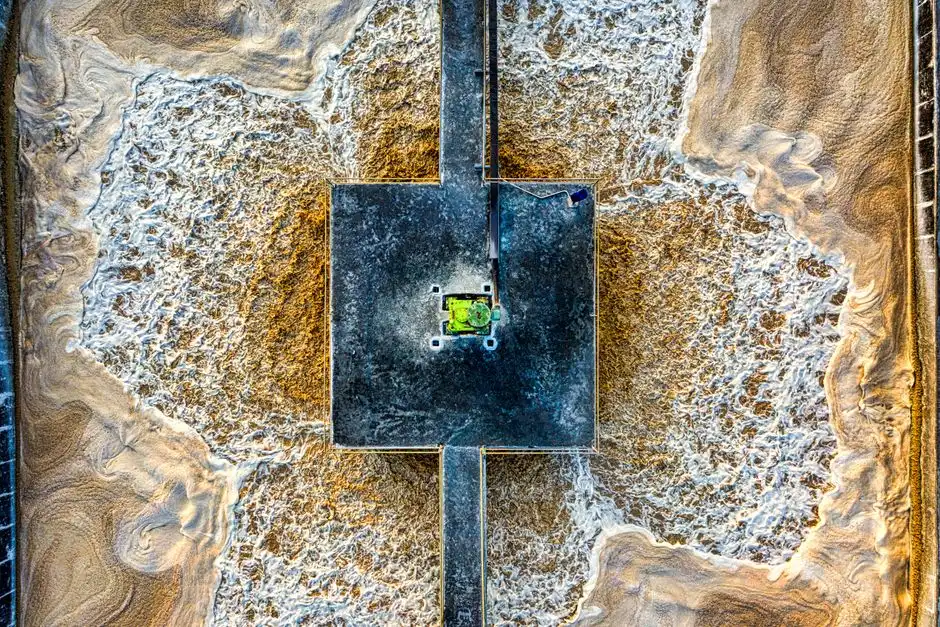
The table below consolidates eight parameters a procurement engineer in Huntsville typically has to defend in writing. Removal percentages depend on influent profile and jar testing, so the ranges reflect typical performance for properly conditioned systems rather than guaranteed outputs.
| Parameter | DAF Clarifier (COMPACT class) | Lamella Clarifier (Inclined-Plate) |
|---|---|---|
| TSS removal | 70-95% on conditioned influent; strongest on floatable and low-density TSS | 50-85% on settleable TSS; weak on floatables and colloidal solids |
| FOG removal | 80-95%+ on emulsified and free oils when chemistry is dialed in | Poor; free FOG rides over plates with clarified water |
| BOD removal | 40-70% as a primary stage; protects downstream biology | 20-50% on settleable BOD; soluble BOD passes through |
| Footprint | 4-300 m3/h range in a single skid; compact for high loading | 20-40 m/h surface loading; needs much larger footprint at the same flow |
| CAPEX band (2026, directional) | Medium (skid) to high (custom engineered) | Low to medium; concrete civil work drives the cost |
| OPEX drivers | Polymer dose, saturation pump energy, periodic nozzle/saturation vessel service | Lower polymer use; sludge pumping; plate cleaning cycle |
| Operator skill | Moderate; PLC-controlled chemistry and skimmer speed | Low to moderate; simpler controls, but sludge handling matters |
| Best-fit stream | High FOG, oils, low-density TSS, food and beverage, poultry, dairy | Low-FOG, mostly settleable TSS, mineral-style or pre-treated streams |
| Sludge output | Thick float sludge (2-5% DS typical); pairs well with filter press dewatering | Thinner bottom sludge (1-3% DS); higher downstream dewatering cost |
The single largest mechanical gap is in FOG handling. Lamella clarifiers physically cannot lift free oil; DAF can. The single largest footprint gap is at flows above 50 m3/h, where a lamella needs the civil footprint of a small building to match what a DAF skid delivers in a plant bay.
Decision Framework: Pick by FOG, TSS, Flow, and Footprint
Run the four questions below in order. The first one that pushes the answer off-center settles the choice for most Huntsville food and beverage duty.
- Q1 - FOG level. If influent FOG regularly exceeds 300 mg/L, or if a visible oil sheen appears on the lift station or equalization basin, DAF is the answer. Below 150 mg/L with mostly settleable TSS, a lamella is a defensible choice (per HydropureWater field data, 2026).
- Q2 - Floatable vs settleable solids. Floatables, feathers, fruit pulp, cheese fines, and low-density particles favor DAF. Gritty mineral-style settleables from a screened pre-treatment or a brewery's lauter tun favor lamella.
- Q3 - Flow and footprint. A skid-mounted COMPACT-class DAF handles flows of 66 GPM (about 15 m3/h) or less on a single skid and up to multi-skid modular configurations above that, which is the right answer for tight plant bays in older Huntsville facilities. Large flows with low FOG - a beverage line at 100+ m3/h with mostly settleable sugar and label solids - favor lamella for footprint efficiency, with surface loadings of 20-40 m/h (per Clearwater, 2026).
- Q4 - Downstream polishing. If an MBR, SBR, or conventional activated sludge stage follows the clarifier, DAF primary is almost always required to protect aeration basins and membranes from FOG poisoning and fouling. A lamella-only train into a biological stage in a high-FOG stream is a maintenance problem waiting to happen.
If Q1 pushes you to DAF, the recommended train is DAF primary plus downstream biology plus sludge dewatering. If Q1 is no, Q2 and Q3 both lean lamella, and no biological polishing is required, a lamella-only train is the cost-effective answer.
Huntsville-Specific Drivers: 40 CFR 432, ADEM, and the Tennessee River
The federal floor binding Huntsville dairy processors is 40 CFR Part 432, which sets BOD5, TSS, and pH limits by subcategory and is the benchmark ADEM inspectors apply when auditing permit compliance (per EPA 40 CFR 432). For poultry, beverage, and prepared-foods plants, ADEM-administered state permits impose parallel BOD, TSS, FOG, and pH limits, and inspectors routinely pull oil and grease samples alongside TSS. Plants discharging to the Tennessee River or the Lake Wheeler watershed may also face nutrient and total phosphorus triggers if their permit has them - worth confirming in the current permit's Part I special conditions before sizing any unit.
The local industry mix is the real tailwind for DAF. Poultry processors generate streams with high emulsified FOG and high soluble BOD from blood and offal washwater; dairies generate high-strength BOD with butterfat and whey carryover; breweries generate high BOD/COD with low FOG; beverage plants swing between low-FOG (water batching) and high-FOG (syrup and flavor cleanup) by product. Across that mix, a DAF primary stage is the lowest-risk default because it handles the worst-case FOG events without operator intervention.
When DAF is the primary, downstream sludge handling becomes the next decision. Float sludge from a DAF is typically 2-5% dry solids and dewaters readily in a plate and frame filter press, producing a cake in the 18-25% DS range that passes the paint filter test and reduces disposal volume. Skipping that step and trucking liquid float sludge to a renderer is the most common O&M cost overrun on Huntsville DAF installations. For an alternative train pattern that pairs primary clarification with biological polishing in a single skid, see this industrial RO system vs alternatives engineering comparison for the same packaged-train logic applied downstream. Plants running gelatin or collagen-bearing waste streams should also review the gelatin wastewater characteristics and treatment engineering guide for additional conditioning guidance.
2026 Cost and ROI Direction for Huntsville Plants
Authoritative 2026 installed-cost numbers for Huntsville DAF and lamella projects are site-specific and require vendor quotes with P&IDs and anchor-bolt drawings. The table below gives directional bands a procurement manager can use to move from technical shortlist to budget request. Treat each cell as a starting point for an RFQ, not a final figure.
| Cost lever | DAF clarifier (skid-mounted) | Lamella clarifier (concrete, inclined plates) |
|---|---|---|
| CAPEX band (2026, directional) | Medium to high, with material of construction (304SS, 316SS, polypropylene) as the main driver | Low to medium; concrete civil works and plate-pack cost dominate |
| OPEX band (2026, directional) | Medium: polymer dose, saturation pump kWh, periodic service | Low to medium: less chemical, more sludge pumping, plate cleaning cycle |
| Footprint cost | Low footprint penalty; skid fits a plant bay | High footprint penalty at flows above 50 m3/h |
| Sludge disposal cost | Lower per pound of solids; thicker float sludge dewaters well | Higher per pound of solids; thinner bottom sludge carries water |
The ROI story for a DAF in a high-FOG stream is rarely about energy savings. It is about avoided compliance risk (BOD/TSS excursion fines), avoided FOG-driven downtime in the lift station and equalization basin, and reduced downstream aeration basin and membrane cleaning. A correctly specified DAF in a poultry plant typically pays back inside 18-36 months on these lines alone (HydropureWater field data, 2026).
Recommended Train for Huntsville Food and Beverage Plants in 2026
Default train for high-FOG streams: HydropureWater DAF as primary clarifier, HydropureWater automatic chemical dosing system for coagulant and polymer, an MBR or SBR for biological polishing, and a HydropureWater plate and frame filter press for float-sludge dewatering. The MBR stage is delivered as a packaged HydropureWater MBR system skid, which is the lowest-footprint option for plants that need simultaneous BOD reduction and TSS polishing to meet 40 CFR 432 effluent limits.
Alternative train for low-FOG, mostly settleable streams: lamella clarifier only, no biological polishing required downstream, and FOG kept below 150 mg/L by upstream segregation. This applies to beverage lines with cold-only cleanup or to a low-strength side stream from a prepared-foods plant that does not need biological treatment.
Always confirm with on-site jar testing and a 2-4 week pilot before purchase. That step is the standard 2026 best practice in food and beverage wastewater engineering and it is the single highest-ROI hour a plant engineer can spend on this decision. For an out-of-state analog covering the same technology trade-off in a different regulatory climate, this related food and beverage DAF vs clarifier guide for Camp Hill, PA walks through the same matrix with a Pennsylvania permitting frame.
Frequently Asked Questions
Is DAF or a clarifier better for high-FOG food wastewater?
DAF. A lamella or gravity clarifier cannot capture floatable FOG; free oils simply ride up with the clarified water. DAF generates 30-50 micron micro-bubbles that attach to flocculated oil droplets and lift them to a skimmable surface layer, which is why DAF is the default primary for poultry, dairy, and beverage streams in Huntsville where FOG regularly exceeds 150-300 mg/L.
What flow rate can a skid-mounted DAF handle in a small Huntsville plant?
A single COMPACT-class DAF skid handles flows up to 66 GPM (about 15 m3/h). Above that, the DAF scales to 4-300 m3/h in modular two-skid configurations. For a small poultry or dairy processor in the 5-20 m3/h range, a single skid is typically the right answer, with a small footprint that fits an existing plant bay without major civil work (per Clearwater, 2026).
Can a lamella clarifier replace a DAF in a dairy or beverage plant?
Only when FOG stays below 150 mg/L consistently, TSS is mostly settleable, and no biological polishing stage is required downstream. In a dairy plant with butterfat or whey carryover, or a beverage plant with syrup cleanup, FOG events will routinely push past the threshold and a lamella will pass oil through to the discharge. In those cases, DAF primary is required regardless of cost preference.
What influent thresholds favor DAF over gravity clarification?
The commonly used 2026 thresholds are FOG above 150-300 mg/L, a visible oil sheen in the equalization basin, floatable solids content above what the lamella can settle in its plate pack, and any downstream biological or membrane stage that needs FOG and TSS protection. Below those thresholds with mostly settleable TSS, a lamella clarifier is the cost-effective choice.
How do I size a DAF or clarifier for a 40 CFR 432 discharge?
Start with the 40 CFR 432 subcategory limits for your product (dairy products point sources in 40 CFR 432.10-432.16 are the most common reference). Pull one year of hourly flow, BOD5, TSS, FOG, pH, and temperature data from the plant historian, run a mass balance to set the primary clarifier's removal targets, then size the DAF hydraulic loading (typically 15-25 m/h surface loading) or the lamella plate-pack area from the design flow. Confirm with jar testing and a 2-4 week pilot on the actual waste stream before purchase.