Why Seattle Transportation Equipment Wastewater Forces the DAF vs Clarifier Question in 2026
The dissolved air flotation (DAF) versus clarifier decision for Seattle-area transportation equipment plants is anchored to 40 CFR Part 432, the Transportation Equipment Cleaning Point Source Category, rather than the generic 40 CFR 433 Metal Finishing standard often cited by vendors. Subpart A governs aircraft and aerospace parts cleaning; Subpart B governs metal finishing of transportation equipment. Both Subparts impose daily-maximum effluent limits on oil and grease (O&G) and trace metals. The 2024–2025 EPA effluent-guideline revision cycle tightened these daily-maximums while increasing narrative self-monitoring-report expectations—a trend that will define 2026 inspections (per EPA 40 CFR Part 432).
Two local authorities overlay the federal rule. The Washington State Department of Ecology holds NPDES delegation authority, and King County's Industrial Waste System (IWS) pretreatment program enforces local discharge limits at the plant side of the meter. The composite Seattle stream is more than generic oily wastewater. Boeing commercial parts-washer overflow carries free oil at 200–2,000 mg/L plus tramp greases; PACCAR/heavy-truck sub-tier machining-coolant dumps contribute emulsified oil at 500–5,000 mg/L; maritime hardware passivation and rail-car paint stripping add oil-coated TSS; E-coat and phosphate conversion-coating rinse water (Boeing BAC 5712/5749, MIL-STD-7179) push TSS to 200–1,000 mg/L with trace Zn, Ni, and Cr. This profile makes the unit choice critical.
How a DAF and a Lamella Clarifier Actually Separate Oil
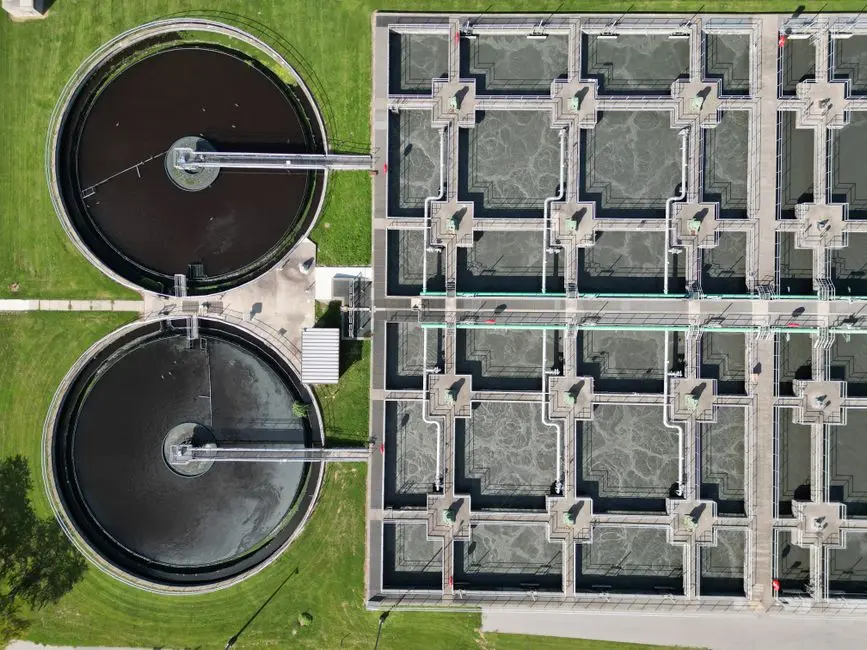
A DAF unit saturates a pressurized side-stream—typically 5–8 bar—with air, then releases it through a pressure letdown at the bottom of the flotation tank. The pressure drop nucleates a cloud of micro-bubbles in the 10–80 µm range. These bubbles attach to oil droplets and oil-coated solids and lift them to the surface in 15–40 minutes of hydraulic retention time, where a mechanical skimmer removes the float (HydropureWater field data, 2026). Surface loading rates of 5–25 m/h let a DAF handle a high oil load in a compact footprint, which is why the HydropureWater DAF integrates tank, saturator, recycle pump, and skimmer in a single vessel.
A lamella clarifier is a gravity settler that relies on a stack of inclined plates to separate solids from liquid. Wastewater flows upward through plates set at 55–60°; settleable solids drop onto the plate surface and slide into a sludge hopper. Hydraulic retention runs 30–90 minutes, and surface loading is rated at 20–40 m³/m²·h (HydropureWater product data). The mechanism is purely gravitational, so the unit removes only particles whose settling velocity exceeds the plate overflow rate. Free oil, by definition, floats and passes through the plate pack; a bare lamella requires a top-mounted oil skimmer plus a demulsifier feed to remove free or emulsified oil. That is why a HydropureWater lamella clarifier is most often specified as a downstream polishing or sludge-thickening step, not as the primary oil-removal unit on oily streams.
What EPA's Own Oil/Water Separation Matrix Says About Each Unit
EPA-600/2-78-069 (April 1978), the Oil/Water Separation State-of-the-Art report, remains the citable federal record. Table 1, "Potential of Separation Techniques to Separate Various Oil/Water System States," rates DAF as "XXX — excellent" for free oil, unstabilized dispersions, and oil-coated solids. A conventional gravity clarifier is rated only "XXX" for free oil and "X–XX" for the dispersed classes. EPA's own text states that "a modern oil wastewater treatment system may include an API gravity separator and dissolved air flotation for removing free oil"—the agency pairs them, and DAF is the unit that pulls free oil out of the water column (per EPA-600/2-78-069).
While the codes are a 1978 reference, the underlying physics remains consistent for 2026 operations. For a procurement file reviewed by the Washington State Department of Ecology or a King County IWS inspector, citing this federal matrix converts a vendor recommendation into a documented engineering decision.
Seattle-Specific Sizing: Flow, Peak Surge, and 40 CFR 432 Daily-Maximum
Sizing must follow three rules specific to a Seattle permit envelope. Match design flow to the 40 CFR 432 daily-maximum window, not the monthly average—a 30–35 m³/h peak is the real design point for a 25 m³/h single-shift plant, and 55–80 m³/h for a two-shift operation. Second, the 30-minute morning startup surge as the E-coat line or batch parts washer dumps overnight inventory will reach the daily-max on the first day; a DAF absorbs it via float-up kinetics, while a lamella absorbs it poorly and pushes oil out the overflow. Third, Pacific Northwest cool influent (winter 8–12 °C) increases polymer demand and may justify a slightly larger saturated-water recycle ratio to hold bubble density steady.
| Design flow (m³/h) | DAF model band | Lamella plate area at 25 m³/m²·h (m²) | Operating shift profile |
|---|---|---|---|
| 10–25 | DAF-5 to DAF-15 (4–50 m³/h bracket) | 0.4–1.0 | Single-shift parts washer + E-coat rinse |
| 25–40 | DAF-20 to DAF-30 (20–80 m³/h bracket) | 1.0–1.6 | Single-shift high-mix, two-shift light |
| 40–80 | DAF-40 to DAF-80 (40–150 m³/h bracket) | 1.6–3.2 | Two-shift Boeing-tier / PACCAR-tier plants |
Lamella sizing is design flow (m³/h) divided by 20–40 m³/m²·h, plus a separate skimmer, sludge hopper, and chemical feed skid. The HydropureWater DAF covers 4–300 m³/h across 13 standard models, which brackets the entire Seattle plant-size distribution in a single product line.
DAF vs Lamella Clarifier: The Honest Comparison Matrix
The following table is sized to the 10–80 m³/h flow band common to Seattle transportation equipment plants and is anchored to specific HydropureWater product capacity data.
| Parameter | DAF (HydropureWater) | Lamella Clarifier (HydropureWater) |
|---|---|---|
| Target contaminant | Free oil, emulsified oil, oil-coated TSS | Settleable TSS only; free oil passes through without skimmer + demulsifier |
| Removal efficiency | 80–95% O&G; 60–90% TSS (with polymer) | 50–80% TSS; <30% free oil alone |
| Surface loading | 5–25 m/h | 20–40 m³/m²·h |
| Footprint | Larger tank volume (~1.5–2×), single integrated unit | Smaller tank, but adds skimmer, plate pack, chemical feed skid |
| Chemistry | Coagulant + flocculant (polymer 2–10 mg/L) | Flocculant only (polymer 2–10 mg/L) |
| Energy | Saturated-water recycle pump + polymer | Polymer + sludge pumping (thinner sludge) |
| Sludge dryness | 3–6% DS float; easy to dewater | 1–2% DS underflow; higher hauling cost |
| Surge tolerance | Tolerant (rapid float-up kinetics) | Sensitive (residence-time limited) |
| CAPEX (bare unit) | Higher bare unit | Lower bare unit |
| CAPEX (total installed) | Lower total installed for oily streams | Rises sharply when skimmer and chemistry added |
| Capacity range | 4–300 m³/h, 13 standard models | 20–40 m³/m²·h surface loading |
| Typical application | Primary oil and coolant removal | Downstream polish and sludge thickening |
A lamella cannot match DAF on the contaminant class that drives Seattle permit limits. A bare lamella may suffice on a low-oil, high-TSS parts-washing operation where O&G is below 200 mg/L and trace metals are absent, but that is a narrow exception. This logic aligns with the Milton transportation equipment DAF vs clarifier guide and the EV/auto DAF vs clarifier Bradenton guide regarding adjacent geographies.
Why 2026 Compliance Pushes Seattle Plants Toward DAF-Primary Trains
Three Seattle-specific pressures tighten the 2026 case for DAF-primary systems. EPA has moved toward narrative self-monitoring reports and more frequent DMR submissions for 40 CFR 432 facilities; inspectors now read narratives for cause, not just numbers. A DAF-primary + lamella-polish train is easier to narrate defensibly because each unit has a single, well-documented job. Second, the Washington State Department of Ecology has renewed focus on metal-finishing categorical standards, and Boeing-tier suppliers face joint federal-state scrutiny as the King County IWS pretreatment program runs a parallel review. Third, Pacific Northwest cool winters (8–12 °C) reduce biological polishing capacity, pushing more of the load onto primary physico-chemical treatment. Hybrid DAF + MBBR configurations are emerging as a polish step for tight reuse targets (Elsevier, 2024, doi:10.2139/ssrn.4731382), but they still rely on a DAF upstream for primary oil removal.
Procurement Checklist for a Seattle Transportation Equipment DAF in 2026
- Match design flow to the 40 CFR 432 daily-maximum window, not the average, with 20–30% headroom for startup surge.
- Specify a HydropureWater automatic chemical dosing system to hold polymer at 2–10 mg/L through flow swings, including winter cool-influent conditions.
- Plan sludge handling around 3–6% DS float using a HydropureWater plate and frame filter press downstream.
- Confirm vessel material (304 stainless steel for aerospace chemical conversion-coating rinse water) and instrumentation (pH, TSS, and oil-in-water probe on effluent) before purchase.
- Ask the vendor for documented DAF model headroom at peak flow, not just the nameplate rating, and verify against the King County IWS pretreatment local limits in addition to the federal 40 CFR 432 daily-maximum.
Frequently Asked Questions
Should a Seattle transportation equipment plant choose a DAF or a clarifier as the primary oil-removal unit in 2026?
For most Seattle transportation equipment streams, DAF is the correct primary unit. Parts-washer and machining-coolant streams contain 200–5,000 mg/L free and emulsified oil—the particle class the EPA Oil/Water Separation State-of-the-Art matrix (EPA-600/2-78-069) rates "excellent" for DAF. A lamella downstream acts as a polish and sludge thickener, not as the primary oil-removal unit.
Frequently Asked Questions
Should Seattle transportation equipment factories use a DAF or a clarifier in 2026?
For most Seattle transportation facilities, Dissolved Air Flotation (DAF) is the superior choice for 2026 operations due to the high emulsified oil content typical of metalworking fluids. While gravity clarifiers are effective for inorganic solids removal, they struggle to achieve the sub-50 mg/L oil and grease levels often required for discharge into King County municipal sewer systems.
DAF systems offer a smaller physical footprint, which is critical for high-cost Seattle industrial real estate. By utilizing micro-bubble aeration, DAF units can achieve 90% to 95% removal efficiency for suspended solids and emulsified hydrocarbons, whereas a conventional clarifier would require extensive chemical pre-treatment and significantly longer retention times to reach similar results.
Is 40 CFR 432 the right effluent standard for Boeing-tier parts washing?
No, 40 CFR 432 is not the correct standard. That regulation applies specifically to the Meat and Poultry Products Point Source Category. For Boeing-tier aerospace parts washing and metal finishing operations, the applicable federal guidelines are found under 40 CFR 433, the Metal Finishing Point Source Category.
Compliance under 40 CFR 433 requires strict adherence to discharge limits for total toxic organics (TTO), cyanide, and heavy metals including cadmium, chromium, copper, lead, nickel, silver, and zinc. Facilities must ensure their wastewater treatment system is capable of meeting these specific concentration limits, which are often further tightened by local King County Industrial Waste discharge permits.
Can a lamella clarifier remove free oil from machining coolant wastewater?
A lamella clarifier alone is insufficient for removing free or emulsified oil from machining coolant. Lamella clarifiers rely on gravity sedimentation to remove suspended solids with a specific gravity greater than water; because free oil has a lower specific gravity than water, it will rise to the surface rather than settle, causing interference with the plate pack and potential discharge violations.
To effectively remove oil using a lamella system, the coolant must first undergo chemical de-emulsification and flocculation. Even with pre-treatment, a lamella clarifier will only capture the flocculated solids, while the free oil must be removed separately via an integrated oil skimmer, coalescer, or a downstream DAF system.
What size DAF does a 50 m³/h Seattle aerospace plant need?
A 50 m³/h (approximately 220 GPM) aerospace plant requires a DAF system with a hydraulic loading rate typically ranging between 5 and 10 m³/m²/h. This necessitates an active surface area of at least 5 to 10 square meters for the flotation tank to ensure adequate rise velocity and hydraulic retention time.
Given the complexity of aerospace wastewater, which often contains high concentrations of surfactants and synthetic coolants, it is recommended to size the unit at the lower end of the loading rate (5 m³/m²/h) to ensure sufficient contact time for the micro-bubbles. This results in a footprint requirement of approximately 10 square meters of active clarification area, excluding the pump skid and chemical feed stations.
How much polymer does a DAF need on oily parts-washer wastewater?
Polymer dosage for oily parts-washer wastewater typically ranges from 5 to 20 mg/L of active polymer, depending on the specific chemistry of the surfactants and emulsifiers present. Because aerospace parts-washers utilize complex cleaning agents, jar testing is mandatory to determine the exact dosage required to break the emulsion.
In addition to the polymer, the system will likely require a primary coagulant, such as aluminum sulfate or ferric chloride, dosed at concentrations between 50 and 200 mg/L. Proper chemical conditioning is essential; insufficient dosage leads to poor floc formation and effluent oil carryover, while excessive dosage can increase sludge volume and lead to high disposal costs in the Seattle metropolitan area.