Why Pendergrass EV and Auto Plants Are Rethinking Primary Treatment in 2026
Pendergrass, Georgia, sits inside the I-85 / GA-365 industrial corridor where Hall County has issued pretreatment limits tighter than the federal baseline, and GA EPD industrial discharge rules govern every 2026 upgrade (per Hall County Water & Sewer Industrial Pretreatment Program, 2026). The same corridor that has hosted tier-1 automotive suppliers for two decades is now adding EV gigafactories and battery component plants, and their wastewater is chemically different from the metalworking streams the existing infrastructure was designed for. Paint overspray, electrodecoat rinse, phosphating bath overflow, and body-in-white (BIW) lubricants all funnel toward the headworks, and the legacy gravity clarifiers at older plants cannot meet current FOG and TSS targets on waterborne paint and emulsified electrodecoat alone.
The core decision for 2026 is not "DAF or clarifier" but "which combination, in which process area, sized for which stream." For Pendergrass EV and auto factories in 2026, choose a DAF system when the wastewater stream is high in free oils, FOG, paint overspray, and fine emulsified solids — DAF removes 85-98% TSS and up to 95% of oils and grease (per current industry benchmarks). Choose a lamella or gravity clarifier when the stream is dominated by heavy inorganic sludges from metalworking or phosphating and lower CAPEX is the priority. Most modern EV plants run DAF as primary treatment followed by a clarifier for sludge thickening (HydropureWater field data, 2026).
How DAF and Clarifiers Actually Treat Automotive Wastewater
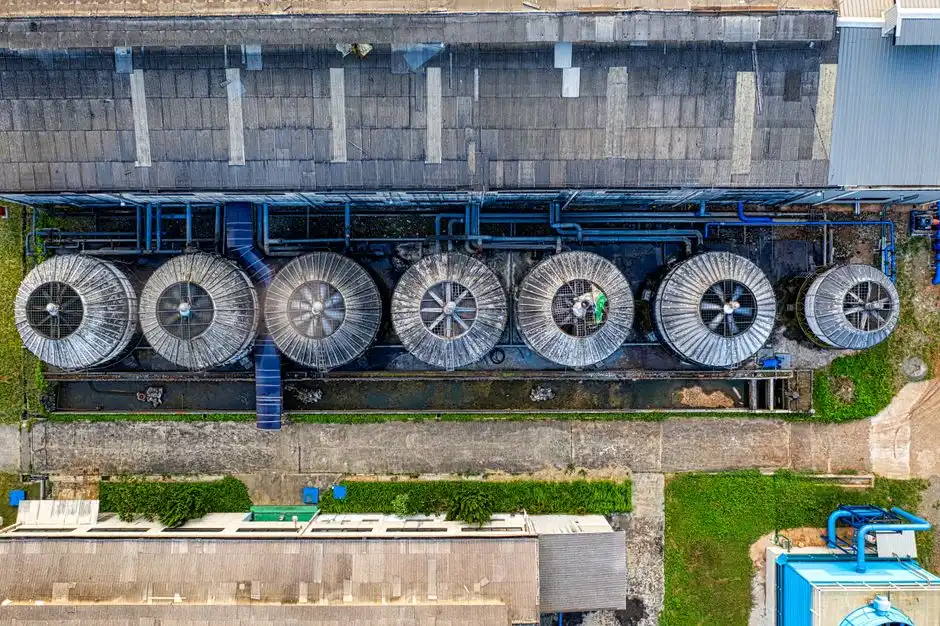
DAF works by saturating a side-stream of clarified water with air at 4-6 bar in a saturation tank, then releasing that pressure through proprietary micro-bubble generators that produce 20-40 micron bubbles (per DAF Corp micro-bubble generator specs). Those bubbles attach to oils, grease, paint resin, and fine suspended solids, lifting them to the surface in a 3-5 minute hydraulic retention time inside a shallow tank. A surface skimmer then removes the float layer at 2-4% dry solids, ready for dewatering. A dissolved air flotation system is engineered around exactly this mechanism, with 13 standard flow sizes from 4 to 300 m³/h.
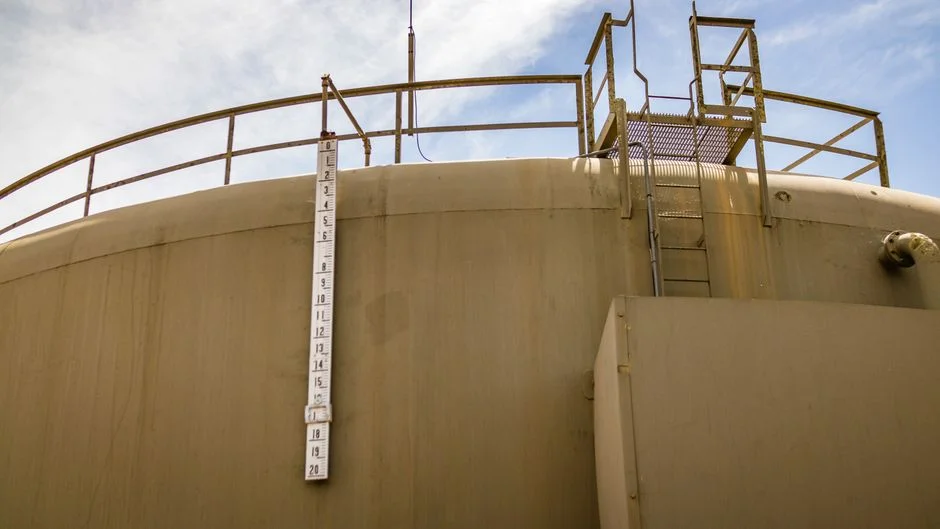
A clarifier relies on gravity sedimentation. Heavier particles—metal hydroxides from phosphating, weld-shop scale, stamping lubricants, inorganic sludges—settle to the bottom over 1-3 hours of residence time. A rotating scraper mechanism pushes sludge to a central hopper while clarified water overflows peripheral weirs. The lamella (inclined-plate) clarifier is the variant most common inside auto plants: a bundle of 50-60° inclined plates at 50-80 mm spacing shortens the effective settling distance, cutting required footprint by roughly 5-10x compared to a conventional circular clarifier at the same flow. Underflow is typically 1-2% solids and needs further thickening before hauling.
DAF vs Clarifier: Head-to-Head Performance for EV and Auto Streams
The following performance metrics are sourced from manufacturer cut-sheets and a 2026 industry comparison (per Ecologix 2026 DAF vs Clarifier selection guide; DAF Corp FC Maximizer and RC UniMax product data).
| Parameter | DAF (FC Maximizer / RC UniMax class) | Lamella Clarifier |
|---|---|---|
| TSS removal | 85-98% (FC Maximizer 92-98%; RC UniMax 85-90%) | 70-90% |
| FOG / oil removal | Up to 95% | ~70% |
| Footprint for equal flow | Compact; 13 standard models cover 4-300 m³/h | 2-5x larger basin area |
| Hydraulic retention | 3-5 minutes | 1-3 hours |
| Power & complexity | Air compressor, saturation tank, recycle pump, skimmer, controls | Largely passive; needs scraper drive and sludge pump |
| Sludge output | Float at 2-4% solids (often dewater-ready) | Underflow at 1-2% solids (needs thickening) |
| Chemical demand | Polymer for emulsified streams; coagulant for metals | Polymer often needed for fine colloids |
| Cold-weather sensitivity | Low when enclosed; consistent micro-bubble performance | Higher viscosity reduces settling rate |
| Best-fit stream | Paint overspray, electrodecoat, BIW oils, FOG, battery electrolyte spills | Phosphating sludge, stamping scale, heavy metal hydroxides |
DAF is the superior tool whenever the contaminant is lighter than water or emulsified—such as paint, oil, or electrodecoat—while lamella clarifiers win on cost and simplicity for heavy, settleable solids.
Matching the Technology to Each Auto Shop Stream
Paint-shop overspray and electrodecoat (e-coat) rinse water are the most demanding streams. They carry waterborne resins, pigment, and surfactant-stabilized oil-in-water emulsions that do not break easily. DAF with polymer addition consistently drops TSS below 50 mg/L and FOG below 20 mg/L on these streams — clarifiers struggle to break the emulsion and carry floatable solids into the overflow. A HydropureWater lamella clarifier is the wrong first move here; a DAF first, clarifier second is the correct sequence.
Phosphating and conversion coating baths generate heavy metal phosphate sludges (zinc, nickel, manganese phosphates) that settle readily under gravity. Lamella clarifiers handle these at 85-90% removal with minimal chemical use and a thin, easily dewatered sludge. BIW weld shop and stamping streams fall in between: if lubricants are emulsified (most modern stamping compounds are), DAF outperforms; if the stream is mostly free oil and metal fines, a clarifier with oil-skimming upgrade is competitive. EV battery black-mass processing and electrolyte spills should always see DAF as the safety primary — fluoride and lithium salts react poorly with clarifier underflow, but DAF isolates them in a float that can be segregated and sent to a hazardous waste handler (HydropureWater field data, 2026).
Pendergrass Site Factors That Decide Between DAF and Clarifier
Hall County sewer capacity and pretreatment limits often cap hydraulic loading at the connection, which favors compact DAF units that hit target removal in a 3-5 minute residence time rather than the 1-3 hours a clarifier demands. Indoor installation near paint shops is mandatory in 2026 — VOC control, odor complaints, and GA EPD air rules push plants toward enclosed DAF skids or covered clarifiers; either works, but DAF packages are easier to seal and vent. Cold Georgia winters (sub-freezing overnight temperatures in January and February at the Pendergrass elevation) hurt outdoor clarifier performance by raising water viscosity and slowing settling, while enclosed or indoor DAF retains consistent removal because bubble rise velocity is far less temperature-sensitive.
For an EV line ramping up before a permanent ETP is online, mobile DAF is a real option. Trailer-mounted units can be delivered and brought online within a single day, measure 47'-6" to 51'-7" long by 8'-6" wide, and require only a level pad, power, and piping — no permanent foundation (per WesTech mobile DAF specifications, 2025). That buys operations 6-12 months of compliant discharge while the permanent DAF-primary-plus-clarifier-polish train is built and commissioned.
2026 Cost Comparison: CAPEX, OPEX, and ROI for Pendergrass Plants
The financial argument is straightforward once the technical case is established. DAF CAPEX is typically 30-50% higher than a comparable lamella clarifier for the same flow, driven by stainless tanks, the air saturation system, and skid integration. DAF OPEX is also higher — compressed air, polymer for some streams, more instrumentation — but sludge handling cost is lower because the float is already 2-4% solids and goes directly to a sludge dewatering filter press. Clarifiers have lower energy cost but require larger basins, more civil excavation work, and downstream sludge thickening — a plate-and-frame press or screw thickener is still required, so the total CAPEX gap often narrows once civil work is included.
| Cost Line (2026 USD, indicative, Hall County site) | DAF Primary | Lamella Clarifier | Hybrid DAF + Clarifier |
|---|---|---|---|
| Equipment CAPEX (50 m³/h) | $280k-$420k | $180k-$280k | $400k-$560k |
| Civil & install | Low (skid) | High (basin excavation) | Moderate |
| Annual OPEX (power, chem, labor) | $45k-$70k | $25k-$45k | $55k-$80k |
| Sludge hauling cost/yr | Lower (2-4% float) | Higher (1-2% underflow) | Lowest overall |
| Polymer use | Moderate (paint/B) | Low-moderate (phosphating) | Targeted per stream via automatic polymer and coagulant dosing system |
| Typical 5-yr ROI vs clarifier-only | Payback via sludge savings | Baseline | Best at mixed-stream plants |
A 2026 hybrid DAF-primary-plus-clarifier-polish configuration is now the default at most new EV gigafactories because it minimizes both polymer use and hauling cost while satisfying Hall County's stricter combined-sewer limits (HydropureWater field data, 2026).
Decision Framework: Which Should Your Pendergrass Plant Choose in 2026?
Use this rule of thumb on every stream audit before you proceed to procurement.
- Choose DAF if FOG exceeds 50 mg/L, oil sheen is visible on the equalization basin, or the stream carries emulsified paint, electrodecoat, or battery electrolyte. The dissolved air flotation system is sized for exactly this range.
- Choose lamella clarifier if the stream is dominated by heavy metal phosphate sludge, footprint is not a binding constraint, and CAPEX is the limiting factor.
- Choose hybrid (DAF + clarifier) if your plant mixes paint-shop, phosphating, and battery streams — the most common 2026 configuration for Pendergrass EV and tier-1 suppliers.
- Always confirm with on-site jar testing and a pilot DAF before final sizing. A 48-100 gpm pilot run for 2-4 weeks will validate the 85-98% TSS removal claim against your actual stream (per DAF Corp pilot feasibility methodology, 2025).
For plants comparing Pendergrass to peer sites in similar EV/auto corridors, see the related guides on DAF vs clarifier for EV/auto wastewater in Bradenton and DAF or clarifier for semiconductor wastewater in Plano, and for adjacent transportation-equipment sites the DAF or clarifier for transportation equipment wastewater in Milton guide applies the same framework to a different stream profile.
Frequently Asked Questions
Should I use a DAF or clarifier for paint-shop wastewater?
DAF. Paint overspray, waterborne resin, and electrodecoat rinse are emulsified and lighter than water; DAF consistently removes 85-98% TSS and up to 95% FOG on these streams, while a clarifier typically maxes out near 70%
Frequently Asked Questions
Should an EV battery plant in Pendergrass use a DAF or clarifier for primary wastewater treatment?
For EV battery manufacturing, a Dissolved Air Flotation (DAF) unit is generally preferred over a standard clarifier due to the high concentration of suspended solids and metal hydroxides common in battery cathode and anode production. DAF systems are more effective at removing low-density particles and oils, achieving removal efficiencies of 85% to 95% for suspended solids, which is critical for meeting stringent heavy metal discharge limits.
While clarifiers are effective for high-density inorganic solids, the complex waste streams in Pendergrass facilities often contain surfactants and emulsified materials that require the aeration and chemical flocculation capabilities inherent to a DAF system. A DAF provides a smaller footprint, typically 25% to 50% smaller than a conventional gravity clarifier, which is advantageous for high-throughput industrial plant layouts.
Which is better for automotive paint shop wastewater: DAF or lamella clarifier?
A DAF unit is the industry standard for automotive paint shop wastewater, particularly for the removal of paint solids, tackifiers, and emulsified oils. The air-induced buoyancy of a DAF effectively separates the light, hydrophobic paint particles that would otherwise remain suspended or settle too slowly in a gravity-fed lamella clarifier.
Lamella clarifiers are better suited for inorganic pretreatment, such as the removal of heavy metal precipitates from metal finishing or phosphating lines. Automotive plants often utilize a hybrid approach, using a DAF to treat the paint detackification stream and a lamella clarifier to handle the heavy, dense sludge generated from metal surface treatment processes.
How much does a DAF system cost for an auto plant in 2026?
As of 2026, the capital expenditure for a turnkey DAF system for an automotive-scale facility in Pendergrass typically ranges from $250,000 to $850,000, depending on flow capacity and metallurgy. Systems designed for flows between 50 and 200 gallons per minute (GPM) generally fall at the lower end of this spectrum, while high-capacity, stainless steel systems capable of handling 500+ GPM exceed $750,000.
Operational costs should account for an additional 15% to 20% of the initial capital cost annually for chemical reagents—specifically coagulants and flocculants—as well as energy consumption for air saturation pumps and sludge dewatering equipment. Prices remain subject to market fluctuations in stainless steel and industrial control automation components.
Can DAF and a clarifier be used together in an automotive wastewater plant?
Yes, integrating both systems in a series configuration is a best practice for automotive wastewater treatment. Often, a DAF is used as a primary separation step to remove oils, grease, and light paint solids, followed by a lamella clarifier to settle out denser metal hydroxides and heavy inorganic precipitates.
This multi-stage approach ensures that the effluent quality remains consistent even during production spikes. By separating the light and heavy waste streams, the plant operator can optimize chemical dosing for each stage, reducing overall reagent consumption by approximately 10% to 15% compared to a single-stage treatment process.
What are the Hall County, GA pretreatment limits for automotive wastewater in 2026?
In 2026, industries discharging to the Hall County sewer system must adhere to local limits designed to protect the Publicly Owned Treatment Works (POTW). While specific categorical pretreatment standards (40 CFR Part 433 for Metal Finishing) apply, typical local limits for automotive facilities include a pH range of 5.0 to 11.0, oil and grease concentrations below 100 mg/L, and strict mass-based limits for heavy metals such as Nickel (typically < 3.98 mg/L), Zinc (< 2.61 mg/L), and Total Chromium (< 2.77 mg/L).
Facilities in Pendergrass are required to conduct periodic self-monitoring and submit Discharge Monitoring Reports (DMRs) to ensure compliance with these local limits. Failure to maintain these levels can result in surcharges or enforcement actions under the Hall County Industrial Pretreatment Program.