
Why Marshall Fabricated Metals Streams Break a Clarifier
For Marshall, TX fabricated metals plants in 2026, choose a DAF when free oil exceeds 50 mg/L or emulsified coolant exceeds 30 mg/L — which covers most stamping, machining, parts-washer and tramp-oil streams. A 92–98% TSS-removal skid (DAF Corp FC Maximizer or equivalent) sized at 50–200 GPM runs $120K–$280K installed, delivers 15–30 mg/L effluent FOG, and pays back the clarifier premium in 18–36 months through 2–4% cake solids that cut hauled volume 30–50%.
The Marshall fabricated-metals base sits inside the Harrison County industrial corridor, with feeder yards stretching from Longview metal-finishing cluster suppliers to east Texas oil-field equipment fabricators. That geography drives a recognisable wastewater mix: stamping lubricants and drawing compounds from press lines, water-soluble and straight cutting fluids from CNC machining cells, rust preventatives off the paint-deck transfer skid, quench oils from heat-treat, parts-washer rinses carrying tramp oil from hydraulic sumps and way-lubricators, and light plating rinsewater with hexavalent chromium, nickel, cadmium, and lead. Yard runoff picks up chloride from winter de-icing salt tracked in on trailers — a Texas rarity that nevertheless shows up in the Q1 DMR.
The federal floor is 40 CFR Part 437, Metal Finishing and Metal Products subcategory, with daily-maximum oil and grease 26 mg/L and TSS 60 mg/L, plus the four priority metals (source: EPA 40 CFR Part 437). On top of that sits the TCEQ multi-sector general permit framework (TXR050000 or applicable industrial general permit) for Marshall Harrison County discharges, which adds self-reporting, benchmark monitoring, and stricter site-specific limits when the receiving stream is impaired.
The mechanical problem is two-phase. Free oil — bulk leakage from hydraulic sumps and way-lubricators — is buoyant and a conventional clarifier will eventually skim it. Emulsified oil, 1–20 µm droplets stabilised by the surfactants in semi-synthetic and synthetic coolant formulations, does not float under gravity. The droplets stay in suspension, slide over the clarifier weir, and land on Monday-morning DMR samples as a FOG excursion. That is the clarifier's blind spot, and it is the dominant compliance failure mode on Marshall metal-fabrication DMRs, not settleable grit.
DAF and Clarifier Mechanisms Side by Side
A dissolved air flotation (DAF) system pressurises a 20–30% side-stream recycle to 60–80 psig, saturates it with air in a packed saturator vessel, then releases it through a needle valve or micro-bubble generator into the flotation cell. The pressure drop flashes dissolved air into a cloud of fine bubbles — 20–40 µm on the DAF Corp FC Maximizer micro-bubbler, 30–50 µm on the SigmaDAF USA standard unit (sources: dafcorp.com; clearwaterind.com, 2026). Those bubbles attach to oil droplets and to chemically conditioned floc, lift them to the surface in roughly 3 minutes of hydraulic retention, and a paddle skimmer sweeps the float into a sludge hopper. Thickened sludge exits at 2–4% solids on the FC Maximizer (source: dafcorp.com, 2026) — no thickener required downstream.
A gravity clarifier — circular, rectangular, or lamella-plate — relies on quiescent Stokes'-law settling. Suspended solids heavier than water drop to the bottom; the clarified supernatant overflows a peripheral weir. A lamella clarifier stacks inclined plates at 55–60° to multiply the effective settling area, achieving 20–40 m/h surface loading, or roughly 0.3–0.6 GPM/ft², in a footprint one-quarter to one-fifth of an equivalent conventional basin (HydropureWater lamella product data, 2026). Clarifiers handle settleable metal fines and grinding swarf well, but retention is 1–3 hours, hydraulic capacity is 10–20× lower per square foot than DAF, and anything that does not settle under gravity — sub-50 µm emulsified oil, low-density fines, colloidal metal hydroxides from plating rinse — passes straight through to the outfall (source: spectrumwater.com, 2026).
The mechanism difference matters because Marshall's stamping coolants, drawing compounds, and parts-washer surfactants deliberately stabilise emulsions. A coolant that resists separation on the shop floor for a week will resist separation in a clarifier indefinitely. A DAF cell breaks that emulsion chemically (coagulant + polymer) and physically (microbubble attachment) in the same three-minute pass.
Head-to-Head Engineering Parameters
The table below consolidates the engineering parameters a Marshall plant engineer needs to defend the equipment choice in a CAPEX memo. Cost figures are illustrative 2026 USD bands for a 50–200 GPM mid-size job shop; exact pricing depends on chemistry integration, tank material, and site prep.
| Parameter | DAF (FC Maximizer / RC UniMax) | Lamella Clarifier |
|---|---|---|
| TSS removal | 85–98% (FC Maximizer 92–98%; RC UniMax 85–90%) | 50–80% on metal-bearing wastewater |
| FOG removal | 85–95%; effluent typically 15–30 mg/L | <50% on emulsified oil; free oil skim only |
| Particle capture range | ~1–50 µm via micro-bubble flotation | >50–100 µm only; sub-50 µm passes through |
| Hydraulic retention | ~3 minutes | 1–3 hours |
| Surface loading | 4–5 GPM/ft² | 0.3–0.6 GPM/ft² (20–40 m/h) |
| Sludge output | 2–4% cake, no thickener needed | 1–2% slurry; thickener usually required |
| Skid envelope | 48–450 GPM at 6–15 ft diameter (FC Maximizer); DAF 18–1,320 GPM across 13 models | 10–200 m³/h; rectangular or circular civil build |
| Turnkey cost (50–200 GPM) | $120K–$280K (304L); add ~15–25% for 316SS | $40K–$180K |
| Material of construction | 304L standard; 316SS upgrade for chloride-bearing rinsewater or yard runoff | 304L, FRP, or concrete with liner |
| NPDES suitability | Typical effluent TSS 20–30 mg/L, O&G 15–30 mg/L — meets 40 CFR Part 437 daily-maximum limits | Marginal on FOG; usually needs a polish step for O&G and metals |
Sources: DAF Corp product literature (2026); SigmaDAF USA via Clearwater Industries (2026); Wang & Wang, Lenox Institute, STEAM Vol. 4 No. 7C, July 2022; EPA 40 CFR Part 437. For plating rinsewater carrying Cr(VI), Ni, Cd, or Pb, DAF removes the oils that interfere with downstream precipitation but does not precipitate dissolved metals — pH adjustment and metals precipitation still come after the DAF cell, not inside it.
Four Decision Paths for a Marshall Plant
The mechanism story and the parameter table collapse into four operational choices. Use these thresholds to make the call before you draft the P&ID.
DAF alone. Pick a DAF when free oil exceeds 50 mg/L, or emulsified coolant exceeds 30 mg/L, or TSS exceeds 500 mg/L with significant FOG. That covers most Marshall stamping, machining, parts-washer, and coolant-sump streams. A skid-mounted FC Maximizer in the 48–450 GPM range (6–15 ft diameter) can be installed in days rather than the months a civil clarifier build requires — a real advantage when a TCEQ sampling event is already on the calendar. The dissolved air flotation system covers 18–1,320 GPM across 13 standard models, so most mid-size Marshall duties fall on a single skid without paralleling.
Clarifier alone. Pick a clarifier when the stream is dominated by settleable metal fines from grinding, lapping, or polishing, with FOG under 30 mg/L, and the site has the footprint for a 1–3 hour retention basin. A HydropureWater lamella clarifier at 20–40 m/h is hard to beat on settleable solids alone. It is the wrong primary choice the moment emulsified coolant or tramp oil enters the stream.
DAF first, lamella polisher second. Pick this configuration when TSS exceeds 2,000 mg/L and FOG exceeds 200 mg/L — the high-load case. The DAF takes the oil and floatables first; the lamella polishes settleable fines down to the 437 limit. The DAF Corp FC-150 is documented at 500 GPM and 2,000 PPM loading clarified to 50 PPM in a single cell (source: dafcorp.com, 2026), which is the operating envelope where a polish step becomes optional rather than mandatory.
DAF retrofit on an existing clarifier. Pick this when a legacy basin installed in the 2010s is breaching FOG or O&G limits because coolant formulations have shifted to semi-synthetic emulsions. DAF Corp explicitly offers new and retro-fit installations on DAF Clarifiers (source: dafcorp.com, 2026), and skid delivery at 48–450 GPM lets a Marshall plant add oil removal in front of an under-performing clarifier without a multi-month shutdown. A companion framework for the same retrofit question on semiconductor streams is laid out in the companion Marshall, TX semiconductor comparison.
Retrofit Case: Bringing a 2010s-Era Marshall Clarifier Back Inside FOG Limits
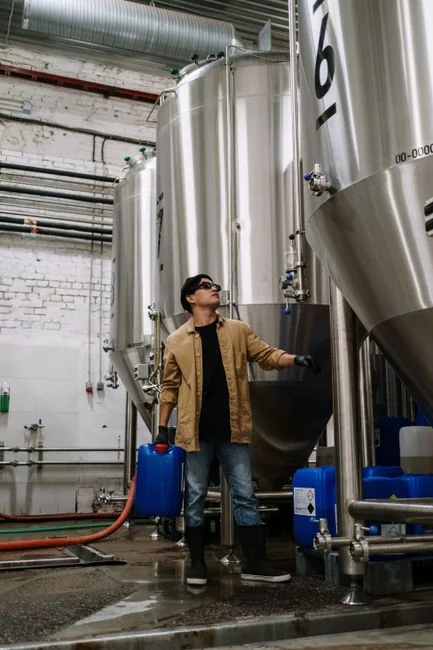
Picture a Marshall job shop with a 2012-era circular clarifier, originally sized for free-oil skimming and grinding-fines settling. Coolant formulations have since shifted to semi-synthetic emulsions, tramp-oil carry-through from a rebuilt parts washer has doubled, and the Q1 DMR shows two FOG excursions above 26 mg/L. Rebuilding the clarifier does not solve the chemistry problem — gravity still cannot break a 1–20 µm emulsion.
The fix is to install a skid-mounted FC Maximizer (6–15 ft diameter, 48–450 GPM) upstream of the existing clarifier, demoting the clarifier to a polish basin for settleable fines. Under-scoped line items on this kind of retrofit, in order of how often they bite the budget: (1) an automatic polymer and coagulant dosing skid integrated with the DAF PLC — without it, Monday-morning polymer overdose becomes the new compliance failure mode; (2) a saturator recycle loop sized for 20–30% of forward flow, not the 10% default some vendors quote; (3) tank washdown access for the annual clean-out. A HydropureWater plate and frame filter press downstream handles the 2–4% DAF cake directly to a roll-off at 25–35% DS, removing the thickener that a clarifier-only train would have needed. The retrofit scope is the focus of the 2026 lamella clarifier retrofit guide for plants weighing this path.
2026 Cost and ROI for a 50–200 GPM Marshall Installation
For a mid-size Marshall job shop discharging 50–200 GPM, a 2026 turnkey DAF installation typically lands in the $120K–$280K range, including tank, saturator recycle loop, micro-bubble generator, skimmer, controls, and commissioning. The wide band reflects tank material (304L standard, 316SS upgrade ~15–25% premium for chloride-bearing rinsewater or yard runoff), site prep, and whether the unit is skid-mounted or field-erected. A lamella clarifier alternative in the same flow band lands at $40K–$180K turnkey, but budget for an additional thickener or filter press step if FOG and sub-50 µm fines are in the stream.
Operating cost breaks into two lines. Chemistry: polymer and coagulant combined run $0.30–$1.20 per 1,000 gallons treated at typical Marshall dosing rates (5–15 mg/L polymer, 50–150 mg/L coagulant). Energy: compressed air for the saturator and recycle-pump power add $0.05–$0.15 per 1,000 gallons. Sludge hauling is where the DAF premium is usually recovered: a 2–4% DAF cake (versus 1–2% from a clarifier alone) typically cuts hauled volume by 30–50%, paying back the DAF premium in 18–36 months for any plant hauling more than 5 yds³/week. Add $15K–$40K for the chemistry package — the most commonly under-scoped line item on a DAF CAPEX.
| Line item | DAF (50–200 GPM) | Lamella clarifier (50–200 GPM) |
|---|---|---|
| Turnkey installed | $120K–$280K (304L); +15–25% for 316SS | $40K–$180K |
| Chemistry dosing skid | $15K–$40K (PLC-integrated) | $5K–$15K (polymer only) |
| Chemistry OPEX | $0.30–$1.20 / 1,000 gal | $0.20–$0.80 / 1,000 gal |
| Energy OPEX | $0.05–$0.15 / 1,000 gal | Minimal (no saturator) |
| Sludge output | 2–4% cake; 30–50% less hauled volume | 1–2% slurry; thickener usually required |
| Payback vs. clarifier baseline | 18–36 months at >5 yds³/week hauling | Lower CAPEX, higher hauling OPEX |
| Annual maintenance budget | 2–4% of CAPEX | 1–2% of CAPEX |
Cost rows are 2026 USD illustrative bands; verify against current vendor quotes and site-specific influent testing.
Specification Checklist a Marshall Buyer Can Hand to a Vendor
For a 150 GPM stream at 500–2,000 mg/L TSS and 50–200 mg/L FOG, request a 10–12 ft diameter skid-mounted unit — between the DAF Corp FC-60 pilot (48 GPM, 6 ft) and the FC-150 production skid (500 GPM, 15 ft) referenced in vendor literature. Confirm the unit handles 2,000 PPM loading and that the saturator recycle ratio is sized for 20–30% of forward flow. Specify 304L stainless as standard with documented upgrade pricing to 316SS for chloride-bearing rinsewater, and confirm skimmer, weir, and sludge-hopper drawoff access for daily and weekly maintenance. The dissolved air flotation system covers 4–300 m³/h (≈18–1,320 GPM) across 13 standard models, so 150 GPM (≈34 m³/h) sits in the mid-range with headroom. Request a one-year parts-and-labor warranty baseline and a 2–4% of CAPEX per year maintenance budget line.
Frequently Asked Questions
Can a DAF meet 40 CFR Part 437 limits on FOG and TSS for a Marshall fabricated-metals plant?
Yes. A properly sized and chemically conditioned DAF delivers 85–98% TSS removal (FC Maximizer 92–98%; RC UniMax 85–90%) and effluent FOG in the 15–30 mg/L band, well below the 40 CFR Part 437 Metal Finishing daily-maximum TSS and oil & grease limits of 60 mg/L and 26 mg/L respectively (sources: dafcorp.com, 2026; EPA 40 CFR Part 437). Dissolved metals — hexavalent chromium, nickel, cadmium, lead — still require a dedicated precipitation step after the DAF.
How long does a DAF actually take to pay back versus a clarifier for a 50–200 GPM Marshall job shop?
A $120K–$280K DAF pays back the clarifier CAPEX differential in 18–36 months for any plant hauling more than 5 yds³ of sludge per week, because 2–4% DAF cake versus 1–2% clarifier slurry cuts hauled volume 30–50% (HydropureWater field data, 2026). Plants below that hauling threshold see longer paybacks and should weigh the chemistry and footprint trade-offs more carefully.
Can a DAF be retrofitted onto an existing Marshall clarifier that is failing FOG limits?
Yes. DAF Corp explicitly offers new and retro-fit installations on DAF Clarifiers, and the FC Maximizer geometry (skid delivery 48–450 GPM, 6–15 ft diameter) is designed to drop into an existing hydraulic envelope (source: dafcorp.com, 2026). The standard retrofit installs the DAF upstream of the existing clarifier, with the clarifier demoted to a polish basin for settleable fines; budget $15K–$40K for an automatic polymer and coagulant dosing skid integrated with the DAF PLC, which is the most commonly under-scoped line item.