Why 40 CFR 437 Is Forcing the 2026 Equipment Decision in Hopkinsville
40 CFR Part 437 (Ore Mining and Dressing) sets the daily-maximum and monthly-average effluent limits that any Hopkinsville-area mining or metals plant discharging to waters of the United States must meet: TSS, total recoverable lead, zinc, copper, and iron, plus a pH band of 6.0–9.0 (per 40 CFR 437.30–437.32). In Kentucky, the NPDES program is administered by the Kentucky Division of Water as KPDES, and Christian County permits incorporate the 40 CFR 437 numbers verbatim; a plant manager must select technology capable of meeting these specific limits. Two non-regulatory pressures are stacking on top in 2026: ESG-driven closed-loop water-reuse targets, which have moved clarifier replacement from a maintenance line item to a board-level decision, and a 1970s-era clarifier capital cycle that is now due. The stream profile driving both is dense Fe(OH)₃, Al(OH)₃, and Mn(OH)₂ floc, silica fines, and magnetite, with intermittent tramp oil from on-site maintenance shops — explicitly not the food-grade FOG stream most DAF articles assume. For a regional comparison, the Catlettsburg mining and metals 2026 guide walks through the same regulatory anchor on the eastern Kentucky border.
| Parameter | Daily maximum (40 CFR 437) | Monthly average (40 CFR 437) | Engineering implication |
|---|---|---|---|
| TSS | 30 mg/L | 20 mg/L | Sets the polish-step burden |
| Total recoverable lead | 0.5 mg/L | 0.3 mg/L | Precipitation + capture, not settling alone |
| Total recoverable zinc | 1.0 mg/L | 0.5 mg/L | pH-controlled precipitation at 8.5–9.0 |
| Total recoverable copper | 0.5 mg/L | 0.3 mg/L | NaHS or sulfide precipitation upstream |
| Total recoverable iron | 2.0 mg/L | 1.0 mg/L | Drives Fe(OH)₃ floc mass balance |
| pH | 6.0–9.0 | 6.0–9.0 | Constrains coagulant selection |
How DAF and Clarifiers Actually Remove Solids
A dissolved air flotation unit floats solids using micro-bubbles generated from a pressurized recycle stream. Clarified water is drawn off the DAF outlet, pressurized to roughly 6 bar (87 psi), and saturated with air in a packed saturation vessel. When the saturated recycle is depressurized back into the flotation tank at atmospheric pressure, dissolved air comes out of solution as 30–50 µm bubbles. Those bubbles attach to chemically conditioned floc and lift it to the surface, where a skimmer sweeps the float into a sludge trough; clarified water exits below the float blanket and heavy settleable solids drop to a bottom sediment compartment. Removal performance for DAF in this service class is 90–95% for TSS and FOG, and the unit also captures particulate metals and colloidal silica when upstream chemistry is right. Coagulants typically include polyaluminum chloride (PAC), ferric chloride, or alum, paired with an anionic polymer flocculant at 1–5 mg/L — without that conditioning, micro-bubbles pass right past colloidal fines and DAF underperforms. A packaged dissolved air flotation system covers 4–300 m³/h in 13 standard models, which keeps custom-engineering markup out of mid-band flows.
A lamella clarifier (also called an inclined-plate settler or high-rate sedimentation tank) stacks inclined plates inside a compact tank. The plates multiply effective settling area, so surface loading climbs to 20–40 m/h and footprint drops by roughly an order of magnitude versus a conventional clarifier at the same flow. Many lamella designs include a sludge-recirculation loop that re-injects settled sludge to contact fresh influent, cutting coagulant consumption by up to 30% (HydropureWater P10, 2026). A conventional gravity clarifier is a large rectangular or circular tank operating at just 1–2 m/h surface loading, resulting in a footprint of 5–8 m² per m³/h; this legacy option is rarely re-specified in 2026 except where an existing vault is being reused.
The Three Rules That Decide DAF vs Clarifier for a Mining/Metals Stream
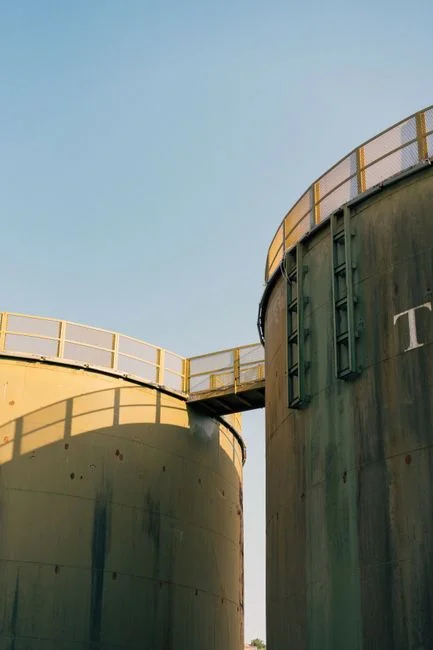
Rule 1 — Floc density. Conditioned floc with specific gravity greater than 1.05 settles readily and favors a clarifier; the same floc, once polymer-conditioned, also binds tightly to 30–50 µm micro-bubbles, so either technology works when chemistry is right. Upstream pH and coagulant choice dictate performance, not the equipment vendor.
Rule 2 — FOG presence. Free oil and grease do not settle in a clarifier's residence time and exit in the overflow. Any FOG load — even intermittent tramp oil from a maintenance shop — disqualifies a clarifier as primary and forces DAF upstream or as polish (per S2, S4).
Rule 3 — Cold-weather sizing. Micro-bubble nucleation kinetics slow 20–30% at 5°C versus 20°C. Hopkinsville's Christian County winter design temperature sits near 5°C, requiring a 10–15% margin on the recycle pump and saturation vessel (HydropureWater field data, 2026). Intermittent loads also matter: variable sump flows from Hopkinsville mine dewatering favor a DAF skid that starts and stops in minutes, while steady high flow with no oil favors a lamella.
Head-to-Head: DAF vs Lamella vs Conventional Clarifier for Mining Effluent
Procurement leads use the following matrix to evaluate equipment for dense metal-hydroxide streams with intermittent FOG. Pair any of these primary steps with a downstream plate-and-frame filter press sized to the float or underflow solids, and a high-rate lamella clarifier remains the relevant 2026 benchmark for the polish column.
| Parameter | Dissolved air flotation (DAF) | Lamella clarifier | Conventional gravity clarifier |
|---|---|---|---|
| TSS removal (dense Fe(OH)₃ / Al(OH)₃ floc) | 90–95% | 90–95% with proper chemistry | 80–90% |
| FOG / emulsified oil removal | 95% | ~70% (oil exits in overflow) | ~70% (oil exits in overflow) |
| Footprint per m³/h | 0.2–0.4 m² | 0.3–0.6 m² | 5–8 m² |
| CAPEX multiplier (lamella = 1.0x) | 1.5–2.5x | 1.0x | 0.7–0.9x (before civil) |
| Energy OPEX | 8–15 kWh/m³ (compressor + recycle) | 0.1–0.3 kWh/m³ (scraper) | 0.1–0.3 kWh/m³ (scraper) |
| Coagulant demand | Baseline | Up to 30% lower (sludge recycle) | Baseline |
| Float / underflow dryness | Float 4–8% DS (easier dewatering) | Underflow 2–5% DS | Underflow 2–5% DS |
| Cold-weather performance (<10°C) | Moderate (size 10–15% margin) | Low (freeze risk in unheated hopper) | Low (same risk, larger vault) |
| Best-fit stream | FOG, colloidal fines, light floc, variable flow | Dense settleable hydroxide floc, high flow, no oil | Legacy installations only |
DAF outperforms on FOG, colloidal fines, footprint, and float dryness; lamella is more cost-effective for FOG-free streams at high flow; the conventional clarifier is rarely the 2026 answer due to footprint constraints. Float dryness is a significant downstream cost factor, as DAF float at 4–8% DS is easier to dewater than lamella underflow at 2–5% DS, which directly impacts plate-and-frame filter press sizing.
Sized for Hopkinsville: A 50 m³/h Winter-Operation Worked Example
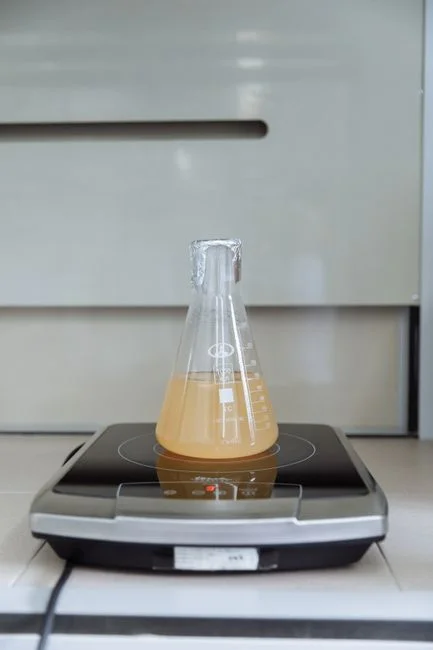
A 50 m³/h mixed-metals wastewater stream requires primary treatment for 1,500–2,500 mg/L TSS (Fe(OH)₃) and intermittent 50–150 mg/L emulsified oil, with Hopkinsville winter design at approximately 5°C. A DAF primary treatment using a DAF mid-band standard model avoids custom-engineering costs; sizing with a 10–15% margin on the recycle pump and saturation vessel compensates for cold-weather kinetics, with an air compressor sized for 8–15 kWh/m³. Pairing this with a lamella polish sized at 20–30 m/h surface loading on the plate-pack projected area (roughly 2–3 m² of plate area total) inside an insulated vault keeps the sludge hopper above freezing. The expected effluent envelope achieves TSS below 30 mg/L, with metals (Pb, Zn, Cu, Fe) controlled at the upstream precipitation step against 40 CFR 437 daily-maximum limits. The automatic chemical dosing skid in front of the train maintains coagulant and polymer doses against variable influent. Total footprint is roughly 15 m² for the DAF plus 3 m² for the lamella, compared to 250–400 m² for a conventional clarifier at the same flow, representing a 20x building-cost lever.
2026 CAPEX and OPEX Bands a Buyer Can Defend
The headline ratio for 2026: DAF CAPEX runs 1.5–2.5x a comparable lamella at equal flow (HydropureWater field data, 2026). That ratio narrows when including civil work, excavation, and footprint-driven building costs, as a lamella at 0.3–0.6 m² per m³/h is cheaper to house than a conventional gravity clarifier at 5–8 m² per m³/h, and a DAF at 0.2–0.4 m² per m³/h is smaller still. For a 100 m³/h stream, this is the difference between roughly 30 m² of DAF footprint and 600 m² of conventional clarifier footprint. The DAF CAPEX premium is most apparent in cold, space-rich sites and least significant in dense industrial corridors where building costs are high.
OPEX narrows the gap further. Both technologies use coagulant and polymer; the lamella saves up to 30% on coagulant via sludge recycle, but DAF produces a thicker float (4–8% DS) that dewaters more easily in a downstream filter press. The DAF's air compressor and recirculation pump are known, scalable costs at 8–15 kWh/m³. Two components make the cost band defensible: an automatic chemical dosing skid and a downstream plate-and-frame filter press. The ESG water-reuse potential serves as a board-level justification, as a DAF-plus-lamella train feeds directly into closed-loop reuse. For a related region, the Bicknell mining and metals 2026 guide covers comparable cold-winter sizing math for Indiana operations.
Frequently Asked Questions
Does 40 CFR 437 require a DAF or a clarifier specifically?
No. 40 CFR 437 does not mandate specific technology, but it sets daily-maximum and monthly-average limits for TSS, total recoverable lead, zinc, copper, and iron, plus a pH band of 6.0–9.0 (per 40 CFR 437.30–437.32). A well-
Frequently Asked Questions
Is DAF or a clarifier required by 40 CFR 437 for a Hopkinsville mining plant?
40 CFR 437, the Centralized Waste Treatment Point Source Category, does not mandate the use of specific equipment like DAF or clarifiers. Instead, it establishes effluent limitation guidelines based on performance standards for pollutants such as oil and grease, total suspended solids, and heavy metals. Facilities must achieve these numeric discharge limits, and the choice between DAF or clarification depends on the specific treatability of the wastewater stream to meet these federal requirements.
How cold is too cold for DAF micro-bubble flotation in a Kentucky winter?
DAF efficiency begins to degrade significantly when wastewater temperatures drop below 4°C (40°F). As water viscosity increases in extreme cold, the rise velocity of micro-bubbles slows, and the solubility of air in the recycle stream changes, potentially destabilizing the flotation process. In Kentucky winters, outdoor DAF units should be insulated or housed in temperature-controlled environments to maintain optimal performance.
What is the smallest DAF flow rate that makes sense for a Hopkinsville metals plant?
For industrial metals processing, DAF systems are generally not cost-effective below a flow rate of 5 to 10 m³/h (approximately 22 to 44 GPM). At lower flow rates, the mechanical complexity, energy requirements for the recycle pump, and chemical dosing precision required for micro-bubble saturation often make batch-process sedimentation or smaller-scale membrane filtration more economically viable.
Can a lamella clarifier handle emulsified cutting oil from a mine maintenance shop?
A standard lamella clarifier cannot effectively remove emulsified cutting oils because the oil droplets are typically too small and buoyant to settle by gravity. Emulsified oils require chemical pre-treatment, such as acidification or polymer-induced demulsification, to break the emulsion before any separation technology can be applied. Once the emulsion is broken, a DAF is generally superior to a lamella clarifier for removing the resulting free-floating oil phase.
What is the real footprint difference between a DAF and a conventional clarifier at 100 m³/h?
At a flow rate of 100 m³/h, a conventional circular clarifier typically requires a footprint of 60 to 80 square meters due to the long hydraulic retention time needed for gravity settling. A DAF system, utilizing higher surface overflow rates and rapid flotation, can achieve the same throughput in a footprint of approximately 15 to 25 square meters, representing a space savings of roughly 60% to 75%.