DAF vs Clarifier for Petroleum Wastewater: The 2026 Short Answer
For petroleum wastewater in Woodland, California, choose a DAF system when free oils, emulsified FOG, and TSS dominate the stream, and a lamella clarifier when heavy settleable solids and slop-oil sediment are the main load. Most 2026 refinery retrofits run a DAF first (95% oil removal benchmark) followed by a lamella clarifier for polishing, because the hybrid meets 40 CFR Part 419 oil & grease limits and Yolo County/SRCSD pretreatment limits in a smaller footprint than a clarifier-only train. DAF systems deliver 95% oil and grease removal on refinery food-equivalent streams versus roughly 70% for a clarifier on the same influent, per published field data; a clarifier in turn achieves around 90% solids reduction on heavy mineral loads at materially lower operating cost.
Map your stream before you size equipment. Desalter effluent, tank-farm draw, and slop-oil water each map to a different primary unit. Refinery desalter effluent and API separator skim carry free and emulsified oil, the textbook DAF duty. Tank-farm draw and slop-oil water mix light free oil with heavy sediment, so a clarifier-first or DAF-then-clarifier train is the right call. Fracking flowback adds proppants, hydrocarbons, and high TDS that change flocculation chemistry and push most operators toward DAF with polymer conditioning.
2026 procurement in Woodland is tilting hybrid. Updated oil and grease guidance, California Title 22 produced-water reuse rules, and tighter SRCSD discharge limits are forcing refiners to defend both the technology choice and the configuration choice. The remainder of this guide gives the head-to-head data, the local compliance table, and a 3-step decision framework you can take into a 2026 RFP.
Why Petroleum Wastewater Is Different From Food or Mining Streams
Petroleum wastewater is not a generic FOG stream, and the generic DAF-vs-clarifier content misses this. A refinery wastewater train carries free oil, emulsified oil, high COD, sulfides, phenols, and suspended solids in a single stream (per Ecologix oil-and-gas process data). Food processing streams are dominated by free and emulsified FOG with low TDS, so a single DAF stage covers most of the duty. Mining streams are dominated by dense, settleable solids with little oil, which is why a clarifier hits 90% removal at low OPEX. Petroleum sits in the middle and tends to swing day to day as desalter chemistry, crude slate, and turnarounds shift.
Produced water is the largest waste stream in oil and gas and behaves differently from refinery wastewater. It contains emulsified oils, suspended solids, and a large fraction of dissolved organics that resist gravity settling, which is why DAF units are described as "highly effective in treating produced water, facilitating its reuse or safe discharge" in the Ecologix oil-and-gas application note. A pure clarifier on produced water struggles with the emulsified fraction; a DAF with proper coagulant/flocculant conditioning recovers the float and clears the water column in one stage.
Tank-farm draw and slop-oil water carry a mix of light free oil and heavy sediment that defeats either technology used alone. A clarifier leaves the free oil riding on top; a DAF re-suspends the heavy grit and pulls it into the float, hurting downstream sludge handling. A DAF-then-lamella configuration handles both fractions in series. Fracking flowback adds proppants, hydrocarbons, and high TDS that change flocculation chemistry, so jar testing is mandatory before committing to a single-stage design.
The point for the Woodland buyer: do not copy a food plant DAF spec or a mining clarifier spec. Characterize the stream, then pick the technology that matches the dominant contaminant fraction. A DAF system sized for 4–300 m³/h covers most refinery and produced-water duties in a single skid.
Woodland, California Compliance Landscape in 2026
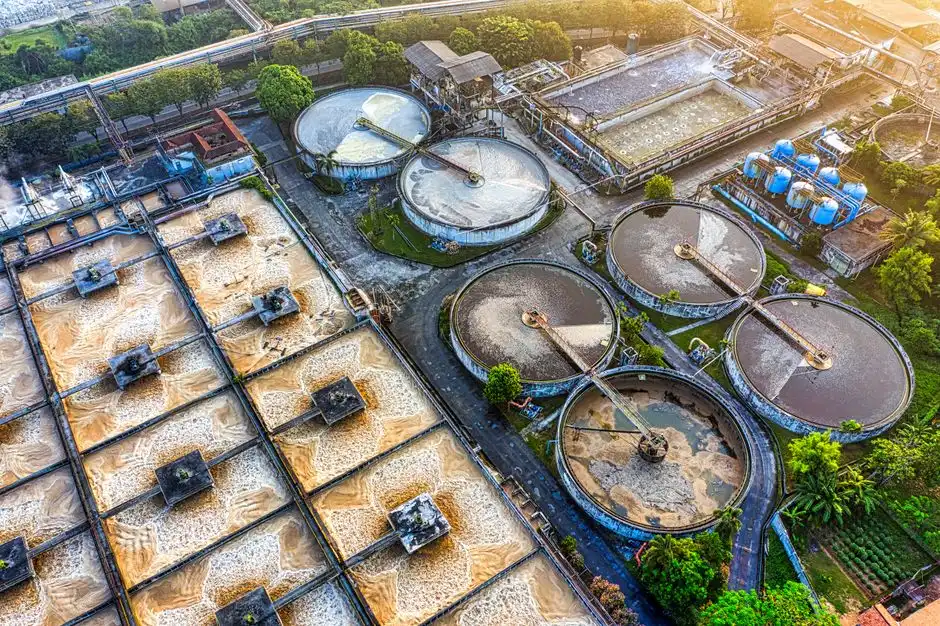
Industrial discharges in Woodland flow to the Sacramento Regional County Sanitation District (SRCSD) interceptor system and are regulated under Yolo County's industrial pretreatment program. Federal pretreatment framing is set by 40 CFR Part 403, with petroleum refining limits defined under 40 CFR Part 419. The numeric targets that govern DAF-vs-clarifier sizing in 2026 are summarized below.
| Parameter | Typical Limit (40 CFR Part 419 / SRCSD) | Driver for DAF vs Clarifier |
|---|---|---|
| Oil & Grease, daily max | <100 mg/L at sewer connection | DAF strongly favored; clarifier alone typically misses on emulsified loads |
| Total Suspended Solids (TSS), daily max | <200 mg/L at sewer connection | DAF for oily TSS; lamella clarifier for settleable inorganic TSS |
| COD / BOD | Site-specific; tightened for 2026 permits | Sets polymer dose on DAF, sludge pumping on clarifier |
| pH | 5.0–11.0 typical SRCSD band | Drives coagulant selection on DAF; affects clarifier sludge blanket |
| Sulfide | Site-specific; often <1 mg/L | Forces covered DAF or vapor capture; air emissions routing |
| Title 22 produced-water reuse (2024–2026 update) | Conditional reuse for oil-field operations | Pushes hybrid DAF + MBR trains over single-stage DAF |
California Title 22 and the 2024–2026 produced-water reuse updates change the economic case. A facility that can recycle treated produced water for oil-field operations avoids fresh-water draw fees and positions for state reuse credits, which is why most 2026 retrofits in California are now sized as DAF → lamella → MBR rather than a single DAF or a single clarifier.
Air-permit overlap is increasingly relevant. DAF skimmings release VOCs, and a Woodland DAF retrofit in 2026 typically requires vapor capture and a BAAQMD-equivalent operating permit for the skimmer enclosure, even though the site is under the Yolo-Solano AQMD. The Martinez chemical-plant 2026 pretreatment guide walks through the same permit stack in a neighboring jurisdiction and is worth a read for the EHS manager who has to sign the air permit application.
Side-by-Side Comparison: DAF vs Lamella Clarifier for Oil and Gas
This is the matrix most procurement engineers will screenshot and forward. Use it to defend the technology choice to SRCSD, EHS, and management on the same page.
| Parameter | DAF | Lamella Clarifier |
|---|---|---|
| Mechanism | Micro-bubble flotation of oil and fine solids to the surface | Gravity settling on inclined plates at 20–40 m/h surface loading |
| Target contaminant | Free oil, emulsified FOG, TSS <500 mg/L with high oil fraction | Heavy settleable solids, slop-oil sediment, grit |
| Oil & grease removal | ~95% on refinery-grade streams (per Ecologix field data) | ~70% on the same stream; better on settleable solids |
| TSS removal | 80–90% with polymer conditioning | ~90% on heavy mineral loads at lower chemical cost |
| Hydraulic retention time (HRT) | 15–30 minutes typical | 45–90 minutes typical |
| Footprint per m³/h | Compact skid; ~0.5–1.0 m² per m³/h | ~60–70% smaller than conventional clarifier at same surface loading |
| CAPEX band (50 m³/h, packaged) | Low-to-mid six-figure USD (carbon steel); +20–35% for 304 SS | 30–50% below comparable DAF |
| OPEX band | Higher (air compressor, saturator, polymer dose, float handling) | Moderate (pumps, sludge pumping, lower polymer) |
| Best-fit stream | Desalter effluent, API skim, produced water, flowback | Tank-farm draw, slop-oil water, pretreatment to biological |
Two numbers anchor the comparison: 95% oil removal for DAF and 70% for clarifier on the same refinery food-equivalent stream, plus 90% solids removal for a clarifier on a heavy mineral load (per the Ecologix 2026 selection guide). Footprint matters in a tight Woodland refinery plot; a HydropureWater high-efficiency sedimentation tank (lamella clarifier) delivers conventional-clarifier performance in roughly one-third the area, and a DAF system stacks the air-saturation, flocculation, and separation stages into a single packaged skid.
OPEX is the line item management pushes back on. Clarifier OPEX is moderate, dominated by pumps and sludge pumping. DAF OPEX is higher because the air compressor, saturator, and polymer dosing system run continuously, per the same Ecologix 2026 selection guide. The trade is real removal efficiency on the oily fraction for real dollars on the utility bill.
When a DAF System Is the Right Choice in 2026
DAF wins when free oil, emulsified FOG, and a TSS load under about 500 mg/L with a high FOG fraction define the stream. Refinery desalter effluent, API separator skim, and produced water from upstream separation all sit in this band. The DAF range covers 4–300 m³/h across 13 standard models, with micro-bubble generation and automatic skimming, which is the right envelope for most Woodland refinery sidestreams without custom engineering.
DAF also acts as a thickener. The float leaves the tank at 3–5% dry solids versus 1–2% from a clarifier underflow, which directly cuts downstream sludge handling CAPEX on a centrifuge or belt press. Pair the DAF with an automatic chemical dosing skid to push oil and grease removal toward 95%+ on refinery desalter effluent and to stabilize performance when the crude slate swings.
When a Lamella Clarifier Wins Over DAF
A lamella clarifier wins when slop-oil sediment, heavy grit, or high settleable solids dominate the load. Tank-farm draw and produced-water streams with a heavy mineral fraction are textbook lamella duties. The plate pack runs at 20–40 m/h surface loading versus about 5–10 m/h for a conventional clarifier, which is the engineering reason a HydropureWater high-efficiency sedimentation tank (lamella clarifier) delivers the same overflow clarity in roughly one-third the footprint.
Lamella OPEX is materially lower. Up to 30% less polymer consumption and the absence of an air-saturation system drop the recurring utility line, which is why operators with a fixed OPEX ceiling frequently start the train with a lamella. It is also a strong pretreatment step ahead of a biological reactor in tank-farm or terminal applications where emulsified oil is already low and the limiting parameter is settleable TSS rather than free oil.
The 2026 Hybrid Train: DAF First, Clarifier Polish, MBR Finish
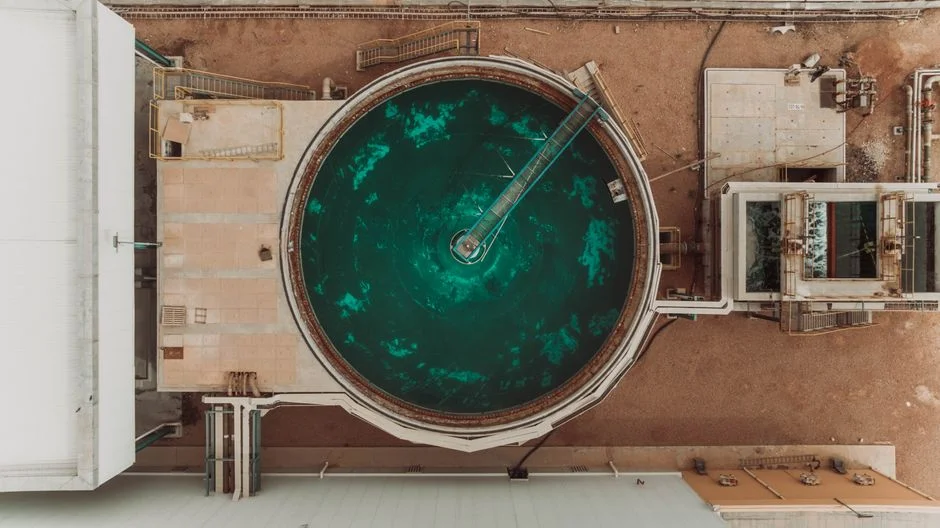
Most 2026 refinery and produced-water retrofits in California are no longer single-stage. A DAF first removes the free and emulsified oil fraction at the 95% benchmark, then a lamella clarifier polishes the remaining TSS to clean the float carryover, and an MBR finishes the water to a near-reuse quality when the Title 22 produced-water reuse pathway is in play. This is the configuration real California refineries are building, and it is the answer to the tightening oil and grease guidance plus the produced-water reuse shift.
Hybrid systems are validated for complex streams, with DAF handling the oil fraction and the clarifier handling the residual settleable load, per the same Ecologix 2026 selection guide. For a Woodland facility planning a 2026 shutdown-window retrofit, a mobile DAF can carry the load while the permanent train is being installed, then redeploy for the next turnaround. An MBR membrane bioreactor system with a DF series 0.1 μm module closes the train to near-reuse effluent for oil-field recycle, cooling-tower makeup, or evaporation pond feed.
CAPEX and OPEX Ranges for a Woodland Refinery Retrofit (2026)
The numbers below are 2026 vendor-quote envelopes for a Woodland refinery retrofit, not list prices. They are sized to defend a CAPEX line on a 2026 board deck.
| Equipment | Hydraulic Size | CAPEX Range (USD, 2026) | OPEX Drivers |
|---|---|---|---|
| DAF skid, carbon steel | 50 m³/h | Low six-figure | Compressor power, polymer, float hauling |
| DAF skid, 304 stainless upgrade | 50 m³/h | +20–35% over carbon steel | Same; longer asset life in chloride service |
| Lamella clarifier, equivalent hydraulic capacity | 50 m³/h | 30–50% below comparable DAF | Pumps, sludge pumping, lower polymer |
| Hybrid DAF + lamella train, installed | 100 m³/h refinery sidestream | Mid six-figure band installed | Sum of both; shared controls and polymer skid |
| MBR finish (DF series) | 50–100 m³/h | Adds to mid-to-upper six-figure band | Membrane aeration, periodic CIP, module replacement |
The 100 m³/h hybrid DAF + lamella train sized for a typical Woodland refinery sidestream lands in the mid-six-figure band installed, with the DAF float being thicker than clarifier underflow and reducing downstream sludge hauling. For a deeper cost walk, the 2026 B2B breakdown of lamella clarifier cost gives line-item pricing, and the DAF system page has the standard model matrix.
Decision Framework: Choose Your 2026 Configuration in 3 Steps
Step 1: Characterize the stream. Pull representative 24-hour composites for oil and grease, TSS, COD, sulfide, salinity, and temperature. Note whether the oil is free, emulsified, or both, and whether the solids are organic, inorganic, or a mix. Without this step the technology choice is a guess.
Step 2: Match the technology to the dominant fraction and the discharge limit. Free oil and emulsified FOG above about 200 mg/L points to DAF. Heavy settleable solids above about 1,000 mg/L with low oil points to lamella clarifier. Both fractions, or a 40 CFR Part 419 limit you cannot meet with a single stage, points to a hybrid DAF + lamella train, with MBR finish if Title 22 reuse is in scope.
Step 3: Size the unit and the chemistry. Use m³/h and contamination load to set the hydraulic rating, then jar-test polymer dose and confirm float or sludge characteristics. Submit the configuration to SRCSD and Yolo County pretreatment staff as part of the permit modification package before issuing the PO. A defensible characterization report in 2026 is the difference between a permit cleared in 90 days and one stalled for a year.
Frequently Asked Questions
What oil and grease limit applies to a Woodland refinery discharge in 2026?
Federal limits under 40 CFR Part 419 typically cap oil and grease below 100 mg/L daily max at the sewer connection, and SRCSD applies site-specific limits on top of that. A DAF sized for 95% removal on the design influent is the standard way to defend compliance.
When does a clarifier outperform a DAF on petroleum wastewater?
When the load is dominated by heavy settleable solids and slop-oil sediment rather than emulsified FOG, a lamella clarifier hits around 90% TSS removal at lower OPEX, with up to 30% less polymer and no air-saturation system. A DAF on the same stream re-suspends the grit and pulls it into the float, hurting downstream sludge handling.
Is a hybrid DAF and clarifier train standard for 2026 refinery retrofits?
Yes. Most California refinery retrofits now run a DAF first for the 95% oil removal, then a lamella clarifier to polish the residual TSS, and an MBR finish when Title 22 produced-water reuse is in scope. The hybrid is the configuration that meets both 40 CFR Part 419 and SRCSD pretreatment limits in the smallest footprint.
What capacity range does a packaged DAF cover for a Woodland refinery sidestream?
The DAF range covers 4–300 m³/h across 13 standard models with micro-bubble generation and automatic skimming, which is the right envelope for most refinery desalter effluent and produced-water sidestreams without custom engineering.