Why Vancouver Mining and Metals Plants Are Re-Evaluating Clarification in 2026
40 CFR Part 437 (Ore Mining and Dressing) sets the binding effluent ceiling for any Vancouver, US-area mining or metals-finishing facility discharging to a POTW or surface water, with daily-maximum TSS capped at 50 mg/L and a 30-day monthly-average of 30 mg/L (per EPA 40 CFR 437, Subpart A). The same subpart sets daily-maximum metal limits at 0.6 mg/L lead, 1.0 mg/L zinc, 1.0 mg/L copper, and 2.0 mg/L iron, with monthly averages tightened by roughly 30-50% (per EPA 40 CFR 437.15-437.17). Washington State Department of Ecology implements these federal limits and overlays its own monitoring, sampling, and reporting requirements under the Industrial Stormwater Permit and the Sand and Gravel General Permit, so the choice of primary clarifier now directly drives the DMR (Discharge Monitoring Report) sampling load and the defensibility of compliance data.
A typical Vancouver-region mine water profile swings between 200 mg/L TSS in clean runoff and several thousand mg/L during milling, heap-leach irrigation upset, or tailings reclaim events. The stream carries residual flotation reagents (xanthates, dithiophosphates), suspended metal hydroxides from lime or soda-ash pH adjustment, and seasonal hydraulic swings tied to Pacific Northwest precipitation cycles. Equalization smooths the hydraulic side but does little for the colloidal and reagent-laden fraction, which is exactly the fraction a poorly chosen clarifier cannot remove. That gap between what gravity settling can do and what 40 CFR 437 requires is why 2026 capital justifications are re-opening the DAF-vs-clarifier question rather than defaulting to the incumbent technology.
How a DAF System Actually Works in a Mining Circuit
Dissolved air flotation clarifies wastewater by attaching 30-50 micron micro-bubbles to destabilized particles so they float to the surface instead of sinking (H2Flow DAF brochure). A recirculation pump takes a fraction (typically 20-40%) of clarified effluent, pressurizes it with air in a saturation tank, and releases the air-saturated water into the flotation cell; the pressure drop nucleates the micro-bubbles that contact the coagulated and flocculated particles. A surface skimmer then removes the floated sludge at 4-12% dry solids, a thicker underflow than any gravity clarifier produces (H2Flow DAF brochure). Heavy, non-floatable fractions drop to the bottom and are swept to a bottom-sludge discharge.
In a mining circuit, DAF is almost never the only unit operation. The typical train is pH adjustment (lime, NaOH, or Ca(OH)₂) to a target pH of 8.5-10.5, coagulant dosing with ferric sulfate or alum (typical 50-200 mg/L as product), polymer flocculation (anionic or cationic polyacrylamide, 0.5-5 mg/L active), and then DAF. The DAF effluent usually goes to sand or multimedia filtration, followed by metals precipitation polishing or ion exchange before discharge or RO. A properly functioning DAF on a coagulated, flocculated mining feed delivers 90-95% TSS, FOG, and particulate BOD removal (H2Flow DAF brochure), which is the performance band needed to keep downstream metals precipitation within its design loading envelope.
How a Gravity or Lamella Clarifier Handles Metals Wastewater
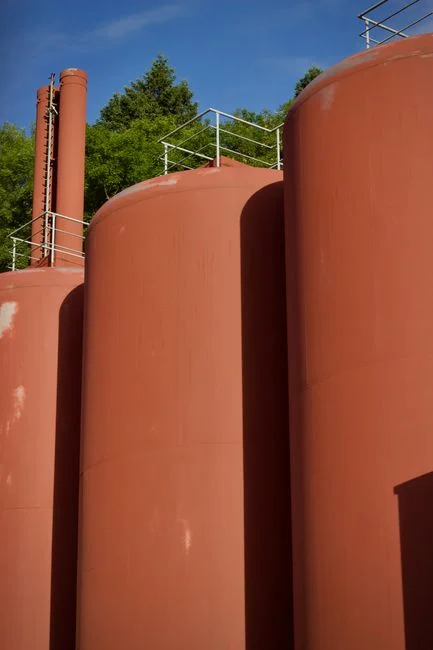
A conventional circular or rectangular gravity clarifier relies on quiescent settling, with overflow rates of 1-2 m/h and a floor-scraped sludge that leaves the basin at 1-3% dry solids. The unit is simple, well understood, and inexpensive per m², but it needs large footprint and cannot remove particles whose settling velocity falls below roughly 1 m/h. In practice that excludes most colloidal metal hydroxides and reagent-coated fines, which is the dominant particle class in many Vancouver mine waters.
A lamella (inclined-plate) clarifier compresses the same settling physics into a much smaller footprint by stacking inclined plates at 55-60° and forcing water to flow countercurrent between them. Effective surface loadings rise to 20-40 m/h (HydropureWater product data, 2026), and the HydropureWater lamella clarifier typically delivers that range with flocculation and sludge recirculation built into a single packaged unit. The trade is chemistry: lamella works best when particles are already dense, well-coagulated, and the flow is steady, which is the exception rather than the rule in milling, heap-leach, and tailings reclaim circuits where flows and solids both vary hour to hour.
DAF vs Clarifier: Head-to-Head Parameters for Mining and Metals
The comparison below is the table a procurement justification should be able to defend in one page. Numbers are drawn from the H2Flow DAF brochure (2026) for DAF performance, HydropureWater product data (2026) for lamella, and EPA Process Design Manual EPA-625/1-75-003a for gravity clarifier baselines.
| Parameter | Dissolved Air Flotation (DAF) | Lamella (Inclined-Plate) Clarifier | Conventional Gravity Clarifier |
|---|---|---|---|
| TSS removal efficiency (with optimized chemistry) | 90-95% (H2Flow brochure, 2026) | 60-85% (HydropureWater field data, 2026) | 50-70% (per EPA 625/1-75-003a) |
| Surface / hydraulic loading (m/h) | 5-25 (per H2Flow model ranges) | 20-40 (HydropureWater product data, 2026) | 1-2 (per EPA 625/1-75-003a) |
| Flow range coverage (m³/h) | 5-2,500 (H2Flow Alpha 5-180, SPC 16-2,500) | 10-500 typical per skid | 50-5,000+ per basin |
| Footprint per m³/h capacity | 0.05-0.15 m² | 0.10-0.20 m² | 0.5-1.5 m² |
| Typical influent TSS range (mg/L) | 500-5,000+ | 200-1,500 | 200-800 |
| Removed sludge dry solids (%) | 4-12 (H2Flow brochure, 2026) | 1-3 (HydropureWater field data, 2026) | 1-3 (per EPA 625/1-75-003a) |
| Chemical demand (coag + polymer) | Higher (more polymer) | Up to 30% lower (lamella field data, 2026) | Lower-moderate |
| Sensitivity to flow variation | Low-moderate (recycle loop buffers) | Moderate-high (lamella field data, 2026) | High |
| 2026 CAPEX band (per m³/h, USD) | $8,000-$25,000 for 5-50 m³/h skid; $4,000-$12,000 for 200-2,500 m³/h circular | $6,000-$15,000 for 10-500 m³/h packaged unit | $3,000-$8,000 for 50-1,000 m³/h basin (excludes civil) |
Two rows drive most of the 2026 selection work: removed sludge dry solids and chemical demand. DAF sludge at 4-12% DS cuts downstream dewatering cost meaningfully (smaller centrifuge or belt press, less polymer for conditioning), but lamella's 30% lower coagulant-plus-polymer consumption is a real OPEX line item at 2026 polymer prices. These two effects roughly offset over a year on a 100-200 m³/h circuit, which is why the right answer is rarely "DAF is always more expensive" or "lamella is always cheaper".
Decision Framework: Which One Should a Vancouver Factory Specify in 2026
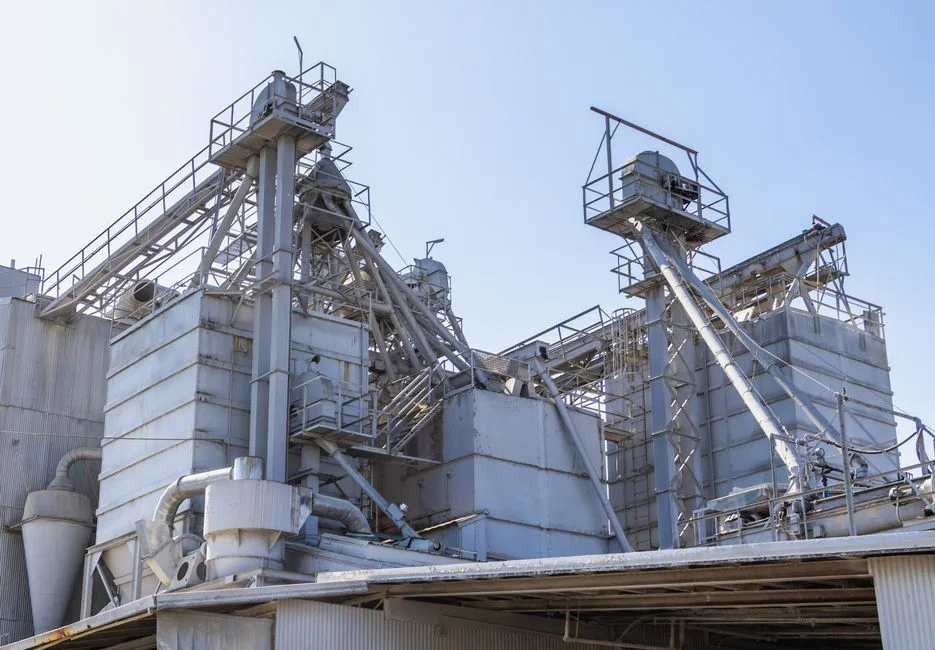
For a Vancouver, US mining or metals project in 2026, the technology choice is a function of three things: influent TSS, the presence of oils, FOG, or residual flotation reagents, and the allowable footprint. Apply these four rules in order and the answer falls out without a vendor call.
- Default to DAF if influent TSS exceeds 1,000 mg/L, or if FOG, oils, or residual flotation reagents are present. DAF delivers 90-95% TSS removal in this band (H2Flow brochure, 2026) and is the only technology that floats reagent-coated fines. A dissolved air flotation system sized to the 5-180 m³/h range (H2Flow Alpha class equivalent) covers the typical small-mine or pilot scale, while SPC-class circular units extend coverage to 2,500 m³/h.
- Default to lamella if flow is steady, TSS is below 500 mg/L, chemistry is simple, and footprint is not a binding constraint. Lamella achieves 20-40 m/h surface loading at up to 30% lower chemical cost (HydropureWater product data, 2026), and the HydropureWater lamella clarifier is a defensible pick when monthly-average TSS limits are the binding compliance number rather than daily-maximum spikes.
- Treat the clarifier as a solids-removal step only when metals speciation is the binding constraint. Lead, zinc, copper, and iron have 40 CFR 437 daily-maximum limits of 0.6, 1.0, 1.0, and 2.0 mg/L respectively, with monthly averages tightened further (per EPA 40 CFR 437.15-437.17). Confirm that downstream precipitation, ion exchange, or membrane polishing still meets those monthly averages before signing off on the upstream choice; see the copper wastewater treatment guide and the 2026 lead discharge compliance guide for unit-operation sizing behind the clarifier.
- Match the unit to the flow band, not the other way round. For flows above ~250 m³/h with variable load, specify a circular DAF (H2Flow SPC class, 16-2,500 m³/h) or a lamella preceded by equalization. Do not specify a small rectangular DAF on a large mine drain; surface loading collapses and effluent quality becomes non-compliant. For a comparable regulatory framing on a different site, the comparable mining and metals guide for Caddo Gap walks the same four-rule logic against a different state implementation.
2026 Cost and OPEX Reality Check for Vancouver Projects
For 2026 capital planning, a small DAF skid in the 5-50 m³/h range lands in the low six figures USD (roughly $150,000-$400,000 installed, including chemical dosing and control), while a large circular DAF or lamella in the 200-2,500 m³/h band runs mid-to-high six figures (roughly $600,000-$2,500,000 for the unit, with civil works and an automatic coagulant and polymer dosing skid adding 20-40% on top). Conventional gravity clarifiers in the same flow band look cheaper on the equipment line but quickly lose that advantage once the basin civil works, larger footprint, and lower chemical efficiency are priced in (HydropureWater field data, 2026).
OPEX for both technologies is dominated by coagulant and polymer consumption, which is where lamella earns its up-to-30% advantage (HydropureWater product data, 2026). DAF offsets that by producing sludge at 4-12% dry solids (H2Flow brochure, 2026) versus 1-3% for clarifier underflow, which directly shrinks downstream dewatering and haul-off cost. The two effects tend to net out over a year on a 100-200 m³/h circuit, so the final call should turn on TSS band, reagent load, and footprint rather than CAPEX alone. Before signing a 20-year specification, run a mobile pilot or rental DAF for 1-3 months; H2Flow and similar vendors offer this as a service, and it is the cheapest insurance against under- or over-sizing a primary clarifier in 2026 dollars.
Frequently Asked Questions
What TSS band favors a DAF over a clarifier for mining wastewater?
Specify DAF when influent TSS is above roughly 1,000 mg/L, when oils or residual flotation reagents are present, or when footprint is constrained; DAF delivers 90-95% TSS removal in this band (H2Flow brochure, 2026).
When is a lamella clarifier the correct primary for a Vancouver mine site?
Choose a lamella clarifier when flow is steady, influent TSS is below ~500 mg/L, chemistry is simple, and large footprint is available; lamella achieves 20-40 m/h surface loading at up to 30% lower chemical cost (HydropureWater product data, 2026).
Do either DAF or lamella meet 40 CFR 437 metal limits on their own?
No. 40 CFR 437 sets daily-maximum lead at 0.6 mg/L, zinc at 1.0 mg/L, copper at 1.0 mg/L, and iron at 2.0 mg/L (per EPA 40 CFR 437.15-437.17), and the DAF or clarifier is a solids-removal step only; downstream precipitation, ion exchange, or membrane polishing is required to hit those numbers.
How dry is the sludge from each technology and why does it matter?
DAF skimmings leave the unit at 4-12% dry solids (H2Flow brochure, 2026) versus 1-3% for clarifier underflow, which lowers downstream dewatering and haul-off cost but does not eliminate it.
Should a 2026 project run a pilot before specifying a primary clarifier?
Yes. A 1-3 month mobile pilot or rental DAF from H2Flow or a comparable vendor is the lowest-cost way to validate TSS removal, polymer dose, and sludge dry solids against site-specific mine water before committing to a 20-year asset in 2026 dollars.