
Why Jefferson Hills Petroleum Plants Are Re-Specifying the Oil-TSS Step in 2026
Petroleum bulk terminals, lubricant blenders, and small refinery/petrochemical support facilities along the Jefferson Hills and McKeesport stretch of the Lower Monongahela corridor discharge under either 40 CFR Part 419 (Petroleum Refining, SIC 2911) or 40 CFR Part 442 (Transportation Equipment Cleaning) depending on SIC code, and they all sit inside the PA Department of Environmental Protection's Lower Monongahela basin oversight zone. PA Code Title 25 Chapter 95 imposes oil & grease limits typically ≤15 mg/L daily maximum and TSS ≤30 mg/L monthly average for industrial discharges to surface waters, with permit-specific limits often tighter in the Lower Monongahela watershed because of cumulative TMDL loadings. Influent from petroleum receipts at these sites is not the clean stream the design manuals describe: free oil routinely lands in the 100–1,000+ mg/L range, emulsified oil runs 50–500 mg/L, and TSS sits between 200–1,500 mg/L depending on receipt batch and tank-bottom turnover. That mix — free oil plus emulsified FOG plus suspended solids — is the exact combination that determines whether a dissolved air flotation unit or a lamella clarifier belongs at the head of the train. PADEP inspections along the Lower Mon Valley tightened in late 2025 after several petroleum-handling spill events, and Jefferson Hills plants are now retrofitting pretreatment ahead of the 2026 permit renewal cycle to avoid consent-order exposure.
How a Refinery Wastewater Train Is Actually Built: Where DAF and the Clarifier Each Sit
EPA's 1996 Petroleum Refining ELG study documents the standard train as API separator → equalization → pH adjustment → coagulant (ferric chloride) → polyelectrolyte → DAF → biological aeration → secondary clarifier → sand filter → chlorination, with evaporation-pond diversion for off-spec flow. The ChemEngineering 2019 refinery simulation used the same sequence with concrete numbers: a 4.7 m diameter DAF cell operating at 0.5 h HRT, 4.8 bar saturator, and air/solids 0.15; followed by plug-flow aeration and an 11 m circular secondary clarifier at 0.69 m³/m²·h surface overflow and 4.5 m side water depth. DAF sits upstream of biology to strip oil and FOG that would otherwise poison biomass or cause foaming; the clarifier sits downstream of biology to settle biomass and any carry-over solids. The practical implication for a Jefferson Hills specifier: "DAF vs clarifier" is a misleading question in most cases — plants need both, and the real decision is which to use as the primary oil-removal step and what type of clarifier (lamella or circular) to use downstream. A typical API-DAF-clarifier train with the HydropureWater DAF system as the primary oil/FOG step is the default 2026 starting point for any petroleum site on the Monongahela.
DAF for Petroleum Wastewater: How It Works and What It Actually Removes
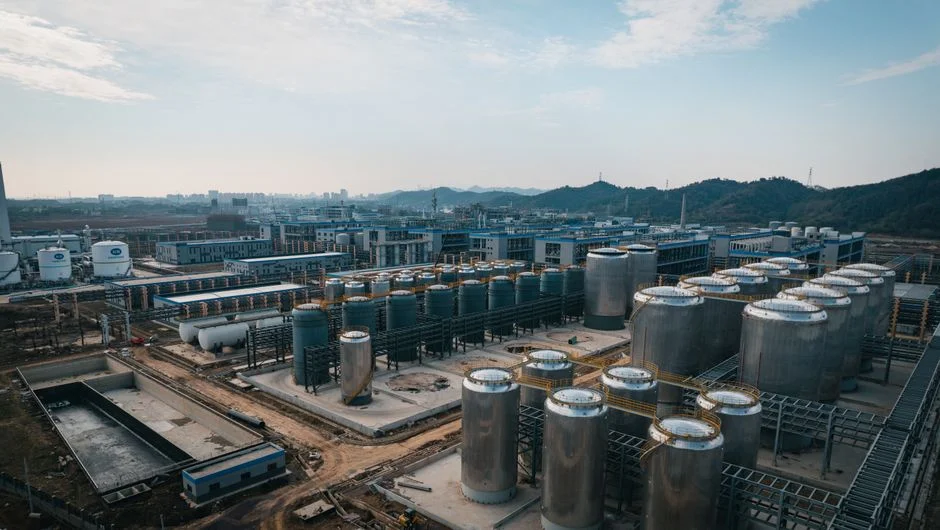
A DAF unit pressurizes a recycle stream with 4–6 bar of air inside a saturator; when that recycle is released into the flotation cell at near-atmospheric pressure, micro-bubbles in the 10–100 μm range nucleate and attach to oil droplets and floated floc, lifting them to the surface for skimming. The refinery design in ChemEngineering 2019 specifies a 4.7 m diameter cell, 2.5 m maximum water level, 0.5 h detention time, 60.337 m³/m²·d hydraulic loading, air/solids 0.15, polymer 0.001 g/kg, and ferric chloride at 16 kg Me/d — figures that translate directly to Jefferson Hills sizing. Removal performance on refinery feed typically lands at 80–95% free oil, 60–90% emulsified oil, 50–80% TSS, and 30–60% COD, consistent with the published simulation. A high-rate Clari-DAF configuration pushes surface loading to 20 gpm/ft² (~50 m/h) and shrinks the pretreatment footprint by up to 82.7% versus conventional settling (Lenox Institute / Xylem field data, 2019), which is a decisive advantage on the cramped Jefferson Borough industrial-park parcels. Operating sensitivities worth flagging for Jefferson Hills operators: hydraulic shock loads from batch truck receipts, surfactant overload that stabilizes emulsions and cuts oil removal, and winter oil temperature drops that raise viscosity and slow bubble-droplet attachment. The HydropureWater DAF system is built around these sensitivities with a top-mounted skimmer and a flooded-cell saturator that tolerates the typical 2:1 peak-to-average flow swings seen at petroleum bulk terminals.
Lamella Clarifier for Petroleum Wastewater: What It Does and Where It Struggles
A lamella (inclined-plate) clarifier is a compact sedimentation unit that uses 55–60° inclined plates at 20–40 m/h surface loading to settle heavy solids; sludge recirculation improves flocculation and contact time. Its strengths are well known: low CAPEX, no compressed-air system, very simple operation, and excellent capture of heavy inorganic TSS such as sand, rust, and mineral scale that ride in with petroleum receipts and tank-bottom sludge. Its weakness on oil is structural: the settling velocity of 50–200 μm emulsified oil droplets is too low for gravity-driven plates, and lamellas typically achieve <70% oil removal on raw refinery wastewater — not enough to meet a 15 mg/L O&G limit on a feed at several hundred mg/L. Sized per the ChemEngineering 2019 simulation (11 m circular, 0.69 m³/m²·h, 4.5 m side water depth), a HydropureWater lamella clarifier fits the secondary-clarifier duty downstream of biological treatment, where its strengths — low cost, no air system, simple operation — match the application. The lamella becomes the primary oil/TSS step only when influent is overwhelmingly heavy particulate TSS with very low emulsified oil, which is rare at Jefferson Hills petroleum terminals.
Side-by-Side Comparison: DAF vs Lamella Clarifier for Petroleum Service
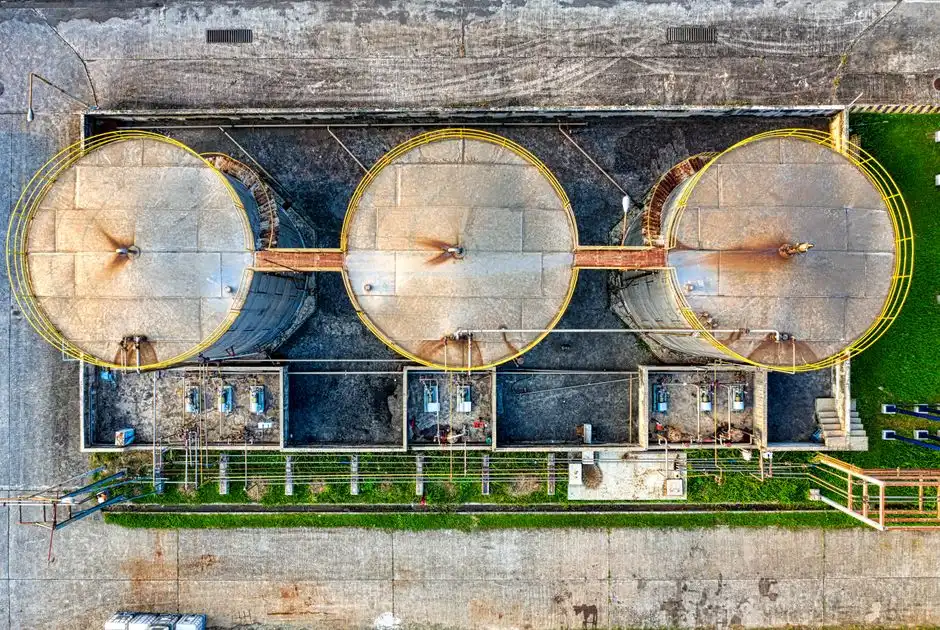
The table below uses the ChemEngineering 2019 DAF and clarifier designs so the head-to-head is anchored to a single published refinery dataset, not a vendor brochure. DAF wins on oil/FOG removal, footprint (up to 82.7% smaller per Clari-DAF field data), and start-up time (minutes versus hours for a lamella). Lamella wins on capital cost, mechanical simplicity, no compressed-air system, and handling of heavy inorganic TSS.
| Parameter | DAF (ChemEng 2019) | Lamella Clarifier (ChemEng 2019) |
|---|---|---|
| Target contaminant | Free oil, emulsified oil, FOG, light TSS | Heavy TSS, biomass, mineral scale |
| Typical free-oil removal | 80–95% | 30–50% |
| Typical emulsified-oil removal | 60–90% | <70% (often 30–50%) |
| TSS removal | 50–80% | 70–90% on biological mixed liquor |
| Residence time | 0.5 h | 1.5–3 h equivalent |
| Hydraulic loading | 60.337 m³/m²·d (high-rate up to 50 m/h) | 20–40 m/h |
| Footprint index | 1.0 (up to 82.7% smaller than conventional) | 1.5–2.0 |
| Energy demand | Saturator pump + recycle pump | Sludge pump only |
| CAPEX index (of train) | 35–50% | 10–20% |
| OPEX index (of train) | Polymer, ferric chloride, compressed air | Polymer, plate cleaning, sludge pumping |
| Shock-load tolerance | High (minutes to recover) | Moderate (sludge blanket upset) |
The takeaway for Jefferson Hills: DAF as the primary oil-removal step, then biology, then a HydropureWater lamella clarifier as the secondary settler, is the hybrid that captures each unit's strengths. This matches the configuration described for nearby DAF vs clarifier for petroleum wastewater in Lufkin, TX and for DAF vs clarifier for petroleum bulk plants in Harlingen, where the same hybrid train dominates the 2026 spec sheets.
Jefferson Hills 2026 Compliance Map: 40 CFR Part 419, PA Title 25 Ch. 95, and Indirect Discharge
Direct-discharging refineries are subject to 40 CFR Part 419 BPT/BAT effluent limits on oil & grease, TSS, phenols, sulfides, chromium, and ammonia (per the EPA 1996 Petroleum Refining ELG study, 1996). Indirect-discharging petroleum plants — those sending wastewater to the ALCOSAN or McKeesport POTW — are subject to 40 CFR Part 403 categorical pretreatment standards plus local POTW limits, typically oil & grease ≤100 mg/L with no visible sheen, plus TSS and COD surcharges above local limits. PA Code Title 25 Chapter 95 sets the state oil & grease and TSS limits for direct discharges; Jefferson Hills plants discharging to the Lower Monongahela watershed also have to meet any basin-specific TMDL requirements on total recoverable petroleum hydrocarbons. The equipment implication is hard: only DAF (or an equivalent) reliably drives oil & grease low enough to meet either the federal or the PA limit; a clarifier alone will not pass a 15 mg/L O&G limit on raw refinery wastewater in the 100–1,000 mg/L range.
| Parameter | 40 CFR Part 419 (BPT/BAT) | PA Title 25 Ch. 95 (typical) | DAF effluent | Lamella-only effluent |
|---|---|---|---|---|
| Oil & grease (mg/L) | ≤15 (BAT daily max) | ≤15 daily max | 5–15 | 50–150+ |
| TSS (mg/L) | ≤30 (BAT monthly avg) | ≤30 monthly avg | 20–40 | 30–60 |
| Phenols (μg/L) | regulated | basin-specific TMDL | 0.1–0.5 | 1–5 |
| Sulfides (mg/L) | regulated | basin-specific | below detection after DAF | variable |
| Visible sheen | none | none | eliminated | possible |
Decision Framework: How to Choose for Your Specific Jefferson Hills Plant in 2026
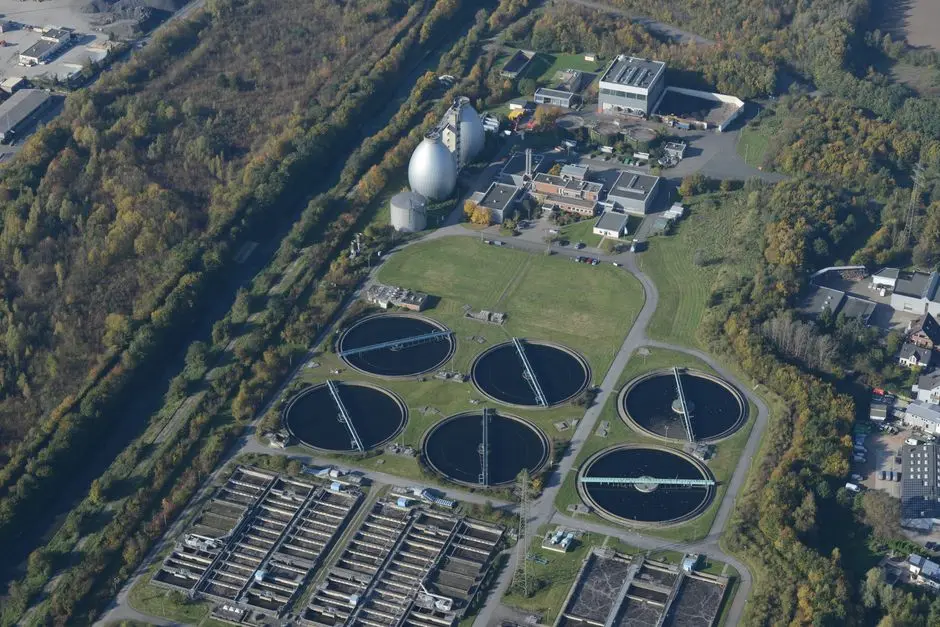
Apply these four branches in order to the influent data you already have from your most recent DMR or POTW sample:
- Free oil + emulsified oil >100 mg/L, or visible sheen: DAF is mandatory. A clarifier will not meet a 15 mg/L O&G limit and will not break a stable sheen. Pair DAF with chemical dosing using a HydropureWater automatic chemical dosing system to break emulsions before flotation.
- Influent mostly heavy TSS (rust, sand, mineral scale, tank bottoms): Start with a lamella clarifier and add DAF only if downstream oil limits fail. This is the right answer for a few legacy Jefferson Hills tank-farm sites that handle mostly settled particulates.
- Flow variability >2:1 peak-to-average and tight footprint: Specify a high-rate Clari-DAF-style DAF to capture shock loads and shrink the civil footprint by up to 82.7% versus conventional settling — a decisive advantage on the constrained Jefferson Borough industrial-park parcels.
- Bulk terminals and lubricant blenders (not refineries): 40 CFR Part 442 may apply; DAF is still the standard answer for emulsified cutting oil and lubricant carryover, typically 50–500 mg/L in the feed.
The default 2026 configuration for almost every Jefferson Hills petroleum plant is DAF as primary, biological treatment in the middle, and a lamella or circular clarifier as the secondary — a hybrid train that satisfies both 40 CFR Part 419 BPT/BAT and PA Title 25 Chapter 95. The same logic is described in how petroleum plants meet 2026 pretreatment limits near Demopolis, where the regulatory pressure is comparable.
CAPEX and OPEX Ranges: What to Budget in 2026
Costs are expressed as a relative index of the full pretreatment train (API separator + DAF + clarifier + chemical dosing) so the figures stay useful as the article ages and material costs move. As a rule of thumb, the DAF system typically represents 35–50% of the train CAPEX (skid, saturator, recycle pump, controls); the lamella clarifier is 10–20%; the remainder is civil works, chemical systems, and instrumentation. DAF OPEX drivers are compressed-air energy for the saturator, polymer consumption (refinery benchmark ~0.001 g/kg per ChemEngineering 2019), ferric chloride (16 kg Me/d in the published example), and skimmer maintenance. Lamella clarifier OPEX drivers are sludge pumping, polymer, and periodic plate cleaning — usually a 5-year wash cycle in oily service. Over a 5–10 year refurbishment window, DAF internals typically outlast lamella plate packs in oily service, so total cost of ownership can favor DAF despite the higher upfront cost. For a precise budgetary figure, run your influent flow and loadings through a HydropureWater automatic chemical dosing system sizing and your local electrical and polymer unit costs.
Frequently Asked Questions
Can a lamella clarifier replace a DAF for petroleum wastewater?
No, not where oil & grease limits apply. Lamellas settle heavy TSS but typically remove <70% of emulsified oil, so they cannot meet 40 CFR Part 419 BPT or PA Title 25 Chapter 95 O&G limits on raw refinery wastewater in the 100–1,000 mg/L feed range.
What DAF hydraulic loading and residence time is typical for refinery service?
60.337 m³/m²·d hydraulic loading and 0.5 h residence time, per the published ChemEngineering 2019 refinery simulation. High-rate Clari-DAF configurations push surface loading to 20 gpm/ft² (~50 m/h) and shrink footprint up to 82.7% versus conventional settling.
Do Jefferson Hills petroleum plants need both DAF and a clarifier?
Yes. DAF as the primary oil/FOG step upstream of biological treatment, and a lamella or circular clarifier downstream to settle biomass and any residual TSS before sand filtration and chlorination.
Does DAF work for emulsified oil from lubricant blenders and bulk terminals?
Yes. DAF with coagulant (ferric chloride) and polymer reliably breaks and floats emulsified oil in the 50–500 mg/L range typical of petroleum non-refinery operations, including cutting-oil and lubricant carryover at Jefferson Hills bulk plants.
What is the smallest-footprint DAF option for a constrained Jefferson Hills site?
A high-rate Clari-DAF-style DAF at up to 20 gpm/ft² (~50 m/h) surface loading, which can shrink the pretreatment footprint by up to 82.7% versus conventional settling — the right answer on tight Jefferson Borough industrial-park parcels.