Charleston Mining and Metals Wastewater: What the 2026 Buyer Is Actually Deciding
For a Charleston-area mining, mineral processing, or fabricated-metals plant in 2026, the dissolved air flotation vs. lamella clarifier decision is governed by 40 CFR Part 437 effluent limits, not by vendor preference. Feed streams typically carry 2,000–10,000 mg/L TSS from aggregate wash water, heavy-metal hydroxide flocs (Fe, Mn, Al, occasionally Pb and As), and variable salinity when coastal intake water is used for dust suppression or process makeup. Hurricane-driven flow surges from June through November routinely push hydraulic loading 2–3× above design basis, washing floc out of any clarifier that lacks an equalization buffer.
Engineering selection is the standard practice in this sector: SLR Consulting lists mining and metals alongside iron and steel, chemical, and petroleum refining as core wastewater service lines, with NPDES permitting, jar and bench testing, pilot campaigns, and equipment selection as the routine project activities (per SLR's Water and Wastewater Treatment Services SOQ, 2017-07). That SOQ is dated 2017 and reflects general engineering service capabilities rather than a Charleston-specific deliverable, but it confirms that engineered selection — not catalog shopping — is how the industry buys this equipment.
The binding constraint is the applicable 40 CFR Part 437 subpart — ore mining and dressing (Subpart A), alumina processing (Subpart B), ferroalloy manufacturing (Subpart C), and so on — and the South Carolina NPDES permit that implements it. Equipment selection is downstream of the permit limit, not upstream. Get the permit basis wrong and the wrong clarifier gets installed.
The verdict the rest of this article defends: choose DAF when feed TSS is high in fines, oils, or floated metals and 40 CFR 437 effluent limits for TSS and metals must be met in a compact footprint; choose a lamella clarifier when flow exceeds roughly 250 m³/h with coarse, settleable solids and a tight polymer budget. Most Charleston-area sites in 2026 run best with a lamella clarifier or thickener for bulk removal plus DAF for metals polishing — the combined train is the realistic winning answer.
How DAF and Clarifiers Each Separate Solids and Metals
DAF separates on buoyancy, not gravity. A five-step sequence governs every commercial DAF unit on the market, and it is the same sequence documented in current vendor process flow diagrams (S2): (1) coagulant and flocculant dosing to build a settleable-or-floatable floc; (2) pressurized air-saturated recycle water injected into the contact zone; (3) micro-bubble attachment to the floc; (4) float accumulation at the surface for skimming; (5) clarified water exit from the bottom of the vessel, with a fraction recycled to the saturation tank. That buoyancy mechanism is what lets DAF pull low-density fines, emulsified oils, and floated metal-hydroxide flocs out of the water column in roughly 15–25 minutes of residence time.
The design drivers that govern DAF capex and opex are not optional. Selection criteria published by current DAF vendors specify hydraulic surface loading rate at the low end of the operating range, saturation pressure at or above 5 bar, a VFD on the recycle pump, SS316 wetted parts for aggressive mining water, and PLC control with effluent monitoring (S2). Deviate from those and you lose the 95–97% TSS removal the technology is sold on. A typical 120 m³/h packaged DAF unit occupies roughly 12.5 m × 4.4 m × 2.9 m (S2 model table) — about 55 m² of floor space, which is the appeal when a plant has a 100 m² bay to fit a 250 m³/h stream.
A lamella (inclined-plate) clarifier separates on gravity through stacked plates at 20–40 m³/m²·h surface loading (HydropureWater lamella specification, 2026). Coagulant-conditioned water rises through the plate pack, settleable solids slide down the inclined surface into a sludge hopper, and clarified effluent overflows a weir at the top. There is no saturation package, no recycle pump, no air-release nozzles. A 250 m³/h clarifier at 25 m³/m²·h needs about 10 m² of plate area inside a concrete basin; a concrete basin is cheaper per m³/h than a packaged DAF, but the capex savings are eaten by civil work and polymer dosing if the solids do not settle cleanly.
The mechanism contrast is the point. DAF wins on low-density fines, FOG, and floated metal hydroxides. Lamella clarifiers win on coarse, dense, readily settleable solids at very high flow with low energy input. That is why the combined train — clarifier for bulk, DAF for polish — is the dominant 2026 configuration in Charleston-area mining and metals duty, not a one-technology answer.
Side-by-Side Performance: TSS, Metals, Footprint, Sludge
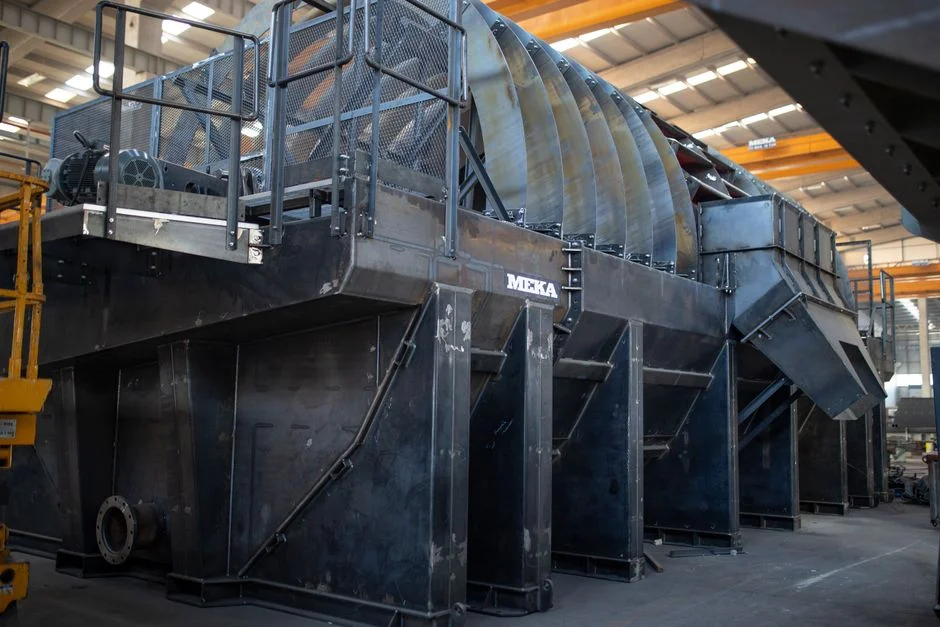
Use this matrix to score both options on the four metrics a 2026 capex review will demand.
| Parameter | DAF (mining duty) | Lamella Clarifier (mining duty) |
|---|---|---|
| TSS removal | 95–97% (S2: up to 97%; S5: up to 95% TSS and FOGs) | 60–85% standalone, 80–90% with polymer optimization |
| COD/BOD removal | 60–80% (S2) | 30–55% unless paired with biological polishing |
| Heavy metals (Al, Fe, Mn, Pb as hydroxide flocs) | >90% removal of floated fraction (S2) | Settleable fraction only; colloidal metals carry through |
| Hydraulic surface loading | ≤5 m³/m²·h typical (low end per S2 spec) | 20–40 m³/m²·h (HydropureWater lamella spec) |
| Footprint at 250 m³/h | ~55 m² (two packaged DAF-120 units in parallel, S2 dimensions) | ~10 m² plate area, larger concrete basin footprint overall |
| Sludge dry solids | 3–6% float; dewaters well on a plate press | 1–3% underflow; benefits from a plate-and-frame press to reach 25–35% cake |
| Hydraulic shock sensitivity | Tolerates 2× surge with buffer; bubble attachment recovers quickly | Floc washout above ~1.5× design flow; equalization is mandatory |
| Polymer demand | 5–15 g/m³ typical for floated floc | 1–5 g/m³ if settleable; can climb past 20 g/m³ for colloidal solids |
| Energy intensity | Recycle pump at 0.005–0.01 kWh/m³ treated | Minimal pumping beyond feed forwarding |
Two clarifications from field experience, not the vendor literature. First, the 60–85% TSS range for a lamella clarifier is what you see when the feed is genuinely settleable; once fines dominate, the clarifier needs polymer and the operating cost moves toward DAF territory. Second, sludge dry-solids numbers are at the underflow — once you put either stream through a HydropureWater plate and frame filter press (1–500 m² plate area, 2026 spec), both trains converge on a 25–35% cake suitable for off-site disposal.
Charleston-Specific Decision Tree: Which One for Your Plant
Apply the routes below to your own flow, TSS, and metals data before you walk into the 2026 capex meeting.
| Route | Trigger Conditions | Recommended Equipment |
|---|---|---|
| Route 1 — DAF only | Feed TSS >1,000 mg/L with high fines fraction; FOG or oil present; footprint <100 m²; metals (Al, Fe, Mn, Pb) are the compliance driver | HydropureWater DAF system sized to peak flow with HSR at low end, ≥5 bar saturation, SS316 wetted parts, PLC + effluent monitoring per S2 selection criteria |
| Route 2 — Lamella only | Flow >250 m³/h; solids coarse and settleable; polymer budget limited; 40 CFR 437 TSS achievable without metals polishing | HydropureWater lamella clarifier at 20–40 m³/m²·h with ~30% chemical reduction vs. conventional clarifiers |
| Route 3 — Combined train (most common 2026 winner) | Bulk TSS plus fines plus metals polishing required; variable flow from coastal/storm events; RO reuse downstream | Primary lamella or thickener for bulk removal and flow equalization, followed by HydropureWater DAF system for fines, oils, and floated metals; sludge to plate and frame filter press |
Map the routes to the binding 40 CFR 437 subpart before you select equipment. Ore mining and dressing (Subpart A) sets TSS limits in the 20–50 mg/L daily-max range depending on the mine type, with metals (Pb, Zn, As, Cd) tracked as priority pollutants. Alumina processing (Subpart B) and ferroalloy manufacturing (Subpart C) carry their own effluent limits — the subpart text is the spec sheet, not the equipment brochure. South Carolina's NPDES permit will layer any site-specific or water-quality-based limits on top, and those are typically what the capex meeting ends up defending.
For comparison with a similar Appalachian-style metals duty, see the mining/metals DAF vs clarifier guide for Caddo Gap. For mechanism-level detail on DAF bubble physics and selection, the DAF working principle and microbubble physics guide is the spec reference. For the metals limits side of the ledger, the heavy metals discharge limits and treatment guide walks through how Gulf-region jurisdictions handle similar parameters.
Capex, Opex, and 2026 Compliance Outlook for Charleston Mines
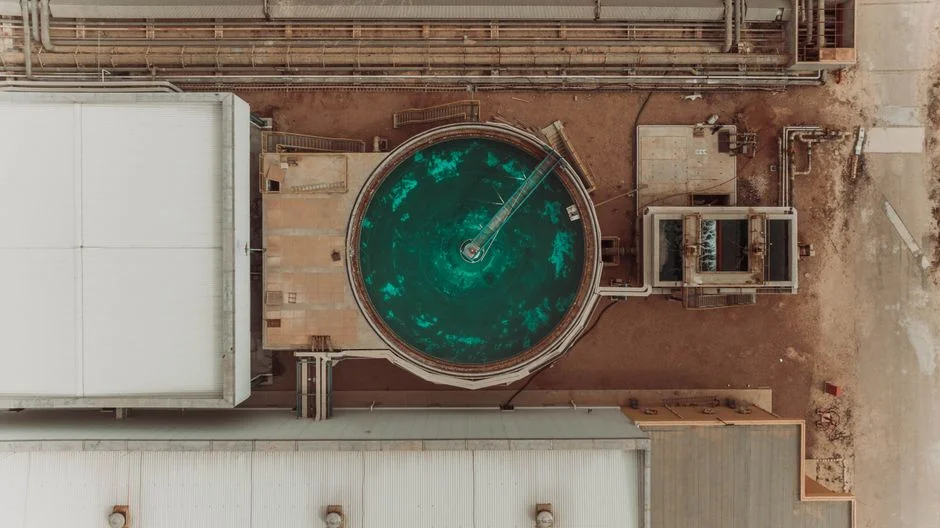
Capex order of magnitude: for the same hydraulic capacity, a packaged DAF train typically runs 1.3–1.8× the capex of a lamella clarifier once you include the saturation package, VFD-driven recycle pump, and SS316 wetted parts required by current selection criteria (S2). A 250 m³/h lamella basin in concrete, by contrast, is heavy on civil work and light on mechanical equipment — the opposite cost profile.
Opex runs the other direction. DAF opex is dominated by polymer (5–15 g/m³ for floated floc) and the recycle-pump energy at roughly 0.005–0.01 kWh/m³. Lamella opex is dominated by sludge hauling unless a mechanical dewatering step is added downstream; vendors report that sludge dewatering can cut volume by 70% or more (S5), which is the single largest opex lever a clarifier-based train has. Adding a HydropureWater plate and frame filter press sized to your underflow rate flips the math — and it dewateres DAF float equally well.
The 2026 compliance outlook is a tightening one. SCDES continues to push metals limits down, Whole Effluent Toxicity evaluations are showing up in more renewals, and selenium plus thallium concerns — familiar from Appalachian coal-country permits — are starting to surface on Lowcountry fabricated-metals permits that source process water from coastal intakes. Rental DAF skids in the 10–15 m³/h range (S5 Alpha 5 / Alpha 10 containerized units) are a useful bridge during plant upgrades or pilot campaigns, and they let you generate real operating data on your actual wastewater before committing to a permanent train. The recommended next step is jar testing followed by on-site pilot work — standard practice on every mining/metals selection project listed in SLR's SOQ project experience (S1, project list section).
Frequently Asked Questions
When should a Charleston mining plant choose DAF over a lamella clarifier in 2026?
Choose DAF when feed TSS exceeds 1,000 mg/L with a high fines fraction, oils or FOG are present, and 40 CFR 437 metals (Al, Fe, Mn, Pb) drive the compliance limit. DAF delivers 95–97% TSS removal (S2) and >90% removal of floated metal-hydroxide flocs in a footprint under 100 m² for a 250 m³/h train.
Is a combined lamella-plus-DAF train common for Charleston metals facilities?
Yes. A primary lamella clarifier handles bulk TSS at 20–40 m³/m²·h (HydropureWater lamella spec, 2026) and equalizes storm-driven surges, then a downstream HydropureWater DAF system polishes fines and floated metals to meet 40 CFR 437 daily-max limits.
What 40 CFR 437 subpart applies to a Charleston-area mining or metals plant?
It depends on the operation: Subpart A covers ore mining and dressing, Subpart B covers alumina processing, and Subpart C covers ferroalloy manufacturing. Each sets its own TSS and metals daily-maximum and monthly-average limits, which the South Carolina NPDES permit then implements on a site-specific basis.
How much pilot testing is needed before selecting DAF or a clarifier?
Run jar tests first to screen coagulants and polymers on actual feed, then a 2–4 week on-site pilot of the leading technology at representative hydraulic and solids loading. SLR's project list shows bench and pilot-scale testing as standard practice for every mining/metals selection (S1), and containerized rental DAFs in the 10–15 m³/h range (S5) are the typical pilot platform.